# The Dark Legacy of Cold War Human Experiments and the Rise of Modern Neuro-Weapons and AI Abuses
The shadowy history of Cold War-era human experimentation continues to cast a long and troubling pall over contemporary advancements in technology and military strategy. Decades after declassified documents revealed disturbing projects like MKUltra and Project ARTICHOKE—where unethical experiments on mind control, sleep deprivation, and sensory manipulation were conducted—their legacy persists in evolving, often clandestine, forms. Recent developments have unveiled alarming progress in covert neuro-weapons, AI-driven surveillance, and systemic privacy violations, raising critical questions about ethical oversight, transparency, and international regulation.
## Revisiting the Foundations: Cold War Human Experiments and Ethical Breaches
### Mind Control and Psychological Manipulation
During the Cold War, intelligence agencies, notably the CIA, launched secret programs aimed at mastering human consciousness for espionage and interrogation purposes:
- **Project ARTICHOKE** (declassified in recent years) sought to explore **drug-induced mind control**, hypnosis, sensory deprivation, and electroshock therapy. Subjects—often unwitting civilians, marginalized groups, or vulnerable populations—were subjected to invasive procedures without informed consent, violating basic human rights.
- **MKUltra**, building upon ARTICHOKE’s groundwork, expanded dramatically. It employed **LSD psychedelic experiments** and other techniques with the goal of creating **"programmable" agents** capable of memory erasure or behavioral control. Investigative reports, including *"The CIA Mind Control Program Before MKUltra,"* reveal a pattern of **gross ethical violations**, experimentation on vulnerable populations, and a blatant disregard for human dignity.
### Sleep Deprivation and Interrogation Techniques
Declassified CIA documents, such as those titled *"Declassified CIA Document Sleep,"* detail an extensive program of **sleep deprivation experiments**:
- Participants—including military personnel, civilians, and detainees—endured **prolonged sleep deprivation**, sometimes exceeding days or weeks.
- The purpose was to evaluate **sleep disruption as an interrogation tactic**, capable of **inducing confessions or breaking resistance**.
- These experiments often **lacked proper informed consent**, reflecting a brutal disregard for human well-being.
These studies contributed to **coercive interrogation techniques** that have contemporary echoes in debates over torture and psychological manipulation, illustrating a disturbing willingness to sacrifice ethical standards for strategic advantage.
## Ethical Breaches and Human Rights Violations
The Cold War experimentation era is marked by systemic **ethical breaches**:
- **Lack of informed consent**, with subjects unaware of the risks involved.
- Use of **vulnerable populations**, such as marginalized communities or unwitting civilians.
- Development of **coercive tactics** that amount to psychological torture.
These violations tarnished the reputation of intelligence agencies and serve as stark reminders of what can happen when scientific curiosity is divorced from ethical responsibility. They underscore the critical need for **oversight, transparency, and adherence to human rights** in all research endeavors.
## The Modern Echoes: Covert Neuro-Weapons and Neurological Attacks
Recent investigative reports and technological breakthroughs reveal that the dark legacy of Cold War experiments persists through the **development and clandestine deployment of neuro-manipulation technologies**.
### The Russian "Invisible Weapon" and U.S. Investigations
In 2023, a documentary titled *"DECLASSIFIED: How Russia's 'Invisible Weapon' Brain-Damaged the ENTIRE CIA"* exposed Russia’s alleged progress in **neuro-weapons capable of remote neurological damage**. These devices purportedly utilize **advanced electromagnetic or acoustic technologies** to induce **brain trauma and neurological symptoms** without physical contact. Experts warn that such **"invisible" warfare** could target individuals or entire populations covertly, with devastating effects.
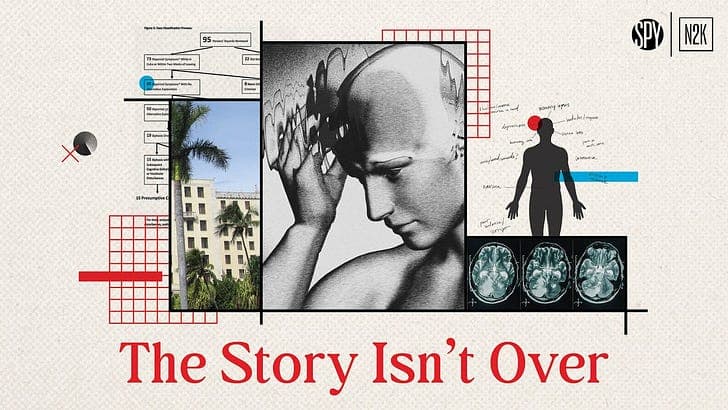
Further, in 2026, journalist Zoe Hussain uncovered a **U.S. military case involving a clandestine device purchased from Russian criminal networks**. When tested, this device produced symptoms remarkably similar to **Havana Syndrome**, a mysterious neurological condition affecting diplomats and intelligence personnel globally. Victims report **headaches, disorientation, cognitive impairments, and long-term neurological damage**, prompting urgent concerns about the proliferation and potential misuse of neuro-weapons.
### Emerging Technologies and Elevated Risks
These developments highlight several alarming issues:
- The **existence of covert neuro-weapons** capable of remotely inducing neurological symptoms or damage.
- The potential for **targeted, "invisible" attacks** on individuals, groups, or entire populations.
- The **lack of transparency and regulation**, creating fertile ground for misuse, proliferation, and unintentional harm.
Adding to the peril are **advancements in AI and information ecosystems**, which intensify these risks:
- **AI-powered surveillance tools** can enhance neuro-warfare, enabling **more precise targeting**.
- **Facial recognition and biometric technologies** are increasingly vulnerable to **false positives, misidentification, and misuse**, leading to wrongful detentions and privacy violations.
Recent incidents exemplify these dangers. For instance, a woman was detained for **six months on false charges triggered by facial recognition AI errors**, losing her home, car, and beloved pet. Such cases reveal how **technological misapplications** can devastate innocent lives.
## Contemporary AI and Privacy Violations: Continuation of Technological Abuses
The proliferation of AI and biometric tools has led to **serious privacy breaches** and wrongful targeting:
- **False positives in facial recognition** can result in wrongful detention, exemplified by cases like the woman detained for half a year due to AI errors.
- **AI systems misappropriating identities** or falsely identifying individuals threaten personal privacy and safety.
- **Legal challenges and class-action lawsuits** have emerged, such as against Grammarly’s AI ‘Expert Review,’ which allegedly misused and misrepresented identities of journalists and authors—highlighting how AI systems can infringe on intellectual and personal rights.
These incidents highlight a **continuity of abuses rooted in unchecked technological development**, emphasizing the urgent need for **robust regulation, oversight, and ethical safeguards**.
## Accountability, Transparency, and the Ongoing Struggle
The history of Cold War experiments—marked by **gross ethical violations and human rights abuses**—serves as a stark warning. Today, the secretive development of **covert neuro-weapons, AI-enabled surveillance, and privacy violations** echoes this troubled past.
However, recent revelations and ongoing investigations reveal troubling concerns:
- A 2023 MSN article accused the CIA of **secret bioweapon experiments**, linking these to broader clandestine research efforts.
- The **Stormont censorship policy** exemplifies how **secrecy and censorship** can suppress transparency about declassified documents, further obscuring the truth.
- Reports like *"The Family Jewels"* and other declassified CIA files detail **unscrupulous activities** that remain hidden or censored, hindering accountability.
This environment of secrecy fosters distrust, hampers oversight, and risks repeating past abuses.
## Policy Responses and the Path Forward
Addressing these complex challenges requires comprehensive action:
- **Implement strict oversight and regulation** of military, intelligence, and private sector research involving human subjects and neurotechnologies.
- **Establish international norms and treaties** to regulate the development, deployment, and proliferation of neuro-weapons.
- **Strengthen AI and biometric regulation** to prevent misuse, wrongful targeting, and privacy violations.
- **Promote transparency** regarding research activities, declassification of documents, and public awareness.
- **Create accountability mechanisms** to address past abuses and prevent future misconduct.
Learning from history, the global community must prioritize **ethical standards rooted in human rights**, ensuring that **scientific advancements serve humanity rather than harm it**.
## Conclusion
From the clandestine experiments of the Cold War to today’s covert neuro-weapons and AI-enabled surveillance, a troubling legacy persists—highlighting both the potential and peril of unchecked technological pursuit. The recent revelations of **neuro-attack devices**, **misuse of AI**, and **systemic privacy violations** underscore the urgent need for **transparency, regulation, and international cooperation**.
**Upholding principles of informed consent, human dignity, and ethical responsibility** is essential to prevent history’s darkest chapters from repeating. As neurotechnology and AI continue to evolve rapidly, unwavering vigilance and a commitment to human rights are vital to ensuring that innovation benefits society rather than becoming a tool of oppression and harm. Only through confronting this legacy openly can we safeguard the rights and well-being of individuals in an increasingly complex and interconnected world.