# Global Instability Deepens: From Trump-Era Tariffs to Market Turmoil and Strategic Shifts
The geopolitical and economic turbulence initiated during the Trump presidency continues to reverberate across the world, escalating conflicts, straining international relations, and triggering widespread market volatility. Recent developments reveal a landscape characterized by regional flashpoints, strategic power plays, technological decoupling, and domestic governance challenges—all compounding risks and creating an environment of profound uncertainty.
---
## Escalating Geopolitical Risks: Middle East, Ukraine, Arctic, and Beyond
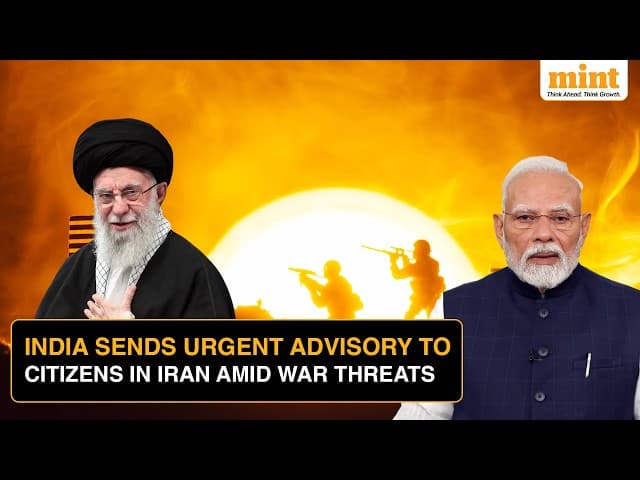
The Middle East remains a hotbed of volatility. Iran’s **recent decision to temporarily close parts of the Strait of Hormuz** during military drills underscores its strategic posture over **the vital maritime corridor through which approximately 20% of global oil trade** flows. Such actions have historically led to **sharp energy price spikes** and ripple effects across financial markets. Intelligence agencies now warn that **a potential US–Iran conflict could erupt within weeks**, driven by escalating provocations, miscalculations, and the erosion of diplomatic channels. While negotiations led by Oman and European allies aim to de-escalate tensions, the risk of **accidental clashes or misjudgments** remains high, with any conflict threatening **regional and global economic stability**.
Meanwhile, Russia’s **persistent missile and drone assaults in Ukraine** continue to threaten **European energy security**, especially as winter approaches and demand surges. Moscow’s **warnings that "Russia may strike Europe if attacked first"** reflect its strategic posture, while its **assertive expansion into the Arctic**—marked by **territorial claims and military activity**—further escalates tensions. The Arctic’s strategic importance is surging, driven by **climate-induced melting** that opens new navigation routes and resource opportunities, increasing the risk of **conflicts and miscalculations**.
In the Middle East, the **Gaza conflict** has resulted in **over 71,000 Palestinian casualties**, worsening the humanitarian crisis and regional instability. These crises highlight an **increasingly volatile global environment**, with markets highly sensitive to any signs of escalation. The US has responded by **bolstering military deployments**, including deploying aircraft carriers and strike groups to hotspots, while diplomatic efforts continue—though **the danger of misjudgments and unintended escalation remains acute**.
---
## Renewed Great-Power Rivalry: Economic, Technological, and Strategic Maneuvers
The legacy of Trump-era tariffs, export restrictions, and sanctions continues to shape the strategic landscape. The US maintains a **hardline stance on China’s technological advancements**, utilizing **export controls and sanctions**. Recent actions include **allowing Nvidia to export its H200 AI chips to China**, signaling a **nuanced approach** balancing **containment with limited engagement**. However, the overarching goal remains to **limit China’s progress in AI and semiconductors**, fueling fears of **further decoupling**.
China is **actively reducing its holdings of US Treasuries**, aiming to **lessen reliance on the dollar** amidst **domestic economic headwinds** such as **sluggish property markets** and **declining new-home prices**. This move **raises concerns over destabilizing global financial markets**, potentially **weakening the dollar’s reserve status**, **increasing borrowing costs**, and **amplifying volatility**.
In the technological race, strategic investments and collaborations are accelerating:
- **SambaNova**, a leading AI chip startup, **raised $350 million in a Vista-led funding round** and **partnered with Intel**, exemplifying the **continued private sector focus on AI hardware**. This underscores **the strategic importance of AI chips** in global technological dominance.
- The **AI hardware sector** is fiercely competitive, with **Nvidia’s export restrictions** and **China’s efforts to develop indigenous AI capabilities** accelerating a **decoupling trend**.
- **UK-based autonomous vehicle software startup Wayve** recently **raised US$1.5 billion** to **license its AI driver software**, highlighting **AI-driven mobility solutions** as a critical component of the race for technological supremacy.
Russia’s **military expansion and territorial assertions in the Arctic**, coupled with ongoing diplomatic negotiations, **maintain the risk of unintended conflicts**, especially as Ukraine’s **resilient resistance** continues to challenge Russian advances. The ongoing **Ukraine conflict** and **Gaza crisis** serve as central flashpoints, with **Ukrainian border guards at Vilcha** exemplifying **persistent resistance** even as the US **heightens military presence** in these regions to **deter further escalation**.
---
## Domestic Institutional Strains: Governance, Transparency, and Security Challenges
Within the United States, internal conflicts over **monetary policy, institutional independence, transparency, and cybersecurity** have intensified, adding layers of instability.
- A **landmark Supreme Court case** is examining whether a sitting president **has the authority to dismiss Federal Reserve governors**. A **favorable ruling for the president** could **undermine the Fed’s independence**, risking **inflationary pressures** and **market destabilization**. The Fed’s role as a **pillar of global financial stability** could be compromised if politicized, **potentially triggering widespread market turmoil**.
- The Biden administration’s **refusal to release files related to Jeffrey Epstein** has fueled **public skepticism**, amid broader concerns over **government transparency**. Revelations about **a secret bunker project beneath the White House East Wing**, initiated during Trump’s tenure, **raise alarms** about **unchecked executive authority** and **erosion of democratic norms**.
- Cybersecurity vulnerabilities are increasingly alarming. The acting head of CISA, **Madhu Gottumukkala**, **faced scrutiny after uploading sensitive government data to AI platforms**, exposing risks of **cyberattacks and data breaches**. Experts emphasize the **urgent need for robust cybersecurity frameworks** to **protect critical infrastructure** and **maintain national security**.
---
## Market Turmoil and Safe-Haven Flows: Signs of Deep Uncertainty
Financial markets worldwide continue to experience **steep declines**, **heightened volatility**, and **massive flows into safe assets**:
- **Equity markets** show signs of distress. Major indices like **India’s Sensex and Nifty** have **fallen sharply**, driven by fears of **prolonged instability and regional conflicts**. The **US stock markets** exhibit **extreme volatility**, with **Nvidia’s strong quarterly results** initially boosting sentiment but also fueling **sector-specific corrections**. The **S&P 500** declined **0.40% to 6,853.75**, and **Nasdaq** dropped **0.44% to 22,653.68**.
- **Safe-haven assets** like **gold** have **surged past $5,000 per ounce**, with **JP Morgan forecasting** it could **reach $6,300 by 2026**, reflecting **extreme risk aversion**. Critical metals such as **copper** are at **historic highs**, driven by **disrupted supply chains** and **renewed energy infrastructure demands**.
- The **silver market**, despite recent **dips**, remains a **barometer of market uncertainty**.
- The **banking sector** faces **asset quality concerns**, with **lower recovery rates on bad assets**, raising fears of **systemic vulnerabilities**.
- Sector-specific stresses are evident in **IT and data center sectors** like TCS, Infosys, and Wipro, which are experiencing **profit margin pressures** amid turbulent conditions. For example, **Oracle’s plan to cut approximately 30,000 jobs** signals **sector vulnerabilities**.
- The **India tech sector** has shown resilience, buoyed by **the recent Nvidia results** and **India’s emphasis on AI and industrial tech**. The **Infosys–Anthropic partnership** exemplifies confidence in India’s **tech ecosystem** amid global uncertainties.
- Countries like **India** have **infused ₹2 lakh crore** to **stabilize markets**, but **corrections remain possible** if geopolitical or policy uncertainties escalate further.
---
## India’s Strategic Responses and Economic Outlook
India’s markets have **dipped below key levels**, with **Nifty falling below 25,600** and the **Sensex down over 200 points**, amid **sectoral concerns** and **global volatility**.
### Policy and Diplomatic Initiatives
- The government has **implemented liquidity injections**, notably a **₹2 lakh crore infusion**, to **support the markets**.
- Prime Minister Modi’s **visit to Israel** signals a **deepening of defense, trade, and technological ties**, reflecting **a strategic pivot toward strengthening international alliances**.
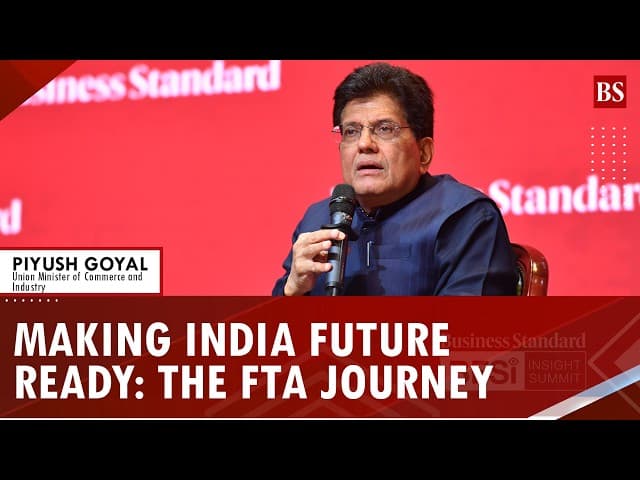
- India is **reviewing investment rules related to China**, as indicated by Piyush Goyal at the **BS Manthan conference**, signaling a **reevaluation of foreign investment policies** amid rising geopolitical tensions.
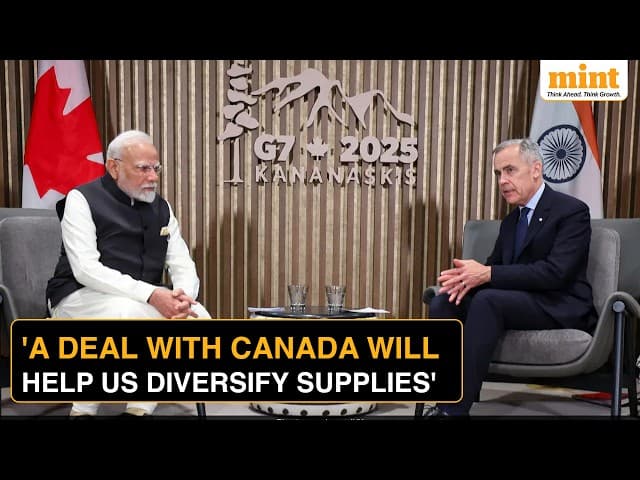
- The **India–GCC Free Trade Agreement (FTA)** negotiations are progressing, aiming to **deepen bilateral trade valued at over $178 billion**, seeking **to diversify trade sources** and **reduce dependence on traditional markets**.
### Economic and Technological Initiatives
- **India is diversifying energy sources**, such as **importing oil from Venezuela** to **circumvent US sanctions**, and **expanding domestic logistics** for **supply chain resilience**.
- The **AI ecosystem** continues to expand, exemplified by the **India AI Impact Summit 2026**, with Prime Minister Modi emphasizing **India’s rapid AI progress** and **inclusive growth**.
- **Tata Group’s partnership with OpenAI** marks **India’s strategic entry into global AI and data infrastructure markets**, with Tata becoming **OpenAI’s first major client for data-center services**—initially deploying **10 data centers**—strengthening India’s position in **AI supply chains**.
### Recent Developments and Tech-Led Market Rally
Following Nvidia’s robust quarterly results, **a tech-led rally has emerged**, with markets responding positively to **AI sector optimism**. The **Nvidia results** underscored **the significance of AI hardware**, prompting a surge in **investment and optimism in the sector**. This **renewed confidence** supports **sector-specific rebounds** despite broader geopolitical uncertainties.
---
## Current Status and Broader Implications
The world remains **in a state of profound instability**. The **interplay of regional conflicts, great-power decoupling efforts, institutional vulnerabilities, and volatile markets** creates a **fragile global system**. **Market crashes** have erased an estimated **₹7 lakh crore in investor wealth**, and escalating geopolitical tensions threaten to deepen disruptions.
The convergence of **geopolitical conflicts and strategic technological decoupling** underscores the **urgent need for renewed diplomacy, resilient supply chains, and robust financial safeguards**. Without concerted international cooperation, the risk of **long-term destabilization—politically, economically, and security-wise—is substantial**.
---
## Policy Prescriptions and the Path Forward
To navigate these turbulent times, policymakers should **prioritize**:
- **Diplomatic de-escalation** in hotspots like the Middle East, Ukraine, and the Arctic.
- **Protecting the independence of central banks**, resisting politicization that could trigger inflation and market chaos.
- **Enhancing cybersecurity frameworks**, especially as **AI adoption accelerates**, to **protect critical infrastructure** and **mitigate cyber threats**.
- **Implementing targeted liquidity measures, supply chain diversification**, and **regulatory reforms** to **stabilize markets** and **support vital sectors**.
**In conclusion**, the convergence of geopolitical tensions, economic protectionism, institutional vulnerabilities, and market volatility signals a period of **unprecedented uncertainty**. The global community’s ability to exercise **strategic foresight, resilience, and multilateral cooperation** will determine whether these turbulent times lead to long-term destabilization or an opportunity for renewal. Recent developments, especially India’s technological initiatives and strategic alliances—including the recent tech rally driven by Nvidia’s results—offer a glimpse of hope that **technology and diplomacy** could serve as vital tools in navigating these challenges.
---
### **Additional Note: Market Micro-Movements**
Reflecting the current market dynamics, the NSE’s top-traded stocks today include **YES Bank**, **IDFC First Bank**, and **Eternal**, highlighting sector-specific investor interest amidst broader volatility. These stocks remain under focus as investors seek safe entry points within the banking and financial sectors, which continue to be sensitive to policy signals and macroeconomic shifts.
---
*The global landscape remains highly fluid. Vigilance, adaptability, and strategic cooperation will be crucial in steering through these turbulent times.*