# The 2026 Revolution in Autonomous AI Agents: Architectural Innovations, Industry Momentum, Embodied Multimodal World Models, Safety Breakthroughs, and Emerging Trends
The year 2026 marks a pivotal moment in the evolution of autonomous AI agents. Building upon years of foundational advancements in architecture, perception, safety, and tooling, this year witnesses systems that are more modular, embodied, and capable of long-horizon reasoning than ever before. These breakthroughs are fundamentally transforming industries—from space exploration and industrial automation to urban mobility and scientific research—and are demonstrating unprecedented levels of robustness, safety, and operational efficiency. The convergence of these developments signals a transition from experimental prototypes to fully integrated, trustworthy AI agents embedded deeply into societal infrastructure.
## Architectural Shift Toward Modular, Embodied, Hierarchical Agents
A dominant trend in 2026 is the **departure from monolithic, end-to-end language models** toward **modular, embodied, and hierarchical agent architectures**. This shift addresses critical limitations such as **long-term reasoning**, **adaptability**, **interpretability**, and **safety**, especially in unpredictable or high-stakes environments.
- **Modular and Skill-Based Systems:** Frameworks like **SkillRL** and **Recursive Policy Evolution** enable **dynamic skill discovery, composition, and refinement**. For instance, robotic surgical systems now **adapt in real-time during procedures**, ensuring **high safety and precision** even when unexpected complications arise.
- **Active Memory and Context Management:** Inspired by human cognition, agents incorporate **active memory modules** that **dynamically manage context** across extended interactions. This capability supports **scientific modeling**, **medical diagnostics**, and **industrial automation**, where **complex, sustained reasoning** is essential.
- **Hybrid Cognitive Architectures:** Major industry investments have accelerated the integration of **symbolic reasoning**, **neuromorphic components**, and **multimodal perception** within **hybrid systems**. These architectures **improve interpretability**, **robust safety mechanisms**, and **long-term operational stability**, especially relevant for **space missions** and **autonomous factories**.
This architectural evolution underpins **long-horizon planning**, **safe decision-making**, and **transparent reasoning**, making these agents indispensable across diverse sectors.
## Embodied Multimodal World Models: Perception, Simulation, and Causal Reasoning
Advances in **embodied multimodal world models** continue to redefine how agents perceive, reason about, and act within complex environments. These models seamlessly fuse sensory inputs with **causal understanding**, enabling **robust, real-time decision-making**.
- **Multisensory Integration:** Foundations like **RynnBrain** now combine **vision, audio, tactile, and textual data**, supporting **dynamic tasks** such as **space exploration**, **industrial process control**, and **robotic assistance**.
- **Causal and Object-Centric Reasoning:** Models such as **Causal-JEPA** enhance **object-centric embeddings** by inferring **causal relationships**, even amidst environmental noise or uncertainty—crucial for **unpredictable settings**.
- **Egocentric and Real-Time Perception:** Tools like **VideoLMs** and **ViewRope** push perceptual boundaries, offering **egocentric perception** and **real-time situational awareness** for **autonomous vehicles** and **robotic assistants**. Additionally, **visual and textual environment synthesis platforms** like **Code2World** and **AssetFormer** accelerate **virtual environment creation**, facilitating **VR applications** and **simulation training**.
- **Edge-Optimized Models:** The development of **Mobile-O**, tailored for **edge devices**, empowers **local perception and reasoning** for **personal assistants** and **drones** operating in resource-constrained environments**.
A significant conceptual advance is **"World Guidance,"** which models environments within a **condition space** to **dynamically adapt actions** based on **changing contexts**, resulting in **more nuanced, flexible world models**.
## Enhanced Agent Tooling and Multimodal Generation
Operational capabilities are being amplified through **innovative tools and unified models** that support **multi-turn reasoning**, **content synthesis**, and **skill optimization**:
- **Model Context Protocol (MCP):** Efforts to **augment MCP tool descriptions** streamline **context management**, leading to **more reliable agents** capable of **multi-step reasoning** and **complex task execution**.
- **JavisDiT++:** This **unified multimodal model** enables **joint audio-video generation**, crucial for **media synthesis**, **virtual assistants**, and **interactive environments**.
- **Robotic Foundation Models & Physical AI:** The **RLWRLD** initiative exemplifies the fusion of **robot foundation models** with **physical AI**, creating **resilient, adaptable robotic systems**. Recent **$26 million funding round** underscores industry confidence in deploying these at scale, particularly in **industrial automation**.
- **Skill Optimization Platforms:** Tools like **Tessl** now help developers **evaluate and optimize agent skills**, achieving **up to 3× improvements** in **code quality** and **capability**, paving the way for **scalable, reliable autonomous agents**.
## Industry Momentum: Funding, Hardware, Ecosystem, and Consolidation
Industry momentum in 2026 is unparalleled, driven by **record-breaking funding rounds**, **hardware breakthroughs**, and strategic acquisitions:
- **Major Funding & Valuations:**
- **OpenAI** approaches a **$100 billion valuation**, reflecting confidence in **safety-conscious, integrated systems**.
- **Wayve**, the UK autonomous driving startup, raised **$1.2 billion in Series D**, led by **Microsoft**, **Nvidia**, and **Uber**, now valued at **$8.6 billion**—a clear sign of **scaling autonomous mobility**.
- **MatX** secured **$500 million** to develop **transformer-optimized hardware**, challenging legacy chip giants and emphasizing the importance of **specialized AI chips**.
- **Hardware Innovations:** The **Svipino chip** offers **5× faster processing**, enabling **more efficient, real-time inference** at the edge—crucial for **autonomous drones**, **personal assistants**, and **robotic systems** operating in resource-limited environments.
- **Ecosystem Expansion:** The proliferation of **APIs powered by foundation models** is transforming enterprise infrastructure, with **every SaaS platform** increasingly relying on **foundation model APIs**—fostering **interoperability** and **rapid integration**.
- **Strategic Acquisitions:**
- **Harbinger**'s acquisition of **Phantom AI** accelerates **autonomous vehicle deployment efforts**.
- **X Square**, a robotics startup, secured fresh funding amid rising valuations, reflecting **continued investor confidence** in **resilient, autonomous robotics**.
## Resilient Robotics and Action-Verified Training
Research continues to emphasize **diversity-driven training** and **action-verified trajectories**, producing **robust, adaptable agents** suited for **long-term, real-world operations**:
- **Diverse Trajectory Learning:** Initiatives like **RoboCurate** expose agents to **varied environments and action sequences**, enhancing **resilience** and **generalization**.
- **VLA (Vision-Language-Action) Training:** Frameworks such as **VLANeXt** support **multi-task learning** across **unstructured environments**, including **disaster zones** and **space habitats**.
- **Action-Verified Trajectories:** These ensure **training data** aligns with **real physics and safety constraints**, underpinning **trustworthy deployment**.
### **Recent Breakthroughs in Compute Scaling and Memory**
A notable development is the demonstration that **scaling test-time compute** allows **smaller models** to **match the performance of much larger models**. As **@lvwerra** highlights:
> *"It's wild that it's even possible to scale test-time compute so far that a 4B model can match Gemini."*
This suggests a future where **resource-efficient inference** makes **large-model capabilities accessible** for **resource-constrained agents**, dramatically reducing **deployment costs and latency**.
### **Voice-to-Action OS: Zavi AI**
The **Zavi AI** platform introduces a **Voice to Action OS**, enabling **natural spoken commands** to **type, edit, see, and execute actions** across **every application**. Available on **iOS, Android, Mac, Windows, and Linux**, Zavi AI **eliminates reliance solely on transcription**, allowing **fluid multimodal interaction**—a significant leap toward **natural, intuitive human-AI collaboration**.
### **Interactive & Companion AI: Funding for Companion Labs**
The **AI startup Companion Labs** recently raised **$2.5 million** in seed funding, positioning itself as a leader in **interactive, companion AI** systems. Their focus on **personalized, conversational agents** that assist with **daily tasks**, **learning**, and **entertainment** reinforces the trend toward **more human-like, engaging AI companions**.
## Safety, Simulation, and Benchmarking: Ensuring Trust in Autonomous Systems
Trustworthiness remains central, with **advances in virtual testing environments**, **reasoning frameworks**, and **verification benchmarks**:
- **Generated Reality Environments:** High-fidelity, risk-free simulations using **tracked head and hand movements** enable **training and validation** without real-world dangers.
- **Decision and Reasoning Frameworks:** Tools like **UniT** support **multi-modal, iterative reasoning**, allowing agents to **refine decisions dynamically**. The **SAGE-RL** model teaches agents **when to halt reasoning or actions**, preventing **over-computation** and **unsafe behaviors**.
- **New Benchmark Suites:** These measure **long-horizon command-line reasoning**, **knowledge utilization**, **long-term reasoning with external data**, and **egocentric spatial understanding**:
- **LongCLI-Bench**
- **DREAM**
- **SenTSR-Bench**
- **LOCA-bench**
- **SAW-Bench**
- **AgentRE-Bench**
- **LatentLens**
These benchmarks are vital for **verification and transparency**, especially in **healthcare**, **aerospace**, and **defense** sectors.
## Recent Strategic and Technological Developments
Adding to the momentum, several notable developments have surfaced:
- **Anthropic–Vercept Acquisition:** In a strategic M&A move, **Anthropic** announced its acquisition of **Vercept**, a Seattle-based startup specializing in **"computer-use" AI**. This indicates industry consolidation and a focus on **specialized, safety-oriented systems**.
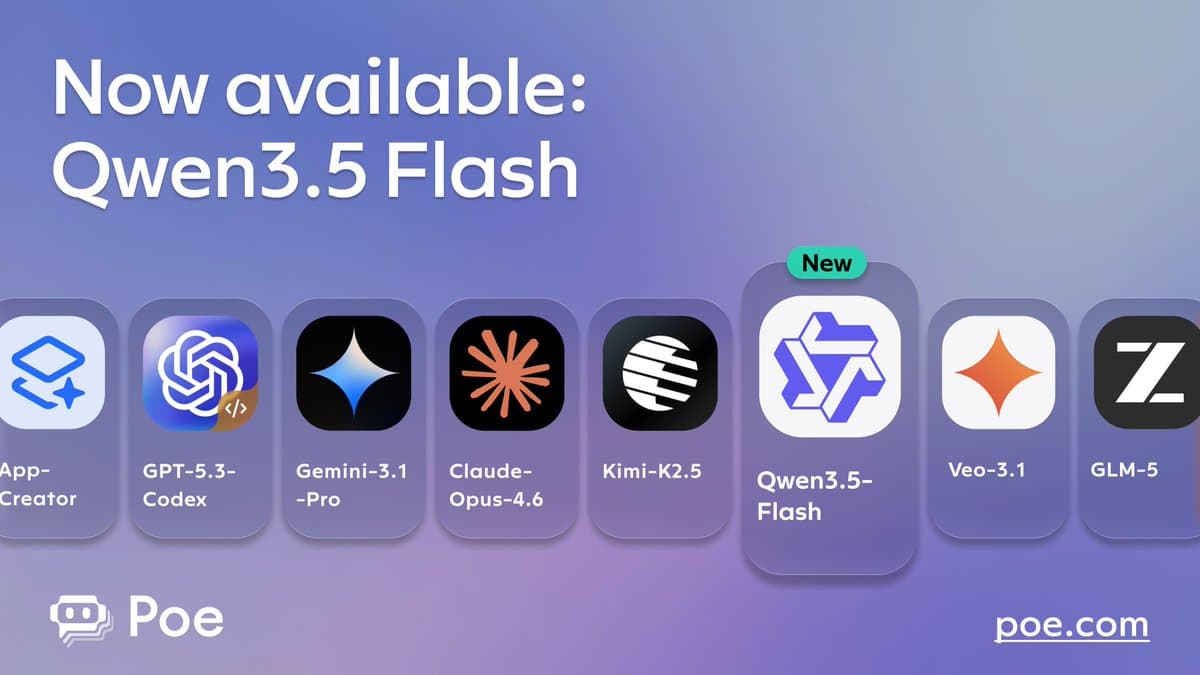
- **Qwen3.5 Flash Multimodal Model:** The release of **Qwen3.5 Flash** on the **Poe** platform marks a significant step in **fast, efficient multimodal processing**, combining **text and images** with remarkable speed and accuracy, facilitating real-time applications.
- **RLWRLD’s $26M Funding Round:** The seed round for **RLWRLD** consolidates its position as a leader in **industrial robotics AI**, emphasizing **resilience** and **scalability** in physical automation.
- **Claude Code’s Auto-Memory Support:** **Claude Code** now supports **auto-memory**, a huge step forward in **long-term reasoning** and **context retention**, crucial for **complex programming and decision-making**.
- **MatX & Transformer-Optimized Chips:** Reiner Pope of **MatX** discusses how **specialized, transformer-optimized chips** are accelerating AI performance, reducing latency, and enabling **more efficient deployment** of large models at the edge.
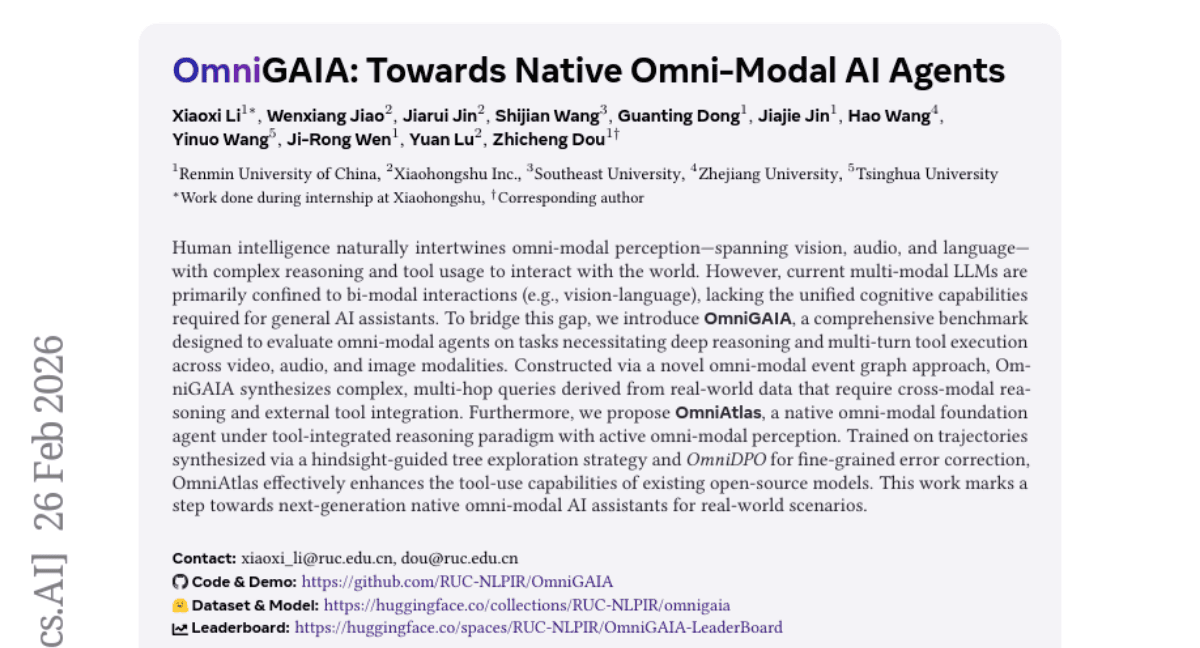
- **OmniGAIA & Multimodal Agents:** The recent **OmniGAIA** paper introduces **omni-modal agents** capable of integrating vision, language, and action seamlessly, pushing the boundary of **embodied multimodal AI**.
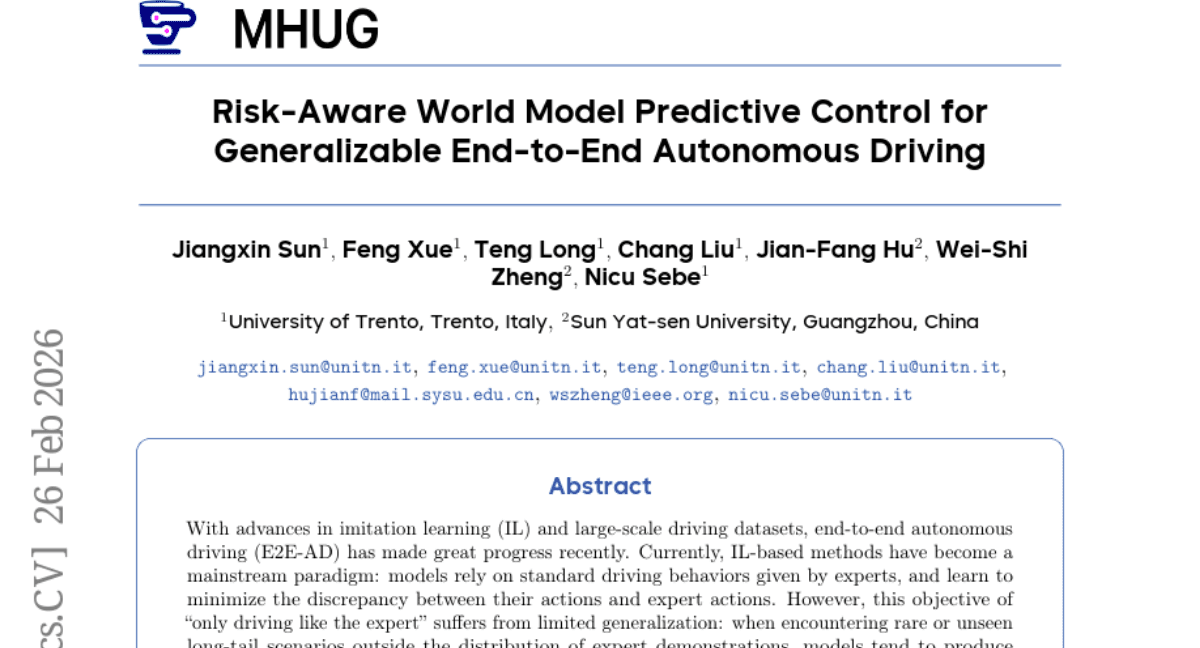
- **Risk-Aware World Model Predictive Control:** Cutting-edge research on **risk-aware control frameworks** enhances **safe decision-making** under uncertainty, addressing **trust and safety** in high-stakes environments.
## Current Status and Future Outlook
By 2026, **autonomous AI agents** are **integrated into societal infrastructure** as **safety-conscious, multimodal, adaptable systems**. Their **modular, embodied, hierarchical architectures** are validated across industries, supported by **edge-optimized perception models**, **robust safety benchmarks**, and **scaling tools** like **Tessl** and **DeltaMemory**.
**Industry investments**—including **Wayve’s $1.2 billion Series D**, **Amazon’s rumored $50 billion ecosystem plan**, and hardware innovations like **Svipino**—are accelerating deployment and fostering **market consolidation**. Meanwhile, **rigorous verification frameworks** and **simulation environments** are ensuring **trustworthiness** in real-world, high-stakes applications.
### **Implications and Future Directions**
Looking ahead, these trends point toward **holistic, embodied intelligent systems** capable of **long-term reasoning**, **safe decision-making**, and **adaptive interaction**. The advent of **test-time compute scaling** suggests that **resource-efficient agents** will deliver **large-model performance at smaller footprints**, broadening accessibility.
The increasing integration of **Voice-to-Action OS platforms** like **Zavi AI** and the rise of **interactive startup ecosystems** such as **Companion Labs** hint at a future where **AI agents are more natural, human-centric, and embedded** in daily life. The combined emphasis on **trust, safety, and transparency**, bolstered by **comprehensive benchmarking and simulation**, will underpin **widespread adoption** across sectors.
**In sum**, 2026 heralds an era where **architectural ingenuity**, **embodied perception**, **industry momentum**, and **safety rigor** converge—creating **trustworthy, capable autonomous agents** poised to **augment human potential and address global challenges** with unprecedented efficacy.