# Advancements and Emerging Challenges in Securing Multimodal and Agentic AI Systems: An Updated Perspective
As artificial intelligence (AI) continues its rapid evolution, the focus is shifting from merely enhancing capabilities to addressing **security, robustness, interpretability, and trustworthy deployment**—especially as models become more autonomous, multimodal, and capable of complex reasoning. Recent breakthroughs in hardware, platform orchestration, and model design have unlocked extraordinary opportunities, but they also introduce a host of vulnerabilities and challenges that demand urgent attention from researchers, practitioners, and policymakers alike.
This updated overview synthesizes the latest developments, highlighting both the transformative potential and the critical risks that shape the future of secure, reliable, and interpretable AI systems.
---
## Hardware Accelerators: Enabling Low-Latency Multimodal Agents While Expanding Attack Surfaces
**Innovations in hardware** are central to deploying advanced AI applications at scale:
- **Taalas’s HC1 chips** now support **nearly 17,000 tokens/sec inference**, representing a **tenfold increase** over models like Llama 3.1 8B. This significant speed-up enables **near real-time multimodal agentic applications**, opening new possibilities in autonomous robotics, space exploration, and interactive AI assistants.
- **Taalas’s N1 chips** push further, facilitating **real-time multimodal reasoning** critical for **embodied systems** functioning in dynamic, unpredictable environments.
**Implications:**
- These hardware improvements **expand AI’s operational scope**, allowing **complex decision-making** in real-world scenarios.
- However, **faster inference speeds** **broaden attack surfaces**:
- **Prompt injections**, **model hijacking**, and **data poisoning** can be executed more efficiently and at scale.
- The **cost-effectiveness** and **wider accessibility** of such hardware **democratize deployment**, but simultaneously **increase the risk of malicious exploitation**.
**Countermeasures:**
- Incorporating **hardware security protocols** such as **tamper-resistant chips** and **secure boot mechanisms** is essential.
- Combining **hardware safeguards** with **robust software defenses** will be crucial, particularly in **sensitive domains** like defense, finance, and critical infrastructure.
---
## Platform-Level Orchestration and the Rise of Autonomous Agent Workflows
Major tech firms are advancing **platform frameworks** to support **agent-driven workflows**:
- **Google’s recent upgrade to its Opal platform** (announced February 2026) introduces **an AI agent powered by Gemini 3 Flash**, capable of **automating complex, multi-step workflows**.
- **Gemini’s agentic capabilities** have now extended to **Android devices**, including the **Pixel 10 and Pixel 1**, marking **the advent of autonomous multi-step task automation directly on mobile hardware**.
**New Developments:**
- **Perplexity**, a leading AI-powered search company valued at **$20 billion**, launched **‘Perplexity Computer’**, an AI agent that **coordinates 19 models** to act as a **multi-model digital worker** for **$200/month**.
- This platform aims to **be your digital employee**, capable of handling **complex tasks** across multiple domains with **turnkey simplicity**, and **offers a glimpse into highly orchestrated multimodal workflows**.
**Security Concerns:**
- The **complexity and autonomy** of these systems **increase attack vectors**:
- Potential **manipulation of workflow protocols**
- Exploitation of **decision-making routines**
- Introduction of **data poisoning during configuration or operation**
**Mitigation Strategies:**
- Implementation of **secure, auditable orchestration protocols**
- **Continuous monitoring** for anomalies and malicious interference
- Development of **robust validation mechanisms** to **ensure operational integrity**
---
## Advances in Agentic Vision, Reinforcement Learning, and World Modeling
Research in **open, adaptable agentic vision models** continues to accelerate:
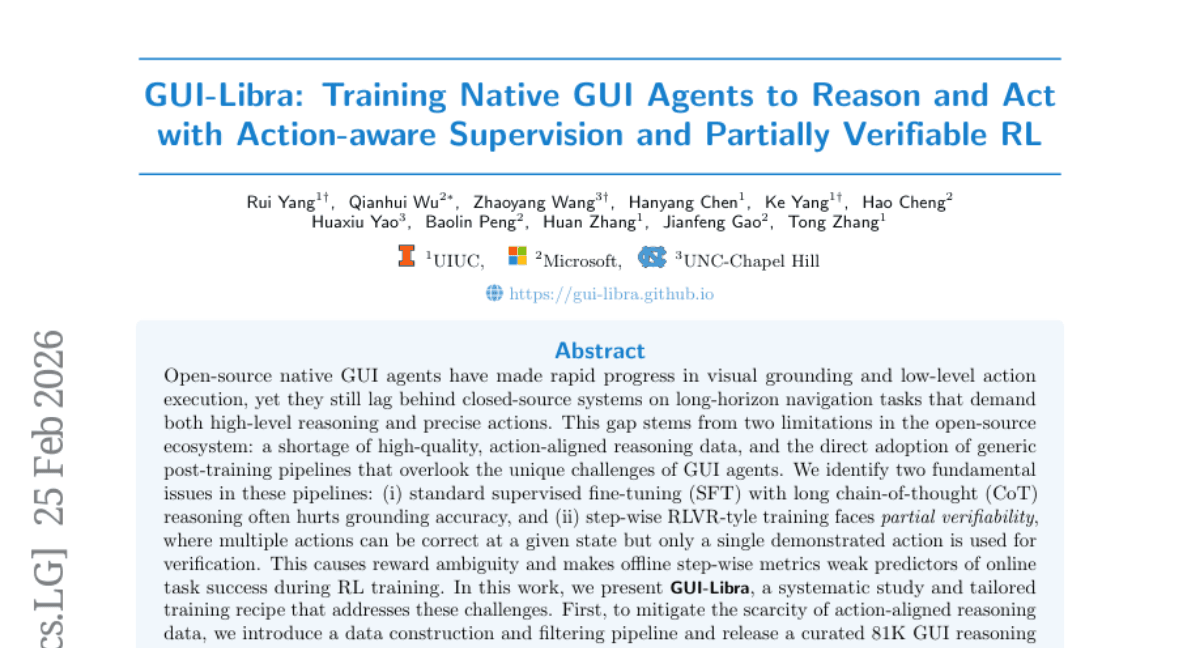
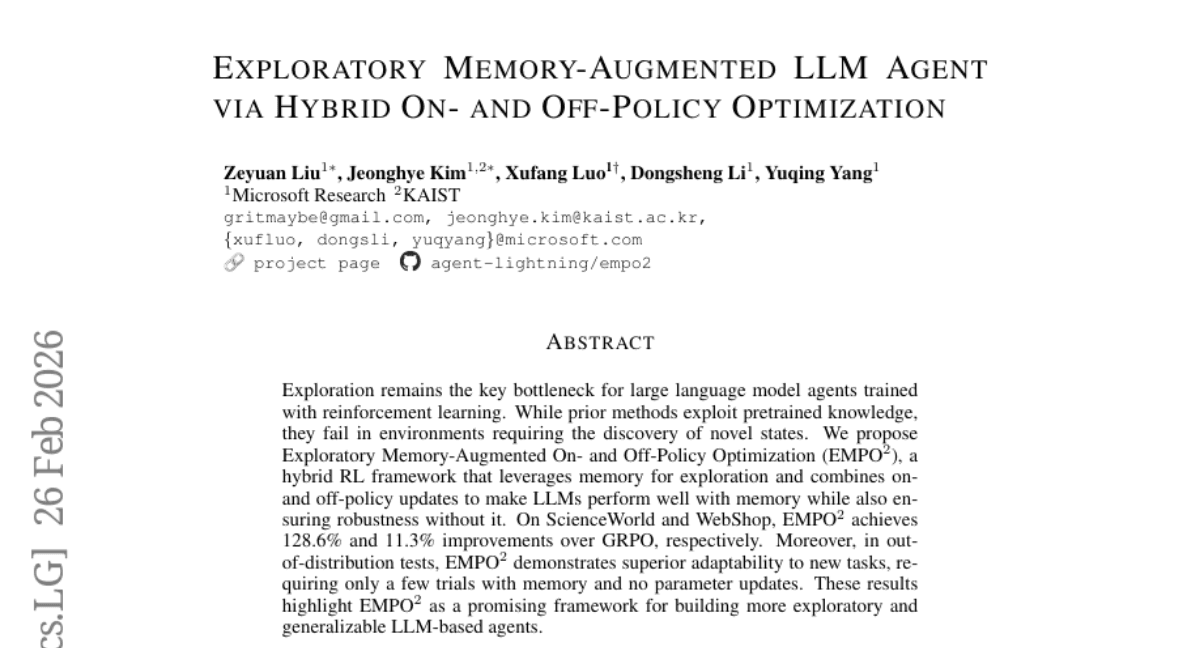
- **PyVision-RL** exemplifies **reinforcement learning (RL)-fine-tuned vision systems** capable of **learning and adapting** in complex, real-world environments.
- **World modeling techniques** like **World Guidance** facilitate **structured, interpretable scene representations**, supporting **long-term planning** and **decision-making**.
**Vulnerabilities and Challenges:**
- Despite progress, **RL-finetuned models** remain **susceptible** to:
- **Adversarial RL signals** designed to mislead or degrade performance
- **Training data contamination**, which can introduce **biases or vulnerabilities**
- **Adversarial environments** that manipulate training or inference phases
Recent evaluations reveal that **adversarial signals** and **contaminated datasets** can **significantly impair robustness**, emphasizing the need for **rigorous robustness testing** and **secure training protocols**.
**World Modeling and Interpretability:**
- Techniques like **LatentLens** and **structured scene representations** **improve transparency**, aiding **bias detection** and **failure diagnosis**.
- These methods **support long-term reasoning** but **must be secured** against **adversarial distortions** that could undermine **trustworthiness**.
---
## Enhancing Interpretability and Verifiability in Multimodal Agent Systems
Progress in **structured representations** and **test-time planning routines** has made **embodied large language models (LLMs)** notably more **transparent**:
- **Communication-inspired tokenization** yields **interpretable image representations**, facilitating **bias detection** and **failure analysis**.
- **Reflective, test-time routines** allow models to **dynamically adapt strategies**, enhancing **long-term reasoning** and **self-verification**.
**Risks and Challenges:**
- As internal decision processes **grow more complex and opaque**, models **become more vulnerable** to **adversarial inputs**:
- Malicious inputs can **distort structured representations** or **mislead test routines**, eroding **trust**.
- **Adversarial manipulation** could **exploit interpretability mechanisms**, emphasizing the need for **robust evaluation frameworks**.
**Evaluation Protocols and Benchmarks:**
- Datasets like **ResearchGym**, **LOCA-bench**, and **BrowseComp-V3** are crucial for **robustness assessment**.
- The **Agent Data Protocol (ADP)**—introduced at **ICLR 2026**—aims to **standardize data collection practices**, **improve reproducibility**, and **enhance security** in deployment.
---
## Long-Horizon Video Reasoning and Embodied World Models
Recent innovations are pushing **temporal and spatial understanding**:
- Architectures such as **Rolling Sink** and the **Very Big Video Reasoning Suite** extend models’ **temporal horizons**, enabling **prediction and planning over extended sequences**.
- Tools like **LatentLens** provide **visual token interpretability**, supporting **failure diagnosis** and **bias detection** in complex scenarios.
- **NVIDIA’s embodied robot world model**, trained on **44,000 hours of real-world data**, now underpins **real-time navigation** in **disaster zones**, **extraterrestrial terrains**, and **complex environments**.
**Remaining Challenges:**
- Despite these advances, models **remain vulnerable** to **adversarial attacks** and **unforeseen real-world conditions**.
- Their **causal understanding of the physical environment** is **superficial**, limiting effectiveness in **causally complex tasks** and **long-horizon planning**.
---
## Deployment, Security, and Geopolitical Dynamics
As AI systems **become embedded in consumer electronics and automotive systems**, **security and policy considerations** grow critical:
- Features like **Apple’s CarPlay** with integrated AI chatbots (announced in **iOS 26.4**) **enhance user experience** but **introduce vulnerabilities** related to **connectivity**, **hacking**, and **privacy**.
- **Consumer assistants** (e.g., **Samsung Bixby**, **Apple’s Ferret**) are evolving **to see, control, and manipulate devices**, raising **safety and security** concerns that require **robust safeguards**.
**Hardware Security and Geopolitical Tensions:**
- The **Taalas HC1 and N1 chips**, capable of **17,000 tokens/sec inference**, **must be secured** through **hardware security protocols** to prevent **hardware-level attacks** and **confidential data leaks**.
- Recent reports highlight **configuration data leaks** and **operational hygiene issues**, emphasizing **the importance of secure deployment practices**.
- The AI landscape is increasingly influenced by **geopolitical tensions**:
- **DeepSeek**, a Chinese AI lab, **excluded US chipmakers** from testing upcoming models, signaling **fragmentation**.
- The **Pentagon** warns against **overreliance on specific vendors**, advocating for **international standards** and **cooperation**.
- Recent threats to **isolate companies like Anthropic** over **AI guardrails** underscore **global safety and policy concerns**.
---
## Emerging Risks: Embedding Sensitive Data and Operational Hygiene
A **new threat vector** involves **embedding sensitive information** within **configuration files** and **model parameters**:
- Investigations reveal **hardware vulnerabilities** in **N1 chips** that could **expose operational configurations** or **confidential data**, risking **system compromise**.
- This underscores the **critical importance** of **secure deployment practices**, **regular audits**, and **strict operational hygiene**, especially as models **integrate into critical infrastructure**.
---
## Current Status and Future Implications
The AI ecosystem exhibits a **dual trajectory**:
- **Capability breakthroughs**, driven by hardware like **HC1 and N1 chips**, **long-horizon video reasoning**, and **interpretability advances**, are **expanding AI’s understanding** of **spatial and temporal domains**.
- Conversely, **security and robustness challenges**—including **dataset contamination**, **adversarial vulnerabilities**, and **operational hygiene**—**remain pressing**, demanding **integrated, proactive defenses**.
**Key considerations for stakeholders:**
- Developing **comprehensive evaluation frameworks** such as **ResearchGym**, **LOCA-bench**, and **BrowseComp-V3** is vital for **measuring robustness** in real-world scenarios.
- Building **secure hardware-software stacks** and **robust orchestration protocols** is essential for **safe autonomous operations**.
- Emphasizing **interpretability**, **dataset integrity**, and **secure training** will foster **trust** in increasingly powerful models.
- **International cooperation** and **policy coordination** are crucial to **balance innovation and safety**, especially amidst ongoing geopolitical tensions.
---
## **Conclusion**
The rapid expansion of **multimodal and agentic AI capabilities** offers extraordinary opportunities to revolutionize industries and societal functions. However, this progress **inevitably amplifies vulnerabilities**—from **hardware-level threats** and **dataset contamination** to **adversarial manipulation** and **operational risks**. Ensuring **security, interpretability, and reliability** requires an **integrated approach** that combines **hardware security protocols**, **rigorous evaluation**, **secure orchestration**, and **international policy dialogue**.
As AI systems become more deeply embedded in daily life and critical infrastructure, **stakeholders must collaborate proactively** to **navigate these complexities**, safeguarding the **trustworthiness and resilience** of our AI-enabled future. Only through **holistic, forward-looking efforts** can we realize AI’s full potential while mitigating its risks and fostering a safe, equitable, and stable technological landscape.