# Rust in 2026: The Pervasive Rise of Safer, Smarter Systems Across Domains
In 2026, Rust has cemented its role as the **trustworthy backbone** of an increasingly autonomous and resilient digital infrastructure. Its principles of **safety**, **performance**, and **autonomy** are no longer niche qualities but fundamental to a wide array of systems—from embedded devices and GPU-accelerated scientific computing to web applications and cloud-native architectures. This evolution signifies a **paradigm shift**: **trustworthiness** and **self-healing capabilities** are now critical attributes embedded into modern system design.
---
## The Expanding Ecosystem: From Embedded Firmware to Cloud-Edge Intelligence
### Embedded Systems and GPU Acceleration
Rust’s adoption in **embedded firmware development** has reached a new zenith. Thanks to **comprehensive tutorials**, **advanced tooling**, and a **vibrant community** emphasizing **safe patterns**, engineers now routinely develop **fault-tolerant, secure firmware** for **critical infrastructure**, **IoT devices**, and **industrial automation**. These systems comply with **stringent safety standards** mandated across sectors such as **healthcare**, **defense**, and **energy**.
The maturation of frameworks like **wgpu** and **rust-gpu** has transitioned from experimental stages to **mainstream tools**. Developers utilize Rust for creating **real-time visualization systems**, **privacy-preserving AI inference engines**, and **scientific simulations**—pushing boundaries in physics, biology, and materials science. A landmark development is the deployment of **on-device AI models**, such as **OpenClaw**, running efficiently on **Mac Minis**, enabling **local inference** that **preserves data sovereignty**—a critical feature for **healthcare**, **defense**, and **personal privacy**.
### WebAssembly (Wasm) and Edge Computing
The **Wasm ecosystem in Rust** has become central to **interactive web applications**, **client-side data processing**, and **edge AI inference**. Recent innovations, including **multi-agent protocols** like **MCP (Multi-Agent Communication Protocol)**, facilitate **autonomous device coordination** across distributed networks. These protocols are reinforced with **sandboxing** and **trusted execution environments**, making them ideal for **healthcare**, **manufacturing**, and **smart city** sectors where **real-time, secure edge intelligence** supports **autonomous decision-making** under **strict privacy constraints**.
For instance, **decentralized sensor networks** now operate independently of cloud infrastructure, dramatically reducing **latency** and **bandwidth consumption**, while maintaining **security**. This shift enables **privacy-preserving data processing** directly at the edge, aligning with the increasing demand for **data sovereignty**.
### Web Development and Backend Innovation
While JavaScript remains dominant on the frontend, **Rust-based frameworks** are steadily gaining ground in **enterprise backend services**. Projects like **"The S-Tier Rust Web Frameworks"** showcase **high-performance, security-focused** alternatives for building APIs and microservices. When integrated with **Wasm modules**, Rust enhances **client-side logic**, enabling **interactive visualizations** and **web-based gaming** with **improved security** and **trustworthiness**.
Interoperability tools facilitate **smooth communication** between Rust and JavaScript, resulting in **faster**, **more secure**, and **trustworthy web experiences**. This convergence points toward a future where **web infrastructure** is **more resilient** and **secure**, driven by Rust’s **safety guarantees**.
---
## Emphasizing Safety, Observability, and Self-Healing Architectures
### Advancements in Education and Tools
The **2026 edition** of **The Rust Book** underscores **embedded Rust**, **numeric safety**, and **safe abstraction patterns**, addressing industry needs for **trustworthy systems**. Tutorials like **"Stop using raw f32 in Rust!"** highlight the importance of **numeric safety**, especially in **machine learning** and **scientific simulations**, where **approximation errors** can have costly consequences.
Efforts to increase accessibility include **portable Rust Book ePubs** covering **concurrency**, **system design**, and **embedded development**, fostering a **culture of safety-first development** necessary for **trustworthy systems**.
### Resilience and Self-Healing Systems
Fault-tolerance and **self-healing architectures** are now standard. Resources such as **"HLD: 49 | MAANG System Design"** and **"Dev v/s Ops for High-Level Design Interviews"** explore **self-healing systems** capable of **detecting**, **predicting**, and **self-correcting failures** with minimal human intervention.
Innovations like **self-monitoring data stores** equipped with **internal health checks**, **self-optimization**, and **failure mitigation** are commonplace. The article **"Quiet Revolution in Database Design"** discusses **self-aware data stores** that **autonomously maintain health**, **optimize performance**, and **recover from failures**—paving the way toward **full autonomy** in critical systems.
### The Rise of Self-Aware and Autonomous Systems
2026 marks a **watershed year** where **self-aware systems** are widely adopted. Through **OpenTelemetry exporters** supporting protocols like **OTLP**, **Jaeger**, **Prometheus**, and **Datadog**, organizations implement **comprehensive telemetry** that enables **automatic detection**, **diagnosis**, and **remediation** of issues.
Self-monitoring, **self-healing data stores** now **detect anomalies**, **predict failures**, and **recover autonomously**. These advances **fundamentally shift** system reliability and operational costs, dramatically reducing **downtime** and **maintenance overhead**.
---
## Advanced System & Machine Learning Design
### System Design: Proxies and Cloud-Edge Processing
Understanding **forward**, **reverse**, and **hybrid proxies** remains fundamental. Rust’s capabilities in building **robust, scalable proxy architectures** enhance **resilience** and **security** for **cloud-edge ecosystems**.
Guides such as **"System Design Basics: Forward vs Reverse Proxy"** provide strategic insights into **edge environments** and **microservice architectures**. **Cloud-native processing patterns**—including **local data filtering**, **pre-processing**, and **selective cloud transmission**—are vital for **smart cities**, **industrial IoT**, and **healthcare**.
### Machine Learning at the Edge
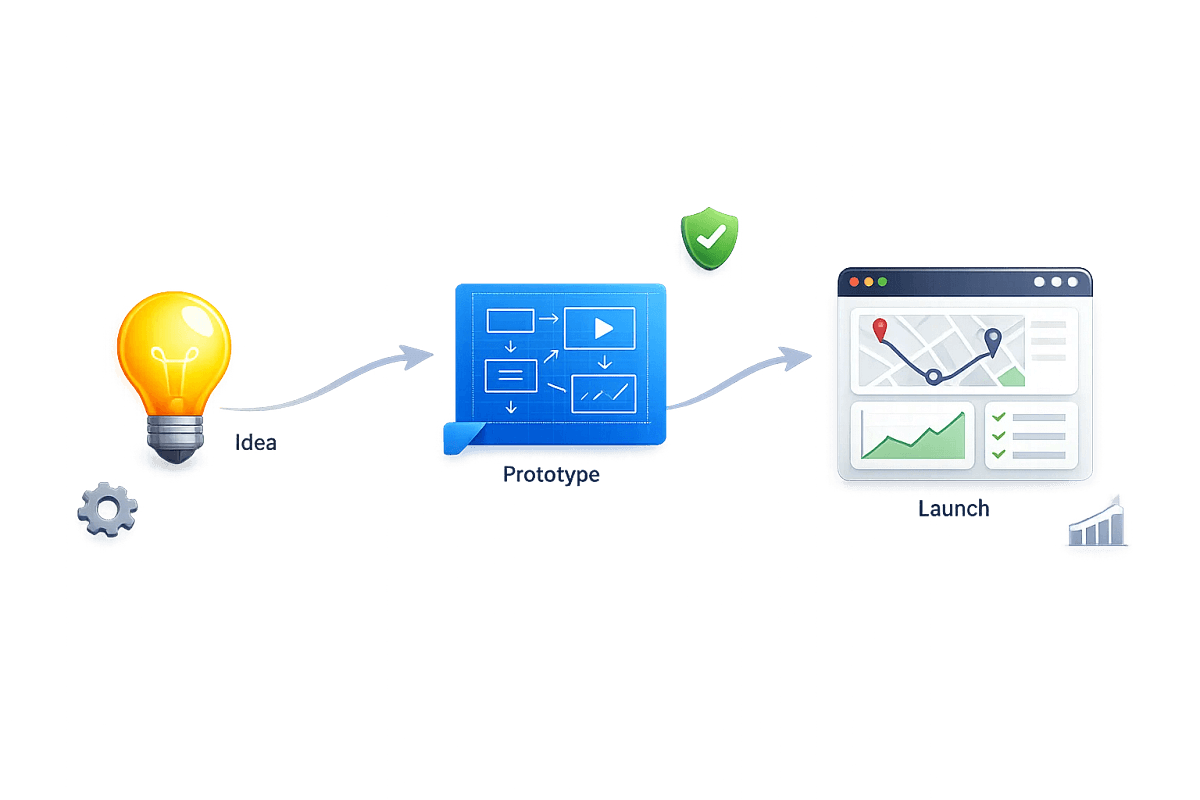
Deploying **ML models** at the **edge** relies on **robust system design**. The guide **"ML System Design: From Prototype to Production"** details strategies for **model development**, **performance testing**, and **optimization** for **low-latency inference** in resource-limited environments.
In 2026, **Rust frameworks** facilitate **on-device inference**, ensuring **privacy-preserving**, **low-latency** operation—revolutionizing **healthcare diagnostics**, **autonomous vehicles**, and **smart manufacturing**.
---
## Practical DevOps and Cloud-Native Patterns
Recent articles highlight **best practices** for building and deploying resilient systems:
- **Docker Compose Explained (The Right Way)** clarifies **local multi-container orchestration**.
- **Bridging The Gap To AI-Native Development** discusses **scalable AI integration**.
- **Kubernetes as the Engine for the AI Revolution** emphasizes Kubernetes’ central role in scaling AI workloads. As highlighted by **"Kubernetes is the Engine for the AI Revolution"**, **Kubernetes** remains the **core platform** for deploying and managing AI workloads at scale, enabling **dynamic resource allocation**, **fault tolerance**, and **automated scaling** essential for **AI-driven infrastructure**.
- **Serverless AI Web Apps with Azure** showcases how **Rust** underpins **cost-effective, scalable AI inference** in serverless environments.
- The **"Missing Semester 2026 Edition"** reinforces modern system design principles, **platform engineering**, and best practices.
- **"Cloud Agents Are the Future of Coding"** explores how **autonomous cloud agents** are transforming **development workflows** through **self-managing, intelligent processes**.
---
## Rust’s Production Maturity and Industry Adoption
A pivotal milestone is Rust’s **maturation as a production-ready language**. The article **"Rust at 15%: production-ready without the pain"** by Andreas Klostermaier underscores that **large enterprises** and **startups** are deploying Rust in **mission-critical systems**—from **high-frequency trading platforms** to **cloud infrastructure components**—thanks to **mature tooling**, **performance guarantees**, and a **robust community**.
This broad adoption **dissolves previous barriers**, positioning Rust as the **primary choice** for **trustworthy, high-performance applications** across industries.
---
## Current Status and Future Outlook
By 2026, **Rust’s ecosystem** powers **self-healing data systems**, **privacy-preserving AI inference**, and **secure, high-performance web services**. Key developments include:
- **Autonomous, self-monitoring data stores** capable of **failure detection**, **prediction**, and **autonomous recovery**.
- Deployment of **GPU-accelerated inference models** like **OpenClaw** on **personal hardware**, supporting **privacy-sensitive** applications.
- Integration of **proxies**, **edge processing**, and **ML pipelines** into **holistic architectures** emphasizing **trust**, **performance**, and **scalability**.
The trajectory indicates a future where **trustworthy, autonomous systems**—built on Rust’s **solid foundation**—**detect**, **diagnose**, and **recover** from failures **independently**, significantly reducing **downtime** and **operational costs**.
---
## Implications and Final Reflection
Looking ahead, Rust’s evolution in 2026 exemplifies a **paradigm shift**: **safety**, **performance**, and **autonomy** are embedded into system architectures. Its **ecosystem** continues to mature, addressing **AI inference**, **security**, and **resilience** challenges. Rust’s emphasis on **safe concurrency**, **ownership models**, and **security guarantees** underpins **trustworthy, autonomous systems**—transforming industries and setting the stage for a **more secure, reliable digital world**.
### Final Highlights:
- **Kubernetes** remains the **engine** powering the **AI revolution**, enabling **scalable, fault-tolerant AI workloads**.
- **Self-healing data stores** and **autonomous monitoring** systems are now standard, driven by **OpenTelemetry**, **self-awareness**, and **predictive analytics**.
- **Privacy-preserving AI inference** at the edge, supported by **Rust frameworks**, ensures **data sovereignty** and **low-latency** operations.
- **Zero-trust security models**, combined with Rust’s **security features**, safeguard **distributed, edge, and cloud systems**.
**In sum**, Rust in 2026 is more than a programming language; it is the **cornerstone** of **trustworthy, resilient, and autonomous systems** shaping a **more secure and reliable digital future** across industries worldwide.