# The 2026 Paradigm Shift: Embedding Ethical, Agentic AI as Co-Designers in UX Workflows — An Expanded Overview
The year 2026 marks a transformative milestone in the evolution of user experience (UX) design—where artificial intelligence (AI) has transitioned from a peripheral tool to an **integral, collaborative partner** that actively shapes, guides, and accelerates the creative process. This shift is characterized by **editable, agentic AI systems** embedded deeply within live design, prototyping, and development workflows, fostering an environment of **speed, innovation, and human-centric ethics**.
Building upon earlier insights, recent developments underscore how this **paradigm** is unfolding through **real-time, context-aware collaboration**, **intelligent knowledge integration**, **end-to-end AI-driven pipelines**, and sophisticated governance mechanisms—all designed to uphold **trust, transparency**, and **ethical responsibility**.
---
## Elevating AI from Helper to Co-Designer: The New Role of AI in UX
### Real-Time, Context-Aware Collaboration
Recent technological breakthroughs have firmly established AI systems as **active collaborators** with humans:
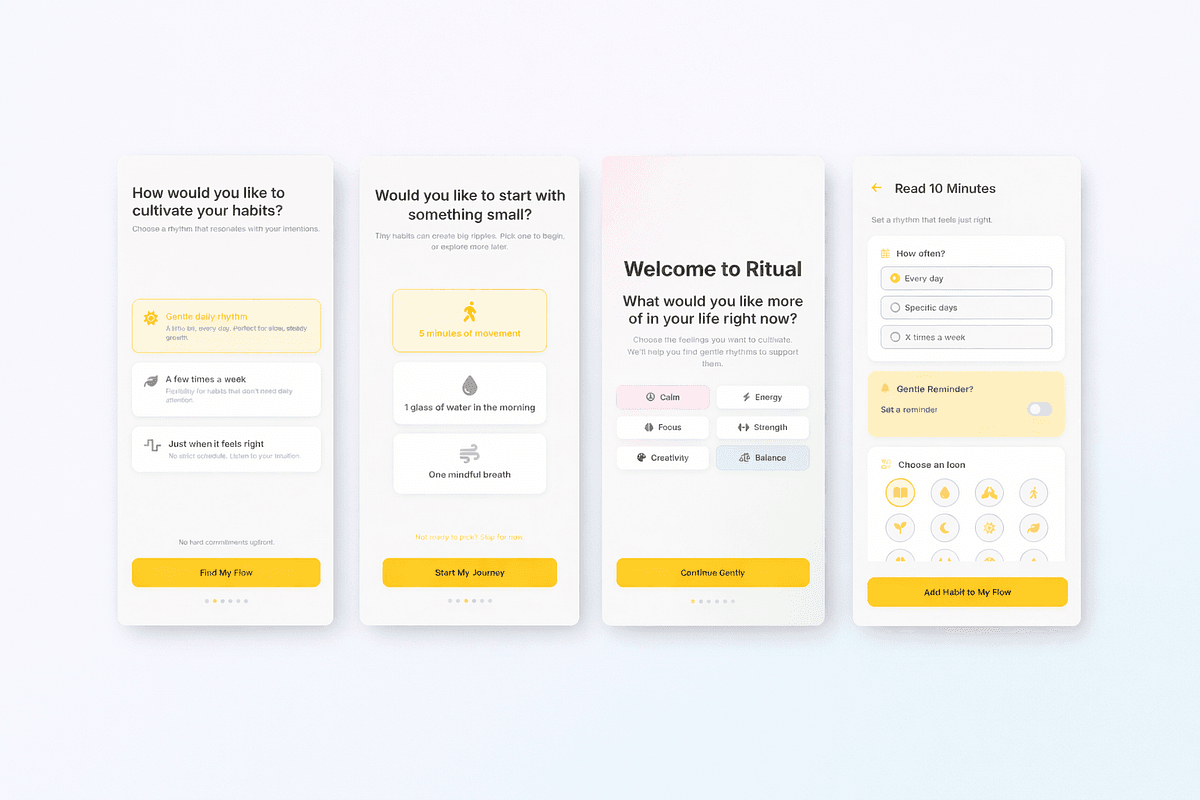
- **Figma Make**, born from a collaboration between Anthropic and Figma, now enables AI to **generate user flows, wireframes, microcopy**, and other design elements **directly within Figma's interface**. Importantly, the platform emphasizes **"You still need to design first,"** positioning AI as an **augmentative partner** rather than a replacement—enhancing human creativity with **speed and precision**.
- **Claude’s integration into FigJam** introduces a **context-sensitive assistant** that **evolves dynamically with the project**, providing **AI-generated rationales** that **complement human reasoning**. This transparency **builds trust**, making AI suggestions **more accountable** and **aligned** with project goals.
- The advent of **agentic AI avatars** embedded in prototypes allows for **simulation of complex UI behaviors and interactions** **in real-time**. These avatars facilitate **accelerated iterative testing** and **experiential validation**, greatly shortening the design cycle and enabling **more user-centric innovations**.
- Leading organizations like **Stripe** are developing **bespoke AI-powered prototyping tools** that **tightly couple design and engineering workflows**, exemplifying a broader industry trend toward **integrated AI tooling** that bridges creative and technical domains seamlessly.
### Embedded Knowledge and Contextual Playbooks
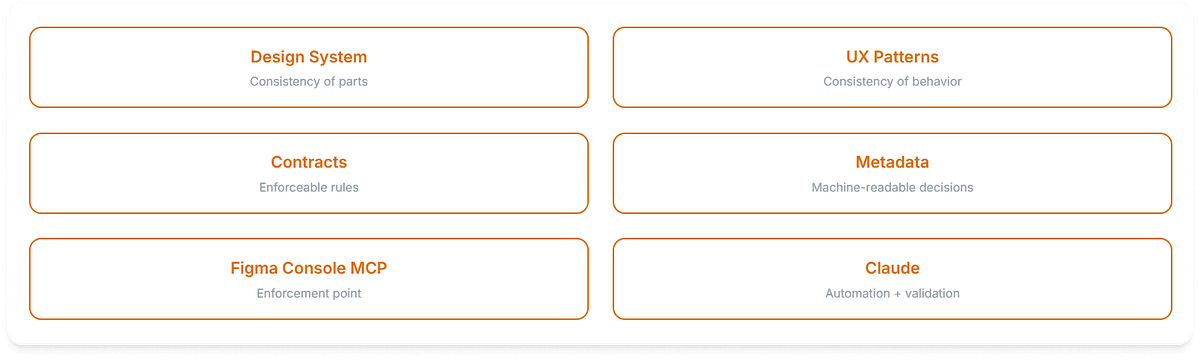
A **noteworthy recent development** involves solutions like **Claude Code x Figma MCP (Miro Contextualization Protocol)**, which **integrate designer playbooks, onboarding guides, and best practices** directly within design tools. This integration offers:
- **Instant access** to **AI-assisted tutorials**, **style guides**, and **knowledge repositories** **without disrupting workflow**.
- A **feedback loop** where AI **not only produces outputs** but also **guides and educates** human collaborators, democratizing expertise and empowering teams of varying skill levels to **leverage advanced methodologies efficiently**.
---
## Democratization and Scaling of UX Innovation
### End-to-End AI-Driven Workflows
The rise of **turnkey AI-UX pipelines** has democratized access to high-quality design and accelerated innovation cycles:
- **Google Gemini**, an all-encompassing environment supporting **ideation, prototyping, testing**, and **deployment**, exemplifies **an end-to-end ecosystem** that **simplifies complex workflows**.
- Success stories like **Achi’s “I Built a Full UX Solution Inside Gemini. EASY!”** demonstrate how teams can **rapidly generate sophisticated solutions** with minimal manual effort.
- **Subframe’s AI pipelines** enable transforming **initial sketches into MVPs** **with little human intervention**, illustrating AI’s expanding role across **multistage design and development**.
- Integrations such as **Claude+Vibecode** and the **Miro MCP Server** **align suggestions** with **business goals**, **historical data**, and **team-specific contexts**, reducing redundancies, improving collaboration, and **drastically shortening project timelines**—making high-caliber UX accessible to startups, SMEs, and large enterprises alike.
### Practical Impact
These innovations **democratize high-quality design** and **streamline scaling**, allowing **small teams** to **compete with larger organizations** in **speed and innovation**. The availability of **AI-powered end-to-end pipelines** means **faster, more consistent, and more inclusive** product development cycles.
---
## Ethical Governance and Transparency in AI-Driven UX
As AI systems assume **more autonomous roles**, the UX community emphasizes **robust governance frameworks** to **maintain trust**:
- **UX audit tools** now evaluate **over 209 parameters** with approximately **95% accuracy**, detecting **style inconsistencies, usability flaws, accessibility gaps**, and **brand misalignments**. These tools generate **confidence metrics** that **guide human review**, ensuring AI recommendations are **trustworthy** and **aligned** with standards.
- The **“AI Delegation Matrix”** aids teams in **allocating tasks appropriately**, delineating which components or stages are best suited for **automation**, **simplification**, or **manual oversight**. This **clarity** enhances **transparency** and **trust**.
- **Fallback and override protocols** are now standard, empowering designers to **quickly regain control** if AI suggestions are problematic—crucial for safeguarding **human judgment** during critical decisions.
- **Confidence cues**, such as **visual indicators** of AI suggestion reliability, are embedded directly into interfaces, fostering **informed oversight** rather than blind acceptance.
### Ethical Considerations and Responsible Deployment
Thought leaders like **Herajeng Gustiayu** and **Riley Coleman** advocate for **early-stage AI testing workflows** and **balanced governance policies** that **maximize efficiency** while **upholding standards** such as **bias mitigation, cultural sensitivity**, and **accountability**. Transparency and **human oversight** remain central, fostering **trust** and **long-term sustainability**.
---
## Evolving Visual and Interaction Languages: Communicating AI’s Role
### New Aesthetic Languages and Interaction Patterns
To reflect AI’s **collaborative role**, visual and interaction languages are evolving:
- The **hybrid minimalism + maximalism aesthetic** combines **clean, simplified foundations** with **rich micro-interactions**, **expressive micro-animations**, and **contextual visuals**. These design choices **signal AI’s “living,” responsive presence**.
- **Progressive disclosure** remains vital—releasing **layered information** to **prevent cognitive overload** while inviting **user exploration**.
- **AI confidence and uncertainty indicators** are now **standard UI elements**, **transparently communicating** the **reliability** of AI suggestions—**building trust through clarity**.
- **Agentic AI avatars** and **interactive prototype agents** facilitate early **experiential simulations**, making AI’s **role tangible and understandable**.
This **visual language** **encodes the nuanced collaboration** between humans and AI—balancing **efficiency, emotional engagement**, and **transparency** to **foster trust**.
---
## Practical Principles for Responsible AI Integration
By 2026, **core design principles** guiding AI feature integration include:
- **Prioritize user control and transparency** to prevent opaque behaviors.
- **Design clear feedback loops** that **explain AI reasoning** in accessible, human-understandable terms.
- Ensure **seamless workflow integration** that **complements** existing processes without disruption.
- Maintain **performance reliability** to foster trust and prevent frustration.
- Embed **ethical considerations**—such as **bias mitigation, cultural sensitivity**, and **privacy**—throughout the design process.
*Alim Goulamhoussen’s* *“5 Design Principles That Separate Successful AI Features from Failed Experiments”* emphasizes **human oversight, transparency**, and **ethical design** as indispensable for **sustainable AI adoption**.
---
## Recent Case Studies and Innovations
### Webflow’s Claude Connector for AI-Driven Site Management
A **notable recent addition** is **Webflow’s Claude connector**, enabling **AI-driven site management and audits** within the CMS:
- **Anthropic’s Claude** can **design pages, manage CMS content**, and **perform accessibility and style audits**—all directly within the Webflow interface.
- This integration streamlines **content updates**, **style consistency checks**, and **compliance**, empowering teams to **maintain high standards** with **minimal manual effort**.
- The **Gist Direct** feature offers **real-time insights** and **automated suggestions**, **reducing manual review** and **speeding deployment**.
### UX Engineering in a Dynamic Environment
The article **“UX Engineering In a Wild: Claude, Tokens And Figma Plugins”** showcases **practical workflows** leveraging **Claude’s capabilities**, **token management**, and **Figma plugins** to **smooth the journey from prototypes to production code**. These workflows **enhance accuracy** and **consistency**, all while **upholding ethical standards**, emphasizing a **collaborative, AI-augmented environment**.
### Educational Resources and Tutorials
The proliferation of **training content** supports responsible AI adoption:
- The **BrainStation Figma Make lab** offers **hands-on tutorials** on **rapid prototyping with AI**, emphasizing **ethical prompts**, **workflow integration**, and **best practices**.
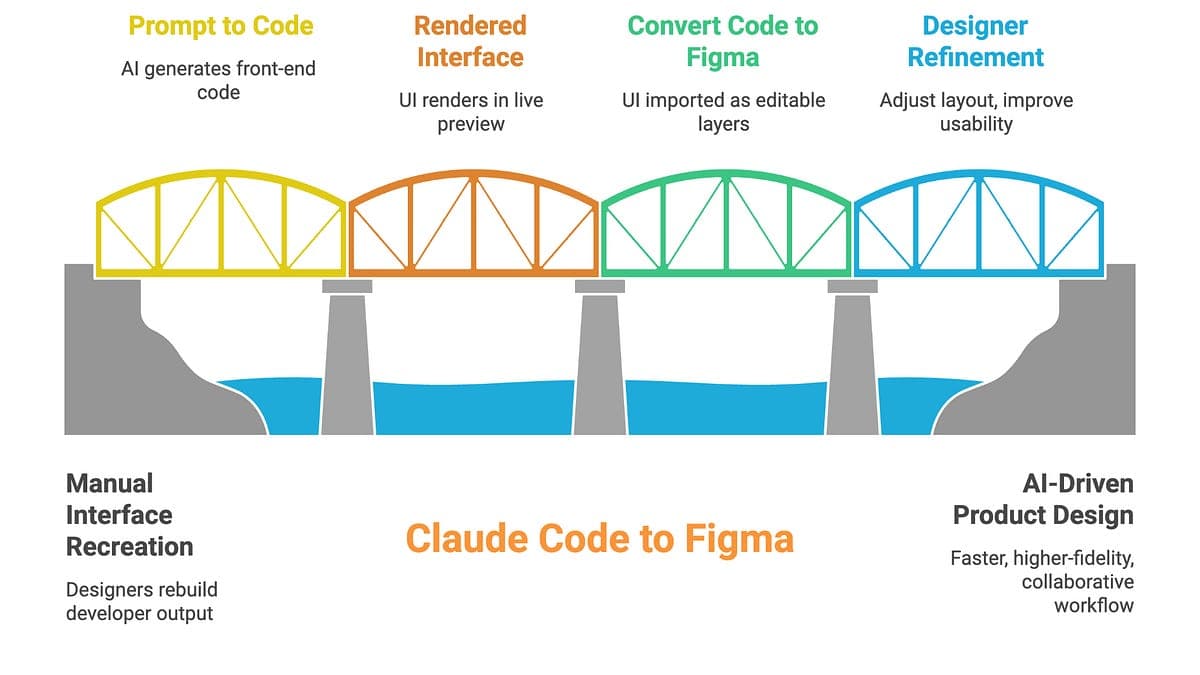
- Guides like **“Claude Code to Figma: The Complete Guide”** and **“Designing UI from Prompts”** provide **step-by-step instructions** for leveraging AI responsibly, **lowering barriers** for non-technical designers and fostering **ethical awareness**.
---
## The Two Main Currents: Quality and Trust
Two prominent themes have emerged:
- **"Stop Shipping AI Slop"**—a movement advocating for **rigorous testing, user validation**, and **meaningful solutions** that **truly serve user needs** rather than superficial features.
- **"Synthetic Users, AI Interviews, and the Future of UX Research"**—highlighting how **AI-generated personas, interviews**, and **automated feedback** **scale research** while **maintaining ethical standards**. These tools **augment** but do not replace **human judgment**.
---
## Current Status and Future Implications
The **2026 landscape** reveals a **cohesive ecosystem** where **editable, agentic AI** functions as **a true co-designer**—**accelerating innovation** while emphasizing **ethical stewardship**:
- AI **participates actively** at **every stage** of design.
- **Governance tools**—such as **audit systems**, **delegation matrices**, and **confidence indicators**—are **integral**.
- **Visual and interaction languages** communicate **AI’s role** clearly, fostering **trust and emotional engagement**.
- The community continues to develop **best practices**, **case studies**, and **training resources** to ensure **responsible, transparent deployment**.
This **paradigm** aims to **harmonize speed and innovation** with **trustworthiness and ethical integrity**, enabling **more empathetic, inclusive, and trustworthy user experiences**.
---
## Final Reflection
In 2026, **editable, agentic AI** is **not merely a tool** but a **trusted, collaborative partner** embedded within the **fabric of UX design**. By **prioritizing ethics, transparency**, and **human oversight**, teams can **harness AI’s full potential**—leading to **faster, more innovative**, and **more human-centered** solutions.
This evolution underscores a future where **AI amplifies human ingenuity, empathy, and trust**, laying the foundation for **more meaningful and inclusive user experiences** that uphold **trust**, **respect**, and **ethical standards** at their core.
---
## Recent Breakthroughs and Emerging Trends
### 1. **Evident™: The Human-Centered, AI-Assisted UX Platform**
Recently introduced by a prominent UX collective, **Evident™** exemplifies **next-generation AI-augmented research**:
- Combines **human insights** with **AI-driven analysis** for **rapid synthesis**.
- Supports **real-time collaboration**.
- Embeds **ethical data handling**, **bias mitigation**, and **transparent AI explanations**, reinforcing **trust**.
### 2. **Google’s Project Genie and Ecosystem Enhancements**
Announced at **Google I/O 2026**, **Project Genie** aims to **embed AI deeply into design and development workflows**:
- Provides **multi-modal, integrated tools** for **design, prototyping, testing**, and **deployment**.
- Facilitates **collaborative, transparent workflows** with **built-in governance**, **user control**, and **explainability features**.
---
## Concluding Outlook
The developments of 2026 demonstrate a **fundamental evolution**: AI is now a **collaborative, editable, agentic partner** in UX workflows—**driving faster innovation** while **upholding ethical standards**. The focus on **trust, transparency**, and **human oversight** ensures that AI **amplifies human creativity** without compromising **user values**.
As the ecosystem matures, the key challenge remains **balancing rapid advancement** with **ethical responsibility**. Continued emphasis on **best practices, governance**, and **inclusive design** will be essential to **safeguard user trust** and **foster sustainable AI-driven innovation**.
This **paradigm** promises a future where **AI and humans co-create** more **empathetic, trustworthy**, and **inclusive** experiences—shaping a digital landscape that **respects and elevates human dignity** through **ethical collaboration**.