# The Evolving Landscape of Long-Horizon AI: Persistent Memory, Industry Innovation, and Future Frontiers
The field of artificial intelligence (AI) is entering a transformative era characterized by **long-term reasoning, continual learning, and multi-year collaboration**. Building upon foundational techniques like Retrieval-Augmented Generation (RAG), recent breakthroughs are shifting focus toward **internalized, persistent memory architectures**. These systems enable AI agents to **internalize knowledge**, **reason coherently over extended periods**, and **adapt dynamically across years**, heralding a new paradigm that redefines autonomous systems, industry operations, and societal impact.
---
## From External Retrieval to Internalized, Persistent Memory: A Paradigm Shift
Historically, AI systems have relied heavily on **external knowledge bases** combined with retrieval mechanisms, exemplified by RAG models that fetch relevant data to answer queries. While effective for **short-term tasks**, these approaches faced **limitations in latency, scalability, and maintaining long-term coherence**. Multi-session reasoning often resulted in **fragmented understanding**, restricting applications in **multi-year scientific projects** or **complex enterprise initiatives**.
**Recent innovations** have ushered in a new paradigm: **internalized, persistent memory architectures**. These systems **record, store, and retrieve knowledge within their internal structures**, allowing agents to **recall past interactions instantly** and **reason coherently over months or even years**. Such capabilities enable:
- **Long-term projects** and **multi-year scientific research**
- **Cumulative knowledge building** across sessions
- **Functioning as long-term collaborators** in enterprise, scientific, or personal contexts
### Key Implications:
- **Enhanced contextual coherence** over extended interactions
- Creation of **"Context Lakes"**—shared, durable memory repositories accessible across multiple agents and sessions
- **Facilitation of long-term collaboration** in sectors like enterprise planning, scientific discovery, and personal assistance
---
## Industry Innovations and Infrastructure Supporting Long-Horizon AI
The push toward **persistent, long-horizon agents** is reflected in a surge of industry developments:
- **Manus AI’s "Always-On" Agents**: These systems support **dynamic observation**, **continuous knowledge updating**, and **multi-year task management**. Designed for **adaptive decision-making**, they exemplify **multi-year autonomous operations**.
- **Deploy-to-AWS Plugin (2026)**: This **transformative deployment tool** simplifies integrating persistent AI agents into cloud environments, **reducing operational complexity**. As analyst Mitch Ashley notes, it **lowers barriers for enterprise adoption**, but also highlights the need for **robust security and oversight** given the extended lifespan of these systems.
- **Kiro AI on AWS**: Enterprises like **TNL Mediagene** leverage **AWS-based Kiro AI agents** to **accelerate media workflows**. These **cloud-native, scalable agents** are **redefining operational practices** by **improving efficiency** and **shortening project turnaround times**.
- **New Relic’s Governance Platform**: This enterprise infrastructure emphasizes **monitoring, safety, and compliance**, addressing **trust and safety concerns** associated with **extended autonomous systems**.
- **Platforms like Spring AI 2.0 and Thunk.AI**: These enable **orchestrating multi-agent workflows**, supporting **collaborative reasoning** and **task delegation**, which are critical for **enterprise-scale, critical operations**.
The **venture capital ecosystem** and **platform ecosystems** are increasingly investing in **agent infrastructure**, signaling a strong belief that **long-term AI will become a core enterprise tool**.
---
## Offline, On-Device, and Zero-Latency Capabilities for Privacy and Accessibility
A parallel trend emphasizes **privacy-preserving, offline, and zero-latency AI agents**:
- **ZeroClaw**, **Ollama**, and **Qwen 3** facilitate **full local operation**, eliminating dependence on cloud connectivity. These are vital in **sensitive sectors** like healthcare and finance, where **data privacy** is paramount.
- **Hydra**, a containerized environment, offers **secure, scalable offline solutions**, supporting **compliance** and **data sovereignty**.
- Techniques such as **ZeroInference** enable **precomputed knowledge**, allowing **instant responses** with minimal computational resources.
- **Tiny resource agents**, like **zclaw** running on **microcontrollers** (e.g., ESP32 with less than **888 KB of memory**), exemplify **personal, long-term autonomous assistants** operating entirely offline—**democratizing access** to **advanced reasoning** capabilities.
---
## Technical Advances and Benchmarking for Long-Horizon Capabilities
Achieving **robust, long-term learning** continues to be a key focus. Recent developments include:
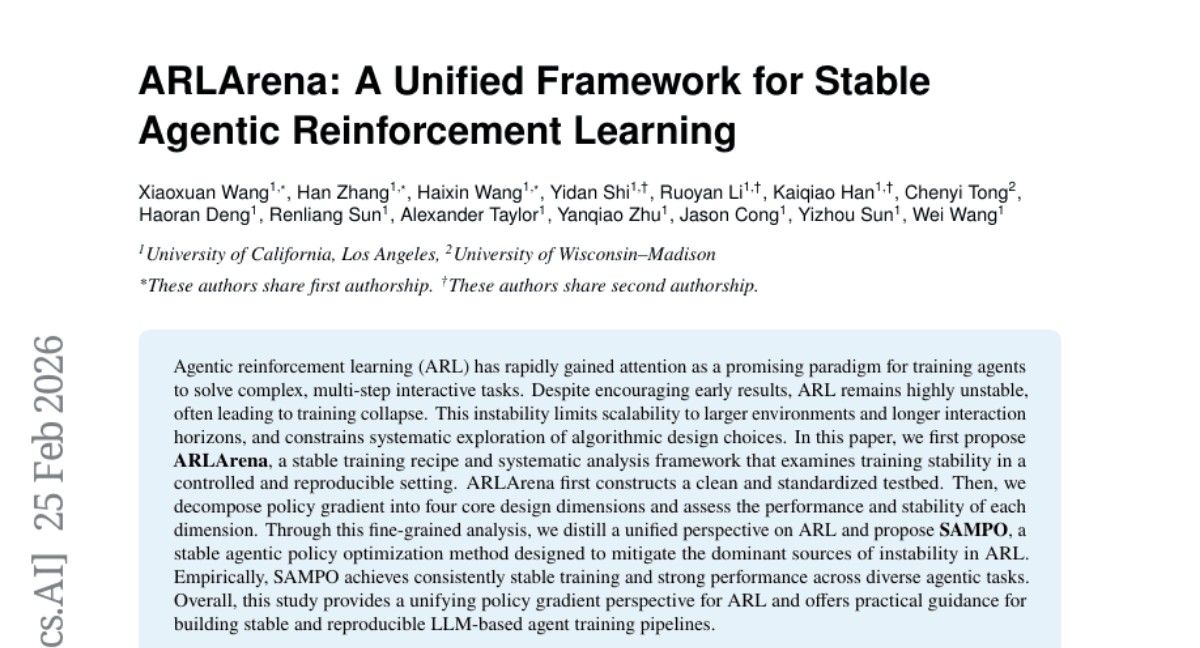
- **ARLArena**: A **unified framework for stable agentic reinforcement learning**, promoting **long-term policy consistency** and **multi-year adaptation**. (Join the discussion on the paper page.)
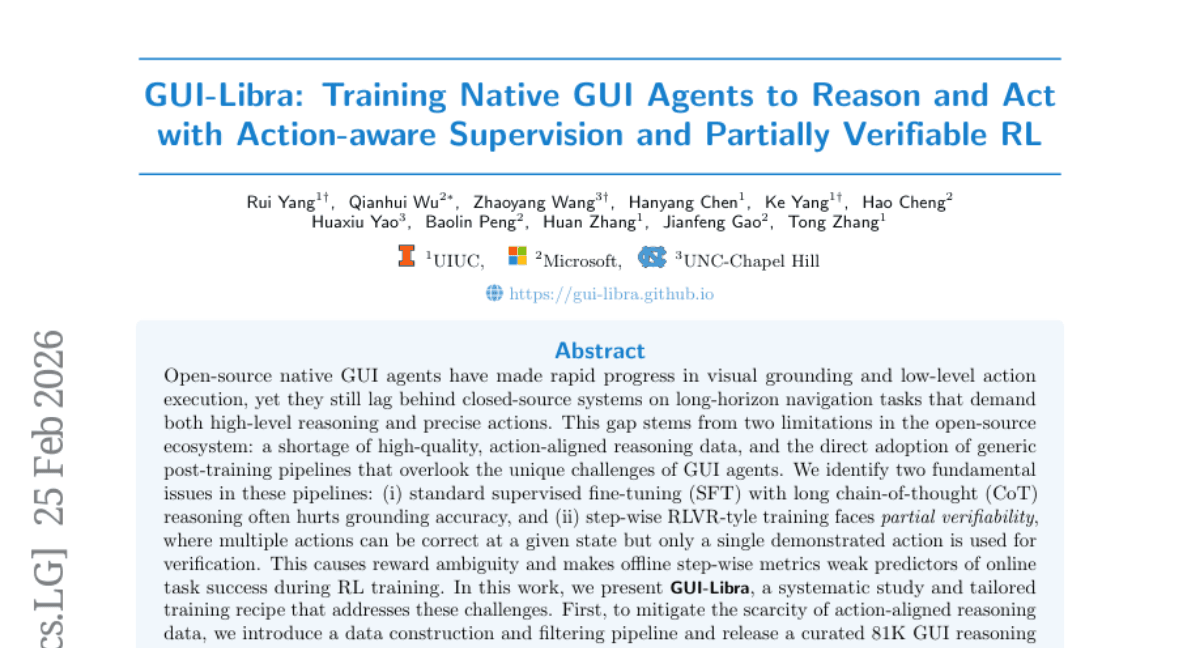
- **GUI-Libra**: Focused on **training native GUI agents** capable of **reasoning and acting** within graphical environments, supported by **action-aware supervision** and **partially verifiable RL**. (Join the discussion on the paper page.)
- **Trace’s $3M Funding**: This startup aims to **solve the AI agent adoption problem in enterprise**, providing **scalable solutions** for long-horizon deployment, reducing friction in real-world integration.
- **Benchmarking Initiatives**: Efforts like **MemoryArena**, **ResearchGym**, **ISO-Bench**, **GAIA**, and **Qwen 3.5** are designed to **measure multi-year reasoning**, **long-term coherence**, and **context retention**. They are crucial for **robust evaluation** of agents operating over extended durations.
- **Evaluation Challenges**: Concerns over **contamination of benchmarks** (e.g., **SWE-Bench**) have prompted the development of **tamper-resistant metrics**, ensuring **integrity and fairness** in assessing long-term capabilities.
---
## Safety, Security, and Governance for Extended-Horizon AI Systems
As agents undertake **multi-year, mission-critical tasks**, **trustworthiness** and **safety** are paramount:
- **Check Point’s Cybersecurity Framework**: Implements **security protocols** tailored for **agentic AI**, emphasizing **environmental isolation**, **attack mitigation**, and **system integrity**.
- **Governed-Agent Patterns**: Incorporate **identity verification**, **least-privilege access**, and **audit trails** to ensure **accountability**.
- **Industry Standards**: Evolving guidelines from **NIST** and other bodies focus on **safety, interoperability, and ethics** in **long-duration AI systems**.
- Scholarly critiques, such as **"Why AI Agent Reliability Depends More on the Harness Than the Model,"**, emphasize that **system architecture and operational controls** are critical for **trustworthy deployment**.
---
## Expanding Capabilities: Vision, Long-Horizon CLI, and Automation
Recent breakthroughs are broadening agent functionalities:
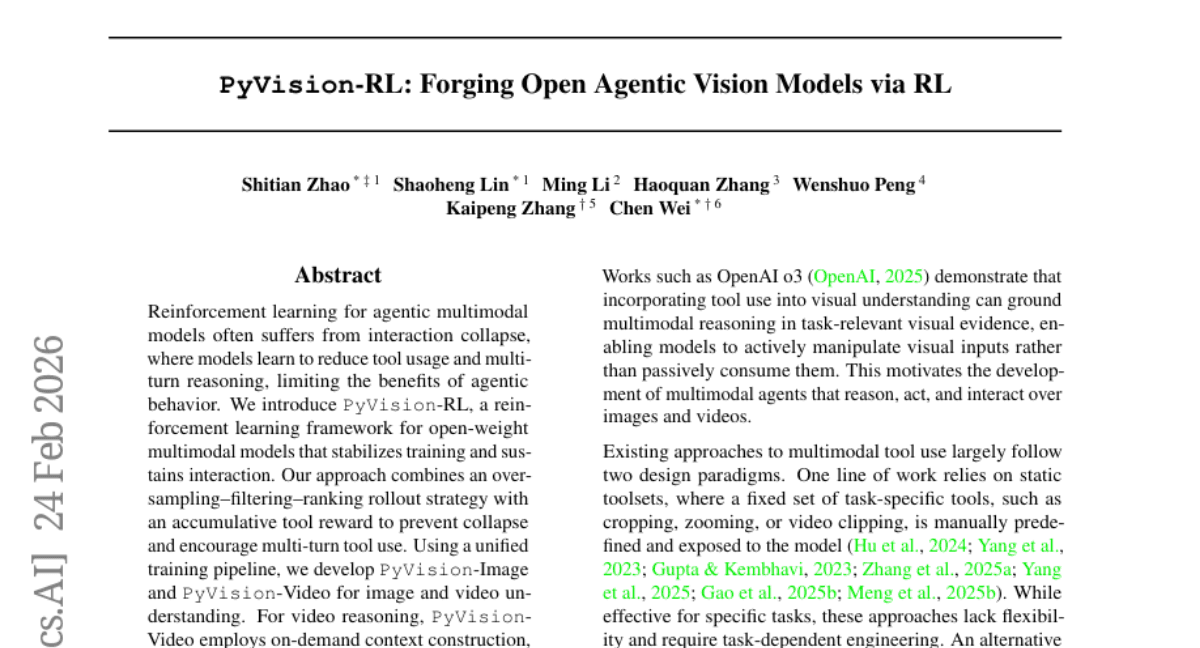
- **Agentic Vision Models**: Projects like **PyVision-RL** develop **open, reinforcement learning-based vision systems** capable of **long-term scene understanding** and **decision-making**.
- **LongCLI-Bench**: Introduces benchmarks for **long-horizon agentic programming** within command-line interfaces, enabling agents to **perform complex, multi-step tasks** over extended periods.
These advances **enhance perception, reasoning, and action** in **complex, real-world environments**, supporting **long-term autonomous operations**.
---
## Practical Industry Applications and Adoption
A prominent example is **AI-native insurance**, where **autonomous, long-horizon agents** are revolutionizing traditional models:
- A **YouTube presentation** titled **"AI-Native Insurance: Autonomous Agents & Real Profit"** demonstrates insurers deploying **self-managing AI systems** to **optimize claims processing, underwriting, and customer engagement**. These agents **learn continually**, **adapt dynamically**, and **collaborate across departments**, leading to **measurable profitability and operational gains**.
Other notable applications include:
- **Enterprise AI & Semantic Kernel Tools**: Frameworks like **N1** streamline **AI workflows** in **C#/.NET environments**.
- **Content Automation**: Developers have built **content management systems** where **AI agents autonomously run and update blogs**, showcasing **long-term automation**.
- **Software Testing & QA**: AI agents now **write, execute, and optimize** entire test suites, significantly **reducing manual effort** and **improving reliability**.
- **Supply Chain and Logistics**: Companies like **project44** launched **AI Freight Procurement Agents** to **automate carrier selection, rate benchmarking, and negotiations** across transportation modes, exemplifying **long-horizon operational automation**.
---
## Current Status and Future Outlook
The convergence of **technological innovation**, **robust infrastructure**, and **industry adoption** indicates we are entering a **new epoch** where **persistent memory**, **long-horizon reasoning**, and **multi-session learning** are becoming **core components** of AI systems. By **2026**, estimates suggest that **approximately 40% of enterprise AI applications** will feature **task-specific, autonomous agents capable of reasoning and learning over multiple years**.
### Key Implications:
- The rise of **resilient, secure, privacy-preserving agents** operating **offline or on-device**.
- **Enhanced human-AI collaboration**, with **personalized, long-term interactions**.
- The emergence of **distributed multi-agent ecosystems** capable of **long-term coordination** across scientific, industrial, and societal domains.
---
## Broader Societal Impact and Ethical Considerations
As these systems mature, **society stands to benefit from more intelligent, adaptable, and trustworthy AI partners**:
- **Long-term, evolving agents** will **support sustainable innovation** in sectors like healthcare, science, and public infrastructure.
- **Distributed multi-agent systems** will **coordinate complex tasks**, fostering **collaborative problem-solving** at scale.
- **Offline, privacy-preserving agents** will **democratize access** to advanced AI, ensuring **data sovereignty** and **security**.
However, these advances also introduce **ethical and safety challenges**:
- **Governance frameworks** must evolve to **monitor and regulate long-term autonomous agents**.
- **Transparency standards** are essential to **build trust**.
- **Safety protocols** must prevent **malfunction or malicious exploitation** over extended operational periods.
---
## Final Reflections: Toward Trustworthy, Long-Term AI
The trajectory points toward **AI systems that think, learn, and adapt over years**, supported by **robust infrastructure, safety standards, and benchmarking**. The integration of **persistent memory architectures**, **offline capabilities**, and **multi-agent ecosystems** heralds an era where **trustworthy, resilient, and autonomous AI agents** become **integral partners** in scientific discovery, industry innovation, and societal progress.
Moving forward, **balancing rapid innovation with rigorous safety and ethical standards** will be vital to **maximize societal benefits** and **mitigate risks**. The development of **governance frameworks**, **transparency measures**, and **robust evaluation protocols** will help unlock the **full potential of long-horizon AI systems**—ushering in a future where **AI truly becomes a long-term collaborator in human advancement**.