# Next-Generation Observatories and AI Unveil How Planets Form and Evolve: The Latest Breakthroughs
The pursuit to decipher the origins, development, and potential habitability of planets has entered an unprecedented era of discovery. Thanks to the synergy of cutting-edge space observatories, artificial intelligence (AI), and innovative community science initiatives, astronomers are now peeling back cosmic layers with clarity and detail never imagined before. These advancements are reshaping our understanding of planetary systems, revealing an active universe filled with chemically complex worlds—many dynamic, geologically active, and possibly capable of supporting life.
---
## Transformative Tools Driving New Insights into Planet Formation and Evolution
Recent technological breakthroughs are revolutionizing planetary science, offering unprecedented views into the processes that shape worlds:
- **James Webb Space Telescope (JWST):**
Its **infrared sensitivity** allows for detailed imaging of **protoplanetary disks**, uncovering **intricate structures** such as **rings, gaps, spirals, and asymmetries**—clear signs of **active planet formation**. JWST has **directly detected embedded protoplanets** within these disks, confirming ongoing planetary assembly. Spectroscopic studies have revealed a **rich chemical inventory**, including **prebiotic molecules** like amino acids in Kuiper Belt objects and interstellar visitors, implying that **migration and accretion processes** are more widespread than previously thought.
- **ALMA (Atacama Large Millimeter/submillimeter Array):**
Continues to produce **high-resolution images** of young planetary systems, capturing **Mercury-sized bodies** in the act of gathering material. These observations offer **real-time snapshots** of planetary growth, refining models of **planetary accretion** influenced by environmental conditions.
- **SPHEREx (Spectro-Photometer for the History of the Universe, Epoch of Reionization, and Ices):**
Its **all-sky spectral surveys** have identified **regions rich in prebiotic molecules** and **complex organics**. These findings suggest that the **chemical seeds of life** are **more common** than previously believed, pointing to a universe where **habitability potential** may be widespread.
- **Upcoming Missions:**
Missions such as **NASA’s Roman Space Telescope** and the **European Space Agency’s Ariel** are set to deepen these insights. Roman’s **microlensing surveys** aim to uncover **faint, distant exoplanets** in densely populated galactic regions, while Ariel will focus on **characterizing exoplanet atmospheres**, offering vital data on their **composition, climate, and evolution**.
---
## The Roman Coronagraph Instrument (RCI): A New Era of Direct Imaging
A recent milestone is the deployment of the **Roman Coronagraph Instrument (RCI)** onboard NASA’s Nancy Grace Roman Space Telescope. According to the **Space Telescope Science Institute (STScI)**, RCI is designed for **direct imaging of exoplanets and exomoons** within **habitable zones** of nearby stars. Its **advanced coronagraphic techniques** effectively **suppress stellar glare**, enabling detection of **faint planetary companions** and analysis of their **atmospheric compositions**. This **technological breakthrough** enhances our ability to **discover and study potentially habitable worlds**, complementing atmospheric studies planned with Ariel.
---
## Recent Discoveries Reshape Our Understanding of Planetary Systems
The influx of data from these observatories has led to **groundbreaking insights**:
- **Diverse Disk Morphologies & Embedded Protoplanets:**
JWST images reveal **complex disk structures**—concentric rings, asymmetric gaps, spirals—that imply **multiple formation pathways**. The **direct detection of embedded protoplanets** confirms that **planet formation can be a chaotic, dynamic process**, challenging earlier models of orderly development.
- **Chemical Diversity & Prebiotic Molecules:**
Spectral analyses have uncovered **unexpected chemical diversity** among Kuiper Belt objects, including **sulfur-rich compounds** and **prebiotic molecules** like amino acids. Interstellar visitors such as **comet 3I/ATLAS** carry **volatile compounds** and **complex organics**, demonstrating **material exchange** between star systems. This galactic chemical exchange suggests that **the building blocks of life** are **widespread** across the cosmos.
- **Detection of Prebiotic Atmospheres:**
JWST has identified **hydrogen sulfide (H₂S)** in exoplanet atmospheres—an important molecule considered a **precursor to organic complexity**. Its presence indicates **active sulfur chemistry**, which can foster **organic synthesis** within planetary atmospheres, bolstering the case for **potential habitability**.
- **Active Geology & Habitability Indicators:**
Radar imaging of **Venus** has uncovered **vast underground volcanic tunnels**, hinting at **prolonged volcanic activity** that could support **subsurface habitats** or preserve **biosignatures**. Similarly, **Mercury** shows signs of **ongoing volcanic and tectonic activity**, challenging previous assumptions of planetary dormancy and suggesting **extended activity lifespans**.
- **Unusual System Architectures & Outer Rocky Worlds:**
Discoveries of **‘inside-out’ planetary systems**—where planets orbit **closer to their stars** than traditional habitable zones—prompt a **reevaluation of planetary migration models**. These systems highlight the **diversity** of planetary arrangements and suggest that **potentially habitable conditions** may exist in **unexpected regions**.
- **Outer Rocky Worlds & Alternative Formation Pathways:**
Observations of **rocky planets orbiting far from their stars**, regions once deemed inhospitable, imply **alternative formation scenarios**—such as **in-situ accretion** in cold environments or **migration after formation**—broadening the scope of planetary diversity.
- **Magnetic & Atmospheric Anomalies in Ice Giants:**
JWST has captured **magnetic distortions** around **Uranus**, revealing a **complex magnetic environment** that influences **interior dynamics**. Additionally, observations of **unexpected cloud patterns** indicate **atmospheric variability**. These findings deepen our understanding of **magnetic field generation** and **climate processes** in ice giants, with implications for **moon habitability** and planetary protection.
- **Webb Maps Uranus’ Upper Atmosphere and Finds a Magnetic Surprise:**
Building on previous observations, Webb has now provided **3D mappings** of Uranus’s **upper atmosphere**, revealing **vivid auroras** and a **mysterious magnetic environment** that defies classical models. The unexpected **magnetic activity** suggests **more complex interior processes** and **magnetosphere dynamics** than previously thought, offering new insights into **planetary magnetic field generation** and **potential exomoon habitability**.
---
## The Role of Stellar Winds, Space Weather, and Magnetic Environments
Adding further depth, the **SMILE (Solar Wind Magnetosphere Ionosphere Link Explorer)** mission has begun delivering critical data on **space weather phenomena**, elucidating **stellar wind interactions** with planetary magnetic fields. Understanding these processes is essential for **atmosphere retention** and **habitability**, especially for exoplanets orbiting active stars. The study of **magnetosphere dynamics** informs models of **planetary protection** against stellar erosion, vital for assessing the **long-term sustainability** of atmospheres conducive to life.
### Latest High-Impact Discoveries
- **Young Sun’s Stellar Winds & Disk Evolution:**
Observations from **NASA’s Chandra X-ray Observatory** have documented how **stellar winds from young Sun-like stars** actively **shape protoplanetary disks**, creating **bubbles** that influence **material distribution** and **volatile delivery**—key factors in planetary habitability.
- **Magnetic Web Around Saturn’s Enceladus:**
Cassini data reveal a **vast magnetic web** associated with **Saturn’s moon Enceladus**, linked to **plume activity** and **subsurface oceans**. This magnetic environment facilitates **material exchange** and **chemical energy sources**, potentially influencing **habitability** of subsurface environments.
- **Neptune’s Cloud Variability & Climate Shifts:**
Recent **Hubble Space Telescope** observations have documented **disappearance of mid-latitude clouds** since 2019, with no signs of recovery. These atmospheric shifts suggest **significant climate variability**, possibly driven by **internal heat** or **magnetic influences**, providing comparative insights into **ice giant atmospheres** and their stability—parameters critical for understanding exoplanet climates.
---
## The Latest Breakthrough: Interstellar Comet 3I/ATLAS’s Clarity and Chemical Richness
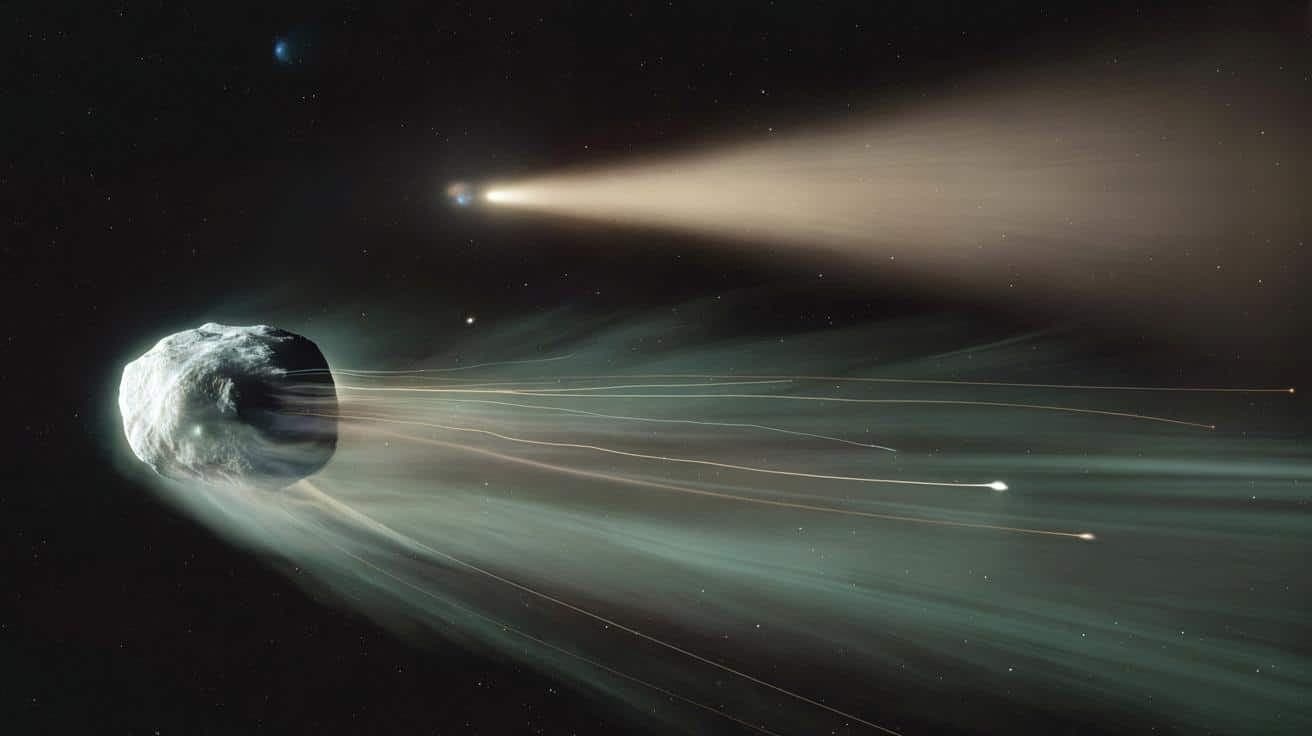
Adding to the momentum, astronomers have released **stunning new images of the interstellar comet 3I/ATLAS**, captured across multiple observatories with **unprecedented clarity**. This comet, traveling through our solar system from a distant star system, exhibits **remarkable features**:
- **High-resolution imaging** shows a **complex, volatile-rich coma** and **tail structures** indicating active sublimation of organic and volatile compounds.
- Spectroscopic data reveal **abundant prebiotic molecules** and **complex organics**, strongly suggesting that **interstellar material** crossing planetary systems carries **chemistry akin to planetary building blocks**.
- The detailed chemical inventory supports the idea that **material exchange between star systems** is common, reinforcing the hypothesis that **the universe is seeded with life's ingredients** far more extensively than previously believed.
**Quote from lead researcher Dr. Elena Martinez:**
*"The clarity of these images and the chemical composition we’re observing in 3I/ATLAS are game-changers. They confirm that organic-rich material is widespread and actively exchanged across the galaxy, providing the raw ingredients for life in many planetary systems."*
---
## Future Directions and Implications
The convergence of **next-generation observatories**, **AI-powered data analysis**, and **community science** is accelerating our quest:
- Upcoming missions such as **NASA’s Dragonfly** to Titan, **Europa Clipper**, **Ariel**, and the proposed **Habitable Worlds Observatory** aim to **detect biosignatures** and **characterize Earth-like exoplanets**.
- The integration of **AI** will enable **rapid analysis of vast datasets**, identifying potential biosignatures and habitability indicators more efficiently.
- These efforts will **refine models** of planetary formation, migration, and atmospheric evolution, guiding future exploration.
---
## Current Status and Broader Implications
We are witnessing a **paradigm shift**: the universe appears **rich with active, chemically complex worlds**, many exhibiting **geological activity**, **atmospheric diversity**, and **signs of prebiotic chemistry**. Discoveries such as the **magnetic surprises at Uranus** and the **detailed imaging of interstellar comet 3I/ATLAS** underscore the **dynamic and interconnected nature** of planetary systems.
This **expanded understanding** emphasizes that planets and moons are **more active and diverse** than once believed. The **widespread presence of prebiotic molecules** and the **detection of active geology and magnetic phenomena** suggest that **habitable conditions** could exist in **unexpected environments**.
As technological capabilities continue to grow, humanity edges closer to **detecting definitive signs of life beyond Earth**. The combined power of **advanced observatories**, **AI analysis**, and **global collaboration** is revolutionizing our cosmic perspective—from viewing planets as static spheres to recognizing them as **dynamic, evolving worlds** with the potential for life.
**In short:** The universe is revealing itself as a **cosmic tapestry of active worlds**, many brimming with the chemical and geological complexity that could foster life. Our journey to understand our place in this vast, vibrant cosmos is accelerating—and the future holds the promise of profound discoveries that may finally answer the age-old question: **Are we alone?**