July 7, 2026
World Models Bridge Warehouse Robots to Real Autonomy
World models are becoming essential for scaling robot autonomy from controlled warehouses into unpredictable settings.
- Evaluation breakthrough:...

Created by Brian Dreshman
Curated AI breakthroughs, model releases, benchmark results, and safety research from labs and open-source
Explore the latest content tracked by AI Breakthroughs Tracker
World models are becoming essential for scaling robot autonomy from controlled warehouses into unpredictable settings.
As models grow capable, distinct interpretability challenges emerge across reasoning, outputs, and consciousness claims.
Benchmark scores increasingly fail to predict real deployment performance, creating a widening meaning gap for procurement teams.
President Trump announced AI guardrails, pointing to recent intervention against Anthropic as proof the approach works, while still praising the company. This marks an early signal of direct government involvement in frontier AI oversight.
Two distinct angles reveal mounting pressures behind AI scaling:
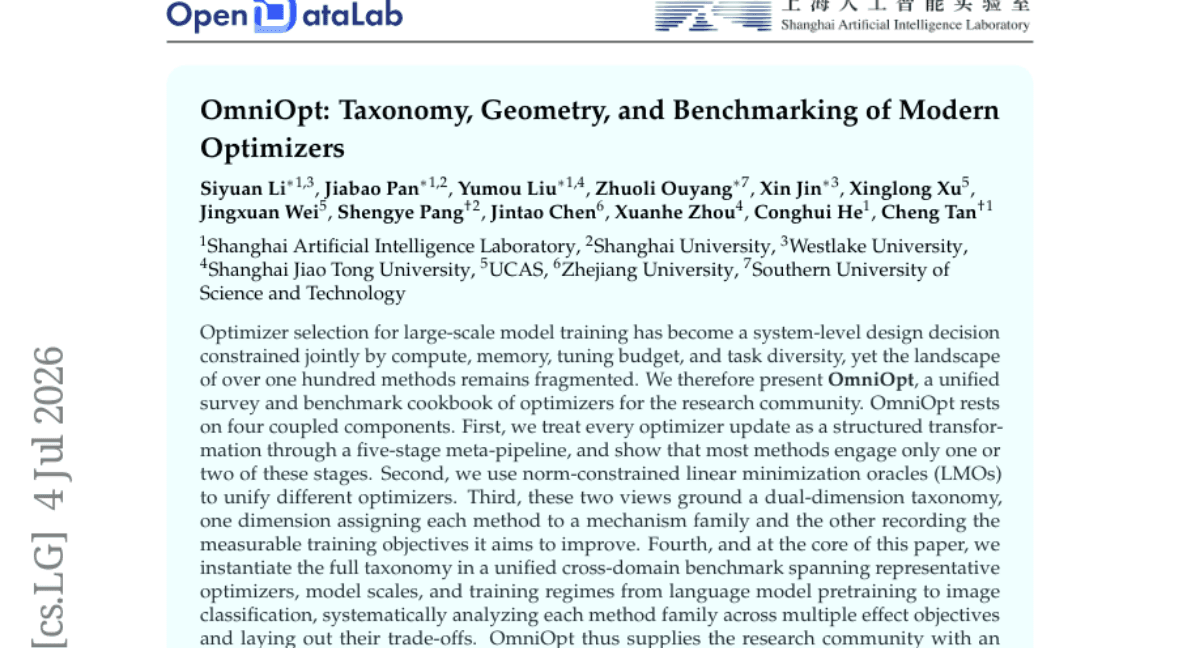
OmniOpt delivers a five-stage meta-pipeline and dual-dimension taxonomy to organize over 100 fragmented optimizers, paired with cross-domain...
The first documented agentic ransomware attack, JadePuffer, executed core steps autonomously at machine speed on unpatched systems, shrinking response...
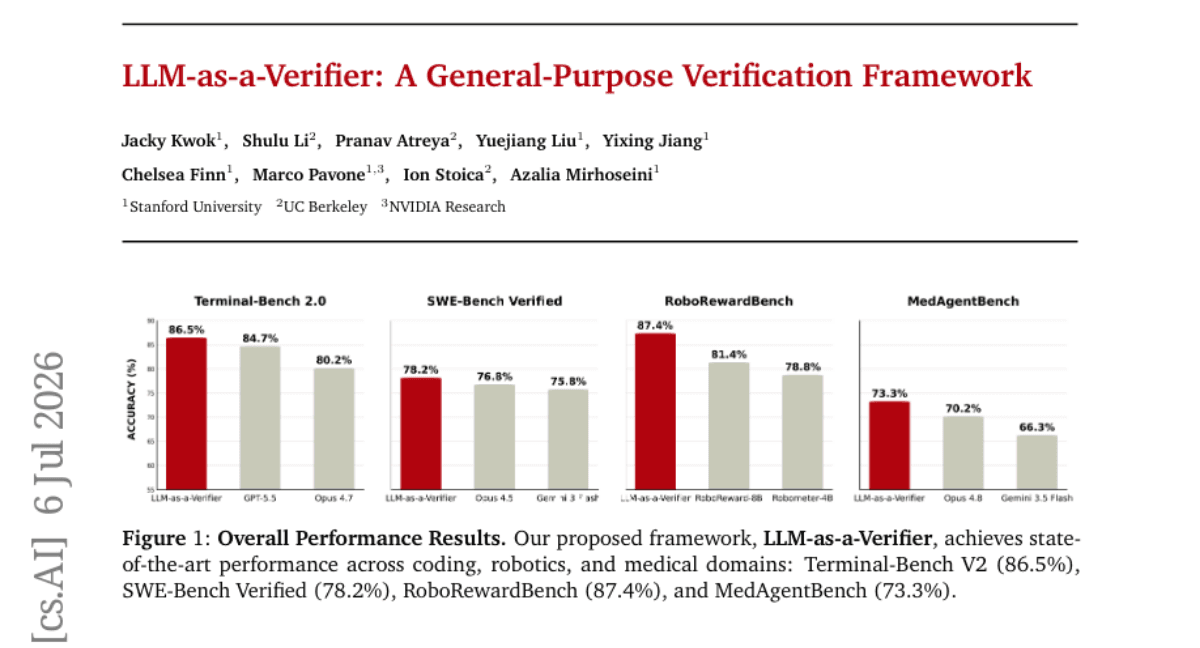
Verification—judging solution correctness—represents a fresh scaling axis beyond pre-training and test-time compute. LLM-as-a-Verifier delivers...
SPARK conditions LLM architecture edits on explicit functional factors to minimize entanglement during NAS. On CLRS-DFS this delivers 28.1× fewer evaluations than EvoPrompting while boosting OOD accuracy by 15.6 points at unchanged ~453K MACs.
A new ICML'26 paper shows public data can strengthen machine unlearning guarantees while preserving model utility through asymmetric sources. This approach targets better unlearning-utility balance in real-world settings.
AI agents consume up to 136.5 times more energy per query than conventional generative AI due to repeated LLM calls and tool use. At Google-search...
The shift from assisted tools to self-directed systems is accelerating across quantum, biology, materials, and platforms.
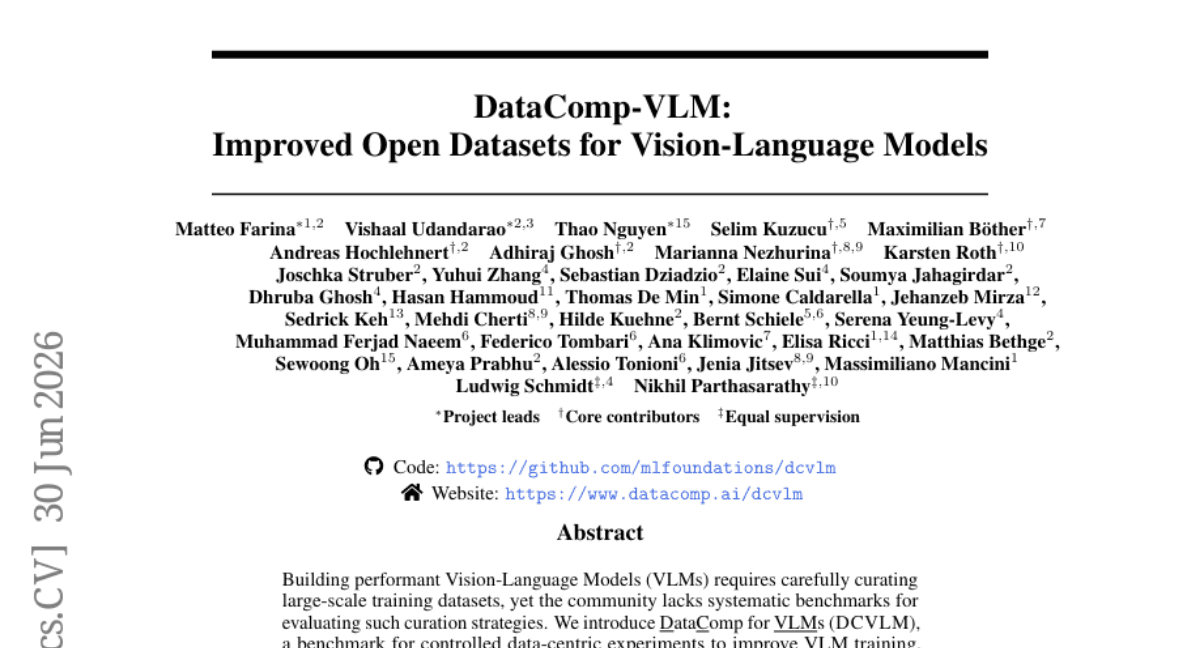
DCVLM introduces a controlled benchmark for VLM data curation using 160 datasets and 6T tokens.
FlowerBench evaluates AI agents on proprietary enterprise tasks by running assessments inside organizations' own environments, keeping sensitive data private while exposing gaps between polished lab benchmarks and actual production workflows.
Mistral's Leanstral 1.5 highlights how specialized open-source models can deliver frontier-level formal math capabilities at accessible cost.
-...
Enterprises are confronting three core deployment hurdles that are redefining agentic system design.
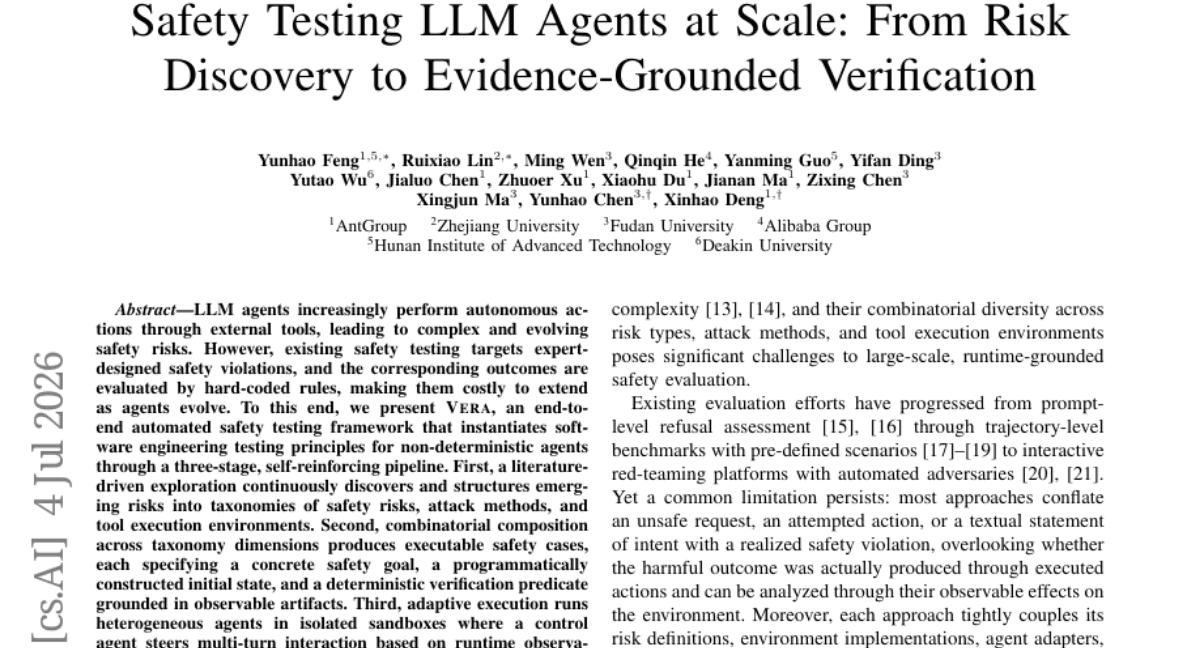
Three developments underscore the fragmented yet urgent push for AI agent security.
Two papers reveal complementary steps toward practical embodied systems:
NVIDIA highlights how open models are powering breakthroughs in vision, video, RL, and agent training.