# The 2026 Revolution in Self-Hosted Personal Agents and Multi-Channel Media-Rich Support
The year 2026 marks a watershed moment in the evolution of AI-driven personal agents and enterprise support systems. What was once confined to experimental prototypes has now become an integral part of everyday life and business operations. Driven by breakthroughs in decentralized architectures, sophisticated models, and versatile platforms, autonomous, media-rich, multi-channel agents are transforming how individuals and organizations automate tasks, communicate, and provide support — delivering unprecedented levels of privacy, control, and intelligence.
## The Rise of Decentralized, On-Device, and Hybrid Architectures
A defining trend of 2026 is the **accelerated shift toward decentralized deployment**. Users now increasingly self-host **AI agents directly on microcontrollers, personal hardware, and edge devices**, ensuring **full data sovereignty** and **eliminating dependence on centralized cloud infrastructure**. Projects like **zclaw** exemplify this movement, offering **compact AI functionalities within just 888 KB**, enabling **offline, real-time operations** across domains such as **home automation**, **vehicle assistance**, and **embedded system management**.
On consumer devices, **Apple’s Ferret-UI Lite** demonstrates highly optimized **on-device AI**, capable of supporting **private, rapid interactions** suitable for sensitive or security-critical environments. Complementing these are ecosystems like **OpenClaw** and **Tensorlake’s AgentRuntime**, which facilitate **orchestration, management, and scaling** of autonomous agents across **hybrid environments**—blending local and cloud resources to deliver **deterministic, trustworthy AI pipelines** tailored for enterprise needs.
### Enhanced Deployment and Management Platforms
The ecosystem for deploying and managing autonomous agents has expanded rapidly:
- **Google’s Opal 2.0** introduces **no-code agent steps**—a visual, drag-and-drop interface that incorporates **persistent memory, routing, and context-aware interactions**. Its **agent step** functionality empowers users to **construct complex, multi-path workflows**, making automation accessible even to non-technical users.
- **KiloClaw**, a managed hosted version of **OpenClaw**, now offers **fully managed, scalable environments** for **self-hosted autonomous agents**, drastically reducing infrastructure overhead and lowering entry barriers for organizations adopting agent-driven automation.
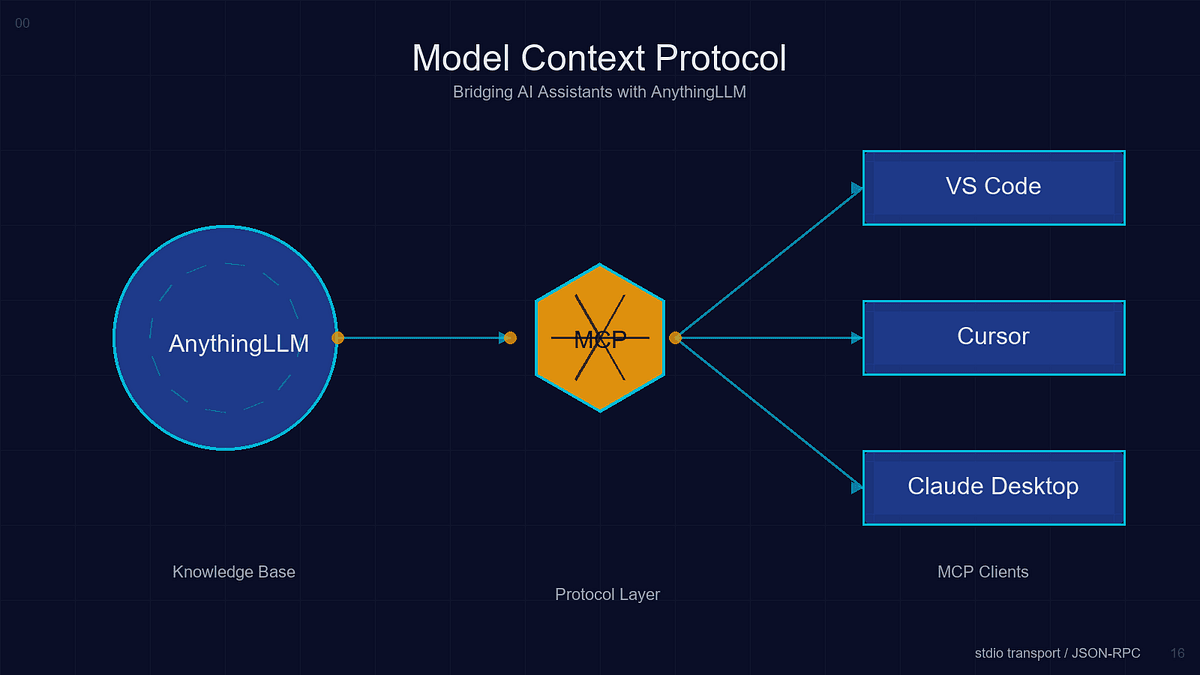
- **Playground by Natoma** provides a **simple, fast directory and interactive playground** for **MCP servers**, with over **100 verified instances**—streamlining discovery and deployment of agent ecosystems.
- **OpenClawCity**—an emerging project—creates **persistent, evolving digital environments** where **AI agents live, create, and interact**. It represents a **virtual city** designed explicitly for **agent collaboration and development**, heralding a new frontier in **agent-centric digital worlds**.
## Breakthroughs in Models and Runtime Technologies
The core of this revolution lies in **faster, more reliable reasoning models** and **sophisticated runtime systems**:
- **Mercury 2** has emerged as **the fastest reasoning large language model (LLM)** optimized for **instant AI production**. Unlike traditional sequential decoding, Mercury 2 employs **parallel refinement techniques inspired by diffusion models**, enabling **rapid token generation** and **multi-turn reasoning**. It supports **conversations exceeding 45 minutes** with **low latency**, facilitating **proactive support**, **complex dialogues**, and **long-term engagement**.
- **Thinklet AI** showcases the **power of on-device AI** for **privacy-preserving, voice-first interactions**. Users can **record thoughts, meetings, or ideas** and **interact naturally**, all **locally on the device**, ensuring **instant responsiveness** and **offline usability**—a major boon for privacy-centric applications.
- The development of **multi-model coordinator agents**, such as **Perplexity Computer**, integrates **19 different models** to deliver **comprehensive, context-aware AI services**. This approach enables **multi-modal reasoning** and **dynamic model selection**, elevating autonomous agent capabilities to handle **complex, multi-faceted tasks** seamlessly.
## Enterprise Integration and Multi-Channel Automation
Enterprises are rapidly embedding **AI agents into existing workflows**, transforming support and collaboration:
- **Jira** now supports **seamless collaboration** between **AI agents and human teams**, including **support ticket triage, automation**, and **multi-channel communication**—across **email, chat, voice,** and **visual interfaces**.
- **Zendesk Switchboard** and similar platforms are orchestrating **multi-channel customer interactions**, leveraging **contextual routing**, **media-rich troubleshooting**, **AR-guided assistance**, and **voice-based help** to create **immersive, seamless support experiences**.
- **Microsoft’s Copilot Studio and Foundry** have expanded capabilities, enabling organizations to **design, deploy, and manage** **custom multi-modal AI agents** tailored to their workflows and support needs.
- Startups like **Trace** have attracted **$3 million in funding** to **simplify onboarding, scaling, and integration** of autonomous agents within enterprise environments, addressing **scalability and adoption challenges**.
## Media-Rich, Multi-Channel Engagement and Privacy Preservation
Interaction channels have become more **immersive and media-rich**, enhancing support quality and user engagement:
- **Zavi AI** has launched an **OS for Voice to Action**, enabling **voice commands** to **type, edit, see, and take actions** across **all applications**—supporting **iOS, Android, Mac, Windows,** and **Linux**. This **cross-platform voice interface** boosts **productivity and accessibility**.
- **OpenClaw’s GoClaw** enables **cross-platform autonomous agent management**, ensuring **consistent multi-channel experiences** across devices and interfaces, facilitating **persistent, evolving agent ecosystems**.
- **Superpowers AI** and **Krater.ai’s Voice Mode** now support **interactive troubleshooting** with **visual aids, AR overlays**, and **voice commands**, transforming support into **immersive, intuitive experiences**.
- **Notion’s** latest **custom agent functionalities** allow **personalized AI assistants** embedded within workflows, democratizing **AI support** for **both consumers and enterprises**.
## Recent Developments and Practical Guides
### Using Perplexity Computer for 24/7 Digital Employees
A significant recent article by **@gregisenberg** provides a comprehensive guide:
> **"How to use Perplexity Computer to spin up digital employees that automate your work 24/7"**
This guide walks users through **connecting**, **configuring**, and **deploying** autonomous agents that **operate continuously**, handling routine tasks, **supporting decision-making**, and **augmenting productivity** in real-time. It emphasizes **creating resilient workflows** that **persist and evolve**, ensuring **long-term operational efficiency**.
### Managing AI Artifacts and Teams with Agentic Creative Ops
Another vital addition is the concept of **Agentic Creative Ops**, a system designed to **manage AI artifacts and teams** efficiently:
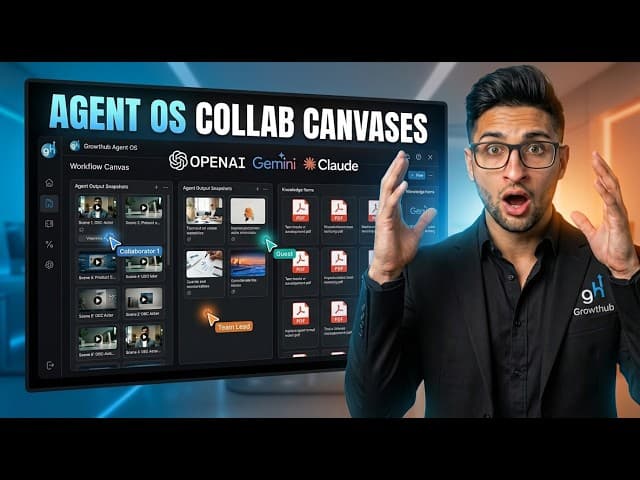
> **"Agentic Creative Ops: The System I Use to Manage AI Artifacts & Teams"**
This approach involves **organizing, versioning, and orchestrating AI outputs** and **collaborative workflows**, enabling teams to **maintain consistency**, **track progress**, and **scale AI-driven projects** effectively. The system supports **creative workflows**, **support operations**, and **large-scale deployment**, reflecting a maturing ecosystem that bridges **technical management** with **creative collaboration**.
## Current Status and Future Implications
The landscape of **self-hosted, media-rich, multi-channel autonomous agents** in 2026 is now **robust and vibrant**. These advancements are **not merely technical feats** but have **profound implications**:
- **Privacy-preserving on-device agents** are now **practical and widespread**, empowering **personal productivity**, **enterprise automation**, and **consumer support** without sacrificing **privacy**.
- **Hybrid cloud-edge solutions** enable **scalable, trustworthy AI pipelines** that orchestrate **multi-modal, multi-channel interactions**—from **voice commands** to **AR overlays**—across **devices and environments**.
- **No-code platforms** and **standardized agent frameworks** are **democratizing AI development**, allowing **non-technical users** and **small organizations** to **build, deploy, and manage** **sophisticated autonomous agents**.
- **Persistent, evolving agent ecosystems** foster **long-term relationships** between users and their AI companions, **supporting, automating, and augmenting** daily life and work more seamlessly than ever.
**In summary**, 2026 has cemented the role of **self-hosted, media-rich, multi-channel autonomous agents** as **core components** of personal and enterprise workflows. They promise a future where **AI assistants** **support, automate, and enhance** every facet of daily life—more **trustworthy**, **accessible**, and **powerful** than ever before. The ongoing innovations point toward an era where **AI-driven support** is **ubiquitous, privacy-conscious**, and **integral to human-AI collaboration** at every level.