# The 2026 Convergence: AI Infrastructure, Sovereign Compute, Platform Standards, and Hardware Investments Shaping a New Global Era
As 2026 unfolds, the artificial intelligence landscape is experiencing a seismic shift driven by relentless investments, strategic regional initiatives for sovereign compute, the maturing of democratized platform ecosystems, and the development of comprehensive safety and governance standards. This convergence is fundamentally reshaping how AI systems are built, deployed, and governed, with profound implications for geopolitical power, economic resilience, and societal trust. Recent developments—ranging from massive startup funding rounds to groundbreaking model releases—highlight a year marked by rapid innovation, fierce competition, and complex challenges that demand resilient hardware ecosystems, safer agent tooling, and robust regulatory frameworks.
---
## Continued Momentum in Regional Sovereign Compute and Hardware Diversification
The race to achieve hardware sovereignty is intensifying, with both industry giants and governments making decisive moves to secure autonomous compute ecosystems:
- **Startup Funding and Hardware Innovation**:
- **MatX**, an emerging AI chip startup, **raised $500 million in Series B funding**, led by a prominent tech investment fund associated with a major conglomerate. Their goal is to develop **next-generation LLM training chips** designed to **disrupt Nvidia’s dominance** and foster **regional hardware ecosystems**.
- **Callosum**, another notable startup, secured **$10.25 million**, aiming to challenge incumbent hardware vendors with **cost-effective, high-performance AI hardware** tailored for large language models.
- **RLWRLD** has just closed a **$26 million Seed 2 round**, bringing total seed funding to **$41 million**. Their focus is on **scaling industrial robotics AI**, which emphasizes the expanding scope of AI hardware applications beyond traditional data centers.
- **Massive National and Regional Investments**:
- **India** continues its aggressive push, committing over **$110 billion** toward **building multi-gigawatt AI data centers**. Currently, the country hosts **more than 38,000 GPUs**, with plans to add **another 20,000** in the coming weeks to accelerate **domestic AI R&D**, **economic independence**, and **national security**.
- **Europe** allocated **€1 billion (~$1.43 billion)** to establish **sovereign AI compute centers** across nations such as **Sweden**, emphasizing **regional resilience** and **technological sovereignty**.
- **China** maintains its ambitious **Moonshot initiative**, investing nearly **$10 billion** into **locally-controlled AI hardware and infrastructure** to **reduce reliance on Western supply chains** and **secure national autonomy**.
- **Emerging Trends in Hardware and Supply Chain Resilience**:
The focus on **diversification and resilience** continues to grow, with startups and governments working towards **reducing dependence on monopolistic global supply chains**. These efforts aim to **foster autonomous regional ecosystems** capable of supporting large-scale AI deployment independent of Western dominance.
---
## Maturation of AI Platforms, Agent Tooling, and Enterprise Adoption
The platform ecosystem for AI is advancing rapidly, driven by **no-code builders**, **real-time communication protocols**, and **improved memory features**:
- **No-Code Multi-Agent Platforms**:
- **Opal 2.0** from **Google Labs** exemplifies this evolution, offering **visual, no-code interfaces** that enable **non-technical users** to **design complex multi-agent workflows** involving **memory**, **routing**, **interactive reasoning**, and **dynamic task management**. This democratization accelerates **adoption across sectors** such as **healthcare**, **finance**, and **manufacturing**.
- **Enterprise Integration and Human-AI Collaboration**:
- Major tools like **Jira** are embedding **AI agents directly into enterprise workflows**, fostering **human+agent collaboration** that **automates decision-making** and **streamlines operations**.
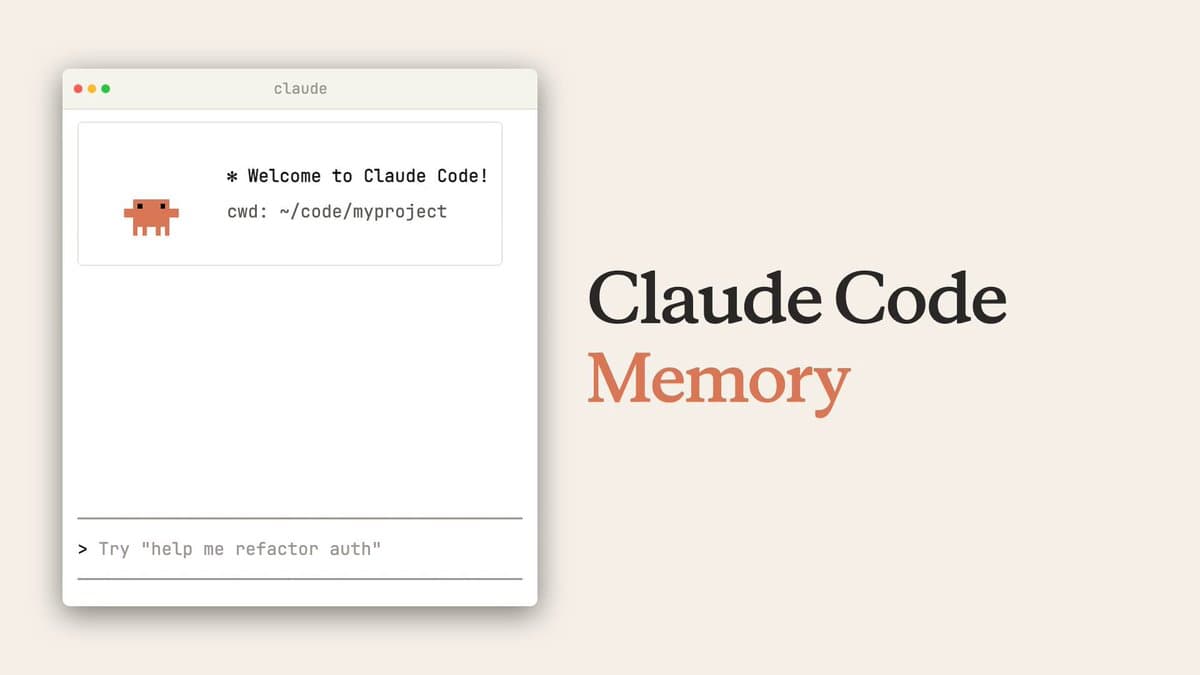
- **Claude’s auto-memory feature**, which **enables AI agents to retain context across sessions**, has been a game-changer. As **@omarsar0** notes, “Claude Code now supports auto-memory. This is huge!” It dramatically enhances **long-term interaction quality** and **organizational productivity**.
- **Real-Time Protocols and Multimodal Capabilities**:
- Advances in **WebSocket-based communication** facilitate **live updates** and **dynamic behavior refinement** for agents operating in **time-sensitive environments**.
- The release of **Qwen3.5 Flash**, a **fast, multimodal model** capable of processing **both text and images**, exemplifies progress toward **embodied, interactive AI systems** suitable for **real-time use cases**.
- **New Industry Moves and Open-Source Initiatives**:
- The **Claude Cowork** platform, optimized for **enterprise workflows**, continues to grow, exemplifying **deep integration**.
- **Anthropic’s acquisition of Vercept**, a Seattle-based startup specializing in **“computer-use”** AI, signals a strategic focus on **specialized, trustworthy agent tooling**.
- The development of **an open-source operating system for AI agents**, a **137,000-line Rust project licensed under MIT**, aims to **standardize agent management**, **improve security**, and **foster community-driven innovation**—crucial for **resilient, interoperable autonomous systems**.
---
## Advances in Model and Retrieval Infrastructure Supporting Production-Grade Systems
To deploy AI at scale, robust **retrieval** and **embedding** infrastructures are essential:
- **State-of-the-Art Multilingual Retrieval**:
- The **Perplexity pplx-embed** models have set a new **standard for web-scale, multilingual retrieval**, enabling **more accurate and scalable search and knowledge retrieval** applications across industries.
- The release of **pplx-embed** highlights significant **improvements in retrieval accuracy and speed**, supporting **enterprise deployment** of large knowledge bases and **real-time decision-making systems**.
---
## Research and Architectural Innovations Enhancing Efficiency and Memory
Recent breakthroughs focus on **long-context handling** and **efficient fine-tuning**:
- **Hypernetworks and LoRA Techniques**:
- **Hypernetworks** are being explored to **offload context to specialized modules**, enabling models to **manage longer sequences** without exponential increases in computational costs.
- **LoRA (Low-Rank Adaptation)** tooling continues to improve **parameter-efficient fine-tuning**, allowing rapid adaptation of models with minimal resource expenditure.
- These innovations **enhance memory capabilities** and **model efficiency**, making **large-scale, long-context reasoning agents** more practical for real-world applications.
---
## Critical Focus on Safety, Governance, and Trustworthiness
As AI systems grow more **autonomous**, **embodied**, and **multimodal**, ensuring **trust** and **security** remains paramount:
- **Benchmarks and Evaluation Frameworks**:
- Tools like **PyVision-RL**, a **vision-based agentic framework trained via Reinforcement Learning**, are advancing **visual perception with reasoning**.
- The **DREAM benchmark suite** now offers **multi-dimensional assessments** covering **reasoning**, **safety**, and **interoperability**.
- Industry-specific benchmarks like **CFDLLMBench** are supporting **robust validation** in complex fields such as **fluid dynamics**.
- **Security Incidents and Urgent Needs**:
- Recent exploits, notably **Claude** being used to **exfiltrate 150GB of Mexican government data**, expose systemic vulnerabilities like **prompt injection** and **data exfiltration**.
- Platforms such as **Rubrik** are incorporating **fine-grained runtime controls** over **agent prompts and responses**, especially important for **embodied AI** operating in **sensitive environments**.
- These incidents underscore the **urgent need for comprehensive governance frameworks** and **standardized safety protocols**.
- **Global Standardization and Regulatory Efforts**:
- Efforts are underway to **harmonize evaluation standards**, **security protocols**, and **interoperability frameworks**. The development of **trustworthy AI benchmarks** and **runtime controls** aims to **build public trust** and **ensure safe deployment**.
---
## Implications and the Road Ahead
The convergence of **regional hardware sovereignty**, **platform democratization**, and **rigorous safety standards** makes 2026 a **pivotal year**:
- **Regional Autonomy and Resilience**:
- Countries like **India** and **China** are **building autonomous hardware and compute ecosystems**, aligned with **national security** and **economic independence** goals.
- **Hardware-Platform Co-Design**:
- The ecosystem is moving toward **integrated hardware-platform development**, where **specialized chips** and **no-code frameworks** are **co-designed** to **maximize efficiency, security, and trustworthiness**.
- **Decentralization and Diversification**:
- Emerging startups and regional alliances are **challenging monopolistic incumbents**, fostering **diversification** that enhances **supply chain resilience** and **geopolitical stability**.
- **Safety, Governance, and Standardization**:
- The development of **benchmarks**, **runtime controls**, and **regulatory standards** is essential for **trustworthy AI**, especially as **embodied agents** become more integrated into **society’s critical functions**.
---
## Current Status and Future Outlook
Today, **2026** exemplifies a **dynamic, multi-layered AI ecosystem** characterized by:
- **Massive regional investments** in **sovereign compute infrastructure**.
- **Hardware diversification** driven by **startups** and **government initiatives**.
- **Platform democratization**, enabling **non-technical stakeholders** to **build sophisticated multi-agent systems**.
- **Enhanced safety measures**, **standardized benchmarks**, and **governance frameworks** to **reinforce public trust**.
Looking forward, these **synergistic trends** are poised to **accelerate AI adoption**, **improve system robustness**, and **align technological progress with societal and geopolitical priorities**. The focus on **security**, **efficiency**, and **interoperability** will be central as **embodied, long-context reasoning agents** become integral to **scientific discovery**, **industrial automation**, and **everyday life worldwide**.
**In essence**, 2026 stands as a **pivotal era** where **regional hardware ecosystems**, **platform democratization**, and **safety governance** are converging to **shape a resilient, trustworthy, and autonomous AI future**—a future that is **globally interconnected yet regionally autonomous**.