# The 2026 Autonomous AI Ecosystem: Convergence, Innovation, and Geopolitical Dynamics — Expanded and Updated
The artificial intelligence landscape in 2026 is more dynamic and transformative than ever, marked by a profound convergence of **world models**, **foundational large language models (LLMs)**, **agent frameworks**, and **scalable infrastructure**. This integrated ecosystem is rapidly reshaping industries, governance, and societal functions by empowering **goal-driven autonomous agents** capable of reasoning, planning, and acting within complex environments. As these technological advances accelerate, they are increasingly intertwined with geopolitical strategies, regional sovereignty initiatives, and regulatory frameworks—creating a complex tapestry of innovation and competition that will define the future of AI on a global scale.
## Continued Convergence: From Models to Ecosystems
Over the past year, the AI community has witnessed significant strides in integrating core models with application-specific frameworks, leading to a **layered autonomous ecosystem**.
- **Enhanced Capabilities in Foundational Models:** Anthropic’s recent strategic move exemplifies this trend. The company acquired **Vercept**, a startup specializing in enabling large language models like Claude to perform complex **computer-based tasks**. This acquisition allows Claude to **write and run code across entire repositories**, marking a significant step toward **goal-oriented AI that can operate within digital workspaces** effectively. By embedding such capabilities, Anthropic aims to **bridge the gap between language understanding and practical execution**, elevating Claude’s utility beyond conversational AI.
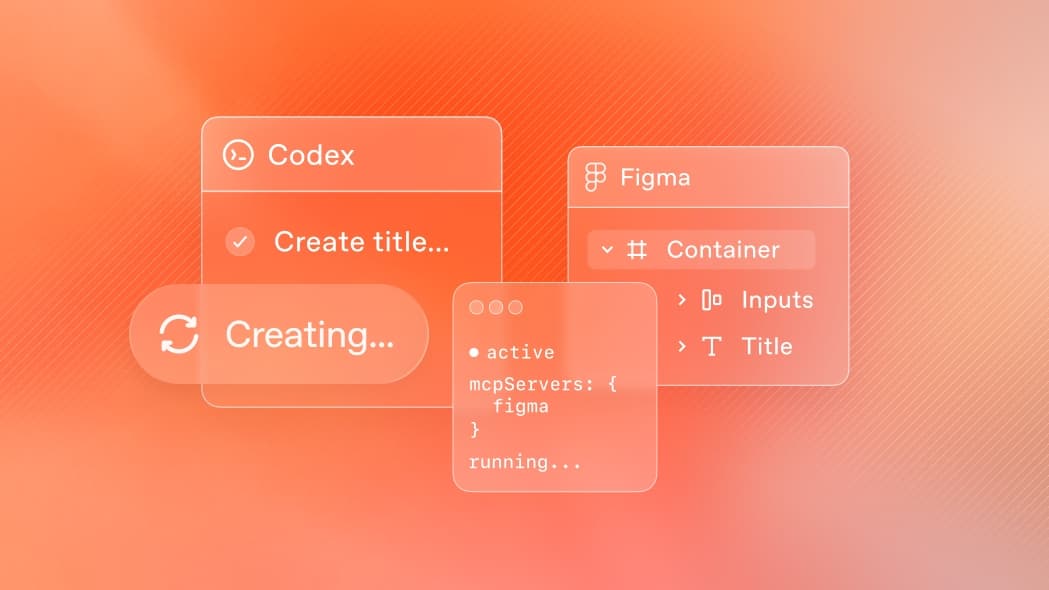
- **Platform and Model Integration Efforts:** Innovations like **Figma’s partnership with OpenAI** to integrate **Codex** demonstrate how major platforms are embedding **AI-powered coding tools** directly into their workflows. This move simplifies **design-to-development pipelines**, enabling users to generate and modify code within familiar interfaces, thus accelerating **creative and technical productivity**. Such integrations exemplify how **multi-model interoperability** is becoming a standard feature across industries.
- **Expanding Agent Frameworks:** The adoption of **open-source, modular SDKs** such as the **Strands Agents SDK** continues to foster a **customizable environment** for developing domain-specific autonomous agents. Their flexibility supports startups like **Letter AI** in creating **sales automation agents** capable of managing **complex customer interactions**—a crucial step toward widespread enterprise deployment.
## Enterprise Adoption and the Rise of Agent-Centric Solutions
While technological innovations surge, **enterprise adoption** remains cautious but steadily progressing. Several recent developments illustrate a **growing momentum** around **agent solutions**:
- **Seed Funding and New Product Launches:** The startup **Gushwork AI** raised **$9 million** in seed funding led by **Susquehanna Asia VC**. Gushwork focuses on **agentic AI** designed to **streamline product discovery, feature ideation, and workflow automation** across organizations—addressing a core challenge of **scaling autonomous agent deployment** within business contexts.
- **Solving Agent Adoption Challenges:** **Trace**, a platform dedicated to **enterprise AI agent adoption**, secured **$3 million** to tackle the **trust and integration barriers** that have historically impeded large-scale deployment. Their solution emphasizes **trust-building, explainability, and seamless integration**, aiming to **accelerate the transition from pilot projects to operational systems**.
- **Industry-Specific Applications:** The momentum is particularly visible in sectors like **financial services**, **professional workflows**, and **customer engagement**. **Rover by rtrvr.ai**, for instance, is developing AI-powered tools for **enterprise workflow automation**, while **Content orchestration startups** are focusing on **coordinating multi-agent systems** to provide **robust orchestration** at scale.
## Robotics, Embodied Autonomy, and Industrial Data Platforms
Investment in **embodied autonomous agents**—robots and physical systems capable of interacting with the real world—continues to grow:
- **RLWRLD’s Funding Surge:** **RLWRLD** raised an additional **$26 million** in their **Seed 2 round**, bringing their total funding to **$41 million**. Their platform focuses on **scaling industrial robotics** by providing **advanced simulation, data management, and training environments** for real-world robotic deployment. These tools enable robots to **learn from diverse data streams** and improve **autonomous operation** in **manufacturing, logistics, and hazardous environments**.
- **Robotics Data Platforms:** Startups like **RobotData** have emerged to **aggregate, label, and process data** for embodied AI systems, addressing the critical bottleneck of **training data scarcity**. These platforms are vital for **training robots in complex, unstructured environments** and are attracting increasing attention from investors.
- **Focus on Resilience and Extreme Environments:** Companies such as **LimX Dynamics** and **FuriosaAI** innovate in **space-grade and disaster-resilient chips**, emphasizing **hardware-software co-design** to enable autonomous operations in **remote, extreme, and unpredictable environments**.
## Hardware and Geopolitical Strategies: Sovereignty and Supply Chains
The rapid development of AI requires **cutting-edge hardware**, intensifying regional competition and strategic initiatives:
- **Next-Generation AI Chips:** Companies like **MatX** announced raising **$500 million** to develop **energy-efficient, scalable AI chips** designed to **challenge Nvidia’s dominance**. These chips aim to **power large language models** and **autonomous systems** while emphasizing **regional hardware sovereignty**.
- **Regional Decoupling and Sovereignty:** Countries are doubling down on **indigenous AI hardware ecosystems**:
- **China’s DeepSeek** has **excluded US chipmakers** from testing and deploying their latest models, illustrating **technological decoupling** amid geopolitical tensions.
- **India’s AI Hardware Initiative** has allocated over **$1.3 billion** to develop **domestic AI chips and infrastructure**, aiming to **reduce dependence on Western and Chinese suppliers**.
- European startups such as **Mistral AI** and **Blackstone** are fostering **regional AI hardware hubs**, supported by local investments, to **diversify the global supply chain**.
- **Extreme Environment Hardware:** Companies like **LimX Dynamics** and **FuriosaAI** are pioneering **space-grade and disaster-resilient chips** to support **real-time onboard processing** in **space missions**, **remote industrial sites**, and **disaster zones**, ensuring **resilient autonomous operations** independent of external infrastructure.
## Infrastructure, Security, and Orchestration for Autonomous Systems
As autonomous agents become embedded in critical infrastructure, **security** and **system orchestration** are paramount:
- **Orchestration Platforms:** **Union.ai**, based in Seattle, raised **$19 million** to develop **scalable, fault-tolerant orchestration platforms** for **distributed autonomous systems**. These systems are essential for **coordinating multiple agents**, managing **failures**, and ensuring **reliable operations** at enterprise scale.
- **AI-Driven Cybersecurity:** **Gambit Security**, an Israeli startup, secured **$61 million** to advance **AI-powered cybersecurity solutions** tailored for **protecting autonomous agents** and **networked systems** against **sophisticated cyber threats**. As autonomous ecosystems expand, **security and trust** are increasingly intertwined.
- **Standards and Interoperability:** The **A2A (Agent2Agent)** communication protocol, developed collaboratively by **Google Cloud**, **IBM Research**, and academia, is gaining traction as a **foundational standard** facilitating **multi-agent interoperability**. This enables **collaborative workflows** across sectors like **urban management**, **disaster response**, and **logistics**—crucial for **scaling autonomous ecosystems reliably**.
## Broader Horizons: People-Operations, Service Automation, and Societal Impact
AI’s reach extends beyond traditional sectors into **people-centric domains**:
- **Workforce and HR:** **Kinfolk**, a London-based AI-native HR platform, recently closed a **$7.2 million seed round** led by **AlbionVC**. It leverages **autonomous agents** to optimize **recruitment, onboarding,** and **workforce management**, promising **cost efficiencies** and **enhanced employee experiences**.
- **Hospitality and Back-Office Automation:** **RobosizeME** raised **$2 million** to develop **automated back-office solutions for hotels**, including **inventory management, billing,** and **staff scheduling**. Such solutions exemplify AI’s expanding footprint in **service industries**, aiming to **improve operational efficiency** and **guest satisfaction**.
## The Road Ahead: Trust, Governance, and Resilience
The future of autonomous AI hinges on **trustworthy deployment**, **robust governance**, and **resilient infrastructure**:
- **Explainability and Security:** As autonomous systems become more complex, **explainability**, **behavior monitoring**, and **security measures** will be critical to **build stakeholder confidence** and **mitigate risks**.
- **Regulatory Frameworks:** Governments are actively establishing **standards** to ensure **safety**, **ethical behavior**, and **transparency**—especially as agents are integrated into **public infrastructure** and **critical sectors**.
- **Interoperability and Hardware Resilience:** The proliferation of **interoperability standards** like **A2A** and **modular SDKs** will underpin **scalable autonomous ecosystems**, complemented by **resilient hardware architectures** capable of withstanding **adverse conditions** and **cyber threats**.
- **Global Geopolitical Dynamics:** Regional sovereignty initiatives and supply chain realignments may lead to **fragmented ecosystems**, but **international collaboration** and **open standards** could foster **more resilient and inclusive** global AI infrastructures.
---
**In conclusion**, 2026 stands as a pivotal year where **technological convergence**, **industry consolidation**, and **geopolitical strategies** are shaping a **complex yet promising autonomous AI era**. The continuous integration of **world models**, **foundational LLMs**, **agent frameworks**, and **robust infrastructure** is laying the groundwork for **scalable, trustworthy, and resilient autonomous systems**. If **trust, governance, and security** are prioritized, this ecosystem has the potential to **unlock societal benefits** across **smart cities**, **space exploration**, **healthcare**, and **industrial automation**—heralding a future where **autonomous AI agents** become indispensable partners in human progress.