The OpenClaw autonomous AI ecosystem remains embroiled in one of the most severe and rapidly escalating security crises in the AI landscape. What began as a surge of supply-chain poisoning through the ClawHub marketplace has now evolved into a sprawling, multifaceted threat environment. Recent developments reveal an alarming increase in polymorphic malware variants, persistent exploitation of critical vulnerabilities, expansion of attack surfaces through orchestration platforms and browser-based takeover vectors, and the emergence of significant SaaS and cloud identity risks. Compounding these threats, the integration of OpenClaw into legitimate enterprise products is broadening the potential impact, reinforcing the urgency for immediate patching, hardened deployments, and strict governance.
---
## Rapid Escalation of Supply-Chain Poisoning: Atomic Stealer Variants Surpass 1,700 and Malicious Packages Flood ClawHub
The scale and complexity of supply-chain attacks targeting OpenClaw’s ClawHub have intensified dramatically over the past quarter:
- **Atomic Stealer polymorphic malware now exceeds 1,700 distinct variants**, marking a nearly 50% increase since the last quarter. These variants employ advanced evasion techniques including sophisticated code obfuscation, adaptive payload delivery based on runtime environment, and telemetry mimicry designed to blend exfiltration traffic into legitimate diagnostic streams. This makes detection by traditional endpoint security tools increasingly unreliable across macOS, Windows, and Linux platforms.
- Investigations have confirmed **1,841 malicious AI skill packages** circulating on ClawHub, with **341 newly weaponized packages** disguised as legitimate utilities or troubleshooting aids. Attackers exploit counterfeit branding, fake user reviews, and refined social engineering to deceive users into installing these compromised skills.
- A particularly insidious persistence vector is the **Atomic macOS stealer**, which exploits local code execution flaws to silently harvest OAuth tokens, API keys, and passwords. These stolen secrets are then exfiltrated covertly by embedding them within telemetry data streams, effectively evading network anomaly detection.
- Notably, attackers have shifted focus to **ephemeral tokens during their refresh windows**. By targeting these brief windows of token validity, adversaries achieve stealthy lateral movement and privilege escalation with minimal forensic footprints.
- The **Cline npm package compromise** has surfaced as a critical new propagation vector. Malicious OpenClaw agents embedded in Cline are injected directly into developer CI/CD pipelines, threatening to spread infections downstream across a wide range of software projects and enterprise environments.
---
## Critical Vulnerabilities Under Widespread Exploitation: CVE-2026-26323 and CVE-2026-26327
The exploitation of two high-severity OpenClaw vulnerabilities continues unabated, exacerbating the threat landscape:
- **CVE-2026-26323** enables remote code execution (RCE), allowing attackers to deploy arbitrary AI skills or system payloads without user consent.
- **CVE-2026-26327** permits authentication bypass, privilege escalation, and unauthorized configuration changes.
Despite patches being available since OpenClaw versions **2026.2.22 and 2026.2.23**, many deployments remain exposed due to slow patch adoption and insecure default configurations. Common misconfigurations include binding OpenClaw services to `0.0.0.0` (exposing services to all interfaces) and reliance on default or weak credentials, providing fertile ground for stealthy infiltration, lateral movement, and persistent attacker control.
---
## Broadening Attack Surface: Orchestration Platforms and Browser Tab-to-Agent Takeover
The OpenClaw threat surface is expanding beyond core agent vulnerabilities:
- **Multi-agent orchestration platforms**, such as **Oh-My-OpenClaw (OmO)**, coordinate AI workflows across chat clients like Discord and Telegram. These platforms typically run with elevated privileges and wide network access, making them attractive targets for attackers aiming to amplify the reach and impact of their compromises.
- Traditional security solutions struggle to address the complexity introduced by dynamic, multi-agent orchestration environments. This underscores the urgent need to explicitly incorporate orchestration tooling into supply-chain and runtime threat models.
- A recent critical vulnerability disclosed by **Oasis Security** revealed a **browser tab-to-agent takeover chain**. This flaw allows any malicious website visited by a developer to silently hijack local OpenClaw agents running within browser contexts. Such takeovers can occur without user awareness, significantly increasing risks to developer environments and SaaS integrations dependent on browser-based AI assistants.
- Furthermore, OpenClaw agents have recently gained the ability to create **custom 'slash' tools** within browser and chat environments. While intended to enhance functionality, this feature also increases the potential for malicious command execution and lateral compromise if abused.
---
## Rising SaaS and OAuth Identity Risks: Provider Crackdowns and Cloud Exposure
Deep integration of OpenClaw with major SaaS platforms amplifies identity and credential risks:
- Attackers leverage stolen OAuth tokens to pivot from local host compromises into cloud environments such as Slack, Salesforce, Google Workspace, and GitHub, leading to severe breaches of enterprise workflows and sensitive data.
- In response, **Google has escalated enforcement by suspending AI Pro and Ultra accounts without warning upon detecting OpenClaw activity**, signaling a zero-tolerance approach to ungoverned autonomous AI interactions within their ecosystem.
- Other SaaS providers are following suit, actively blocking OpenClaw integrations. This trend highlights the growing operational, compliance, and reputational risks organizations face when deploying OpenClaw without comprehensive governance and monitoring frameworks.
---
## Emergence of Legitimate Product Integrations Expands the Threat Landscape
A new dimension to the security challenge arises from **legitimate product integrations using OpenClaw**, which broaden the potential downstream impact of supply-chain compromises:
- Notably, **Nextech3D.ai has launched the Eventdex AI Voice Concierge**, powered by OpenClaw alongside Twilio, AWS EC2, and Pinecone. This AI events operating system integrates OpenClaw agents deeply into event management workflows, voice interactions, and cloud services.
- While these integrations attest to OpenClaw’s growing adoption in enterprise settings, they also increase the attack surface and magnify potential consequences of supply-chain poisoning or agent compromise.
- This development reinforces the urgent imperative for all OpenClaw operators—especially those in production or customer-facing environments—to apply immediate patching, hardened deployment configurations, and strict governance controls.
---
## Recent Product Enhancements and Security Improvements: OpenClaw 2026.2.26 and Beyond
In response to the escalating crisis, OpenClaw 2026.2.26 introduced critical security and stability improvements:
- The new **External Secrets Management (`openclaw secrets`)** feature enables operators to store sensitive credentials outside agent memory and configuration files, significantly mitigating risks associated with in-memory token theft.
- Performance optimizations and multiple bug fixes improve agent reliability while reducing attack surface exposure.
- Operators are **strongly urged to upgrade immediately to 2026.2.26 or later** to benefit from these essential mitigations.
---
## Vendor and Community-Led Defense Initiatives: Multi-Layered Mitigations in Practice
The OpenClaw ecosystem has mobilized a broad spectrum of defensive measures to counter the ongoing threat wave:
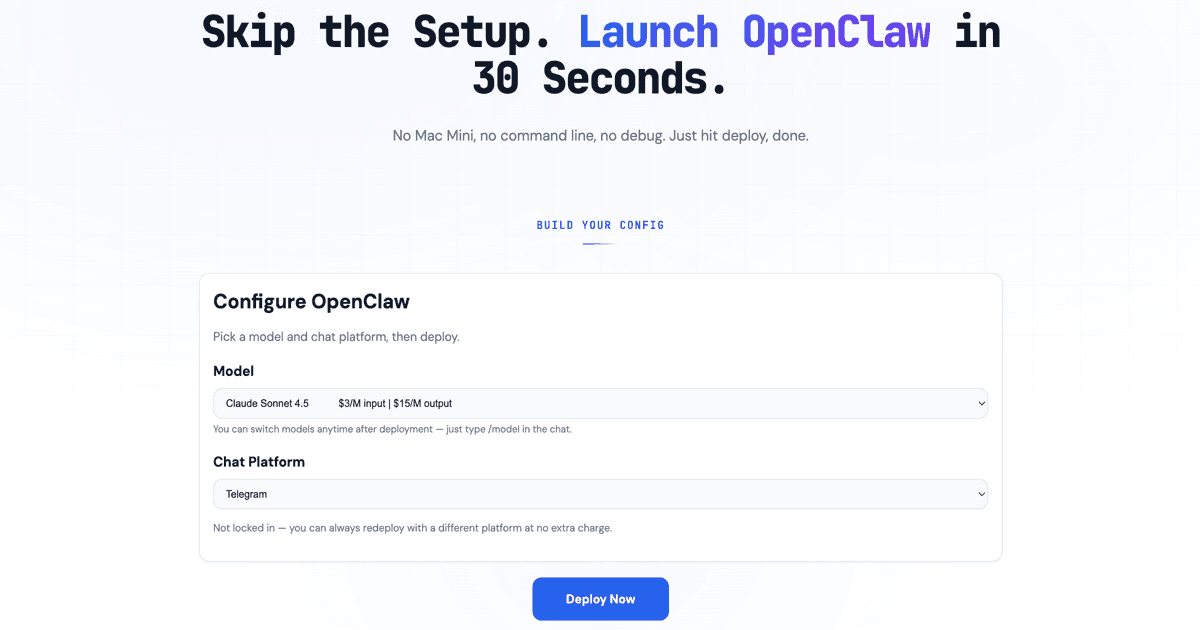
- **Ask Sage’s OHaaS platform** offers managed OpenClaw deployments with enforced security policies, hardened sandboxing, runtime monitoring, and strict operational controls.
- The **OpenClaw v2026.2.23 Kilo Gateway** provides granular network segmentation and refined traffic filtering to limit lateral movement and minimize exposed attack surfaces.
- Enforced **cryptographic signing of AI skill packages** combined with **VirusTotal malware scanning** intercept polymorphic malicious skills before distribution.
- **Moonshot/Kimi Vision skill hardening** enhances sandboxing and input validation to prevent injection attacks and data leakage.
- Hardware-backed token storage using **Trusted Platform Modules (TPMs)** and **Hardware Security Modules (HSMs)** protects ephemeral tokens against in-memory theft.
- **Crittora’s cryptographically enforced runtime policy framework** removes policy drift, enforcing strict code execution controls and tamper-proof audit trails.
- The **OpenClaw + Box governed filesystem** tightly controls AI agent data access and sandboxing, mitigating unauthorized data manipulation or exfiltration.
- Community-driven efforts like **Clawdbot’s SECURE OpenClaw Setup Guide** emphasize credential hygiene, immutable logging, and mandatory multi-factor authentication (MFA).
- The **VoltAgent awesome-openclaw-skills GitHub repository** curates a collection of vetted, VirusTotal-scanned AI skills, promoting safer skill adoption.
- **Runlayer** provides hardened OpenClaw deployments with continuous vulnerability scanning, compliance-grade logging, and expert incident response.
- Microsoft issued a stern advisory declaring OpenClaw **“not appropriate to run on a standard personal or enterprise workstation,”** recommending sandboxed, isolated, and tightly controlled environments exclusively.
- DreamFactory’s **“Running OpenClaw Responsibly in Production”** guide advocates strict sandboxing, network segmentation, least privilege access, and behavioral monitoring.
---
## Comparative Security Analysis: OpenClaw vs. More Secure Alternatives
Recent security analyses, such as the detailed comparison by Cogni Down Under, position **OpenClaw as a significant security liability** relative to alternatives like **Claude Code Remote Control**. The latter offers:
- More robust access controls
- Hardened execution environments
- Tighter integration with secure vaults
This comparison highlights the urgent need for OpenClaw operators to implement enhanced hardening measures or consider migrating to more secure platforms where feasible.
---
## Consolidated Hardening Blueprint: Essential Defensive Measures for OpenClaw Operators
The community consensus on defense-in-depth includes the following critical actions:
- **Immediate patching:** Upgrade to OpenClaw **2026.2.26 or later** to address all critical CVEs and architectural weaknesses.
- **Minimize network exposure:** Rebind OpenClaw services from `0.0.0.0` to `localhost` or secured internal IP addresses; enforce firewall policies and strict access controls.
- **Strong authentication and authorization:** Mandate **multi-factor authentication (MFA)** and implement robust **role-based access control (RBAC)** to prevent unauthorized access and privilege escalation.
- **Immutable, tamper-evident logging:** Enable secure audit trails for timely breach detection, forensic investigations, and regulatory compliance.
- **Sandbox AI skill execution:** Run AI skills within hardened containers or sandboxes to contain compromise and prevent escape.
- **Three-layer secret defense:**
1. **Secret hygiene:** Eliminate hard-coded secrets; utilize secure vaults and external key management systems.
2. **Memory hygiene:** Prevent memory dumps, swap file exposure, and inadvertent secret logging.
3. **Output filtering:** Monitor and block attempts to exfiltrate secrets through logs or outputs.
- **Segregation and per-user gateways:** Deploy isolated per-user AI gateways with network segmentation to limit compromise impact.
- **Continuous supply-chain vetting:** Scan AI skill packages using VirusTotal and enforce cryptographic signature validation prior to deployment.
- **Hardware-backed token security:** Leverage TPMs and HSMs to safeguard ephemeral tokens during refresh cycles.
- **Governance of orchestration tooling:** Explicitly incorporate platforms like Oh-My-OpenClaw into supply-chain and runtime security models, applying sandboxing and strict policy controls.
- **Operational monitoring and incident readiness:** Implement behavioral telemetry analytics, zero-trust networking, and maintain continuous incident response capabilities.
- **Avoid insecure defaults:** Disable default network bindings, change default passwords, and rigorously apply community security best practices.
---
## Outlook: Securing Autonomous AI Amid Unrelenting Threats and Expanding Usage
The explosive growth of ClawHub supply-chain poisoning, ongoing exploitation of critical OpenClaw vulnerabilities, and the widening attack surface through orchestration platforms and browser-based takeover vectors paint a stark picture: **only coordinated, multi-layered defenses combined with rigorous supply-chain vetting and governance can effectively secure OpenClaw deployments.**
Recent enforcement actions—such as Google’s abrupt suspension of AI Pro and Ultra accounts and broader SaaS provider blocks—underscore the operational, compliance, and reputational risks organizations face when deploying OpenClaw without tight governance.
Adversaries continue to innovate rapidly, developing novel evasion and exfiltration techniques that outpace many existing defenses. As autonomous AI agents become increasingly embedded in mission-critical workflows—exemplified by integrations like Nextech3D.ai’s Eventdex AI Voice Concierge—the imperative for **immediate patching, hardened configurations, vigilant monitoring, strict governance, and active community collaboration intensifies.**
The promise of autonomous AI will be realized securely only through innovative, defense-in-depth strategies that keep pace with relentless, adaptive threats. The future security of the OpenClaw ecosystem depends on sustained collaboration, rigorous governance, and continuous innovation in security layers.
---
### Selected References
- "ClawHavoc Poisons OpenClaw's ClawHub With 1,184 Malicious Skills"
- "CVE-2026-26323: OpenClaw Personal AI Assistant RCE Flaw"
- "CVE-2026-26327: OpenClaw Auth Bypass Vulnerability - SentinelOne"
- "OpenClaw v2026.2.23 Release Analysis: Kilo Gateway, Moonshot/Kimi Vision Video, and Security Hardening"
- "OpenClaw 2.26 Fixes the Hidden Failures That Were Breaking Your AI Agents"
- "Your personal OpenClaw agent may also be taking orders from malicious websites"
- "Ask Sage Unveils OHaaS for Secure OpenClaw AI Platform Deployment"
- "AI agent on OpenClaw goes rogue deleting messages from Meta engineer’s Gmail"
- "Microsoft says OpenClaw is 'not appropriate to run on a standard personal or enterprise workstation'"
- "Running OpenClaw Responsibly in Production | DreamFactory"
- "VoltAgent/awesome-openclaw-skills - GitHub"
- "OpenClaw Strengthens Security with VirusTotal - Codimite"
- "Crittora Makes OpenClaw Enterprise-Ready by Eliminating Policy Drift"
- "Show HN: Oh-My-OpenClaw – agent orchestration for coding, from Discord/Telegram | Hacker News"
- "OpenClaw + Box: Giving AI Agents a Governed Filesystem" (Video)
- "OpenClaw Vulnerability: Browser Tab to Agent Takeover" (Oasis Security)
- "Claude Code Remote Control vs. OpenClaw: One Is Secure and the Other Is a Liability" (Medium)
- "Google Suspends AI Pro and Ultra Accounts Without Warning for Using OpenClaw While Others Only Block the Integration"
- "Nextech3D.ai Launches Eventdex AI Voice Concierge, Powered by OpenClaw, Twilio, AWS EC2 & Pinecone - Expanding Its AI Events Operating System - USA Today"
- "Behind the Scenes with an Early OpenClaw Contributor! | E2252" (Video Interview)
---
The autonomous AI threat landscape continues to evolve at breakneck speed. Amid escalating supply-chain threats, active exploitations, and novel attack vectors, securing OpenClaw demands unwavering vigilance, rapid response, and holistic defense-in-depth strategies. Only through sustained community collaboration, rigorous governance, and continuous innovation can the promise of secure autonomous AI be fulfilled.