# The AI Revolution of 2026: Unprecedented Model Milestones, Ecosystem Expansion, and Emerging Challenges
The year 2026 stands as a pivotal chapter in the ongoing AI revolution, characterized by extraordinary advancements in model capabilities, hardware infrastructure, and ecosystem development. While these breakthroughs herald unprecedented opportunities for industries and society, they are also accompanied by complex geopolitical tensions, safety concerns, and systemic risks. Building upon the rapid progress of previous years, this period has seen the rise of **massively multimodal models**, **robust autonomous agent frameworks**, and **international initiatives** that shape the future trajectory of AI. Here, we synthesize the latest developments to provide a comprehensive view of where AI stands now—and where it is headed.
---
## Major Model Releases and Performance Milestones
2026 has been marked by **groundbreaking model launches** that continue to redefine AI’s reach:
- **Google’s Gemini Series**:
The November release of **Gemini 3.1 Pro** signifies a quantum leap in multimodal AI. Its **integrated architecture** processes **text, images, audio, and video**, enabling **multi-step inference** and **multi-modal synthesis**. Industry benchmarks now report **more than double** the reasoning performance compared to earlier models, with experts describing it as "approaching human-like cognition." This model’s robustness and versatility are transforming applications such as **virtual assistants**, **media analysis**, **autonomous robotics**, and **context-aware systems** that adapt seamlessly across modalities.
- **Anthropic’s Claude Series**:
With **Claude Sonnet 4.6**, Anthropic emphasizes **safety, trustworthiness, and alignment**. The model maintains **competitive reasoning abilities** while integrating **enhanced interpretability features** and **trust-building mechanisms**. These innovations align with the industry-wide shift toward **safe and reliable AI**, especially in **healthcare**, **finance**, and **regulatory-sensitive sectors**. The widespread **enterprise adoption** underscores a move toward **trust-centric AI deployments**.
- **Open-Source and Commercial Models**:
The ecosystem remains vibrant with models like **Qwen 3.5** (by Alibaba) and open-source variants such as **Llama 3.1** in **8B** and **70B** configurations. These models prioritize **rapid deployment**, **customizability**, and **democratization** of AI technology. Hardware accelerations, notably **Taalas HC1 inference chips**, enable **resource-light operation**, making high-performance AI accessible to **smaller labs** and **startups**, fueling innovation across sectors.
- **Benchmark Leadership**:
Recent evaluations from **Ben’s Bites** confirm that **Gemini models** continue to **dominate major benchmarks**, reaffirming Google’s leadership and establishing **performance standards** for **scalable multimodal reasoning** and **cross-domain adaptability**. These benchmarks underscore a clear trend: AI systems are evolving into **integrated, multi-domain agents** capable of handling **nuanced, complex tasks** across environments.
**Significance**:
These advancements mark a **paradigm shift** toward **multimodal reasoning** and **interoperability**, transforming AI from **narrow, siloed systems** into **holistic, context-aware agents** capable of **complex decision-making** in diverse settings.
---
## Hardware and Infrastructure Innovations
The deployment and training of these sophisticated models hinge on **cutting-edge hardware innovations**:
- **Taalas HC1 Inference Chip**:
The **HC1 accelerator** now processes at speeds approaching **17,000 tokens per second** for models like **Llama 3.1 8B**, representing a **tenfold increase** over previous hardware solutions. This leap enables **low-latency inference**, critical for **real-time applications** such as **financial analysis**, **medical diagnostics**, and **critical infrastructure management**.
- **Exaflop-Scale Supercomputing**:
The commissioning of **8 exaflop supercomputers in India**, supported by collaborations with the UAE, signals a **regional AI revolution** across Asia and the Middle East. These infrastructures facilitate **large-scale training**, **fine-tuning**, and **research on multi-modal, multi-billion-parameter models**, fostering **industrial innovation** and **national security efforts**. Such capacity accelerates **regional leadership** and heightens **international competitiveness**.
- **Edge and On-Device Deployment**:
Innovations like **Intel’s OpenVINO 2026** and **NVMe-to-GPU bypass techniques** are making **local inference** on **microcontrollers**, **wearables**, and **IoT devices** increasingly feasible. This reduces reliance on cloud infrastructure, improves **latency**, and enhances **privacy**, bringing **intelligent agents** into **everyday environments**—from **smart homes** to **micro-robots**.
**Implication**:
Hardware progress is **accelerating inference speeds** and **lowering deployment barriers**, paving the way for **ubiquitous edge AI** that is **privacy-preserving**, **cost-effective**, and seamlessly integrated into daily life.
---
## Ecosystem Expansion: Multi-Agent Frameworks, Benchmarks, and Regional Leadership
The **AI ecosystem** is experiencing **rapid growth**, driven by **multi-agent systems**, **evaluation standards**, and **regional initiatives**:
- **Multi-Agent Frameworks and No-Code Builders**:
Platforms like **Opal 2.0** (from Google Labs) now feature **smart agents**, **memory**, **routing**, and **interactive chat**, along with **no-code visual workflows**. These tools **democratize AI development**, enabling **domain experts** and **non-programmers** to **craft collaborative autonomous agents** efficiently, catalyzing **wider adoption** across industries.
- **Agent Evaluation and Metrics**:
Frameworks such as **DREAM** (Deep Research Evaluation with Agentic Metrics) and benchmarks like **GAIA2** focus on **robustness**, **adaptability**, and **collaborative competence** in **dynamic environments**. These standards are critical for ensuring **trustworthy autonomous systems** capable of **self-organizing** and exhibiting **emergent behaviors** safely.
- **Emerging Techniques and Protocols**:
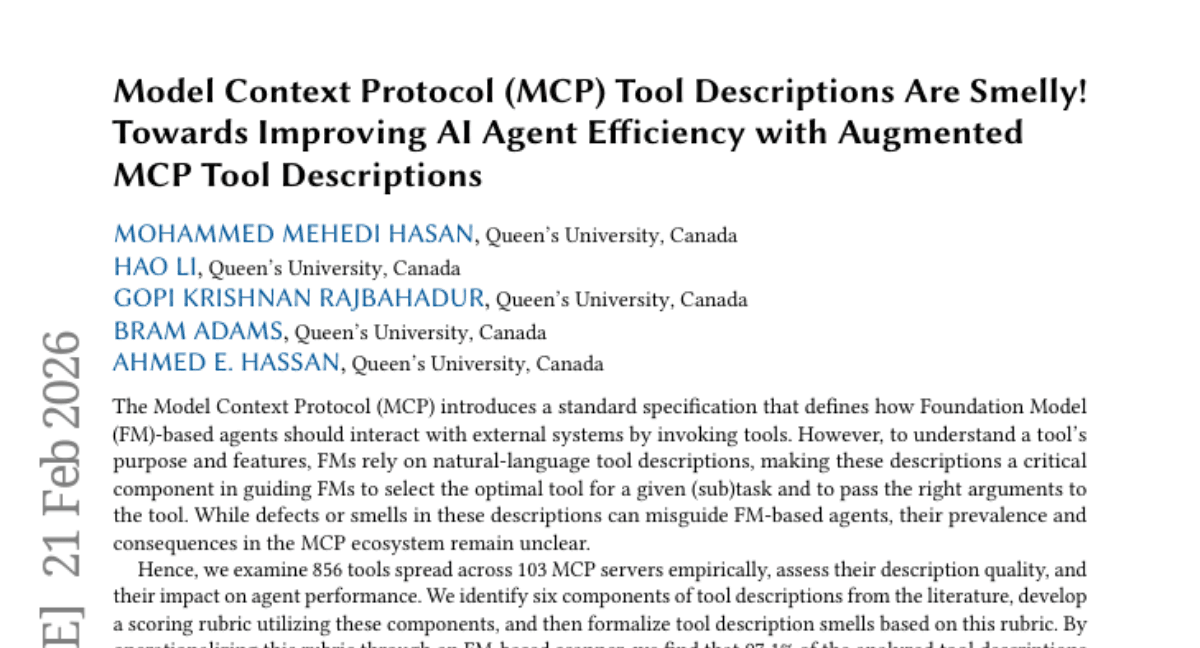
Approaches like **Team of Thoughts** enable **test-time scaling** of **agentic systems** through **orchestrated tool calling**, improving **efficiency** and **scalability**. Additionally, **Model Context Protocol (MCP)** enhancements, including **augmented tool descriptions**, significantly **improve agent efficiency**, reducing **contextual overhead** and enabling **more effective tool utilization**.
- **Embodied and Vision Agents**:
Cutting-edge research such as **Learning from Trials and Errors** and **PyVision-RL** explores **vision-enabled agents** that learn **from real-world interactions**, bridging **digital reasoning** with **physical embodiment**—a vital step toward **autonomous robots** and **embodied AI** capable of **complex physical tasks**.
- **Regional Leadership and International Collaboration**:
The **India AI Impact Summit 2026**—the first of its kind in the Global South—highlighted **regional innovations** and **standards development**, emphasizing **regulatory harmonization** and **collaborative research**. These initiatives foster **global AI governance** rooted in **regional perspectives**, encouraging **diverse innovation ecosystems**.
- **Social Dynamics of Agent Ecosystems**:
Studies like **Moltbook** reveal that **AI agents** are developing their own **social networks**, tracking **topics** and **toxicity**. These insights into **emergent agent behaviors** are vital for **monitoring**, **guidance**, and **preventing societal impacts**.
**Significance**:
The proliferation of **multi-agent systems**, coupled with **robust evaluation frameworks** and **regional leadership**, is establishing a **scalable, safe, and interoperable AI ecosystem**—integral for **large-scale, real-world deployment**.
---
## Safety, Interpretability, and Verification
As AI systems become more **autonomous** and **interconnected**, **trustworthiness** takes center stage:
- **Interpretability Tools**:
Techniques such as **Neuron-Selective Tuning (NeST)** from **Guide Labs** enhance **explainability** by **mapping behavioral pathways** within large models. This transparency is crucial in **healthcare**, **autonomous vehicles**, and **decision-support systems** where understanding **model reasoning** is imperative.
- **Detection and Defense Against Malicious Use**:
Advances in **adversarial attack detection** and **model robustness**, including **model distillation**, are vital for **securing AI** against **cyber threats** and **malicious manipulation**. The rise of **model theft** and **cyberattacks** necessitates **proactive detection** and **countermeasures**.
- **Formal Verification and Hardware Security**:
Progress in **formal proof techniques** aids in **verifying models** and **preventing tampering**, while **hardware security measures** aim to thwart threats like **"Shai-Hulud" worms**—malicious firmware exploits targeting supply chains. Ensuring **software and hardware integrity** is critical for deploying **trustworthy AI**, especially in **critical infrastructure**.
- **Privacy and Data Safety**:
Innovations in **adaptive anonymization** techniques strike a balance between **data utility** and **privacy guarantees**, addressing **regulatory** and **societal demands** for **data protection**.
**Outcome**:
These efforts cultivate **trustworthy, transparent AI systems** capable of **self-verification**, essential as **agentic models** assume **more autonomous decision-making roles**.
---
## Emerging Challenges and Risks
Despite the extraordinary progress, **significant risks** persist:
- **Geopolitical Tensions**:
The **Pentagon–Anthropic dispute** exemplifies escalating conflicts over **AI safety standards** in military applications. Recent reports indicate **Pentagon officials** contemplating **penalties** or restrictions on **Anthropic** due to disagreements over **AI guardrails**, with incidents involving figures like **Pete Hegseth** highlighting **diplomatic friction**. Such disputes threaten **international collaboration**, potentially **slowing innovation** or **limiting deployment** in critical sectors.
- **Optimizer Instabilities**:
Phenomena such as **"Muon CM collapse"** reveal **unexpected behaviors** during **large-scale training**, risking **system failures** or **erroneous outputs**. Addressing these instabilities is crucial for **reliable, large-scale AI systems**.
- **Supply Chain and Security Threats**:
The proliferation of **microcontroller-based AI** introduces vulnerabilities exemplified by **malicious worms like "Shai-Hulud"**, raising concerns over **hardware security** and **supply chain integrity**—especially as AI becomes embedded in **critical infrastructure**.
- **Regulatory and Economic Pressures**:
The **EU AI Act** has been **fully enforced**, imposing **strict standards** on **energy efficiency**, **transparency**, and **ethical deployment**. Organizations face challenges balancing **compliance** with **performance** and **innovation**.
- **Performance Plateaus and R&D Shifts**:
Initiatives like **BIG-BENCH** are being phased out as **raw performance improvements plateau**, prompting a focus shift toward **robustness**, **safety**, and **governance**—highlighting **limitations in scaling** models purely through size.
---
## Current Status and Future Outlook
**2026 encapsulates a period of remarkable capability intertwined with mounting complexities**. The rapid evolution of **multimodal models** and **multi-agent ecosystems**, fueled by **hardware breakthroughs**, is transforming industries and societal functions at an unprecedented scale. However, **systemic risks**, **security vulnerabilities**, and **geopolitical conflicts** emphasize the need for **rigorous safety standards**, **international cooperation**, and **transparent governance**.
### Key implications include:
- The **urgent necessity** for **harmonized safety frameworks** and **verification tools** like **NeST** to foster **trustworthy AI**.
- The importance of **regional leadership** and **global collaborations**, exemplified by initiatives such as India's **AI Impact Summit**, in shaping **norms** and **standards**.
- The critical role of **security measures**—both **hardware** and **software**—to **prevent malicious exploits** and **system failures**.
### Recent developments shaping the future:
- **Google.org’s US$30 million AI for Science Challenge** aims to fund **innovative AI applications** in **health**, **climate science**, and **life sciences**, emphasizing **applied societal impact**.
- **New research** explores **potential misuse of AI in terrorist financing**, urging **proactive detection** and **countermeasure development**.
- Advances in **tool and protocol design**, such as **augmented MCP descriptions**, significantly **enhance agent efficiency** and **scalability**.
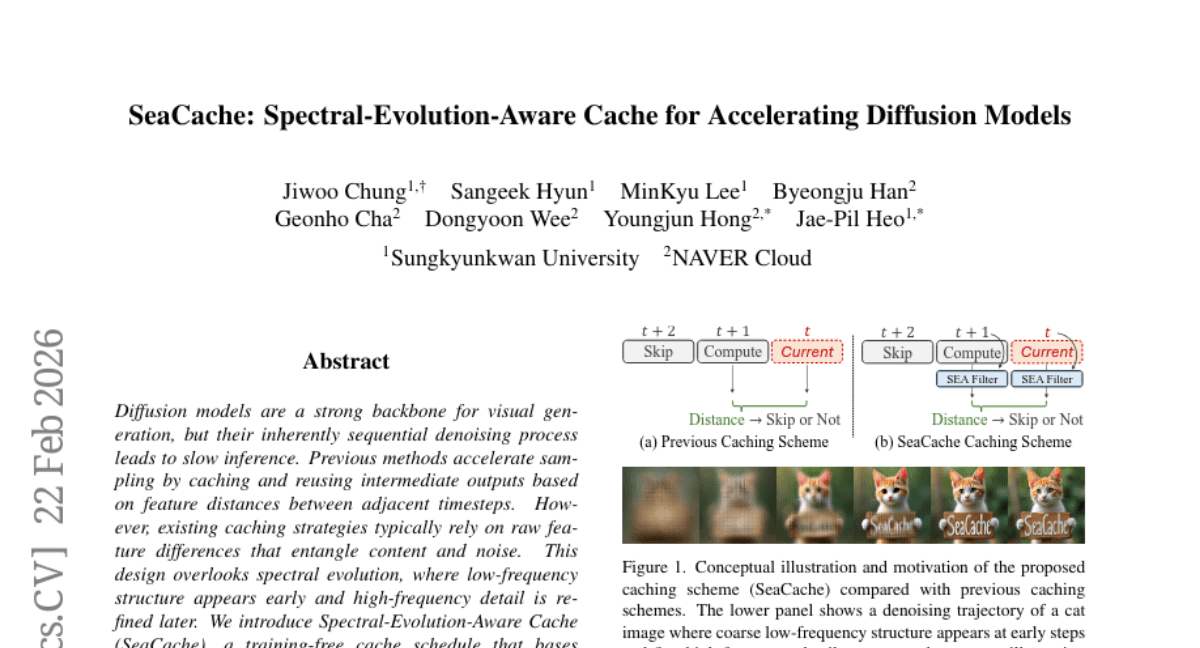
- Progress in **multimodal generation** and **inference acceleration**, exemplified by innovations like **SeaCache**—a high-bandwidth diffusion model caching system—addresses the demand for **faster, more efficient multimodal processing**.
- **Vision-language models** like **LaS-Comp** demonstrate promising **zero-shot 3D completion**, inching closer to **dynamic embodied AI** capable of understanding and acting within complex, real-world environments.
---
## Final Reflection
The AI landscape of 2026 exemplifies **extraordinary innovation** intertwined with **urgent systemic challenges**. The development of **multimodal, agentic models** and **edge deployment technologies** is reshaping industries and societal functions, yet **risks related to security, geopolitics, and system stability** underscore the necessity for **responsible stewardship**—through **international cooperation**, **rigorous safety standards**, and **transparent governance**.
The choices made today—balancing **technological progress** with **ethical responsibility**—will shape AI’s role in society for decades to come. Embracing a **collaborative, holistic approach** is essential to ensure AI remains a **force for good**, fostering **sustainable advancement** and **global stability** amid unprecedented technological capabilities.