As the U.S. economy moves deeper into 2026, **rising household credit stress remains a central and intensifying challenge**, particularly marked by worsening mortgage delinquencies spreading beyond subprime segments, a surge in student loan defaults following the federal repayment restart, and elevated auto and credit card delinquencies. These financial strains continue to suppress consumer spending and housing demand, complicating Federal Reserve (Fed) policy decisions amid mixed inflation signals, a softening labor market, and evolving expectations shaped heavily by AI-driven productivity optimism and trade policy uncertainties.
---
### Mortgage Delinquencies Deepen and Extend Into Prime Borrowers
Mortgage delinquencies have not only grown in severity but have also notably expanded to include prime borrowers—a departure from typical patterns where credit stress is concentrated in subprime or lower credit tiers. This shift is largely propelled by a wave of adjustable-rate mortgage (ARM) resets, with interest rates climbing near 6%, sharply increasing monthly payments for many homeowners.
- The growing delinquency footprint among prime borrowers signals **systemic vulnerabilities in housing finance** and raises concerns over a potential broader foreclosure wave.
- In response, the Federal Reserve under Vice Chair Michelle Bowman has accelerated regulatory efforts with a landmark supervisory proposal that formally integrates **reputation risk** into oversight frameworks. This recognizes that poor mortgage servicing not only harms individual borrowers but can erode confidence in the financial system more broadly.
- Fed supervisory priorities include:
- **Enhancing transparency and borrower communication** to reduce confusion and improve engagement.
- **Speeding up loan modification processing** to prevent delinquencies from escalating to foreclosures.
- Streamlining **loss mitigation procedures** to efficiently address servicing backlogs.
- The Fed is also actively exploring **AI-driven servicing productivity improvements**, aiming to bolster operational efficiency. However, balancing these advancements with labor market impacts remains a key concern.
- Industry groups such as the Bank Policy Institute broadly support these reforms but caution that **implementation delays or operational inefficiencies could exacerbate delinquency trends and destabilize housing markets further**.
These developments underscore the critical need to reform mortgage servicing operations to restore consumer trust and mitigate systemic risks amid increasing housing market stress.
---
### Student Loan Delinquencies Surge Post-Repayment Restart Amid Policy Deadlock
Following the resumption of federal student loan repayments in early 2025, delinquency rates among student borrowers have surged sharply, particularly affecting younger cohorts in early career stages.
- This financial distress is delaying key life milestones such as homeownership, marriage, and family formation, thereby suppressing consumer demand and dampening broader economic growth potential.
- Despite growing bipartisan political and public pressure to address this crisis, **no new federal student loan relief or restructuring measures have been enacted**, prolonging hardship for millions and amplifying systemic risk.
- The prolonged impasse exacerbates financial strain on younger households, curtails discretionary spending, and impedes wealth accumulation—factors critical to economic dynamism.
The student loan crisis remains a prominent socioeconomic concern with significant implications for consumption patterns and labor market fluidity.
---
### Elevated Auto and Credit Card Delinquencies Highlight Broad Consumer Strain
Beyond mortgages and student loans, household credit stress is manifesting strongly in auto and credit card delinquencies, which have risen steadily amid persistent inflation and tighter credit conditions.
- Lenders have responded by tightening underwriting standards and restricting credit issuance, which could create a feedback loop suppressing consumer demand and slowing economic momentum.
- This dynamic raises concerns about potential spillovers into financial markets and the broader economy, as constrained credit access and rising defaults weigh on consumer confidence.
---
### Inflation Signals Remain Mixed, Complicating Fed Policy
Inflation continues to send conflicting signals, making Fed decision-making more challenging:
- Headline Consumer Price Index (CPI) has modestly eased to around **2.4% year-over-year**, providing some relief.
- However, new data show the **Producer Price Index (PPI) rose more than forecast in January 2026**, surprising markets and signaling persistent upstream inflation pressures.
- The Fed’s preferred Personal Consumption Expenditures (PCE) price index ticked up to approximately **2.9% in February 2026**, while the GDP deflator surged to **3.7%**—both indicating underlying inflation stickiness.
- The New York Fed’s December 2025 inflation gauge noted rising core services inflation, further underscoring price rigidity.
- Inflation expectations have inched higher, with the U.S. 5-year forward inflation rate reflecting elevated market concerns.
- Chicago Fed President Austan Goolsbee attributes some inflation persistence to tariffs and trade policies, advocating tariff recalibration as a tool to ease price pressures.
This mixed inflation landscape complicates the Fed’s policy calculus, as headline easing is offset by stubborn core and upstream price pressures.
---
### Labor Market Softening but Remains Resilient
The labor market shows signs of moderation but remains unevenly resilient:
- January 2026 payrolls increased by **130,000**, below expectations, with private sector gains of **172,000**.
- Weekly jobless claims rose modestly to **212,000** during a recent holiday week, signaling a slight uptick in layoffs but still historically low levels.
This moderate softening tempers economic optimism and underscores the Fed’s cautious, data-dependent stance.
---
### Federal Reserve Maintains Neutral Stance Amid Internal Divisions and Uncertainty
The Federal Open Market Committee (FOMC) has maintained a **neutral hold stance** through early 2026, balancing persistent inflation risks against rising credit stresses and economic uncertainty.
- January 2026 FOMC minutes reveal ongoing concerns about inflation, close monitoring of credit conditions, and uncertainty about the timing of future rate moves.
- Fed officials remain divided:
- Boston Fed President Susan Collins favors maintaining neutrality amid mixed data.
- Richmond Fed President Thomas Barkin supports a “higher for now” rate posture.
- St. Louis Fed President James Bullard advocates gradual easing contingent on clear inflation improvements.
- Governors Lisa Barr and Mary Daly urge caution due to inflation pockets and labor market tightness.
- Chicago Fed President Austan Goolsbee emphasizes tariff adjustments as a key inflation lever.
- Governor Christopher Waller described the March 2026 FOMC decision as a “coin flip” between pausing or cutting rates, highlighting the pivotal role of upcoming data.
- Market expectations for early Fed rate cuts have softened, reflecting a more optimistic economic outlook and complicating Fed leadership and nomination dynamics.
- The timing and communication of FOMC meetings have gained heightened importance, with markets highly sensitive to messaging, amplifying volatility and complicating forward guidance.
---
### Market Reaction: Treasury Yields Moderate, U.S. Dollar Shows Surprising Strength
Financial markets continue to reflect the complex economic and policy environment:
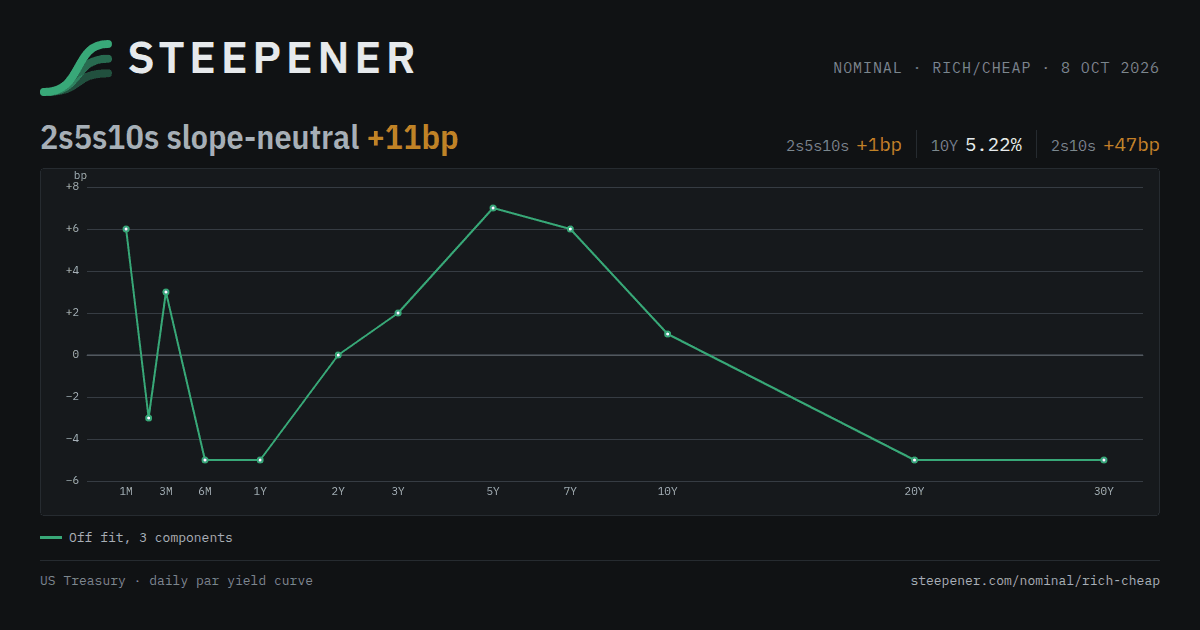
- Treasury yields, including the benchmark 10-year note, have softened modestly to around **4.04%**, indicating cautious investor positioning amid economic ambiguity and Fed uncertainty.
- Contrary to expectations for dollar weakness amid anticipated easing, the **U.S. Dollar Index has exhibited surprising strength**, driven by rate cut uncertainty and safe-haven demand.
- This unexpected dollar resilience complicates market positioning and weighs on dollar-sensitive sectors such as exporters and multinational corporations.
- Market pricing increasingly anticipates multiple rate cuts into late 2026 and 2027, fueled by optimism that AI-driven productivity gains will eventually ease inflation and stimulate growth.
- The International Monetary Fund (IMF) projects only a single U.S. rate cut in 2026 and cautions about downside risks from trade tensions and labor shortages linked to immigration policies, reinforcing the Fed’s data-dependent stance.
---
### Trade Policy and Tariff Developments Add to Inflation and Market Uncertainty
A recent Supreme Court ruling invalidating certain tariffs has added fresh near-term volatility risks to markets and inflation dynamics.
- This decision complicates the trade policy landscape—a critical factor influencing inflation trajectory.
- Fed officials, notably Austan Goolsbee, continue to highlight tariff recalibration as a key tool to manage inflation.
- Market participants remain vigilant regarding trade developments and their potential impacts on prices, supply chains, and economic growth.
---
### Heightened Regulatory Focus on Mortgage Servicing and Reputation Risk
The Federal Reserve has intensified supervisory scrutiny of mortgage servicing amid rising delinquencies:
- Vice Chair Michelle Bowman’s February 2026 testimony unveiled a groundbreaking proposal to formally embed **reputation risk** into supervisory frameworks, underscoring borrower trust as a systemic concern.
- Key focus areas include enhanced **borrower communication**, expedited **loan modifications**, and improved **loss mitigation effectiveness**.
- The Fed’s exploration of AI-driven servicing productivity improvements aims to bolster operational efficiency while monitoring labor market effects.
- Industry stakeholders broadly support these measures but stress that **swift and effective implementation is critical** to mitigate foreclosure risks.
---
### Student Loan Relief Deadlock Persists, Amplifying Systemic Risks
Despite bipartisan calls for action, federal policymakers remain deadlocked over student loan relief or restructuring programs.
- This ongoing impasse prolongs financial distress for millions, suppresses spending, and delays critical life milestones.
- The prolonged crisis poses significant systemic risks and highlights the urgent need for policy breakthroughs to alleviate household burdens and support economic vitality.
---
### Fed Leadership Transition and Policy Dynamics Add Complexity
As Chair Jerome Powell prepares to step down later in 2026, Fed leadership dynamics add further complexity to the policy outlook:
- Former St. Louis Fed President James Bullard has speculated Powell might remain on the Fed Board post-chairmanship, providing continuity amid uncertainty.
- Discussions surrounding leadership transitions contribute to market volatility.
- Fed officials underscore the importance of upcoming economic data releases—especially Producer Price Index (PPI) and labor market metrics—in shaping near-term policy decisions.
---
### AI Disruption and Productivity Narratives Influence Market and Fed Expectations
A growing market narrative focuses on AI’s potential to disrupt business sectors and drive productivity gains, influencing both investor sentiment and Fed outlook:
- Optimism that AI-driven productivity improvements will eventually ease inflation supports market pricing of multiple rate cuts into late 2026 and beyond.
- However, the Fed remains cautious, emphasizing data dependency and uncertainties regarding the timing, scale, and distribution of AI’s economic impacts.
- Policymakers and market participants are closely watching how AI adoption affects labor market dynamics, inflation trends, and growth prospects.
---
### Key Watchpoints and Outlook
Several critical factors will shape the economic and policy landscape in the coming months:
- Upcoming inflation and GDP data, notably the pivotal **Producer Price Index report**, will be closely scrutinized for signs of inflation persistence or easing.
- The success and speed of **mortgage servicing reforms** will be vital to containing delinquency and foreclosure risks.
- Any **legislative breakthroughs on student loan relief** could significantly alleviate household financial strain and boost consumption.
- Ongoing monitoring of **labor market trends, wage growth, and consumer credit delinquencies** remains essential amid elevated credit stress.
- The evolving narrative around **AI-driven productivity gains** will continue to influence Fed expectations and market pricing.
- Treasury yield movements and consumer sentiment indices will provide further insight into economic resilience and risk appetite.
- The **unexpected strength of the U.S. dollar** amid rate cut uncertainty complicates outlooks for exporters and multinational firms.
- The **Supreme Court tariff ruling** adds trade policy uncertainty with potential near-term inflation and market volatility implications.
- The **timing and communication of FOMC meetings** will remain critical in shaping market dynamics and expectations.
---
### Conclusion: Navigating Elevated Credit Stress Amid Policy and Technological Uncertainty
As the U.S. economy advances through 2026, it faces a **complex balancing act**. Broadening mortgage delinquencies—including among prime borrowers—rising student loan defaults, and persistent consumer credit stresses continue to restrain spending and housing demand. Inflation remains a puzzle, with headline easing offset by sticky core measures and surprising upstream price pressures complicating Fed decisions.
The Fed’s cautious neutral stance reflects internal divisions amid mixed signals and rising optimism about AI’s productivity potential. Heightened regulatory focus on mortgage servicing reforms—especially the formal recognition of reputation risk—highlights the urgency of operational improvements to restore consumer confidence and stabilize the financial system. Meanwhile, the unresolved student loan crisis looms as a systemic threat, suppressing economic dynamism.
Policymakers must deftly navigate intersecting forces—monetary policy, regulatory reforms, trade policy volatility, and technological transformation—to influence household credit conditions, inflation dynamics, and the broader economic trajectory in the months and years ahead. Vigilant monitoring of upcoming data releases, policy developments, and market responses will be essential to successfully managing these multifaceted challenges.