# The 2026 Evolution of YieldMax MSTR ETF: Navigating Innovation, Risks, and Opportunities
As 2026 advances, the landscape of income-focused ETFs continues to evolve rapidly, driven by persistent market volatility, investor demand for immediate cash flows, and an industry-wide push toward innovative product structures. Among the standout offerings, the **YieldMax MSTR Option Income Strategy ETF** has maintained its prominence, exemplifying stability and transparency amid a sea of diverse and increasingly complex products. This year has been pivotal for YieldMax MSTR, notably with its shift to **weekly distributions**, reinforcing its role as a core vehicle for moderate-income investors seeking dependable income streams.
## The Resilience and Role of YieldMax MSTR in 2026
Throughout 2026, **YieldMax MSTR** has reaffirmed its status as a **resilient and predictable income generator**. Its primary strategy—selling out-of-the-money covered calls on MicroStrategy (**MSTR**) shares—continues to produce **consistent premiums**, often translating into **annualized yields of 8–10% or higher**. This reliability makes it particularly attractive to **moderate-income investors** prioritizing **cash flow stability** and **transparency** over aggressive growth.
**Key strengths of YieldMax MSTR include:**
- **Predictable income streams:** Regular premiums from options writing provide steady cash flow, serving as a buffer during mild downturns.
- **Simplicity and transparency:** Its straightforward covered call approach remains a significant advantage, especially as investors grow wary of complex derivatives.
- **Limited upside potential:** Gains beyond the strike price are capped, but many investors accept this trade-off for consistent income.
### Recent Performance and Distribution Updates
A defining development in 2026 has been the **introduction of weekly distributions**, which commenced on **February 10, 2026**. This change was strategically implemented to **enhance liquidity** and satisfy investor preferences for **more immediate cash flows**, particularly during turbulent markets or heightened volatility periods. The **trend toward frequent payouts**, including weekly distributions, aligns with a broader industry shift where funds are increasingly tailored for **liquidity and regular income**.
**Recent updates include:**
- **Distribution announcements:** YieldMax introduced **weekly payouts** for its **Group 1 ETFs**, providing investors with increased liquidity and flexibility.
- **Peer comparison:**
- The **Hamilton ETFs** announced their **February 2026 monthly distributions**, with ex-dividend dates around **February 27, 2026**.
- The **QdTE ETF (Roundhill N-100 0DTE Covered Call Strategy)** continues to deliver consistent dividends, appealing to income-focused investors seeking active management and frequent payouts.
## Broader ETF Sector Innovation in 2026
The ETF industry is experiencing a **wave of innovation**, driven by factors such as **low interest rates**, **high investor demand for income**, and **ongoing market volatility**. Notable trends include:
- **Sector and thematic covered call funds:**
- **Energy and MLP ETFs** like **MLPI** have adopted **out-of-the-money covered calls** on energy stocks, leveraging sector gains and distributions to boost yields.
- **Broad-market funds:**
- **Global X RYLD**, tracking the Russell 2000, continues to deliver **yields above 11%**, appealing to retail investors seeking high income.
- The **CIBC US High Dividend Covered Call ETF** (CAD-hedged) maintains **steady distributions** around **$0.125 per unit**.
- **Active and short-duration options strategies:**
- The **Roundhill N-100 0DTE ETF (QDTE)** exemplifies this trend, employing **weekly options** with **annualized yields approaching 15.5%**, catering to active traders comfortable with **frequent payouts** and **higher risk**.
- Funds like **MAGO** and **BITK** focus on **high-premium options writing**, accepting increased volatility to generate **elevated yields**.
- **High-yield, high-volatility ETFs:**
- Leveraged and crypto-linked ETFs such as **NEOS Boosted ETFs** are pushing distribution rates to **19–23%**, designed for investors willing to accept **principal fluctuations** and **elevated risk**.
### Innovations in Distribution Structures and New Product Types
A prominent trend is the **increase in payout frequency**, especially **weekly distributions**, catering to investors seeking **liquidity and immediate cash flow**:
> *"YieldMax® ETFs announced distributions for the Group 1 ETFs, providing investors with regular weekly income. This new schedule offers increased liquidity and flexibility, catering to investors seeking more immediate cash flows."*
In addition, **new product structures** are emerging:
- **Autocallable Income ETFs:**
Collaborations involving **Rex Partners**, **CAIS**, **RBC Capital Markets**, and **Bloomberg Indices** have launched **autocallable income ETFs**. These aim to deliver **periodic income** with the potential for **early redemption**, offering **tailored yield streams** with embedded **yield-enhancement features**.
- **Digital Asset Income Strategies:**
Funds like **VistaShares’ BTYB Treasury Plus Bitcoin Income ETF** combine **US Treasury securities** with **cryptocurrency yield strategies** such as staking and yield farming. This reflects an industry pivot toward **multi-asset income solutions** that blend traditional assets with **cryptocurrency exposure**.
## Risks and Cautionary Examples: The MSTY Collapse and Market Warnings
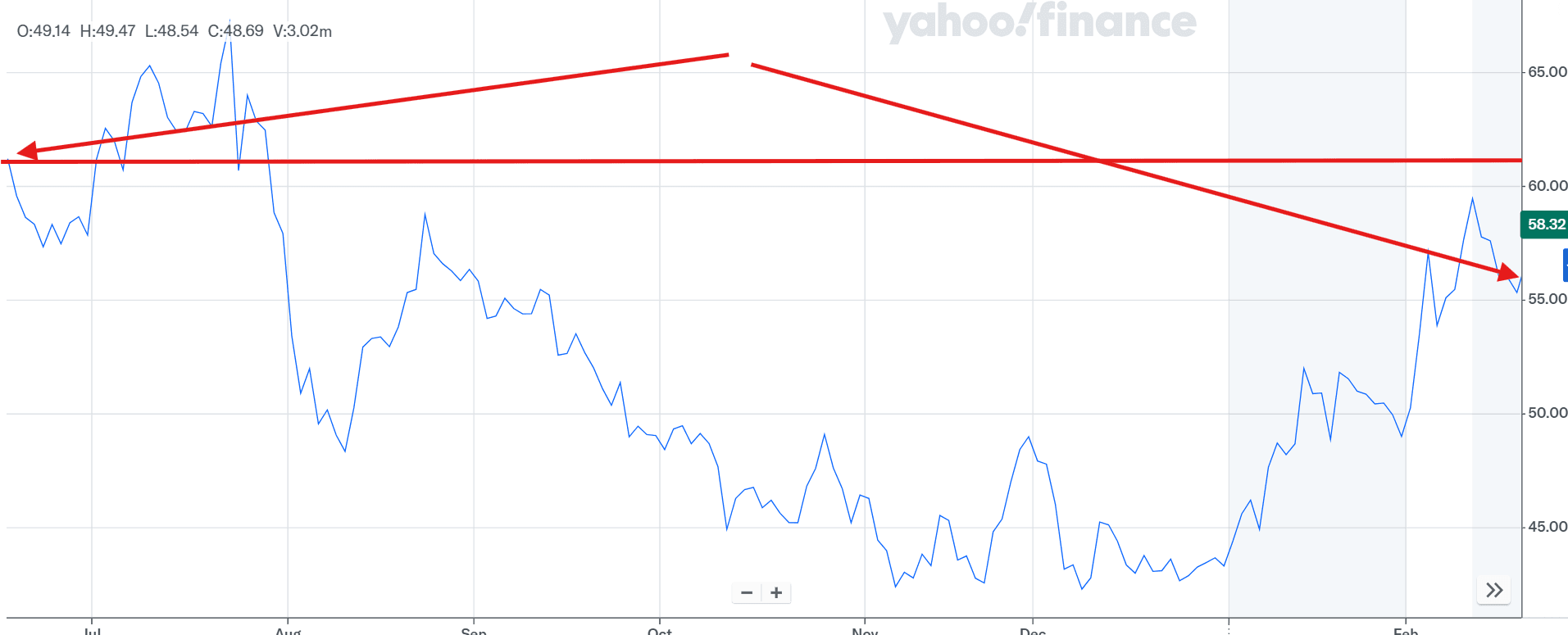
Despite the allure of high yields, recent episodes have starkly highlighted the **inherent risks**, most notably the **collapse of MSTY** earlier this year. MSTY initially claimed **over 102% yields**, primarily due to holdings in **Bitcoin-related assets**. When **Bitcoin prices plunged sharply**, MSTY’s **distributions collapsed**, and **principal erosion accelerated**, leaving investors with significant losses.
This event served as a **wake-up call** about the **principal risks associated with cryptocurrency-linked ETFs**:
- **Market downturns** can quickly turn **high yields into principal erosion**.
- **Cryptocurrency exposure**, especially in volatile phases, magnifies downside risks.
- The MSTY collapse underscores the importance of **due diligence** and **risk awareness** when considering high-yield crypto products.
### Industry Warnings and Cautionary Notes
- **Yield claims can be misleading:**
Many products now promote **"over 20%" yields** and **uncapped gains**, often obscuring **underlying risks**.
- **Principal erosion risks:**
Cryptocurrencies and leveraged strategies magnify downside potential, as demonstrated by MSTY’s fall.
- **Expert counsel:**
Industry leaders like **Amplify ETFs CEO** have **cautioned against yield chasing**, emphasizing that **high yields often come with high risks**. For example, Amplify’s **YieldSmart ETF suite** explicitly urges investors to **consider risk tolerance carefully**.
### Broader Market and Systemic Risks
The proliferation of **leveraged ETFs** and **high-volatility options** introduces **systemic risks**, including:
- Rapid principal losses during sharp market declines.
- Amplified downside in crypto-related assets.
- The risk of **misleading yield marketing** leading retail investors into excessive exposure.
## Notable Product and Industry Developments in 2026
Adding to the landscape, **Amplify** has launched new target-income ETFs such as **LQDM (12%) Target Income ETF** and **HYGM (High Yield, 10%) Target Income ETF**, which are designed to appeal to investors chasing **attractive yields** with structured risk profiles. These offerings highlight the industry's ongoing efforts to balance **yield generation** with **risk mitigation**.
## Practical Guidance for 2026 Investors
In this complex environment, **prudent investing principles** are more critical than ever:
- **Prioritize transparency and simplicity:**
Strategies like YieldMax MSTR, with clear mechanics, tend to be safer and easier to understand.
- **Monitor option parameters and implied volatility:**
Adjust strike prices and expiry dates to optimize premiums, reduce downside risks, and prevent principal erosion.
- **Avoid blind yield chasing:**
Be skeptical of products claiming **double-digit or higher yields** without transparent risk disclosures, especially in leveraged or crypto-linked products.
- **Align exposures with risk tolerance:**
Limit or avoid high-volatility, leveraged ETFs unless comfortable with significant principal fluctuations.
- **Perform thorough due diligence:**
Investigate underlying assets, particularly for products involving **cryptocurrency exposure** or **complex derivatives**.
## The Current Status and Future Outlook
**YieldMax MSTR** remains a **model of transparency, stability, and simplicity**—qualities highly valued amid ongoing market turbulence. Its **covered call approach** and **weekly distributions** have demonstrated resilience, especially compared to **sector-specific**, **short-term**, or **high-yield ETFs** that often carry elevated risks.
Meanwhile, the ETF universe continues to see innovations such as **autocallable income ETFs** and **digital asset income funds**, reflecting industry efforts to diversify income streams. However, the **MSTY collapse** and **industry cautions** serve as stark reminders that **high yields often entail significant principal risks**. Cryptocurrency-linked strategies and leveraged products can lead to **rapid principal erosion** during downturns.
### Implications for Investors in 2026
- The **YieldMax MSTR ETF** offers **transparency, stability, and steady income**, making it suitable for **moderate-income investors**.
- The broader ETF market presents **diverse opportunities**, often with **higher risk profiles**.
- **Vigilance and due diligence** are essential, especially with **cryptocurrency or leverage-based products**.
## Conclusion
In 2026, **YieldMax MSTR** exemplifies **transparency, simplicity, and steady income**—qualities increasingly vital during uncertain times. Its **simple covered call strategy** and **weekly distributions** have proven resilient, especially during volatile periods, reinforcing its position as a **core holding** for investors prioritizing **cash flow stability**.
Conversely, the expanding universe of **innovative ETF products**, such as **autocallable income ETFs** and **digital asset income funds**, illustrates industry efforts to diversify income sources. Yet, recent **MSTY’s collapse** and **industry warnings** highlight that **high yields often come with significant risks**. Cryptocurrency-related and leveraged strategies can lead to **principal erosion** during downturns, emphasizing the importance of **vigilant due diligence**.
### Final Takeaways for 2026
- **YieldMax MSTR** remains a **paragon of transparency and stability** amid market turbulence.
- Investors should exercise caution with **high-yield claims**, especially in **high-volatility** or **leveraged** products.
- **Due diligence** and **aligning investments with risk appetite** are crucial in navigating the **diverse ETF landscape** of 2026.
As the ETF ecosystem continues to innovate, maintaining a focus on **understanding underlying risks** will be essential for leveraging opportunities while safeguarding principal. The lessons from **MSTY’s collapse** serve as an enduring reminder: **not all yields are created equal**—and prudent, informed investing is more important than ever in 2026.