
# Democratizing Machine Learning and Generative AI: New Tools, Education, Industry Insights, and Hardware Advancements Drive Broad Adoption
The rapid evolution of machine learning (ML) and generative AI continues to reshape not only how industries operate but also how individuals participate in AI-driven innovation. Building on recent efforts to make core concepts accessible through bite-sized educational content, the latest developments encompass practical deployment workflows, groundbreaking content generation tools, industry transformations, and significant hardware innovations. These advances collectively lower barriers, empower creators and businesses, and pave the way for a more inclusive AI ecosystem.
## Reinforcing Foundations with Bite-Sized Educational Resources
A key pillar of AI democratization remains accessible, digestible learning materials. Short explainer videos like **"What is Machine Learning in 10 Minutes"** have been instrumental in widening participation, enabling learners from diverse backgrounds to quickly grasp foundational ideas. These primers serve as gateways, transforming curiosity into active experimentation and project development.
Recently, the community has seen an explosion of such content—tutorials, visual explainers, and interactive modules—that demystify complex topics such as neural networks, model training, AI ethics, and responsible AI practices. These resources foster a more inclusive environment, encouraging newcomers to contribute to and innovate within the AI space.
## Expanding Practical, End-to-End ML Workflows
Beyond education, focus has shifted toward enabling real-world application through scalable, user-friendly workflows that minimize technical barriers:
- **AWS SageMaker Tutorials**: Newly released step-by-step guides now facilitate seamless model development, training, and deployment within AWS SageMaker. These tutorials emphasize integration with AWS services, making deployment accessible for small teams and individual developers, thus democratizing enterprise-grade ML infrastructure.
- **Power BI In-Situ Model Training**: Microsoft Power BI has integrated machine learning capabilities directly into its analytics environment. Users can now build, refine, and embed predictive models within dashboards without extensive coding expertise. This integration accelerates data-driven decision-making across industries, empowering business analysts to incorporate AI insights effortlessly.
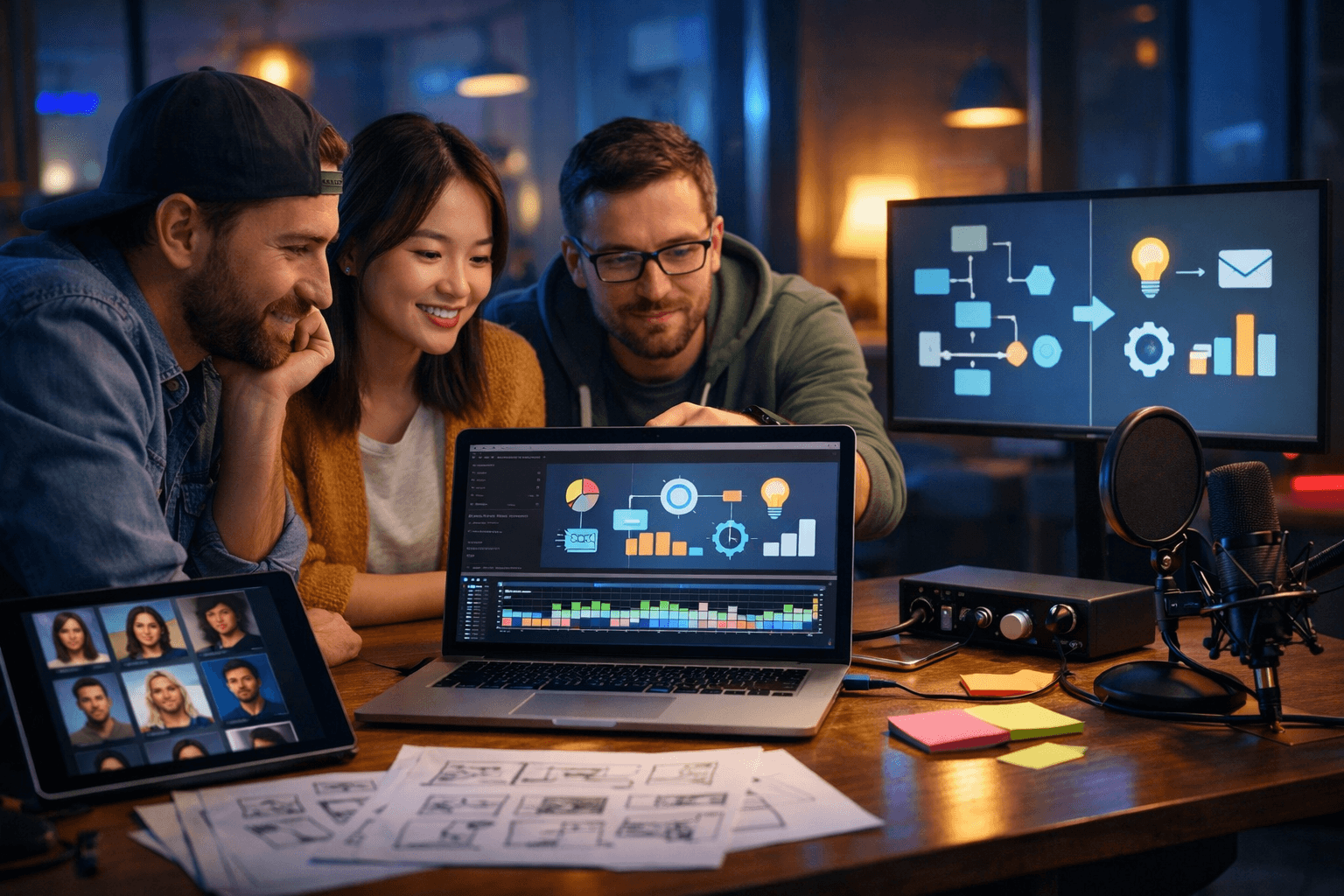
- **Content Generation with AI**: The frontier of AI content creation continues to advance rapidly. Demonstrations like **"NEW LONG AI Video Generator | Text To Video And Image to Film Maker AI"** showcase AI transforming simple textual prompts into high-quality videos and cinematic images within moments. Such tools are revolutionizing marketing, entertainment, and creative workflows, enabling rapid content production at scale.
Industry leaders have also introduced innovative AI agents capable of creating and editing videos in seconds, exemplified by popular YouTube demos titled **"This NEW AI Video Agent Creates & Edits Videos in Seconds! (Crazy use cases)"**. These tools are redefining multimedia workflows, allowing creators to produce, customize, and refine content swiftly without technical backgrounds.
## Industry Perspectives: Balancing Innovation with Ethics and Quality
As generative AI tools become more sophisticated and accessible, industry voices emphasize the importance of maintaining quality, authenticity, and ethical standards:
- **Higgsfield.ai’s Beginner’s Guide**: A recent tutorial introduces users to an AI video tool that can produce cinematic content from simple prompts. The guide aims to demystify AI media creation, encouraging beginners to experiment confidently while understanding technical capabilities and limitations.
- **Fast Company’s Insight on AI Creativity**: An insightful article titled **"Fighting AI Slop with Real Creativity"** explores how brands leverage AI for image and video campaigns—from print ads to commercials. While AI accelerates content creation and reduces costs, the article stresses that genuine creative vision remains paramount. It warns against over-reliance on AI outputs that risk becoming generic or low-quality, advocating for a balanced approach where human oversight preserves authenticity and storytelling integrity.
These perspectives highlight ongoing efforts to address challenges such as content verification, deepfake detection, attribution, and misinformation—critical concerns as AI-generated media proliferates.
## Hardware and Infrastructure Breakthroughs: NVIDIA’s New AI Inference Chip
A noteworthy development in AI deployment infrastructure is NVIDIA’s recent unveiling of a new AI inference chip, as highlighted in the short video **"NVIDIA Unveils New AI Inference Chip | Clockwise 8 PM Technology #Shorts"**. This 2-minute and 7-second clip showcases NVIDIA’s latest hardware designed specifically for high-performance inference tasks. The new chip aims to significantly improve deployment performance and scalability, enabling faster, more efficient AI services in data centers and edge devices.
This hardware innovation addresses a critical bottleneck in AI workflows—deployment latency and resource consumption—making it feasible for real-time applications such as autonomous vehicles, robotics, and large-scale content generation. By enhancing inference capabilities, NVIDIA is empowering industries to deploy AI models more broadly and efficiently, further accelerating AI adoption.
## Industry Integration and Transformation: Hollywood’s Embrace of AI
The entertainment industry is actively integrating AI into creative workflows. An illustrative example is highlighted in **"How Hollywood is Integrating Artificial Intelligence"**, where broadcast industry expert Jeffrey Snyder discusses how major studios and content creators are leveraging AI tools for scriptwriting, visual effects, editing, and even generating synthetic actors. The integration aims to streamline production, reduce costs, and open new creative avenues, but also raises questions about originality and authenticity.
This trend underscores a broader industry shift toward AI-assisted creativity, where machines serve as collaborators rather than replacements. As Hollywood experiments with AI-generated content, the industry is also grappling with ethical considerations related to deepfake detection, content attribution, and maintaining audience trust.
## The Path Forward: Ethical Standards and Responsible Innovation
As AI-generated content becomes more pervasive, the emphasis on ethics, attribution, and verification intensifies. Industry leaders, researchers, and policymakers are working to establish standards and develop tools to detect deepfakes, verify content origins, and prevent misuse. The goal is to foster innovation while safeguarding authenticity and societal trust.
## **Current Status and Future Outlook**
The landscape of AI adoption is experiencing a **paradigm shift** characterized by:
- **Lowered Barriers**: Accessible tutorials, integrated tools within familiar platforms, and intuitive content generators make ML and generative AI approachable for non-experts.
- **Seamless Integration**: Embedding predictive analytics and creative AI into everyday workflows accelerates innovation in business and entertainment.
- **Enhanced Creative Capabilities**: Advanced AI media tools empower creators to produce professional-quality content rapidly, broadening creative horizons.
- **Hardware and Infrastructure Growth**: Innovations like NVIDIA’s new inference chip improve deployment efficiency, supporting large-scale, real-time AI applications.
- **Industry Responsibility**: Ongoing focus on ethical standards and verification tools aims to ensure AI benefits society while minimizing risks.
**In summary**, these developments collectively accelerate AI’s democratization, fostering a more inclusive, responsible, and innovative ecosystem. As tools become more powerful and accessible, and as industry and hardware advancements continue, we are approaching an era where AI-driven creativity and decision-making are intrinsic to multiple sectors—shaping the future of work, entertainment, and technology in profound ways.