# Enterprise AI in 2026: Converging Foundations, Efficient Contexts, and Autonomous Ecosystems
The enterprise AI landscape of 2026 has reached an unprecedented level of sophistication, driven by the convergence of multimodal foundation models, advanced SDKs, innovative hardware, and secure multi-agent architectures. This integrated ecosystem is empowering organizations across industries—healthcare, manufacturing, finance, defense—to deploy AI solutions that are not only powerful and scalable but also trustworthy, adaptable, and seamlessly embedded into mission-critical workflows. Recent breakthroughs continue to refine core capabilities, pushing the boundaries of what enterprise AI can achieve.
## Evolution of Foundation Models and Digital Workforce Automation
**Multimodal foundation models** remain central to enterprise automation and research. Notably:
- **Google’s Gemini 3.1 Pro** now boasts an **impressive 77.1% reasoning accuracy**, effectively doubling previous benchmarks. Its ability to **integrate text, images, structured data**, and perform **multi-step reasoning** has become critical for diagnostics, analytics, and logistics optimization, leading to **faster decision-making cycles**.
- **Qwen 3.5**, branded as "**seeing, thinking, and acting**," exemplifies **native multimodal AI** with capabilities to process **visual, textual, and sensor data** in a **perception-reasoning-action loop**. Its deployment in remote diagnostics, industrial inspections, and interactive support systems significantly enhances enterprise agility.
Complementing these models are **commercial agent products** transforming AI into **digital employees**:
- **Perplexity's "Computer" AI agent**, with its **unified framework of 19 models** and a valuation of **$20 billion**, offers a **turnkey enterprise assistant**. Priced at **$200/month**, it manages complex workflows, automates routine tasks, and reduces manual effort across departments.
- **OpenClaw**, leveraging **N1 and N2 architectures**, has established itself as a **robust, enterprise-ready multi-modal agent ecosystem** emphasizing **security**, **scalability**, and **orchestration**. Its **plug-and-play deployment** approach accelerates digital workforce integration.
The trend increasingly favors **plug-and-play, customizable digital workers**, lowering barriers to enterprise AI adoption and enabling rapid scaling of automation initiatives.
## Hardware & Infrastructure: Democratizing Large-Scale AI
Hardware innovation continues to democratize access to large models:
- Industry figures like **@Tim_Dettmers** highlight ongoing efforts to develop **specialized high-throughput LLM chips** supporting **trillion-parameter models**. These chips aim to enable **on-premise deployment**, reducing reliance on cloud services, lowering costs, and enhancing data sovereignty.
- **NVMe-to-GPU streaming techniques** now facilitate **efficient large-model inference** on **consumer-grade GPUs** such as **RTX 3090s (24GB VRAM)**. This enables organizations to **run models like Llama 3.1 70B** efficiently and cost-effectively, bypassing CPU bottlenecks.
- Hardware diversification persists with **clustering AMD Ryzen™ AI Max+ systems**, supporting **local inference at scale**. An influential report titled **"Trillion-Parameter LLM on an AMD Ryzen™ AI Max+ Cluster"** showcases how enterprises can support **large models without relying solely on cloud infrastructure**, even under **geopolitical constraints**. Hardware sourcing from **DeepSeek’s Nvidia Blackwell chips** further accelerates progress in training and inference.
## Cutting-Edge Research: Native Omni-Modal Agents & End-to-End Pipelines
Research efforts are pushing toward **integrated omni-modal AI agents** capable of **handling diverse data modalities seamlessly**:
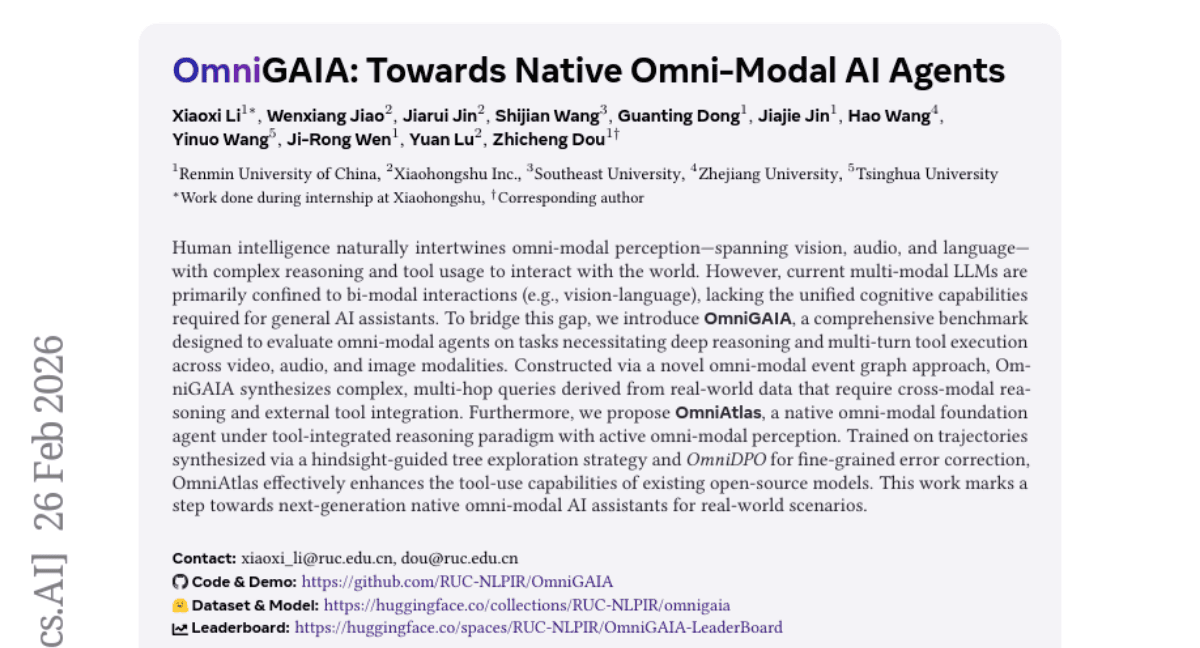
- The paper **"Towards Native Omni-Modal AI Agents"** introduces architectures that natively process **visual, textual, auditory, and sensor data** within a **single unified framework**. This approach **eliminates multi-step data conversions**, enabling **more natural reasoning** and **faster inference**.
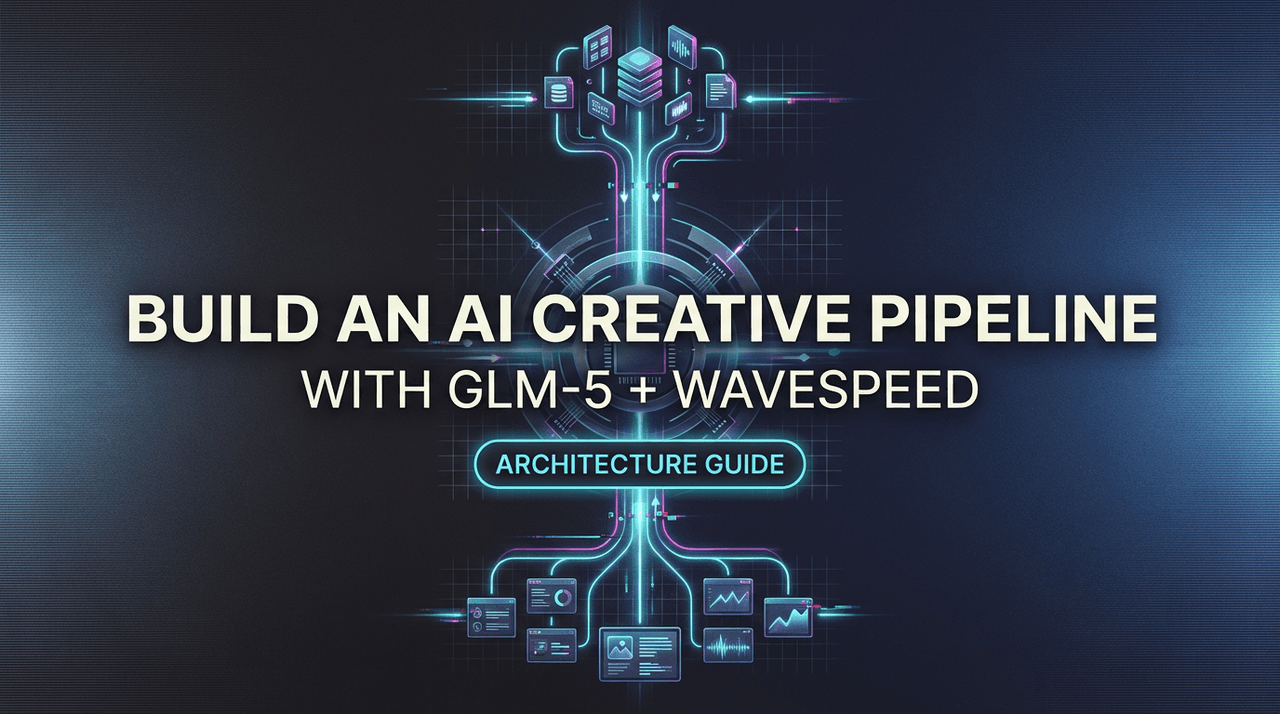
- The **GLM-5** model, combined with the **WaveSpeed** pipeline, exemplifies **end-to-end multi-modal agent systems** that **ingest various inputs**, **perform complex reasoning**, and **generate multi-format outputs**. These systems are increasingly vital for **autonomous medical diagnostics**, **industrial inspections**, and **autonomous vehicles**.
- Additionally, **generative UI** and **vector assets**—such as **Meta’s VecGlypher**—are expanding multimodal toolkits:
> **@_akhaliq: Meta presents VecGlypher**
> *Unified Vector Glyph Generation with Language Models*
> This tool enables **programmatic generation of vector graphics and UI assets** from language prompts, streamlining **design workflows** and **UI customization**. It holds significant promise for **enterprise graphic asset creation** and **dynamic UI automation**, easily integrating into **agent workflows**.
## Enhancing Developer & Agent Engineering
The ecosystem for **building reliable, multi-modal autonomous systems** emphasizes **measurement-driven development**:
- The article **"Rebuilding an AI Agent the Right Way: Measurement, Not Guesswork"** highlights the importance of **systematic evaluation** through **logging**, **metrics**, and **feedback loops** to **ensure robustness**.
- **API design principles** from **"How to Make Your API Agent-Ready"** advocate for **discoverability**, **fault tolerance**, and **orchestration**, supporting **enterprise workflows** and **multi-agent ecosystems**.
- Resources like **OpenClaw’s tutorials** demonstrate **best practices** in **configuration management**, **workflow orchestration**, and **monitoring**, enabling developers to **build scalable and reliable multi-agent systems**.
Recent developments focus on **context management** and **long-term memory**:
- Techniques such as **query-focused** and **memory-aware rerankers**, discussed in **" @_akhaliq: Query-focused and Memory-aware Reranker for Long Context Processing"**, improve **context retention** and **relevance**, vital for **multi-turn, complex workflows**.
- Data engineering innovations, highlighted in **" @_akhaliq: On Data Engineering for Scaling LLM Terminal Capabilities,"** optimize **pipelines**, **indexing**, and **query management**, ensuring **enterprise-scale deployment** is both **efficient** and **robust**.
### Secure Credential & Security Best Practices
Securing multi-agent ecosystems remains a priority:
- The case study **"Solving The Credential Problem with AI Agents"** details **best practices** for **credential provisioning, rotation, and validation**, ensuring **secure data access** and **trustworthiness**.
- The **"54-minute YouTube presentation"** offers **implementation strategies** for **enterprise organizations** to establish **robust security frameworks** supporting **multi-modal, multi-agent workflows**.
The **OpenClaw documentation** now includes **step-by-step deployment guides** for **self-hosted, multi-channel AI assistants** with **security measures**, fostering **trustworthy and scalable solutions**.
## Security, Governance, & Edge Multi-Agent Ecosystems
As autonomous AI proliferates, **security and governance** are critical:
- Recent incidents, such as **Microsoft’s Copilot** accidentally exposing **confidential emails**, underscore vulnerabilities like **API misuse** and **insider threats**.
- New tools, like **jx887/homebrew-canaryai**, enable **real-time anomaly detection** and **malicious activity monitoring**, strengthening **trustworthiness**.
- **Cryptographic attestation protocols**, including **Zero-Knowledge Proofs (ZKPs)** and **WebMCP**, now facilitate **verification of agent decisions** and **secure data sharing**, ensuring **regulatory compliance** across sectors such as **healthcare**, **finance**, and **defense**.
Deployment architectures increasingly leverage **least-privilege gateways**, **policy enforcement layers**, and **ephemeral runners** powered by **MCP**, **OPA**, and related frameworks to **limit attack surfaces** and **enforce operational policies**.
### Edge & On-Device Multi-Agent Ecosystems
A notable trend is deploying **edge** and **on-device multi-agent systems** that **preserve privacy** and **reduce latency**:
- **Samsung’s collaboration with Mato** introduces **multi-agent ecosystems on smartphones**, supporting **privacy-preserving automation**, **mobile diagnostics**, and **secure collaboration**.
- **Mato**, akin to a **tmux-like terminal workspace** for agents, facilitates **parallel management**, **workflow automation**, and **offline debugging** within an **intuitive interface**—enabling **low-latency, resilient AI automation** beyond centralized clouds, ideal for **healthcare**, **autonomous vehicles**, and **military applications**.
## New Developments: Hypernetworks, Agentic RAG, and Medical Reinforcement Learning
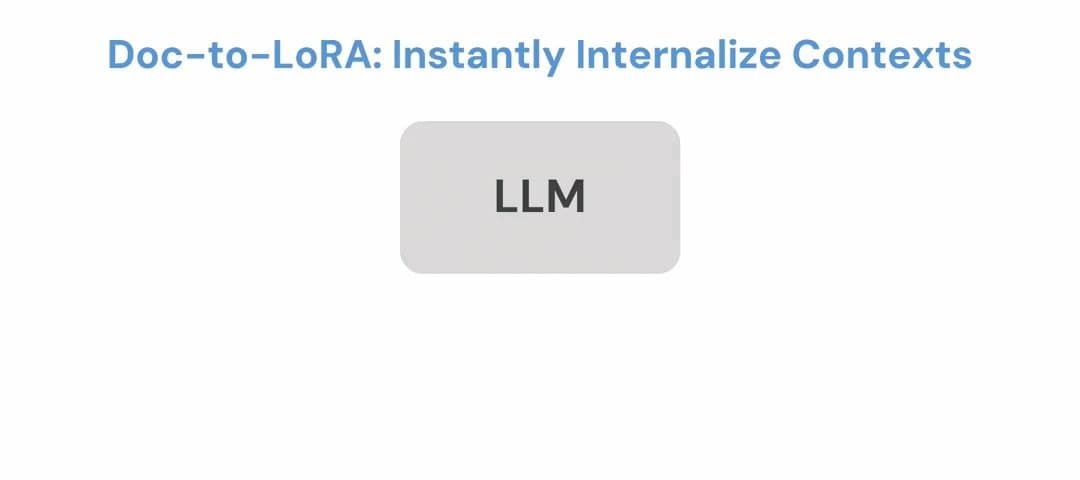
**Hypernetworks** are revolutionizing context management by enabling **parameter-efficient adaptation**:
> **@hardmaru: Instead of forcing models to hold everything in an active context window, we can use hypernetworks to generate dynamic weights tailored to specific tasks or long-term memory needs**, reducing dependency on enormous active context windows and facilitating **personalized, long-term interactions**.
**Agentic Retrieval-Augmented Generation (RAG)** implementations demonstrate practical success patterns:
- In **"Enterprise AI Success With Agentic RAG Implementation,"** real-world use cases highlight how combining retrieval with agent reasoning enhances **accuracy**, **relevance**, and **ROI** in enterprise workflows. Challenges include **efficient retrieval**, **contextual freshness**, and **scalability**, but the benefits are clear: **more precise decision-support**, **knowledge integration**, and **automated reasoning**.
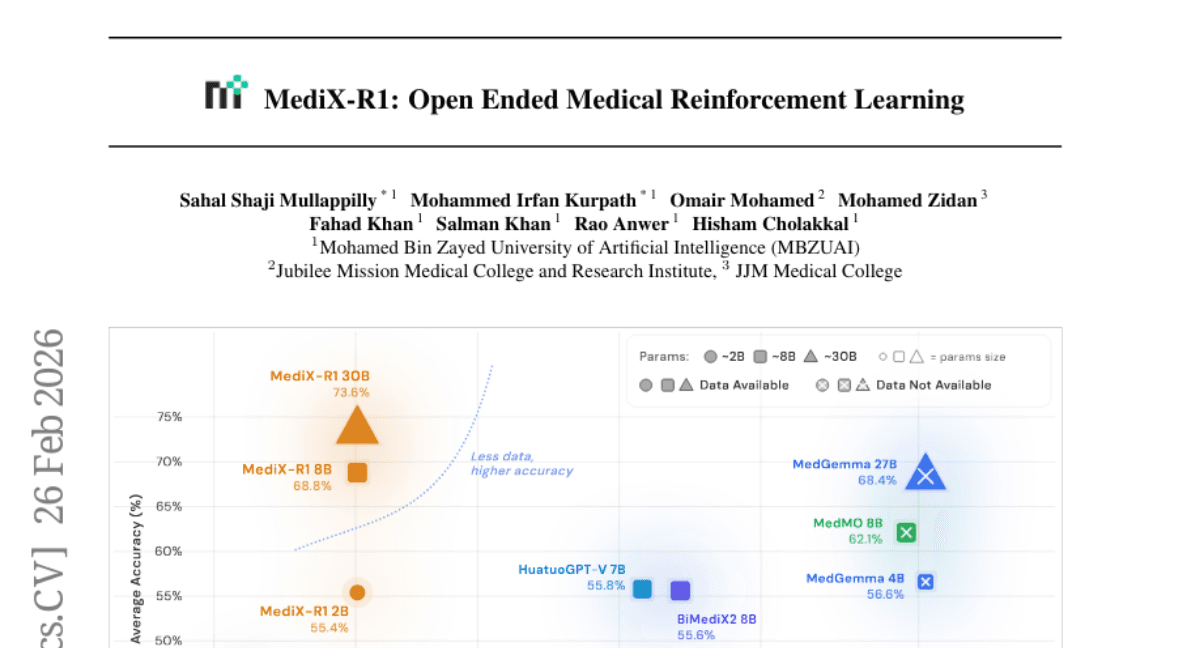
**Medical reinforcement learning** research, exemplified by **MediX-R1**, targets **domain-specific training** for **open-ended medical decision support**:
- MediX-R1 focuses on **learning policies** for complex, regulated environments, supporting **dynamic clinical decision-making** where **safety**, **explainability**, and **regulatory compliance** are paramount. This domain-specific RL marks a step toward **trustworthy autonomous medical AI** capable of **assisting clinicians** and **streamlining diagnostics**.
**Claude API** updates emphasize transforming model outputs into **structured, API-ready data** rather than just conversational text:
> **Claude API** now facilitates **direct integration** of AI outputs into enterprise systems, enabling **structured data exchange**, **automated workflows**, and **better interoperability** with existing SDKs and APIs.
## Current Status and Strategic Outlook
The developments of 2026 paint a picture of a **mature, interconnected enterprise AI ecosystem** where:
- **Native omni-modal agents** and **parameter-efficient context management** are enhancing **long-term memory** and **personalization**.
- **Structured, API-ready outputs** and **retrieval-augmented workflows** improve **accuracy** and **operational integration**.
- **Domain-specific reinforcement learning** and **secure multi-agent architectures** underpin **trustworthy automation** at scale.
- Hardware diversification and edge deployment strategies democratize access, **reducing dependency** on centralized cloud infrastructure and **preserving privacy**.
### Strategic Implications for Enterprises
- Prioritizing **robust context management** and **long-term memory**—via hypernetworks and advanced rerankers—will be key to building resilient, adaptive agents.
- Integrating **structured outputs** and **retrieval-augmented workflows** enhances **accuracy**, **compliance**, and **system interoperability**.
- Investing in **domain-specific RL** like MediX-R1 will unlock **specialized decision support** in regulated sectors.
- Emphasizing **security protocols**, **cryptographic attestations**, and **edge deployment** will safeguard **trust** and **regulatory adherence**.
As AI continues its rapid evolution, organizations that adopt these integrated, secure, and domain-aware solutions will position themselves at the forefront of operational innovation, resilience, and strategic advantage in the AI-driven era of 2026 and beyond.