2h ago
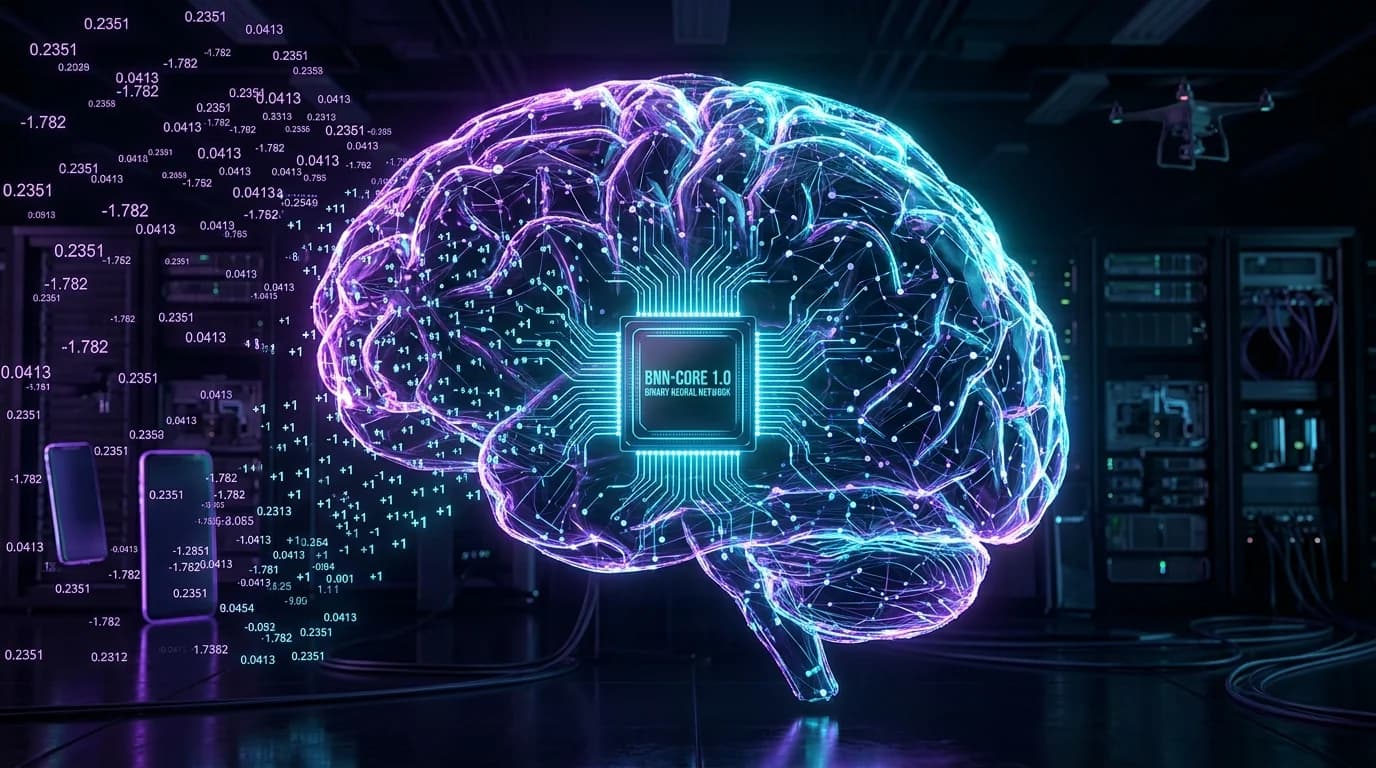
Binary NNs Now Hit 80%+ ImageNet Accuracy
Binary neural networks now reach over 80% ImageNet Top-1 accuracy with fully binarized models, slashing memory up to 32x and swapping multiplies for...

Created by Michael Hancock
Cutting‑edge AI models, algorithms, benchmarks, and theory from academia and industry
Explore the latest content tracked by AI Research Pulse
Binary neural networks now reach over 80% ImageNet Top-1 accuracy with fully binarized models, slashing memory up to 32x and swapping multiplies for...
Diverse terminal tasks in Terminal-Bench 3.0 expose reliability gaps that simpler benchmarks miss.
Claude received 48 hours and one GPU to align smaller models, then independently researched methods, trained, and tested them with surprisingly strong outcomes. The experiment shows AI moving from tool to autonomous researcher in alignment tasks.
Debian's 2026 GR delivered a clear Condorcet win for Option 5 on LLM usage, with 99.9993% posterior probability of ranking first. This outcome...
Genentech used Claude to coordinate a liquid handler, robotic arm and plate reader during a protein assay, including recovering from multiple errors....
The transformer architecture powering modern language models consists of an encoder and a decoder, each built from layers of multi-head self-attention and feed-forward neural networks.
A Google paper separates raw execution traces from a persistent wiki of accumulated knowledge, letting agents retain expertise across tasks instead of losing it after each run. This structure turns one-off trajectories into lasting skill libraries.
Major internal will and >14-hour workdays enabled the OpenAI and METR reports to overcome organizational frictions and release substantial AI safety evidence.
VGI-Bench introduces an academic benchmark to quantitatively evaluate and compare generative video models through measurable visual intelligence. The paper positions this as a structured probe beyond traditional quality metrics.
Data cleaning and reward alignment for RLVR demand significant expertise and upfront effort, yet deliver state-of-the-art results on complex tasks — showing the algorithm is only part of the story.
ActFlow shows flow and diffusion models can move beyond training data into new valid regions via uncertainty-guided exploration plus verifier...
Programmable photonic chips that slow light on command could replace multiple fixed chips, cutting the power AI systems burn.
By moving factual knowledge outside the model, Co-LMLM reaches lower perplexity than standard LMs trained on 40× more tokens. Its 360M variant scores 21.7 on SimpleQA-Verified—matching GPT-4o-mini.
Some code models suffer sharp pass@3 drops and ranking reversals when evaluated on unreleased task variants, while others stay stable. This pattern...
Language-and-vision training leaves LLMs without physical intuition, as they only absorb the world through text and images. Anthropic is holding back...
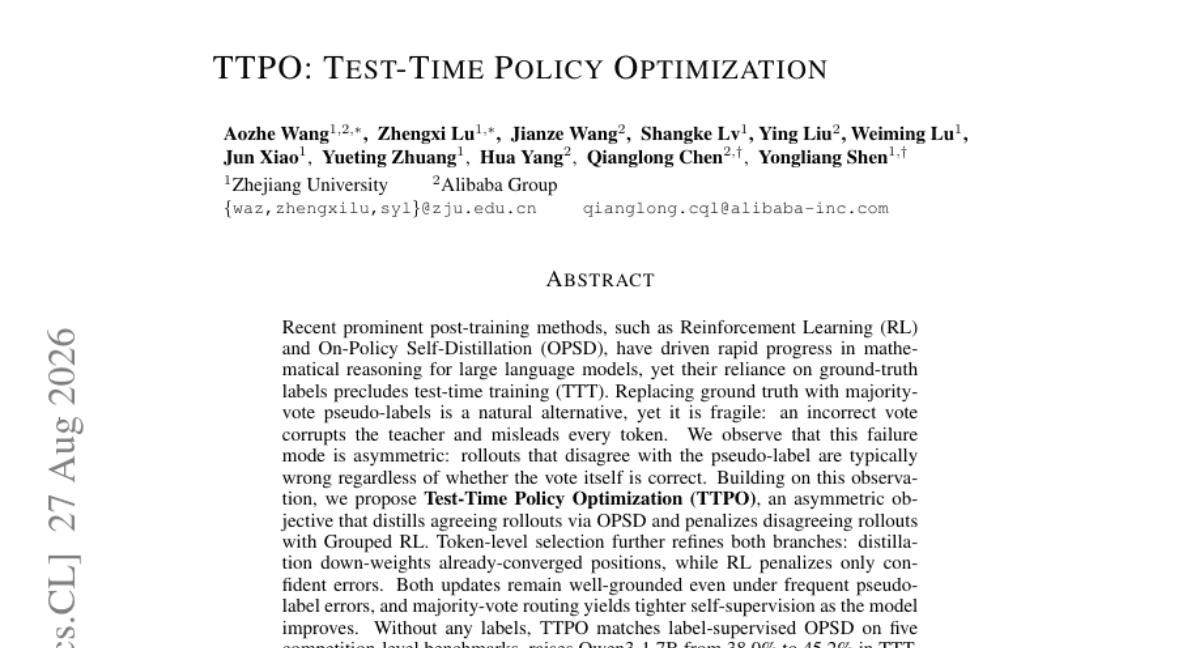
TTPO replaces fragile majority-vote supervision with an asymmetric objective that safely drives test-time self-improvement in math reasoning...
The DGX Spark is the de facto gold standard for running state-of-the-art models in home or small-office settings.
Current video generators fall short as world models because they produce plausible clips but fail to match true outcome distributions across repeated...
A frozen reproducibility package enables zero-training external validation of the Ribeiro atrial-fibrillation ECG model on PTB-XL and...
Progressive neural networks enable closed-loop RL systems to learn and act autonomously by using dynamic data and tags as feedback signals. This setup supports continuous learning during operation.