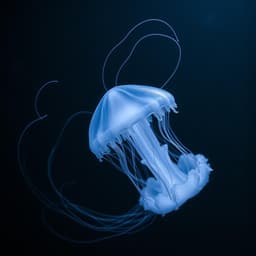
The abyssal and hadal zones remain among the least explored and most enigmatic frontiers on Earth, yet recent technological and scientific breakthroughs are rapidly transforming our understanding of these extreme marine realms. Once perceived as barren and static, these deep-ocean environments are now recognized as vibrant ecosystems shaped by complex geomorphological features, microbial engines, and extraordinary evolutionary adaptations. The latest advances in autonomous platforms, artificial intelligence, and sensing technologies are not only expanding biodiversity baselines but also revealing novel physiological and ecological strategies that enable life to thrive under crushing pressure and perpetual darkness.
---
### A Technological Renaissance: Persistent and Intelligent Exploration Platforms
Over the past few years, exploration of the abyssal and hadal zones has entered a new era defined by sustained, high-resolution, and adaptive observation, empowered by a suite of cutting-edge technologies:
- **Seatrec’s infiniTE profiling floats** continue to revolutionize abyssal monitoring by harvesting ocean thermal gradients to power vertical profiling missions without surfacing. These floats collect continuous streams of temperature, salinity, and density data critical for tracking nutrient fluxes and habitat conditions in some of the ocean’s most remote regions.
- Complementing these are the **Woolpert and Saildrone Surveyor USVs**, solar- and wind-powered unmanned surface vehicles recently deployed in the Mariana Islands region. Their long-duration missions fill critical data gaps left by conventional vessels, providing detailed seafloor mapping in hadal trenches and abyssal plains with minimal ecological disturbance.
- Advances in **autonomous underwater vehicle (AUV) swarms** featuring soft, biomimetic designs enable delicate navigation through sensitive benthic habitats. Coupled with **AI-powered imaging algorithms such as UWLight-YOLO**, these swarms accelerate species identification from vast sonar and video datasets, allowing simultaneous geological and biological surveys across expansive spatial and temporal scales.
- A breakthrough integration of **safe reinforcement learning algorithms with active disturbance rejection control** has enabled unmanned underwater vehicles (UUVs) to autonomously navigate chaotic deep-sea currents and obstacles. This represents a paradigm shift toward intelligent, adaptive platforms capable of prolonged independent missions in the unpredictable abyssal and hadal environments.
- Expanding the sensory toolkit, **multispectral bioluminescence imaging** now illuminates in situ behavior and communication among deep-sea fauna, revealing ecological interactions previously obscured by darkness.
- The **emergence of underwater ultrasonic radar** technology adds a novel sensing modality, enhancing seafloor mapping and object detection capabilities in deep waters where conventional sonar faces limitations due to scattering and absorption.
- Integration of **environmental DNA (eDNA) sampling with biologging devices** facilitates near-real-time tracking of species presence, movement, and environmental parameters—even at anthropogenic deep sites like the Titanic wreck, now recognized as experimental biodiversity hotspots.
- Upgraded multibeam echosounders, such as the **Kongsberg EM2042**, extend precise bathymetric mapping to greater depths and rougher terrains, underpinning refined habitat characterization and geophysical understanding.
Together, these technological advances constitute a robust, integrated toolkit that is transforming deep-ocean science from episodic expeditions into sustained, multidimensional exploration.
---
### Geomorphology as the Invisible Architect of Deep-Ocean Biodiversity and Connectivity
Recent discoveries reaffirm the central role of submarine geomorphology in shaping abyssal and hadal ecosystems, acting as both habitat architects and connectivity corridors:
- Researchers uncovered **dynamic sediment plumes emanating from a colossal submarine canyon in the North Atlantic—far offshore Portugal—whose scale surpasses that of the Grand Canyon**. These plumes funnel organic matter into the abyss, creating localized productivity hotspots that sustain rich benthic communities through enhanced benthic-pelagic coupling.
- In the tropical Pacific, detailed mapping revealed an intricate seascape of **submarine volcanoes, fault systems, and expansive Mass Transport Deposits (MTDs)**. These geomorphological features serve as ecological corridors and refuges, promoting gene flow between isolated abyssal basins and bolstering biodiversity resilience.
- Concentrations of **hydrothermal vents and methane seeps** provide chemosynthetic energy sources independent of sunlight, forming critical oases within deep-ocean food webs.
- Structural features also influence physical processes such as internal wave generation and sediment transport, diversifying microhabitats and ecological niches across abyssal plains.
As deep-sea geoscientist Dr. Elena Vasquez emphasizes,
> “The invisible architecture of submarine geomorphology orchestrates the distribution and resilience of deep-ocean life from polar to tropical realms.”
---
### Revising Biological Baselines: Uncovering Dense Communities and Expanding Species Boundaries
Contrary to earlier assumptions of deep-sea barrenness, the latest biological surveys reveal unexpectedly dense and structured communities thriving under extreme conditions:
- Populations of **amphipods, holothurians, polychaetes, and other benthic invertebrates** form complex trophic networks fueled by organic detritus and scavenging at depths beyond 6,000 meters.
- The **Titanic wreck site (~3,800 m depth)** has emerged as an inadvertent biodiversity hotspot, colonized by abundant sponges, brittle stars, cephalopods, and demersal fishes. This anthropogenic structure functions as a natural laboratory for assessing long-term impacts of climate change, pollution, and fishing on deep-sea ecosystems.
- Numerous **species range extensions** have been documented, with taxa previously thought confined to shallower waters now confirmed at hadal depths exceeding 7,000 meters. These expansions highlight remarkable evolutionary plasticity and adaptation to crushing pressure, near-freezing temperatures, and extreme nutrient scarcity.
Marine biologist Dr. Kaori Nakamura remarks,
> “Finding thriving communities in crushing darkness challenges our fundamental understanding of life’s boundaries on Earth.”
To facilitate research and conservation, the **World Register of Deep-Sea Species (WoRDSS)** has been launched, providing a comprehensive global taxonomic registry that standardizes and accelerates deep-sea biodiversity studies.
---
### Microbial and Chemosynthetic Foundations: Engines of Abyssal and Hadal Productivity
Microbial communities underpin the biochemical foundation of deep-sea ecosystems, particularly in chemosynthetic and extreme habitats:
- Investigations into **underwater brine pools**—dense, hypersaline, oxygen-poor seafloor lakes—continue to reveal metabolically versatile microbes that oxidize methane and sulfur compounds, sustaining chemosynthetic food webs in the absence of sunlight.
- The recent discovery of **abiotic “dark oxygen” production** by microbes in anoxic sediments redefines oxygen dynamics in deep environments. This process enables aerobic metabolism and carbon fixation even in oxygen-starved habitats, supporting higher trophic levels.
- Interactions between microbes and mineral substrates, including hydrothermal precipitates and authigenic clays, influence sediment biogeochemistry by promoting carbon sequestration and nutrient recycling, thereby enhancing ecosystem stability.
These microbial processes represent critical engines of productivity and resilience within abyssal and hadal zones.
---
### Evolutionary Ingenuity: Adaptations for Life Under Crushing Pressure and Eternal Darkness
The physiological and behavioral adaptations of deep-ocean fauna continue to astonish scientists:
- **Antarctic sharks** maintain cellular function at subzero temperatures and extreme pressures through pressure-stabilized enzymes and specialized membrane lipids.
- **Manta rays’ deep dives (~1,200 m)** are supported by enhanced oxygen-binding proteins and pressure-tolerant organ systems, enabling specialized feeding and reproductive behaviors.
- Deep-sea squids exhibit soft, flexible anatomies and molecular adaptations preserving cellular integrity during vertical migrations across steep pressure gradients.
- Novel locomotion strategies, such as the “walking” gait of the abyssal coffinfish (*Chaunax endeavouri*), conserve energy in nutrient-poor habitats.
- Extreme sexual dimorphism and bioluminescent lures in deep-sea anglerfish (*Ceratias holboelli*) facilitate communication and mate location in perpetual darkness.
- Newly described **parasitic barnacles extracting nutrients from deep-sea sharks** reveal complex and previously unknown ecological interactions within hadal ecosystems.
Deep-sea ecologist Dr. Elsa Moreno summarizes,
> “These adaptations epitomize evolutionary ingenuity, enabling diverse taxa to thrive where survival once seemed impossible.”
Adding to public engagement, MBARI’s deep-sea robotic vehicles recently captured rare footage of an **adorable baby squid filmed in Monterey Bay**, providing an intimate glimpse into deep-ocean life and enriching outreach efforts.
---
### Toward Long-Term, Multidimensional Deep-Sea Science: Synergistic Technologies and Approaches
The fusion of advanced technologies is enabling comprehensive, sustained exploration of the deep ocean:
- **AI-coordinated AUV swarms** conduct large-scale biodiversity and habitat surveys with minimal environmental disturbance, improving spatial coverage and data resolution.
- Deep learning algorithms like **UWLight-YOLO** enhance speed and accuracy in species identification from sonar and video datasets.
- **Soft biomimetic underwater vehicles** delicately navigate fragile habitats, minimizing ecological impact.
- Integration of **environmental DNA (eDNA) sampling and biologging devices** enables continuous, near-real-time monitoring of species presence, movement, and environmental variables.
- Platforms such as **Seatrec’s infiniTE floats**, **Saildrone USVs**, and **Kongsberg EM2042 multibeam echosounders** extend physical and biological oceanographic monitoring to unprecedented depths and durations.
- The application of **safe reinforcement learning with active disturbance rejection control** empowers UUVs to autonomously navigate the deep ocean’s complex and dynamic conditions, signaling a new horizon for fully autonomous, adaptive exploration.
- The recent introduction of **underwater ultrasonic radar** further enhances deep-ocean mapping and observation by providing complementary sensing capabilities that overcome limitations of conventional sonar in deep, complex environments.
---
### Conservation and Governance: Safeguarding a Complex and Connected Deep-Ocean Frontier
As evidence mounts for deep-ocean biodiversity hotspots and ecological complexity, sophisticated conservation strategies and governance frameworks become imperative:
- Identification and protection of geomorphological and ecological hotspots—including submarine canyons, methane seeps, hydrothermal vents, hadal trenches, and anthropogenic deep sites—are critical for mitigating threats from deep-sea mining, climate change, and pollution.
- Incorporating detailed geomorphology and ecological connectivity data into **Marine Protected Area (MPA) networks** strengthens ecosystem resilience and maintains biological corridors essential for species dispersal and genetic exchange.
- Strengthening international governance mechanisms, including the **High Seas Treaty** and the **International Seabed Authority’s (ISA) Regional Environmental Management Plans (REMPs)**, is vital to balance sustainable resource use with ecosystem protection.
- Deployment of technology-enabled, real-time monitoring systems facilitates rapid detection of ecosystem changes and enforcement of precautionary stewardship.
Oceanographer Dr. Linnea Marquez emphasizes,
> “Our growing understanding of deep-ocean complexity demands governance equally sophisticated to safeguard this vital planetary frontier.”
---
### Charting the Living Abyss: Toward a Sustainable Deep-Ocean Future
Far from barren voids, the abyssal and hadal zones have emerged as vibrant, intricately connected realms shaped by geomorphological complexity, microbial engines, and remarkable evolutionary adaptations. The ongoing fusion of revolutionary mapping technologies, autonomous exploration platforms, AI-powered analytics, and integrative biological research continues to unlock the deep ocean’s secrets beneath crushing pressure and eternal darkness.
New discoveries—from the North Atlantic’s massive canyon plumes to expanded species depth ranges and novel microbial processes—enrich our understanding of deep-ocean dynamics and biodiversity. Enhanced appreciation of physiological adaptations, habitat connectivity, and ecosystem vulnerability forms the foundation for informed conservation and governance initiatives.
Empowered by global collaboration and technological innovation, humanity stands poised to responsibly explore, understand, and protect these vast, vibrant depths—ensuring the deep ocean remains a thriving bastion of biodiversity and planetary health for generations to come.