# Colorado’s Environmental and Land-Use Crisis in 2026: An Urgent Call for Action and Adaptation
Colorado finds itself at a pivotal crossroads in 2026, confronting a cascade of interconnected environmental challenges that threaten its natural heritage, public safety, and economic stability. From escalating wildfires and persistent drought to complex wildlife management disputes and strained infrastructure, the state’s resilience is being tested like never before. Recent developments underscore the severity of these crises and highlight the urgent need for innovative, science-based solutions rooted in collaboration and adaptive planning.
---
## Escalating Ecological Threats and Evolving Conservation Strategies
Colorado’s ecosystems are under unprecedented stress. The reintroduction of predators such as wolves and wolverines—key components of the state’s conservation efforts—continues to generate both ecological benefits and local tensions. The **Wolf Range Rider program**, expanded earlier this year, emphasizes **non-lethal deterrence methods**, **community engagement**, and **compensation schemes** to foster coexistence. Despite these efforts, conflicts persist: **predation damage claims now exceed $1 million annually**, reflecting ongoing disputes between ecological restoration goals and economic interests, particularly among livestock producers.
Adding to ecological stress is the **massive ponderosa pine beetle outbreak**, which has devastated mountain forests at alarming levels. The **Pine Beetle Task Force**, established in early 2026, continues to coordinate containment and mitigation strategies. The outbreak’s ecological toll is profound, weakening forests and significantly increasing wildfire risk—dead, decayed trees serve as highly combustible fuel. This crisis underscores the need for **integrated forest management strategies** that balance ecological health with fire prevention.
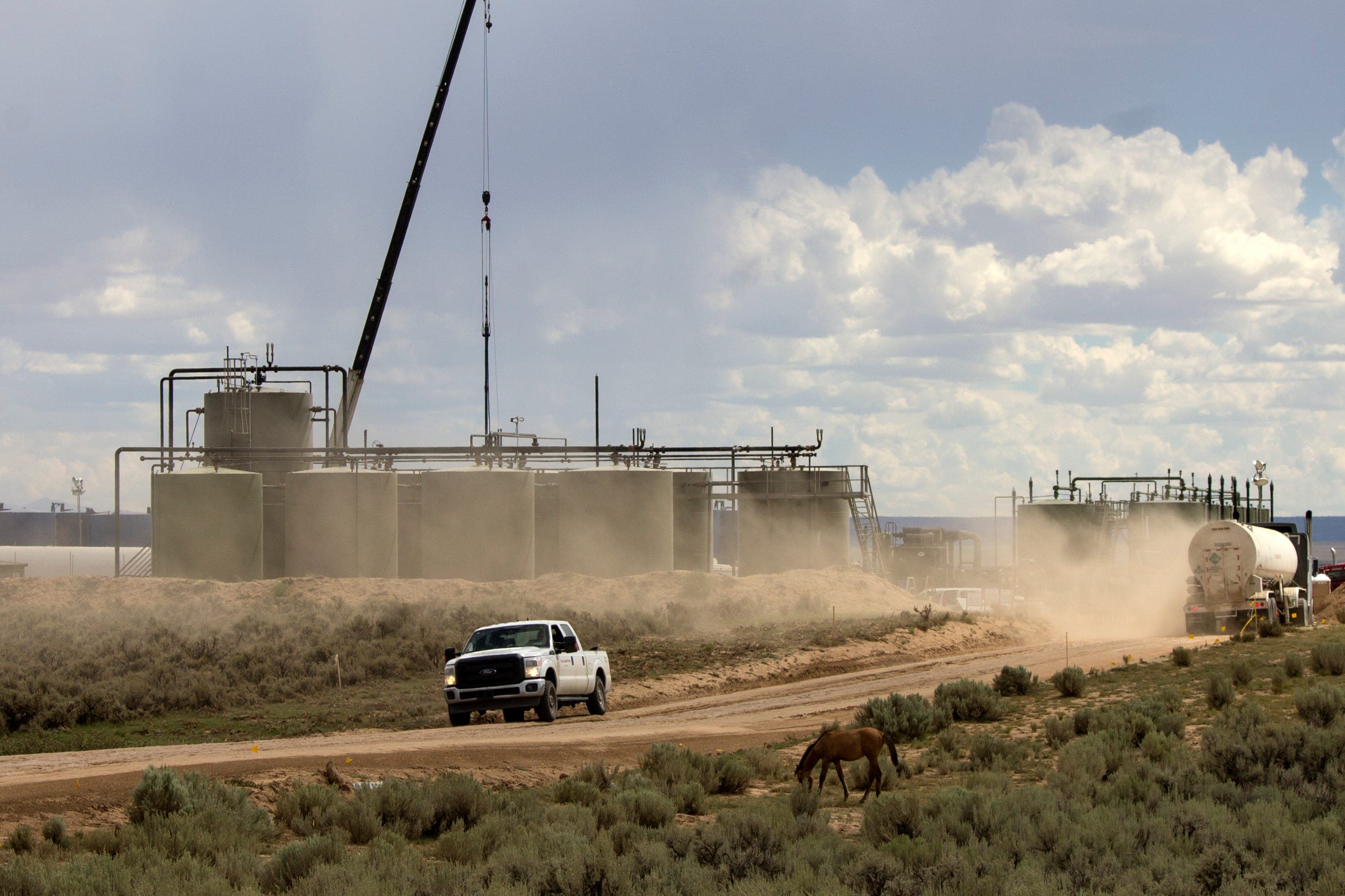
Meanwhile, **urban expansion** continues to encroach on vital wildlife habitats, complicating land-use planning and conservation efforts. As Colorado’s population grows, development increasingly threatens ecological corridors and vital water resources. Recent polls reveal **growing societal support for protecting public lands, water resources, and wildlife**, signaling a grassroots push for conservation amid ongoing growth and resource extraction pressures. An observer poetically reflected: “*Oh beautiful for smoggy skies, insecticided grain, for strip-mined mountain’s majesty above the asphalt*,” emphasizing the urgent need to prioritize ecological and cultural preservation.
---
## Water Scarcity and Climate Resilience: Current Challenges and Solutions
Despite a mid-February snowfall that delivered **over 18 inches across the Rockies**, the **snowpack remains only 58–62% of normal**, leaving Colorado mired in persistent drought conditions. Reservoir levels—such as **Lake Granby**, **Blue Mesa**, and **John Martin**—remain well below capacity, heightening risks of **wildfires**, **water shortages**, and ecological stress across agricultural and urban sectors.
In response, Colorado has allocated **over $21.6 million** toward **climate resilience projects**, including **dam repairs**, **reservoir expansions**, and **water efficiency initiatives**. These efforts aim to bolster **water security** amid ongoing climate variability. Notably, federal negotiations over Colorado River water allocations faced a **critical deadline in October 2026**. With the **missed deadline**, the federal government has imposed its own management plan, bypassing unresolved state negotiations. Colorado officials have expressed concern: **“The federal plan imposes measures without full consensus, risking the future of water sharing in the region,”** highlighting the importance of **collaborative governance**.
Recent proposals, such as **desalination projects in California** and **water transfers from the Pacific coast**, are gaining traction, potentially reshaping interstate water management and easing tensions. An analysis titled **“This is how big the snow needs to get to salvage Colorado's snowpack season”** reveals that as of late February, the snowpack in the Colorado mountains was still tied with the 2001-2002 winter for the second-lowest on record. Experts estimate that **a significant increase in snowfall—on the order of at least 50% above current levels—is needed** to substantially recover the snowpack and improve the season’s outlook. This highlights the critical importance of **long-term climate adaptation strategies** and **interstate cooperation**.
---
## Wildfire Risks and Infrastructure Resilience
While a recent wet spell in mid-February temporarily reduced wildfire danger, **fire risk remains high** due to **continued high winds**, **dry fuels**, and **extreme weather conditions**. A recent report titled **“Colorado Front Range Braces for 60 mph Wind Gusts as Snow Intensifies Along I-70 and Fire Danger Rises East of the Divide”** warns that **gusts reaching 60–65 mph**, combined with **mountain snowstorms**, can trigger wildfires and disrupt transportation networks. The combination of **drought**, **dead vegetation**, and **extreme weather** creates an environment ripe for ignition, especially across plains and rugged mountain terrains.
Utility companies like **Xcel Energy** have responded by **hardening infrastructure**, implementing **public safety power shutoffs (PSPS)**, and launching **public awareness campaigns**. A recent **YouTube video** from Xcel highlights **fire-resistant grid upgrades**, **ignition source reduction**, and strategies aimed at **maintaining energy reliability** during fire weather. These measures are crucial as climate change extends fire seasons and increases severity.
Furthermore, Colorado has dedicated **$6.9 million** in wildfire mitigation funds for 2026, focusing on **fuel reduction**, **community defensible spaces**, and **early detection systems** to better prepare for the upcoming fire season amid unpredictable conditions.
---
## Legal Battles, Policy Disputes, and Federal-State Tensions
Environmental governance remains contentious. The **EPA’s recent decision to revoke the greenhouse gas endangerment finding** has sparked fierce opposition from Colorado officials, who argue it hampers **climate mitigation efforts**. Additionally, the **federal imposition of a management plan for Colorado River water**—without full state consensus—has ignited **interstate legal disputes**. Colorado Attorney General **Phil Weiser** has actively challenged federal funding cuts and defended state-led resilience initiatives.
A recent **federal court** blocked proposed federal cuts totaling **$600 million**, emphasizing the importance of **mutually agreed-upon resource management frameworks**. These legal conflicts highlight risks of **federal overreach** and underscore the need for **collaborative governance**.
Adding to the legal landscape, the **U.S. Supreme Court** is set to hear a major climate litigation case originating from Boulder County. The case alleges that fossil fuel corporations, including **ExxonMobil** and **Suncor**, **knowingly contributed to climate change** and **failed to disclose or mitigate risks**. The Court’s decision could **set a precedent for holding corporations accountable** and influence future climate policy nationwide.
In Congress, **bipartisan proposals** aim to **expand federal water infrastructure funding**, with advocates like **U.S. Representative Brittany Pettersen** emphasizing that **federal support is critical** to confronting drought impacts. Colorado continues to assert its rights to **limit fossil fuel extraction** and lead **land-use reforms** aligned with climate goals.
---
## Public Health and Global Engagement
Colorado remains committed to safeguarding public health amid environmental threats. The **CU Anschutz-led Indoor Air Quality Improvement Initiative**, supported by **up to $39 million**, seeks to **enhance indoor air standards** across schools, healthcare facilities, and public buildings—an essential step in protecting vulnerable populations from wildfire smoke, pandemics, and other hazards.
In a broader move, Colorado announced its **intention to join the World Health Organization’s (WHO) Global Outbreak Alert and Response Network (GOARN)**. Governor Jared Polis emphasized that participation would **strengthen Colorado’s early detection and response capabilities** for emerging infectious diseases and foster **international collaboration**—recognizing that **environmental health and infectious disease preparedness** are deeply interconnected.
Meanwhile, the state faces ongoing extreme weather, including **gusts reaching 65 mph**, **mountain snowstorms**, and **mountain pass closures**, which impact travel, commerce, and emergency response systems. These conditions reinforce the critical importance of **adaptive resilience planning** and **long-term infrastructure investments**.
---
## Impacts on Agriculture, Land Development, and Urban Growth
Colorado’s rapid growth—particularly into sectors like **data centers** and **digital infrastructure**, incentivized by **tax breaks** and **relaxed regulations**—poses additional risks. Critics warn that these **water-intensive** and **energy-demanding** developments could exacerbate **water shortages** and **strain electrical grids**, especially amid ongoing drought and heatwaves.
Concurrently, the **agricultural sector** faces mounting vulnerabilities, with reports such as **“Colorado is turning its back on agriculture”** highlighting issues like **volatile commodity prices**, **rising input costs**, and **labor shortages**—all worsened by environmental stresses. These factors threaten the sustainability of local food systems and rural communities.
A notable development is the **collapse of the Bear Creek Lake Mega-Expansion proposal** in Lakewood, after community opposition and environmental concerns. This event underscores a shift toward **community-led land-use planning** and **environmental sensitivity**. Additionally, efforts to **expand tourism in iconic public lands like Arches National Park** face scrutiny over potential degradation, exemplifying the ongoing tension between **economic development** and **resource preservation**.
---
## Current Status and Future Outlook
Colorado’s landscape remains highly dynamic, characterized by a fragile balance between growth and conservation. The **projected climate-related damages and adaptation costs** could reach **$33–$37 billion** from 2025 to 2050, driven by **extreme heat**, **wildfires**, **flooding**, and **public health impacts**. These figures reinforce the urgent need for **comprehensive, science-based resilience strategies**—including **upgraded infrastructure**, **public health initiatives**, and **sustainable land management**.
Legal rulings, policy debates, and environmental events mark a **critical moment** for Colorado—one where **collaborative governance** and **community engagement** are paramount. The state’s ability to **balance growth with ecological and social resilience** will determine its capacity to **protect natural heritage**, **secure water resources**, and **build resilient communities** amid a rapidly changing climate.
As one observer poetically noted, “*The mountains and forests whisper a warning—adapt or fade.*” Colorado’s future hinges on a **unified vision of conservation, innovation, and collective action**—paving the way toward a **sustainable, resilient tomorrow**.