# Major Changes to FAFSA Application Process for 2026: What Families and Students Need to Know
The landscape of higher education funding is undergoing one of its most transformative shifts in recent history. Starting with the 2026-2027 academic year, a comprehensive overhaul of the Free Application for Federal Student Aid (FAFSA) aims to make financial aid more accessible, transparent, and equitable. These reforms respond to longstanding barriers, streamline processes, and incorporate innovative tools designed to better serve today’s diverse student populations. As a result, millions of students and families across the nation are preparing for a dramatically different federal student aid experience—one that promises earlier access, simplified application procedures, and expanded aid programs like the Workforce Pell Grant.
## Key Developments in the 2026 FAFSA Overhaul
### 1. **Early Opening of the FAFSA: October 1, 2025**
One of the most anticipated changes is the **advance opening of the FAFSA form to October 1, 2025**, nearly a month earlier than previous years. Historically, families faced tight deadlines, often leading to rushed applications that risked missing out on limited aid resources. Now, students will have **more than a year to complete their applications**, fostering proactive financial planning and early decision-making.
**Implications include:**
- Families can **initiate their aid process early**, gather necessary documents like tax transcripts, and explore aid opportunities without last-minute stress.
- **Earlier filing** enhances the likelihood of securing grants, work-study opportunities, and subsidized loans, which are often distributed on a first-come, first-served basis.
- Students will be better equipped to **compare aid offers across multiple institutions** and make informed college choices.
### 2. **Enhanced Automation and Data Integration**
The new FAFSA system will incorporate **advanced data retrieval tools**, enabling **automatic import of financial information directly from the IRS and other federal agencies**. This automation reduces manual data entry, minimizes errors, and accelerates processing times.
**Benefits include:**
- Simplified application process, especially beneficial for **first-generation** and **underserved students**.
- Faster aid determinations ensuring support arrives promptly.
- More precise assessments of financial need, promoting **fairer aid distribution**.
### 3. **Refined Income and Asset Assessment**
Reforms introduce **more precise and targeted evaluations** of income and assets. These adjustments aim to **better identify students with genuine financial need**, reducing disparities and **allocating aid more effectively**.
**Effects include:**
- Students who previously narrowly missed qualification may **now become eligible for additional support**.
- Aid resources will be **more efficiently directed** to address socioeconomic inequities.
- The reforms support **greater fairness and inclusivity** in college affordability.
### 4. **Alignment with State and Institutional Deadlines**
The updated FAFSA system emphasizes **timely submission aligned with state and college aid deadlines**. Examples are:
- **New York:** February 1, 2026
- **Illinois:** February 1, 2026
- **Florida:** May 15, 2026
**Families are advised:**
**File immediately after October 1, 2025**, to **maximize federal, state, and institutional aid opportunities**. Many aid programs have **limited funds** that are distributed early, making **timeliness critical**.
### 5. **Transparency and Guidance Tools**
A key feature is the **‘lower earnings’ alert**, which **flags colleges and programs where graduates tend to earn less after graduation**. This tool provides **valuable insights into the return on investment**, empowering students and families to **make smarter choices** about majors, schools, and career pathways—ultimately **maximizing financial and career outcomes** while **minimizing unnecessary debt**.
### 6. **Launch of Workforce Pell Grant in July 2026**
Arguably the most transformative development is the **introduction of the Workforce Pell Grant**, scheduled to launch **in July 2026**. This new aid program **extends federal support to short-term training programs, certificates, and vocational education**.
**Implications:**
- **Expands access** to **career-specific training outside traditional four-year degrees**.
- **Supports diverse educational pathways**, aligning aid with a modern, flexible workforce.
- Enables students to **enter the labor market quickly and affordably**, fostering economic mobility and addressing labor market demands.
The Department of Education’s Under Secretary, Nicholas Kent, has indicated that **final operational details are in development**, aiming for a **seamless rollout** that supports a broad range of career-focused programs.
---
## Broader Impact and Sector Response
These reforms are designed to **fundamentally change college affordability and access** by emphasizing **early filing, streamlined processes, and targeted aid**. Early data suggests a **rise in FAFSA submissions for 2026**, reflecting **greater awareness and engagement** among students and families.
### Ongoing Outreach and Policy Initiatives
The Department of Education (ED) is actively supporting these reforms through **grants, community outreach, and legislative efforts**:
- **Grants and community programs:**
For example, Howell High School in Michigan received a **$452,621 Universal FAFSA Challenge Grant** to bolster early outreach. Similarly, Medina County, Ohio, is planning **FAFSA-focused events** targeting underserved populations.
- **Community Engagement:**
Tulsa Public Schools hosted an **FAFSA informational session** to demystify the process and promote early filing. Nationwide, numerous organizations are expanding efforts to **reach diverse communities** and **maximize participation**.
- **Legislative efforts:**
Some policymakers, like Florida Senator Ashley Moody, are advocating for **making FAFSA completion a high school graduation requirement**, which could significantly boost participation rates. Other proposals aim to **correct classification issues**, such as ensuring homeschooled students are **properly counted** in aid calculations.
- **Transparency and data tools:**
Features like the **‘lower earnings’ alert** are part of a broader push to **provide transparent, actionable information** for families.
- **Educational resources:**
The Department is producing **short videos**, hosting **local workshops**, and distributing **guides** to help families understand these changes.
### Community Support
Local organizations and schools remain vital in **supporting families** through **informational sessions, assistance programs, and outreach campaigns**. Tulsa Public Schools’ **FAFSA informational sessions** exemplify efforts to ensure students understand and benefit from these reforms.
---
## The Launch of Workforce Pell in 2026
The **Workforce Pell Grant** signifies a **paradigm shift**—**broadening federal aid to include short-term training, certificates, and vocational programs**. This initiative:
- **Increases access** to **non-traditional education routes**.
- **Aligns with workforce needs**, enabling students to acquire skills rapidly and affordably.
- **Supports economic mobility**, especially for non-traditional and underserved students seeking quicker entry into the labor market.
The Department of Education continues to **finalize operational details** to ensure **a smooth implementation**.
---
## Federal Student Loan Policy Changes Effective July 1, 2026
In tandem with FAFSA reforms, **significant federal student loan policy updates** are scheduled to **take effect on July 1, 2026**. These include:
- **Revisions to the Master Promissory Note (MPN):** affecting borrowing terms and conditions.
- **Adjustments to borrowing limits** for undergraduate and graduate students.
- **Changes to repayment options:** potentially modifying income-driven repayment plans.
**Implications for Borrowers:**
Analysts warn that **these policy shifts could increase borrowing costs** for some students, especially if limits are tightened or repayment plans become less flexible. Borrowers are encouraged to **stay informed**, consult financial aid advisors, and **plan their debt management strategies proactively**.
---
## Addressing Pell Grant Funding Challenges
Recent developments highlight **financial pressures on the Pell Grant program**. The Congressional Budget Office (CBO) projected that the Pell Grant would face a **$2.7 billion shortfall last year**, and recent reports indicate the shortfall has grown to approximately **$5.5 billion**. This **funding gap raises concerns** about the future stability of the program, which is crucial for low-income students.
**What does this mean for students?**
- There is **uncertainty about future availability** and potential limitations on grant amounts.
- Policymakers are under pressure to **address these funding gaps** to ensure Pell remains a reliable aid resource.
- Families should **monitor policy debates** and consider **alternative funding sources** if Pell funding becomes constrained.
**Latest update:**
We began processing the **Pell Grant Administrative Cost Allowance payments for the 2025–26 award year** on **February 20, 2026**. These payments are vital for **helping institutions administer Pell grants effectively**, demonstrating ongoing efforts to sustain the program despite fiscal challenges.
---
## Additional Developments: FAFSA Flags and Disbursement Challenges
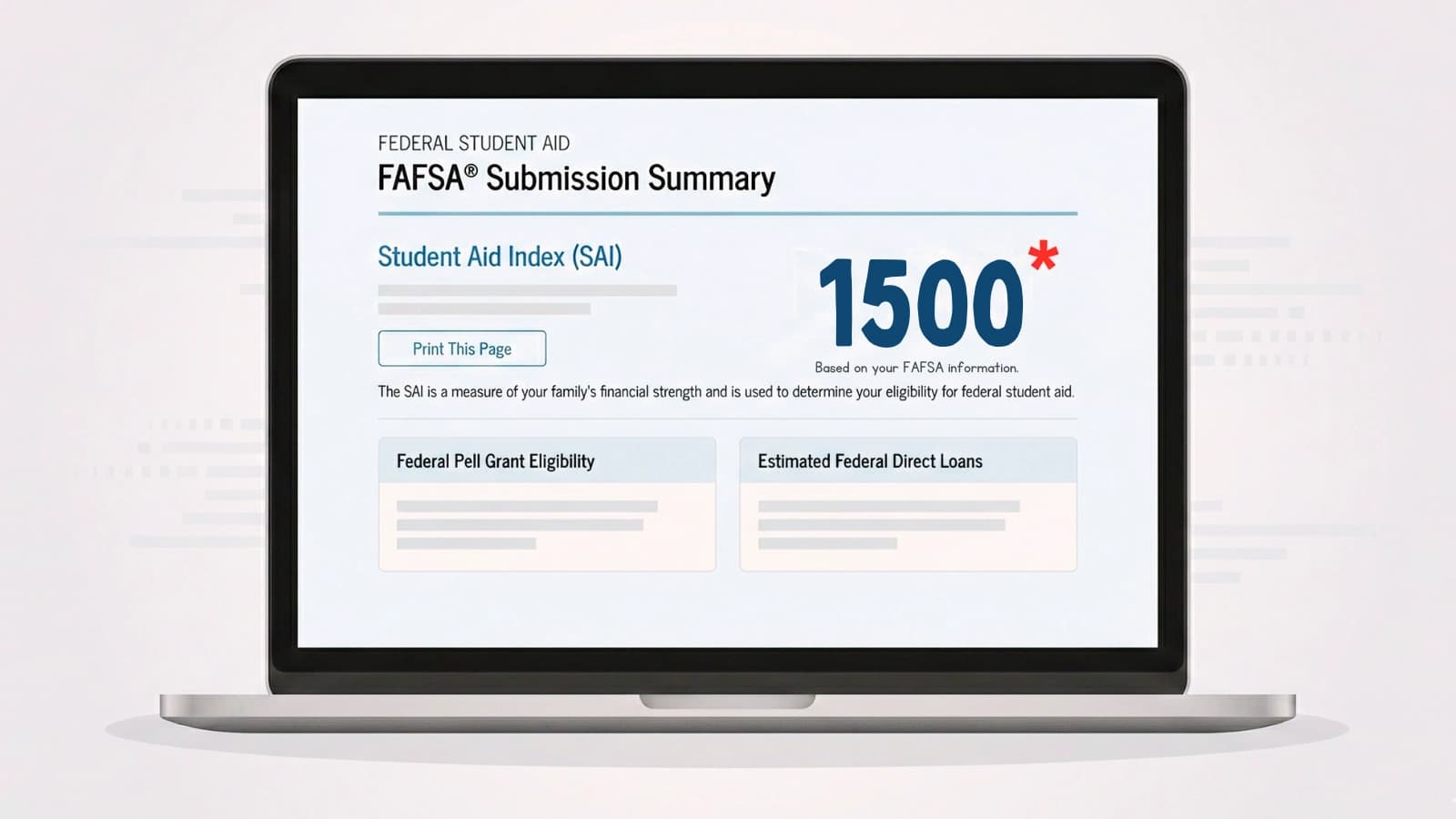
In recent weeks, reports have surfaced about **FAFSA applications receiving ‘asterisks’ or flags**—specifically, warnings next to the Student Aid Index (SAI)—which **may prevent aid disbursement**. These flags typically indicate **data inconsistencies** or **verification issues** that require resolution before federal aid can be released.
**Implications include:**
- Families should **review their applications carefully** for any notices or flags.
- Addressing **verification or data discrepancies early** is critical to avoid delays in aid disbursement.
- The Department of Education is working to **clarify and streamline** the verification process, but families must remain vigilant.
### Practical Next Steps for Families
To navigate these changes effectively:
- **File your FAFSA early, starting October 1, 2025.**
- **Gather all necessary documents**, including IRS transcripts and tax returns, in advance.
- **Pay close attention to deadlines**:
- **State deadlines**: e.g., New York and Illinois—February 1, 2026.
- **School-specific deadlines**: often earlier than federal ones.
- **Attend local workshops and assistance events** to get personalized help.
- **Monitor your application** for any flags or notices, and respond promptly.
- **Stay informed about federal loan policy updates** and plan accordingly to manage potential debt changes.
---
## Current Status and Future Outlook
Early trends indicate **increased FAFSA filings for 2026**, reflecting heightened awareness and the effectiveness of outreach efforts. The Department of Education and community partners remain committed to **supporting families during this transition**.
Looking ahead, **work on the 2027–28 FAFSA** is already underway, with the Department actively seeking **public input and feedback** to further refine the process. The goal is to **continue leveraging technological advances** and **address evolving student needs**.
---
## Final Thoughts
The **2026 FAFSA overhaul** is a landmark moment in federal student aid policy—aimed at **making college more attainable, equitable, and responsive** to the realities faced by today’s students. By **advancing the application timeline**, **streamlining data collection**, and **launching innovative programs like the Workforce Pell**, these reforms seek to **break down barriers** and **expand opportunities**.
**Families and students are encouraged to act early**, stay well-informed, and utilize available resources. Early preparation, proactive engagement, and community involvement will be essential to **maximize financial aid benefits** and set students on a path toward academic and career success.
In this rapidly changing environment, **being proactive and informed** will ensure that students can take full advantage of these historic reforms—building a future where higher education is more accessible, equitable, and aligned with the needs of a modern workforce.