# Veteran KBO Star Son Ah-seop Faces Unexpected Free-Agent Silence Amid League’s Evolving Landscape
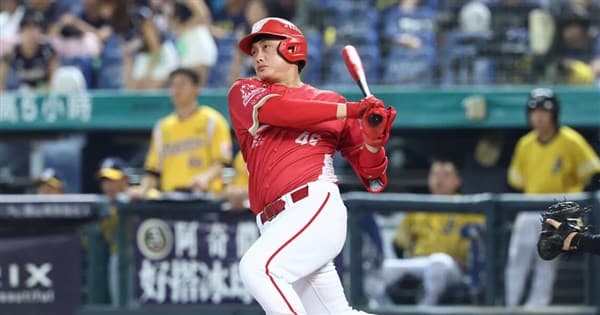
In a surprising development within Korea’s professional baseball scene, **Son Ah-seop**, one of the league’s most iconic and durable veterans, remains unsigned as the **free agency (FA) period extends deep into the offseason**. Despite his long-standing contributions, leadership qualities, and consistent performance over a storied career, the current market has been notably silent for the 35-year-old outfielder. Recent events—including his re-signing with the **Hanwha Eagles** and broader shifts across the KBO—highlight both his resilience and the league’s ongoing transformation toward a more **performance-centric evaluation system**.
---
## The Context: Navigating a League in Transition
**Son Ah-seop’s renewal** with Hanwha exemplifies a **pivotal moment** in KBO history. Traditionally celebrated for his **leadership, clutch performances, and veteran presence**, Son’s recent decline in offensive metrics—paired with his age—has led teams to adopt a **more cautious, performance-oriented stance** regarding long-term or high-value contracts for older players.
**Hanwha’s decision** to re-sign Son reflects a **strategic, performance-driven approach**. Club officials emphasize his **leadership, mentorship, and positional versatility** as key assets, viewing him as a **valuable influence** both in the clubhouse and on the field. This move aligns with a **league-wide paradigm shift**: **performance, recent impact, and adaptability** now take precedence over reputation alone.
**Hanwha’s management** articulated that the re-signing is a **“strategic decision”** aimed at **stabilizing the roster with experienced leadership**, while establishing **performance benchmarks** and **defining specific positional responsibilities** to maximize his contribution.
---
## League’s Paradigm Shift: From Legacy to Data-Driven Evaluation
Son’s re-signing is emblematic of a **fundamental change** in the **KBO’s approach** to player assessment:
### Drivers Behind This Evolution
- **Analytics Over Legacy:**
Teams now rely heavily on **advanced metrics** such as **OPS (On-base Plus Slugging), WAR (Wins Above Replacement), plate discipline, and expected contribution metrics**. Recent data indicates that Son’s offensive impact has waned, and his defensive agility has declined with age, prompting a **more performance-driven evaluation**.
- **Age and Physical Decline:**
At **35**, Son faces typical age-related challenges—**slower speed, reduced defensive range, and recovery capacity**—which now weigh heavily in roster decisions.
- **Role Versatility and Flexibility:**
Modern teams prioritize **multi-positional players** capable of contributing as **designated hitters, utility outfielders, or defensive specialists**. Son’s **adaptability** remains an asset, but **recent form and impact** are now critical metrics.
- **Economic and Strategic Constraints:**
Many clubs operate within **tight budgets**, emphasizing **short-term, high-impact signings**. This economic reality marginalizes older players unless recent performance justifies retention. For example, **Lotte Giants** have focused on **young prospects and high-potential signings**, aligning with a **future-oriented, asset development strategy**.
- **International Factors and Policy Changes:**
Adjustments such as **minimum salary thresholds**, **bonuses for international tournaments like the WBC**, and the influx of foreign players (**Veneziano**, **Miyaji**) influence roster planning, often favoring **players with recent international success or current form**.
---
## Recent Developments and Strategic Moves
The league’s evolving philosophy is reflected in recent roster decisions:
- **Veteran Re-Signings:**
Players like **Seo Geon-chang (Kiwoom)** and **Jang Sung-woo (Woori)** have been re-signed only after demonstrating **recent performance and ongoing relevance**.
- **Foreign and Youth Signings:**
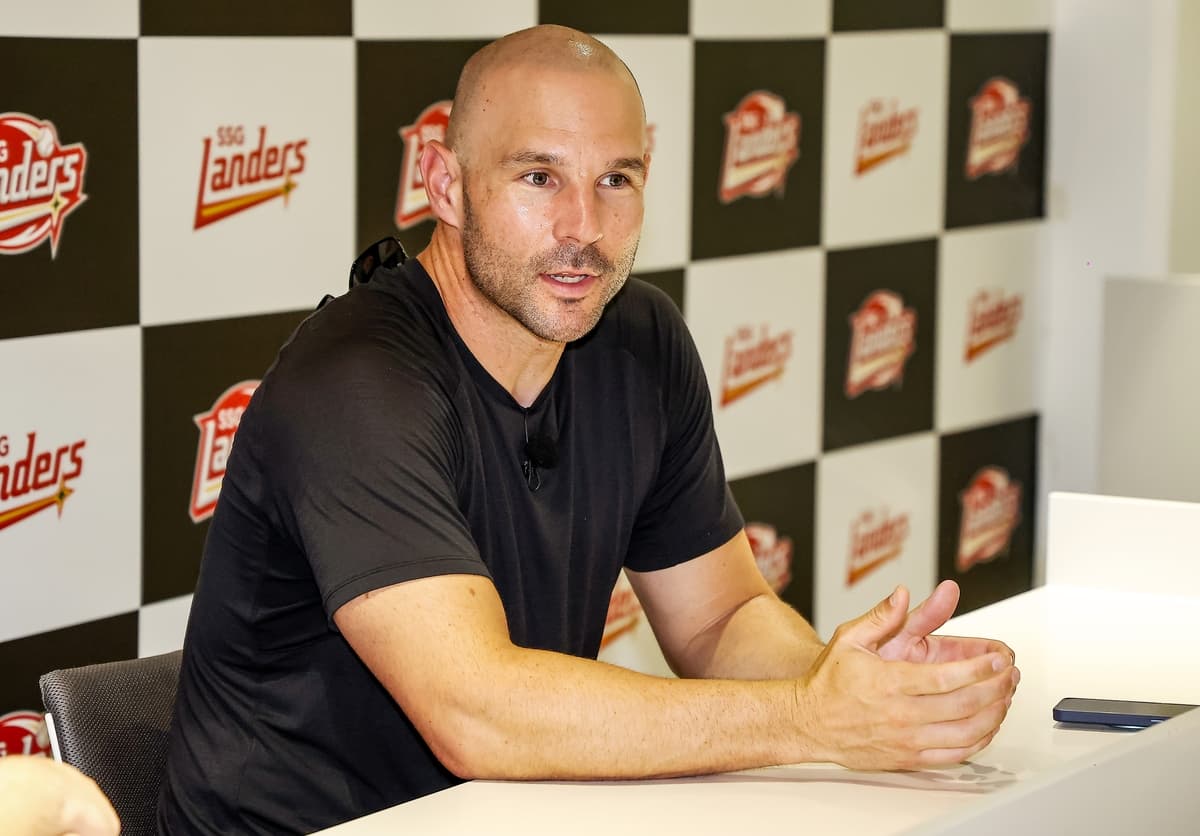
Clubs such as **SSG Landers** are investing heavily in **impactful foreign players** like **Anthony Veneziano**, prioritizing **international talent** over domestic veterans with declining metrics.
- **Spending Strategies:**
The **Lotte Giants** invested approximately **17 billion won (~$13 million USD)** on free agents, focusing on **younger prospects and high-potential signings**, exemplifying a **future-oriented, asset development approach**.
---
## The Latest on Son Ah-seop: Training, Roster Dynamics, and International Prospects
As **2026 season** approaches, **Son has intensified offseason training**, focusing on **improvements in defensive agility, speed, and positional versatility**. These efforts aim to **demonstrate current impact** and **align with league standards emphasizing recent performance**.
**Recent reports from OSEN** indicate that **Hanwha has signaled** Son’s role will be **“strategically tailored”** to meet team needs—potentially involving **performance benchmarks** or **specific positional responsibilities**. This signifies a **shift from his previous status** as a franchise stalwart to a **performance-driven role**, consistent with league trends.
### Impact of Choi Jae-hoon Injury & International Opportunities
Adding complexity, **Hanwha announced catcher Choi Jae-hoon suffered a broken finger**, expected to sideline him for an extended period. This injury **temporarily increases roster flexibility**, possibly **expanding Son’s utility** across offensive and defensive roles.
**Kim Hyung-jun**, a promising young catcher, has been called up to represent Korea at the upcoming **2026 WBC**, replacing Choi. While this injury **weakens Korea’s lineup**, it creates an immediate opportunity for veterans like Son to **step up and demonstrate leadership and impact**.
**Spring training (March 12–24)** will be pivotal for **Son’s conditioning and on-field performance**. His **offseason efforts** are aimed at **showing readiness** to secure a role emphasizing his experience, while meeting **modern performance standards**.
---
## International Stage and Future Opportunities
Beyond domestic play, **Son’s role extends to the international arena**, especially with the **2026 WBC** approaching. The Korean national team continues to evaluate players based on **recent form and international readiness**.
**Full World Baseball Classic 2026 Schedule, Format and Pool Assignments**:
The WBC is rapidly approaching, with the tournament featuring **16 teams divided into four pools**. Korea’s schedule includes:
- **Pool A (Tokyo, Japan):**
Featuring Korea, Japan, China, and the Czech Republic, with games from **March 8–13**.
- **Pool B (Taichung, Taiwan):**
Including the United States, Mexico, Colombia, and Canada, from **March 9–13**.
- **Pool C (Miami, USA):**
Hosting Venezuela, Dominican Republic, Puerto Rico, and Israel, from **March 11–15**.
- **Pool D (Jalisco, Mexico):**
Comprising Cuba, Netherlands, Italy, and Nicaragua, from **March 11–15**.
Korea’s roster will be evaluated based on **recent performances and leadership qualities**. **Son Ah-seop**, with his dedication and recent training, remains a **potential candidate** for the national team—contingent on maintaining current form and demonstrating leadership.
> _"The roster for the 2026 WBC remains flexible, but players who demonstrate ongoing contribution and leadership will be prioritized,"_ a league official stated. **Son Ah-seop**, with his recent offseason efforts, is well-positioned to be considered if performance aligns.
**Korea’s ongoing roster planning** emphasizes **young talent like Lee Jung-hoo** and **veterans who can contribute both offensively and defensively**, especially in leadership roles during high-pressure international games.
---
## Broader Implications for Veterans and the League’s Future
Son’s re-signing amidst a league increasingly driven by analytics and youth investment reflects a **new reality**: **experience and leadership still matter**, but only when paired with** recent performance and adaptability**.
### Key Takeaways:
- **Performance Is Paramount:**
Longevity alone no longer guarantees a roster spot; **recent impact and current form** are critical.
- **Veterans Must Evolve:**
Players like Son are expected to **embrace versatility, maintain peak condition, and demonstrate recent contribution**.
- **League’s Direction:**
As the **KBO** continues to incorporate foreign talent, adopt advanced analytics, and invest in youth, **veterans will need to adapt or face marginalization**.
---
## **Current Status and Outlook**
**Son Ah-seop’s re-signing** with Hanwha has been confirmed, with officials indicating that his **role will be strategically crafted** to meet team needs. His **dedication and efforts during offseason training** aim to **prove recent impact and versatility**, which are now essential for securing a meaningful role.
**Spring training (March 12–24)** will be decisive in **Son’s conditioning and performance**, influencing both his **domestic role** and potential **international selection** for the **2026 WBC**.
**His ability to adapt and demonstrate leadership will determine his relevance** on both club and national levels, with ongoing league trends emphasizing **performance and recent contribution over reputation alone**.
---
## **Summary**
**Son Ah-seop’s re-signing** with Hanwha underscores a **performance-oriented shift** in how the league values veteran players. While **experience and leadership** remain valued, they are now **closely tied to recent impact and adaptability**.
As the **KBO** continues its evolution—marked by increased foreign influence, data-driven strategies, and youth investments—**players, teams, and fans** must recognize that **performance and versatility** are now central to **career longevity and influence**.
**Son’s story** exemplifies that **resilience and adaptation** are key in Korea’s dynamic baseball landscape, where the measure of a veteran’s value is increasingly based on **current form and contribution** rather than age alone.
---
## **Implications and Reflection**
This strategic shift underscores that **veterans like Son Ah-seop** must **prove their worth through recent performance and versatility**—a lesson for aging players aspiring to maintain relevance. His **renewal with Hanwha** illustrates that **leadership remains valued**, but only when it is substantiated by **ongoing impact**.
As **the league embraces more foreign talent, advanced analytics, and a youth-driven approach**, **players, teams, and fans** should accept that **adaptability and current contribution** are vital for sustained success and influence.
---
## **International and WBC Context**
Recent developments and performance evaluations continue to shape Korea’s international prospects:
- **Gwak Bin’s training videos** showcase his preparation for the **WBC**, emphasizing the importance of **young pitchers honing their skills**.
- **Jung Woo-ju’s evaluation during exhibitions** signals the emergence of promising talent.
- **So Hyeong-jun’s debut** and overcoming nerves highlight the infusion of youth into Korea’s national roster.
Meanwhile, **Son Ah-seop’s leadership and recent training** position him as a **potential key figure** in both domestic and international competitions—contingent on maintaining current form and leadership qualities.
---
## **Final Thoughts**
**Son Ah-seop’s recent contract renewal** with Hanwha encapsulates the **league’s evolution**: a landscape where **performance, versatility, and recent impact** are fundamental, even for veteran stalwarts. His journey underscores that in Korea’s fast-changing baseball environment, **longevity and leadership** are only meaningful if demonstrated through **current contribution**.
As **KBO** continues to grow and globalize, embracing foreign talent and advanced analytics, **veterans will need to adapt or risk fading from the spotlight**. For Son, his offseason efforts, resilience, and leadership will determine whether he remains a **valuable contributor** in 2026 and beyond.
---
## **Current Status and Future Outlook**
- **Son Ah-seop** has re-signed with Hanwha with a role **tailored to team needs**.
- His **offseason training** is aimed at **demonstrating recent impact** and **versatility**.
- **Spring training** will be decisive in **securing his spot** and **potential national team inclusion**.
**The league’s shifting evaluation metrics** suggest that **performance and adaptability** will continue to define **veteran relevance**, with Son’s future hinging on **current form and leadership demonstration**.
**In this evolving landscape**, Son’s story is a testament to the importance of **resilience and continuous improvement** — qualities that remain vital for anyone seeking to succeed in Korea’s competitive baseball environment.
---
## **Additional Developments and International Highlights**
- **Korean national team preparations** are intensifying, with focus on **young talent like Lee Jung-hoo** and **veterans’ leadership**. Recent videos, such as **이정후 현장영상**, showcase Lee’s impressive **multi-hit performances** and leadership, reinforcing his role as team captain.
- The upcoming **WBC** (March 8–15) is drawing global attention, with **full schedule and pool details** available through the **World Baseball Softball Confederation**. Korea’s roster decisions will be heavily influenced by **recent form and leadership qualities**, positioning Son as a **potential key figure** if his performance remains at a competitive level.
---
**In conclusion**, Son Ah-seop’s continued relevance in Korea’s baseball landscape depends on his ability to **adapt, perform, and demonstrate leadership** in the upcoming spring training and international stages. His journey reflects the league’s broader trend: **a shift from legacy alone to a performance-driven environment**, where **resilience and adaptability** are the new benchmarks for success.