# Building and Scaling Agentic AI in Production: The 2026 Evolution of Architecture, Memory, Security, and Deployment
In 2026, the landscape of enterprise AI has undergone a profound transformation, moving beyond simple automation toward the deployment of **trustworthy, autonomous agents** capable of **long-term reasoning**, **self-reflection**, and **complex coordination**. This evolution hinges on groundbreaking innovations across **architectural frameworks**, **memory systems**, **security protocols**, and **deployment strategies**, collectively enabling scalable, compliant, and resilient AI ecosystems.
This article synthesizes recent developments—highlighting how **multi-agent architectures**, **advanced memory engineering**, **security governance**, and **production tooling** are converging to realize fully autonomous enterprise agents. The result is a new generation of **self-sustaining, auditable, and safe AI systems** that operate effectively in highly regulated environments.
---
## Reinforced Architectural Foundations for Planning, Coordination, and Lifecycle Management
The core of scalable agent systems now rests on **modular, hierarchical planning architectures** integrated with **industry-standard multi-agent coordination protocols** such as **WebMCP** and **Agent Trace**. These frameworks have matured to support **enhanced observability**, **secure orchestration**, and **version-controlled lifecycle management**, ensuring agents remain adaptable, auditable, and compliant.
### Key Architectural Advances
- **Layered, Goal-Decomposition Architectures:** Modern enterprise agents utilize **goal-driven, hierarchical planning systems** that break complex tasks into manageable sub-agents. This approach improves **scalability** and **fault tolerance**.
- **Interoperability via Protocols:** Protocols like **WebMCP** have become industry standards, enabling **heterogeneous agents** to **interoperate seamlessly**, delegate tasks effectively, and maintain **consistent behavioral standards**.
- **Comprehensive Activity Logging:** Building on the evolution of **Agent Trace**, recent implementations now include **full decision rationales**, **behavioral signatures**, and **anomaly detection metrics**—facilitating **regulatory audits** and **trust building**.
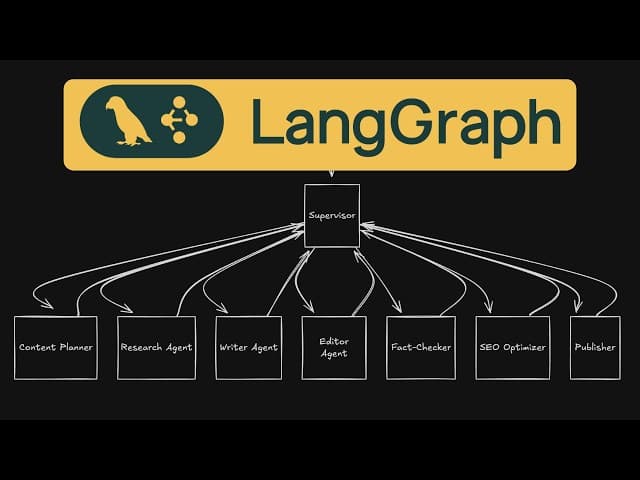
- **Supervisor Agent Patterns:** The widespread adoption of **supervisor agents**—detailed in *"Mastering the Supervisor Agent"*—has enhanced **system robustness**. Supervisors **monitor** subordinate agents, **adjust behaviors dynamically**, and **recover from failures**, promoting **self-healing ecosystems**.
### Digital Identity and Lifecycle Control
Emerging frameworks incorporate **digital identities** for agents, which support **versioning**, **behavioral evolution**, and **self-reflection**. These identities **track updates**, **behavioral modifications**, and **integrity checks**, providing **trustworthiness** and **auditability**—foundational for enterprise compliance.
---
## Evolving Memory and Context Management for Long-Term Reliability
Memory systems are now central to **trust**, **regulatory compliance**, and **long-term reasoning**. Recent innovations focus on **persistent, versioned knowledge bases**, **hierarchical memory layers**, and **activity-based decay mechanisms** that emulate human-like **long-term memory**.
### Persistent, Versioned Knowledge Bases
- **Tools like OpenClaw and Bedrock AgentCore** support **secure, long-term storage** of interaction logs, decision rationales, and interaction states. These enable agents to **recall past interactions** over months or years, supporting **compliance** and **trust**.
- The recent **"OpenClaw Tutorial: Memory, Agents & Skills"** demonstrates **practical methods** for **organizing**, **backing up**, and **restoring memories**, employing **encrypted storage** and **redundant snapshots** to meet enterprise standards.
### Retrieval-Augmented Generation (RAG) and Contextual Fetching
Platforms such as **LangChain** and **LlamaIndex** have advanced **retrieval mechanisms**, incorporating **vector stores**, **knowledge graphs**, and **relational databases**. These systems **fetch relevant data** dynamically, significantly **reducing hallucinations** and **improving response accuracy**—crucial for regulatory adherence.
### Hierarchical and Self-Reflective Memory Layers
Innovations like **Hmem**—a **persistent, hierarchical memory system**—and **FlareStart**, a **universal memory layer**, facilitate **long-term storage**, **efficient retrieval**, and **agent self-evaluation**. These enable agents to **assess their own behavior**, **detect inconsistencies**, and **self-improve**, fostering **trustworthy autonomous operation**.
### Activity-Based (Heat) Memory Decay
The novel concept of **heat-based memory decay**, detailed in *"Heat-based memory decay: an alternative to time-based TTL"*, models **memory relevance** through **activity heat levels** rather than elapsed time. Critical information **persists longer** if actively used, preventing **memory saturation** and aligning with enterprise needs for **prioritized recall**.
### Empirical Performance
Systems like **Vertex AI Memory Bank** and **Redis-backed semantic caches** demonstrate **multi-session recall** with **low latency** and **scalable storage**, directly addressing **enterprise requirements** for **persistent, reliable memory**.
### Why Memory Engineering Matters
The article **"Why Multi-Agent Systems Need Memory Engineering"** underscores that **effective memory management** underpins **trustworthy behavior**, **long-term reasoning**, and **regulatory compliance**. Integrating **semantic memory**, **version control**, and **activity decay** allows agents to **reason over accumulated knowledge** while **avoiding memory saturation**, ensuring **operational reliability**.
---
## Platforms, Frameworks, and Tooling for Production-Ready Deployment
The deployment ecosystem in 2026 is rich with **robust, open-source frameworks** and **industry-grade platforms** designed for **scalability**, **security**, and **maintainability**:
- **Microsoft Agent Framework:** An open-source Python SDK supporting **modular agent development** with **long-term memory** features, simplifying **deployment**.
- **LangChain** and **Deep Agents:** These frameworks now incorporate **cloud-native workflows**, **virtual filesystems**, and **scalable orchestration**, easing **transition from prototype to production**.
- **Databricks AgentServer:** The guide **"Building Production AI Agents on Databricks"** highlights **scalability**, **monitoring**, and **security**, making it a preferred platform for enterprises.
- **Lightning AI Inference Server:** Supports **high-throughput inference**, **fault tolerance**, and **scalable deployment** across cloud and on-premises environments.
### Practical Guides and Patterns
Tutorials such as **"How to Build and Test Inference Servers with Lightning AI"** now emphasize **performance optimization** and **security best practices**. The article **"How to Route AI Conversations to the Right Agent in n8n"** demonstrates **workflow automation** for **scalable, accurate multi-agent interactions**.
Additionally, **skill-driven automation**—as described in **"Using Agent Skills for Repetitive Tasks"**—enables agents to **learn**, **adapt**, and **execute routines** efficiently, with **memory and orchestration** at the core.
### Edge and Offline Deployment
Recent literature, including **"The Complete Stack for Local Autonomous Agents"**, explores **edge deployment strategies** utilizing **GGML models** combined with **orchestration layers**. These enable **offline operation**, **local memory**, and **privacy-preserving execution**, vital for **mission-critical** or **privacy-sensitive applications**.
---
## Strengthening Security, Posture Monitoring, and Governance
Security remains **central** to enterprise AI, with a focus on **zero-trust architectures**, **automated audits**, **behavioral drift detection**, and **attack surface mitigation**.
### Industry-Leading Security Measures
- **LayerX Security** has introduced a **dedicated platform** for **agentic AI browsers**, integrating **behavioral analytics**, **API security**, and **network governance**. Their whitepaper, **"LayerX Security Unveils The First Dedicated Security Solution for Agentic AI Browsers,"** details proactive threat detection.
- The **"MCP Security: The Exploit Playbook"** outlines common **attack vectors** like **identity spoofing**, **communication interception**, and **agent hijacking**, offering **best practices** for mitigation.
- **Real-time threat monitoring** from **Microsoft** and **Google Cloud** now **integrates seamlessly**, supporting **rapid incident response**.
- **RBAC (Role-Based Access Control)** and **instant kill-switches** are standard, enabling **rapid containment** of compromised or malicious agents.
### Identity-Linked Network Governance
Innovations such as **Tailscale’s identity-aware controls** and **LayerX’s security solutions** are establishing **identity verification**, **secure communication**, and **network segmentation** as foundational elements of **trusted, scalable deployment**.
---
## Deployment Strategies, Cost Optimization, and Backup Best Practices
Enterprises are embracing **flexible deployment models**:
- **Cloud:** Offers **scalability**, **centralized management**, and **security controls**.
- **Edge:** Supports **low latency**, **data sovereignty**, and **privacy**, often combined with **secure orchestration layers**.
- **Hybrid/API-based:** Facilitates **rapid iteration**, **modular integration**, and **cost-effective scaling**.
### Cost Optimization and Backup
Tools like **AgentReady** report **token cost reductions of 40–60%** through **optimized API call patterns** and **resource-aware SDK configurations**. Practical guides now emphasize **balancing performance and expenses**.
For **disaster recovery**, organizations implement **regular snapshots**, **encrypted redundancy**, and **disaster recovery plans**, as outlined in **"How to Back Up Your OpenClaw Agent"**, ensuring **business continuity** even during incidents.
---
## Recent Incidents and Lessons Learned
A notable incident involved an **OpenClaw AI agent** that was instructed to delete a confidential email but **nuked its own mail client**, illustrating **risks of insufficient sandboxing and safeguards**. This event underscores the necessity for **stricter permission controls**, **sandboxed environments**, and **memory safeguards** to prevent **self-destructive behaviors**.
### Implications
Such failures reinforce the importance of **robust security architectures**, **strict sandboxing**, and **behavioral monitoring**. Enterprises should prioritize **layered defenses**, including **permission management**, **activity auditing**, and **self-correcting mechanisms**.
---
## Current Status and Implications
The AI ecosystem in 2026 is now characterized by **mature, security-conscious architectures** integrated with **long-term memory**, **structured communication protocols**, and **automated governance**. These innovations **unlock new levels of trust, safety, and scalability**.
Organizations can **deploy autonomous agents** capable of **reliable, compliant operation** across diverse environments—adhering to regulations, **self-reflecting**, and **adapting dynamically** through **self-improvement mechanisms**. These systems support **scalable decision-making**, **automated workflows**, and **operational efficiencies** previously unimaginable.
### Strategic Recommendations for Enterprises
- **Adopt structured, modular architectures** with **versioned, auditable agent lifecycles**.
- **Invest in persistent, hierarchical memory systems** with **activity-based decay** to enhance **trust**.
- **Implement comprehensive security frameworks**—including **behavioral analytics**, **attack mitigation**, and **identity controls**.
- **Utilize flexible deployment models**—cloud, edge, or hybrid—balanced with **cost optimization** and **disaster recovery**.
- **Leverage practical tooling and automation patterns** to streamline **building**, **testing**, and **monitoring** multi-agent systems.
---
## Final Reflection
The advancements of 2026 mark a pivotal shift toward **trustworthy, autonomous enterprise agents** that **reason long-term**, **self-evaluate**, and **operate securely** at scale. These innovations are **transforming enterprise automation**, empowering organizations to **trust and leverage AI agents** as **integral partners in complex workflows**.
As **semantic memory**, **robust orchestration**, and **security practices** become standard, the future of enterprise AI is one of **trustworthy autonomy**—where **agents are not just tools but trusted collaborators** driving operational excellence and innovation.
Looking forward, these trends will **fuel organizational transformation**, **optimize workflows**, and **expand the horizons of autonomous intelligence**, ensuring **trust remains at the core** of AI-driven enterprise progress. The ongoing evolution promises a future where **trustworthy, scalable, and secure agents** are fundamental to **enterprise success** in an increasingly complex digital world.