# The 2024–2026 Frontier of Autonomous AI: Convergence, Hardware Diversification, and Strategic Ecosystem Growth
The landscape of autonomous artificial intelligence (AI) in 2024 is entering an unprecedented phase characterized by rapid technological innovation, strategic regional investments, and evolving governance frameworks. Building upon the foundational developments of multimodal models, agent orchestration, and embodied robotics, recent breakthroughs and strategic moves are accelerating the deployment of trustworthy, general-purpose autonomous systems across industries, defense, and daily life. This era is marked not only by technological convergence but also by geopolitical dynamics shaping hardware ecosystems, supply chains, and international cooperation.
## Main Event: A Converging Ecosystem Driving Commercialization
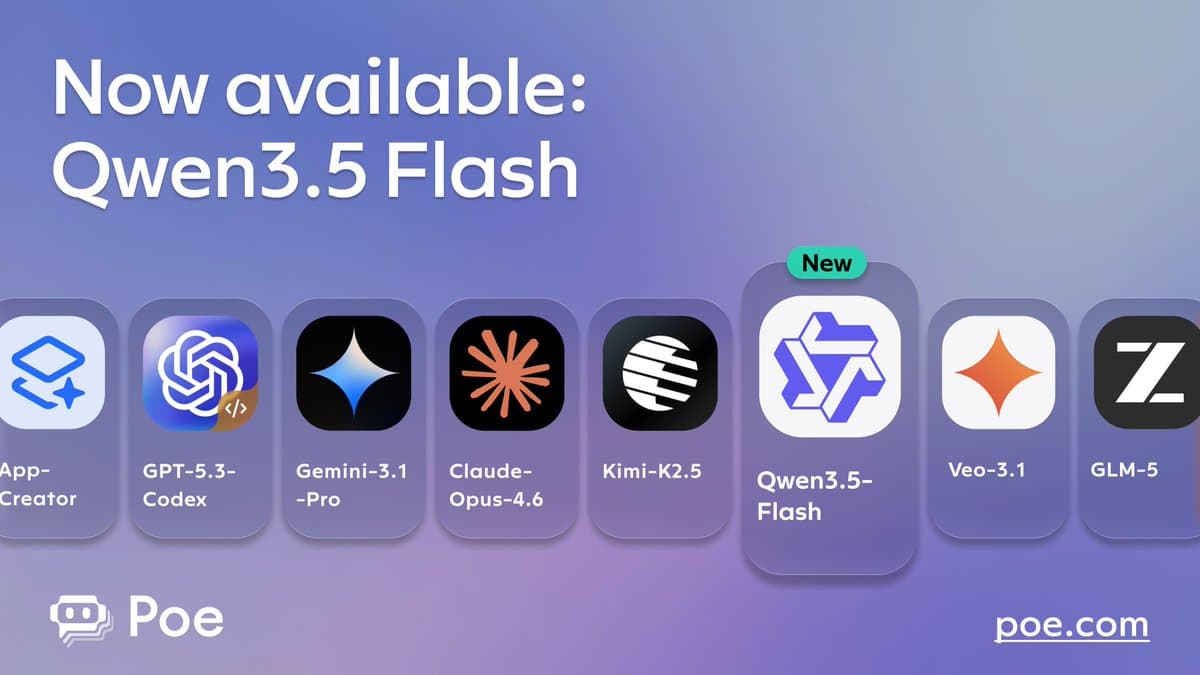
From 2024 onward, the core drivers—**multimodal frontier models**, **agent orchestration platforms**, and **embodied robotics**—are increasingly intertwining to facilitate scalable, real-world applications. Notably, **multimodal models** like Qwen3.5 Flash have demonstrated remarkable speed and efficiency in processing text and images, enabling more responsive and capable autonomous agents. These models are now integrated into **agent orchestration platforms** such as Google’s Opal 2.0 and emerging marketplace ecosystems, which manage complex workflows, long-term memory, and dynamic routing.
Simultaneously, **embodied robotics**—robots and spatial agents capable of physical interaction—are transitioning from experimental prototypes to operational deployments. This shift is exemplified by autonomous construction site monitoring, industrial automation, and consumer automation robots that are now commercially available at scale, leveraging robust AI models and orchestration tools.
## Hardware Diversification and Geopolitical Strategies
A defining hallmark of this period is the **diversification of AI hardware ecosystems**, driven by regional ambitions, security concerns, and supply chain considerations. Several new chip challengers have emerged, challenging Nvidia’s longstanding dominance:
- **Callosum**, founded by Cambridge-trained neuroscientists, has raised over **$10.25 million** to develop brain-inspired, energy-efficient chips optimized for multimodal and embodied AI tasks.
- **MatX**, created by former Google TPU engineers, secured **$500 million** to produce specialized chips emphasizing processing density and energy efficiency, directly competing with Nvidia’s offerings.
- **SambaNova** continues to push its **SN50 AI chip**, supported by ongoing funding and strategic industry partnerships, targeting large-scale multimodal workloads.
- **Axelera AI**, a European startup, received an additional **$250 million** to foster **chip sovereignty**, establishing regional manufacturing hubs amid geopolitical tensions.
In parallel, **regional compute investments** have surged:
- **Amazon and OpenAI** are reportedly collaborating on a significant funding round, with Amazon investing up to **$50 billion** into OpenAI, underscoring the importance of large-scale compute infrastructure.
- **JetScale**, a Quebec-based cloud infrastructure startup specializing in optimizing AI workloads, raised an oversubscribed **$5.4 million** seed round, signaling strong demand for scalable, efficient cloud solutions.
- **India** continues its ambitious plan, investing over **$110 billion** in domestic data centers and compute infrastructure to reduce reliance on Western cloud providers and cultivate indigenous AI ecosystems.
These efforts are fueled by **geopolitical tensions**, such as export restrictions—most notably the US ban on Nvidia’s **H200 chips** to China—and strategic moves by Chinese firms like **DeepSeek**, which are **excluding US chipmakers** from testing their latest models. Such policies accelerate **regional efforts** toward **independent hardware development** and **sovereign infrastructure**, but also introduce risks of **ecosystem fragmentation**. Industry leaders emphasize the need for **international standards** to ensure **interoperability** and **collaborative growth** across borders.
## Embodied Deployments and Verticalization
Embodied AI systems are increasingly moving beyond research labs into **commercial deployments** across sectors:
- **Construction and Site Intelligence**: **Sensera Systems** closed a **$27 million Series B** funding round to accelerate the deployment of **AI-powered jobsite monitoring** solutions, enhancing safety and efficiency.
- **Autonomous Vehicles**: **Wayve**, the London-based mobility startup, announced a **$1.5 billion Series D**, led by **Microsoft, Nvidia, and Uber**, aiming to create **learning-based urban mobility systems** that adapt seamlessly to complex environments.
- **Consumer Robotics**: Solutions like **Nosh One**, capable of preparing over **500 dishes**, exemplify the integration of embodied agents into everyday routines, while companies like **Mantis Robotics** achieved safety certification for **high-speed industrial robots**, enabling flexible manufacturing automation.
- **Site and Industrial Automation**: **Honorable mention** goes to **Mantis Robotics**, whose safety-certified, **fenceless robots** are paving the way for **safety-critical, flexible industrial automation** at scale.
These deployments demonstrate that **embodied AI** is shifting from **proof-of-concept** to **mission-critical applications**, supporting sectors such as **construction, manufacturing, logistics, retail, and household automation**.
## Agent Orchestration and Marketplace Ecosystems
Managing increasingly complex multimodal and embodied systems relies on **advanced orchestration platforms** and **marketplace ecosystems**:
- **Platforms and Tools**:
- **Google’s Opal 2.0** integrates **smart agents**, **long-term memory**, and **interactive routing**, enabling **dynamic workflows** across physical and digital environments.
- **Strands SDK** powers **trustworthy agent deployment** with **monitoring** and **governance** features, easing enterprise adoption.
- **Zavi**, a natural language-driven OS, allows **voice-controlled workflow management**, a key component in scaling **digital workforce** solutions.
- **Marketplaces and Ecosystem Growth**:
- **Agent marketplaces** such as **Portkey**, **ZuckerBot**, and **Treasure Code** facilitate **publish and monetize** autonomous agents tailored to **finance, healthcare, industrial automation, and retail**.
- These platforms support **microtransactions**, **provenance tracking**, and **compliance**, fostering **trust** and **wider adoption**.
- **Workflow and Evaluation**:
- Companies like **Intuit AI** emphasize how **deployment environment** and **pipeline management** influence **agent performance**.
- Tools like **Tessl** help developers **evaluate and optimize** agent skills, ensuring **reliability** and **safety**.
## Memory and Multimodal Content Engineering
Rich, multimodal content management and reasoning capabilities are pivotal:
- **Structured Long-term Memory**:
- **Versos AI** develops tools to convert multimedia archives—videos, images, audio—into **structured data**, enabling **persistent context** and **deep reasoning**.
- Integration with **SurrealDB** enhances **agent memory**, supporting **long-term learning** and **adaptation**.
- **Perception and Reasoning Advances**:
- **Perceptual 4D Distil** enhances **temporal** and **spatial understanding**, critical for **robust perception** in unstructured environments.
- **NoLan**, a recent innovation, mitigates **object hallucinations** in vision-language models, thereby improving **trustworthiness**.
- On-device systems like **Thinklet** demonstrate **long-term reasoning** capabilities at the edge, preserving **privacy** and **reducing latency**.
## Security, Provenance, and Governance
As autonomous agents become embedded in critical sectors, **trustworthiness**, **security**, and **regulatory compliance** are paramount:
- **Agent Identity and Provenance**:
- **Agent passports**—digital identity tokens—verify **origin**, **capabilities**, and **actions**, essential in **defense** and **regulated environments**.
- **Safety and Robustness**:
- Tools such as **SceneSmith** and **AIRS-Bench** provide **comprehensive safety testing** and **explainability**, ensuring **robust**, **trustworthy** systems.
- Cyber-resilience measures—**tamper-proof storage**, **adversarial attack detection**—are increasingly integrated into deployment pipelines.
- **Governance and Standards**:
- The **EU’s AI Act**, scheduled for phased implementation, underscores the importance of **regulatory frameworks**.
- International efforts aim to develop **standards for interoperability**, **security**, and **ethical deployment**, vital amid regional sovereignty initiatives.
## Implications and Future Outlook
The period from 2024 to 2026 is shaping a **trustworthy autonomous ecosystem** where **multimodal models**, **embodied agents**, and **orchestration platforms** are **rapidly maturing and scaling**. The **hardware landscape** is diversifying, driven by **regional ambitions**, **geopolitical tensions**, and **strategic investments**. Meanwhile, **marketplaces** and **governance frameworks** are fostering **trust, security**, and **interoperability**.
**Key implications** include:
- **Industry and Defense** will increasingly rely on **autonomous embodied systems** for **mobility, security, and manufacturing**.
- **Security and governance** will be critical to **prevent misuse** and to **maintain societal trust**.
- **Regional strategies** and **standardization efforts** will shape the future landscape, balancing **innovation** with **collaborative growth**.
## Current Status and Final Thoughts
As of late 2024, the ecosystem stands on the cusp of widespread commercialization. Major tech giants, startups, and governments are investing heavily in **diversifying hardware**, **advancing multimodal and embodied AI**, and **establishing governance frameworks** that ensure **trustworthiness**. The **convergence of these forces** promises a future where **autonomous agents** become **integral partners** across sectors—perceiving, reasoning, and acting in ways that were once purely speculative.
This trajectory underscores a critical moment: the pursuit of **trustworthy, scalable, and interoperable autonomous systems** is no longer an academic endeavor but a **global priority**—one that will define technological, economic, and societal landscapes for decades to come.