# Advancing Enterprise-Grade Deployment, Orchestration, and Secure Runtime Infrastructure for Long‑Running AI Agents: The Latest Breakthroughs
The evolution of autonomous AI agents is accelerating at an unprecedented pace, driven by innovations that enable **enterprise-grade robustness, scalability, and security**. From initial prototypes to resilient, long-term operational systems, the infrastructure supporting these agents now incorporates sophisticated orchestration tools, secure memory architectures, and standardized protocols. These developments are transforming AI from experimental tools into dependable assets capable of **multi-year, mission-critical deployment**.
## Building Robust Foundations for Enterprise Orchestration and Deployment
Recent advances have significantly enhanced how organizations deploy and manage large fleets of AI agents. **Visual multi-agent terminal environments**, inspired by tools like **tmux**, have evolved into powerful platforms such as **Mato**, offering **real-time coordination, debugging, and monitoring** across extensive agent ecosystems. These environments enable operations teams to oversee complex workflows, rapidly identify bottlenecks, and reduce operational errors—crucial for **long-term, enterprise-scale deployments**.
Complementing these tools are **enterprise orchestration frameworks** like **Oracle AI on OCI**, which provide **scalable, reliable deployment pipelines**. These platforms support **multi-cloud and hybrid infrastructures**, ensuring that organizations can flexibly adapt to evolving cloud strategies while maintaining high availability and security.
Open-source initiatives are also playing a vital role. For instance, **Hugging Face's SmolAgents** facilitate **multi-modal and multi-model management**, supporting flexible, cross-platform deployment strategies that accommodate diverse enterprise requirements. Additionally, automation frameworks such as **SkillForge** are transforming routine tasks—like screen recordings—into **reusable, modular agent skills**, drastically reducing development overhead and operational complexity.
To foster adoption, a wealth of **educational resources and tutorials** has been released. These materials guide teams through transitioning from **prototyping environments** like **Jupyter notebooks** to **production-grade systems**, emphasizing **building and connecting agents**, integrating with messaging platforms like **Telegram**, and establishing **scalable, reliable deployment pipelines** using frameworks such as **Copilot Studio** and **Microsoft Agent Framework**.
---
## Managing the Lifecycle of Long-Running Agents
As AI agents evolve from simple prompt-based systems to **persistent "brains"**, managing their **lifecycle** becomes increasingly critical. Modern platforms now enable **transforming real-world workflows into adaptive, reusable skills** that can **learn, recover, and evolve over years**.
For example, **Factory AI Missions** demonstrate the capability to run **agents continuously for days or even weeks**—a significant leap from short-lived prototypes. In a recent YouTube showcase, these missions highlight **agents pursuing complex, multi-step objectives** over extended periods, showcasing their **robustness and resilience**.
Tools like **Copilot Studio** are instrumental in **building autonomous agents** with **long-term reasoning, planning, and acting capabilities**. Resources provided by these platforms teach developers to **design agents that can reason critically, formulate strategies, and adapt dynamically**—traits essential for **multi-year enterprise operations**.
A key philosophy emerging from this ecosystem is **"Stop Prompting, Start Engineering,"** emphasizing **formal context engineering**, **reasoning workflows**, and **robust skill management**. Recent innovations, such as **Claude Code's auto-memory support** and **hybrid optimization techniques**, enable agents to **reason over long-term knowledge** and **adapt dynamically**, underpinning **reliable, autonomous behavior** in mission-critical scenarios.
---
## Memory, Provenance, and Context Control for Long-Term Reliability
Handling **trustworthy, tamper-evident memory** over extended periods is a cornerstone challenge. Cutting-edge solutions like **DeltaMemory** offer **cryptographically secured, high-speed cognitive memory**, allowing agents to **reason over knowledge spanning months or years** without compromising integrity.
Building upon these, systems such as **Total Recall**, **MemoryArena**, and **CtxVault** introduce **tamper-evident logs** and **provenance tracking**, enabling **auditability of decisions** and **knowledge evolution**—features vital for **compliance and trustworthiness** in enterprise environments.
**Context control mechanisms**, exemplified by **CtxVault**, provide **local memory layers** that **isolate sensitive data**, **limit knowledge exposure**, and **prevent prompt injection attacks**. The integration of **sparse-attention models** further supports **scalable context management**, allowing agents to **reason over multi-year horizons** while maintaining **security and privacy**.
---
## Security, Identity, and Governance: Safeguarding Autonomous Ecosystems
As enterprise AI systems become more complex and long-lived, **security and governance** are paramount. Recent incidents, such as the **OpenClaw hijack**, have underscored vulnerabilities and the need for **robust threat mitigation strategies**.
Frameworks like **IronClaw** and **Runlayer** exemplify **zero-trust architectures** that enforce **capability isolation** and **attack resistance**. These architectures incorporate **capability restrictions**, **formal verification**, and **cryptographic attestations** to **prevent prompt injections, credential theft, and malicious skill execution**.
**Observability tools** like **ClawMetry** now provide **real-time dashboards** to monitor agent activity, enabling **early anomaly detection** and **rapid incident response**. The adoption of **standardized protocols**—such as **Agent Data Protocol (ADP)** and **WebMCP**—which are gaining recognition as **ICLR standards**, fosters **interoperability**, **secure messaging**, and **distributed identity management** across heterogeneous systems. These protocols are designed to support **decentralized communication**, **policy enforcement**, and **scalable orchestration**, forming the backbone of **trustworthy enterprise AI networks**.
---
## Infrastructure, Observability, and Formal Verification
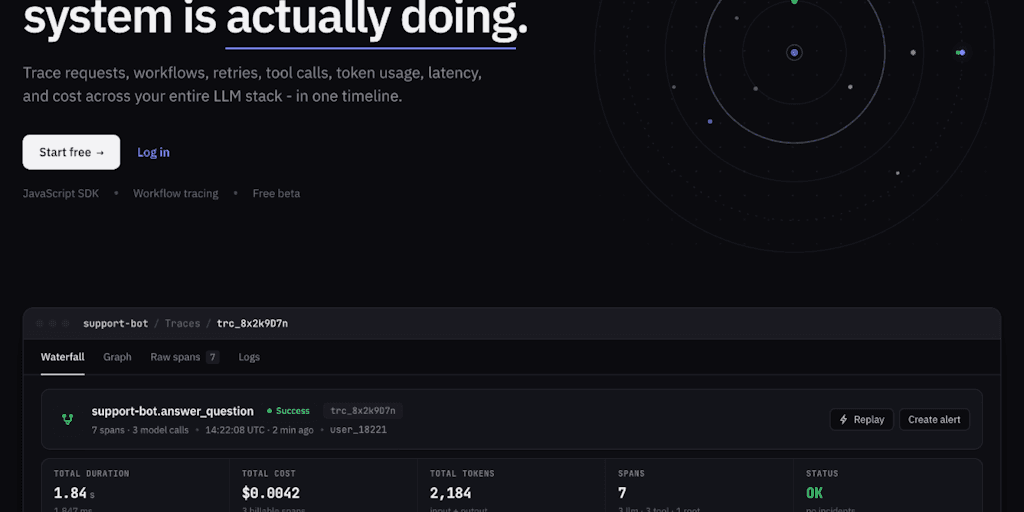
Handling the complexity of large-scale agent ecosystems requires **scalable data layers** and **performance monitoring**. Solutions like **SurrealDB** facilitate **multi-tenancy and knowledge sharing**, while **LangSmith** and similar tools enable **runtime verification**, **behavioral analysis**, and **early anomaly detection**.
Complementing these are **formal verification methodologies** such as **TLA+**, which allow teams to **mathematically specify and validate** agent behaviors. When combined with **cryptographically secured memory logs** and **provenance tracking**, these practices **establish a robust foundation for trustworthy systems**—a necessity for mission-critical enterprise deployment.
---
## Local Autonomous Stacks and Privacy Considerations
**Local stacks**, supported by frameworks like **GGML**, enable **on-device processing** of agents, offering **low latency** and **privacy-preserving** operation—ideal for sensitive or regulated environments. However, **security controls** such as **sandboxing**, **capability restrictions**, and **formal verification** are essential to prevent exploitation, especially when deploying **on-premise or edge systems**.
Implementing **rigorous security audits** ensures **safe, reliable local operations** that comply with enterprise policies, safeguarding sensitive data and maintaining operational integrity.
---
## The Latest Innovations and Their Implications
A significant recent milestone is the demonstration of **agents capable of reasoning, planning, and acting** toward **complex, long-term goals**. The publication titled **"AI agents that reason, plan, and act to accomplish goals"** explores system-level architectures that enable **autonomous, strategic decision-making**—a leap toward **truly autonomous enterprise agents**.
Additionally, the release of **Mobile-Agent-v3.5**, with **20+ state-of-the-art GUI benchmarks**, underscores the ongoing progress in **agent efficiency and usability**, critical for **enterprise deployment at scale**.
---
## **Current Status and Future Outlook**
The convergence of these technological advancements signals a **paradigm shift**: **enterprise AI agents are transitioning from experimental prototypes to dependable, long-lived systems**. With **secure, scalable memory architectures**, **interoperability standards**, **robust orchestration tools**, and **comprehensive security frameworks**, organizations can confidently deploy **autonomous agents capable of operating securely over decades**.
This evolution promises profound impacts on **digital transformation**, **operational efficiency**, and **strategic agility**—making autonomous agents not just tools, but **trusted partners** in enterprise success.
---
**In summary**, the future of enterprise AI hinges on **building resilient, secure, and scalable infrastructures** that support **long-term reasoning, planning, and action**. As standards mature and tools become more sophisticated, organizations are well-positioned to harness autonomous agents that **reason, learn, and adapt over decades**, fundamentally transforming enterprise operations in the digital age.