# Advancements in Core Agent Architectures, Long-Term Memory, Provenance, and Reliability Engineering for Autonomous AI Systems
The quest to create **trustworthy, long-lasting autonomous AI agents** has entered a new era, driven by groundbreaking innovations in **architectural design, memory systems, provenance, and verification methods**. Recent developments are transforming AI from isolated, reactive tools into **robust ecosystems capable of reasoning, planning, and acting over multiple years**—a feat that demands not only sophisticated technical frameworks but also rigorous standards for safety, transparency, and resilience.
This article synthesizes these advancements, highlighting how emerging architectural paradigms, enriched memory and provenance mechanisms, and formal verification strategies are converging to enable **scalable, dependable autonomous agents** suitable for complex, real-world deployment.
---
## Evolving Architectural Paradigms for Multi-Year Autonomy
The foundation of long-term autonomous systems lies in their architectural design. Traditional models like **ReAct** introduced reasoning-action integration but fall short for multi-year, complex tasks. Recent innovations have spawned a variety of **advanced structural paradigms** that better support sustained operation:
- **Code-Act Architectures**: These systems empower agents to **generate executable code snippets dynamically**, merging high-level reasoning with concrete automation. By scripting their own actions, agents can **perform intricate data analysis, automation tasks, and decision-making** independently over extended periods. For example, **Microsoft's CORPGEN** exemplifies this approach by combining hierarchical planning with persistent memory, enabling agents to **manage multi-horizon objectives effectively**.
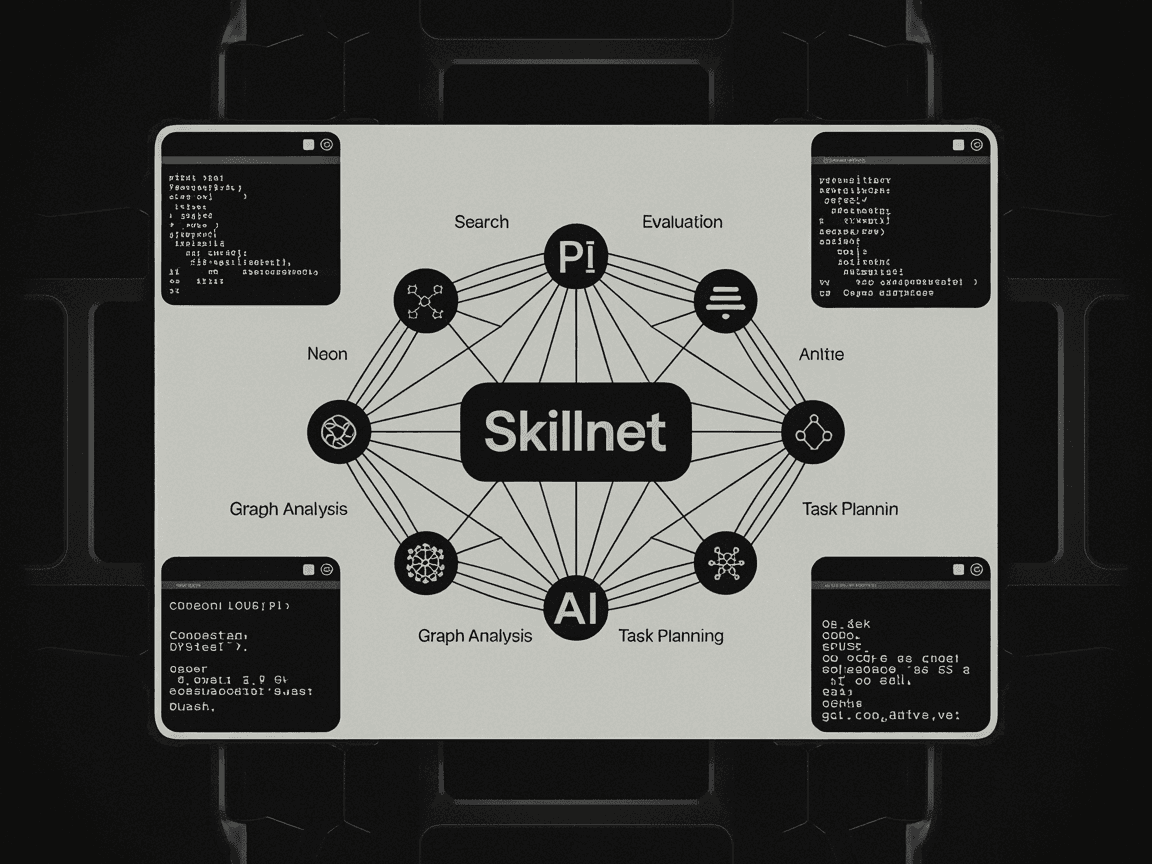
- **Hierarchical and Modular Frameworks**: Architectures like **SkillOrchestra** decompose complex goals into **layered, task-specific modules**, facilitating **fault tolerance, scalability, and adaptability**. Such modularity allows agents to **evolve without systemic overhaul**, essential for enterprise environments where continuous operation and incremental updates are vital.
- **Swarm Architectures**: Inspired by biological systems, swarm models consist of **simple, locally interacting agents** that produce **emergent collective intelligence**. Their decentralized nature offers **resilience to individual failures**, making them ideal for **disaster response, distributed logistics, and resilient decision-making**.
A recent standout example is **Microsoft Research’s CORPGEN**, which integrates hierarchical planning with long-term memory, demonstrating **significant improvements in managing multi-horizon tasks**. This hybrid architecture exemplifies how **structured planning combined with persistent memory** can dramatically enhance **agent reliability and adaptability** over years.
Furthermore, the ongoing debate between **tool-calling** versus **code-generation** strategies continues to shape architectural choices. While **tool-calling** involves invoking external APIs for specific functions, **code-generation** allows agents to **produce bespoke scripts**, offering **greater flexibility** but requiring **robust security measures**. Hybrid approaches are emerging to **dynamically adapt**, balancing flexibility with safety for prolonged autonomous operation.
---
## Long-Term Memory and Provenance: Pillars of Trustworthiness
Long-term operational reliability hinges on **layered, provenance-rich memory systems** capable of **incremental knowledge updates**, **handling knowledge drift**, and **long-term state recall**:
- **Layered Multimodal Memory Systems**: Platforms like **Agent RuleZ**, **Oboe**, and **LongMem** enable **persistent, multimodal knowledge retention** with continuous updates. These systems underpin **scientific reasoning, enterprise decision-making, and complex problem-solving** over multiple years by **integrating diverse data types** and **supporting long-term context**.
- **Versioned and Secure Knowledge Bases**: Architectures such as **AgeMem** and **MemoClaw** track **knowledge evolution over time**, enabling **conflict resolution** and **ongoing learning**. Incorporating **cryptographic security**—as seen in **DeepAgent**—ensures **data integrity and auditability**, which are critical for building **trust in long-term deployments**.
- **Provenance and Context Management**: Tools like **SurrealDB** and **Zep** support **scalable storage and retrieval**, while **CtxVault** manages **context boundaries** to **prevent sprawl and conflicting information**. These mechanisms guarantee that agents maintain **consistent, trustworthy knowledge bases** throughout their operational lifespan.
Recent innovations include **Claude’s auto-memory features**, enabling **automatic augmentation and recall** within large language models, and **hypernetwork architectures** that improve **memory efficiency and adaptability**—both critical for **sustained reasoning**.
Additionally, **content-addressed, verifiable protocols** such as the **Agent Data Protocol (ADP)**—which gained recognition at **ICLR 2026**—are transforming **trust in distributed knowledge exchange**. These cryptographic, tamper-evident protocols **enable secure, transparent communication** among autonomous agents, establishing a **trustworthy information ecosystem**.
---
## Formal Verification and Behavioral Assurance
Ensuring **behavioral correctness** over multi-year durations necessitates **rigorous verification and continuous monitoring**:
- **Formal Methods**: Tools like **TLA+** are increasingly employed to **verify safety properties**, **behavioral invariants**, and **goal fidelity**. They provide **mathematical guarantees** that agents operate **within safe and intended bounds**, even as they **self-evolve** or adapt to changing environments.
- **Behavioral Metrics**: Quantitative measures such as **drift**, **goal alignment**, and **behavioral stability** are critical for **detecting anomalies early**. Researchers like **Kasirzadeh and Gabriel (2025)** have proposed **multidimensional metrics** to **monitor efficacy** and **prevent safety lapses** during long-term deployment.
- **Self-Healing and Resilience**: Integrating **failure mode analysis** and **self-healing capabilities** allows agents to **detect anomalies, recover autonomously**, and **maintain safe operation** over years—an essential feature for **multi-year ecosystems**.
---
## Security, Governance, and Standardization
Long-lived autonomous systems require **robust security frameworks** and **interoperability standards**:
- **Zero-Trust Architectures**: Implementations like **Zero-Trust Memory** architectures **limit agent capabilities** and **prevent malicious exploits**, safeguarding **long-term ecosystems** against internal and external threats.
- **Secure Protocols and Standards**: The **Agent Data Protocol (ADP)** offers a **content-addressed, verifiable data exchange**, fostering **trustworthy collaboration** across distributed agents. Similarly, protocols like **Symplex** enable **semantic negotiations**, enhancing **trustworthiness and cooperation**.
- **Identity Management**: Robust **digital identity frameworks** ensure **authenticity**, **access control**, and **auditability**, forming the backbone of **governance in agent fleets**.
---
## Practical Deployment and Ecosystem Maturity
Leading platforms now support **scalable, fault-tolerant deployment** of long-term autonomous agents:
- **Vertex AI Agent Builder** and **Microsoft Foundry** exemplify **production-level frameworks** capable of **parallel deployment**, **self-healing**, and **inter-agent communication**.
- **Open-Source Resources & Tutorials**: A growing suite of **governance guidelines**, **interoperability standards**, and **long-term maintenance practices**—such as **deep-research agent examples**—are democratizing access and fostering **accelerated adoption**.
Recent innovations like **DeltaMemory**—hailed as **the fastest cognitive memory system**—and **Rust-based operating systems** are paving the way for **robust, secure runtimes** suitable for agents operating over decades.
---
## New Developments: Engineering Overview of Autonomous Agents
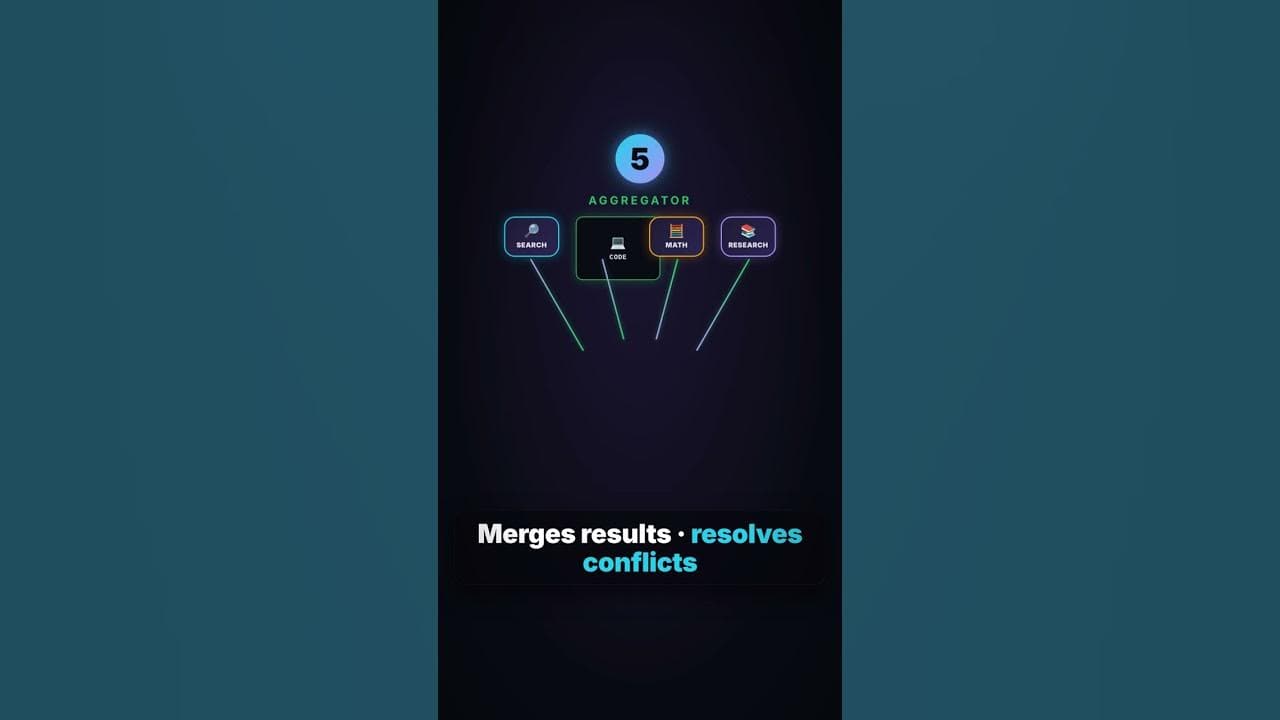
Complementing these technical advances, a recent **engineering overview video titled "AI agents that reason, plan and act to accomplish goals"** provides a comprehensive walkthrough of modern **agent design principles**. It underscores the importance of **end-to-end system integration**, highlighting how **reasoning, planning, and acting** are orchestrated within scalable, secure frameworks.
This resource emphasizes **modularity, transparency, and reliability**, illustrating how **agents can be engineered for long-term autonomy**, capable of **self-maintenance, adaptation, and trustworthy operation**.
---
## Current Status and Future Outlook
The rapid convergence of **advanced architectures**, **long-term memory and provenance systems**, **formal verification**, and **security standards** signals a maturation of autonomous AI from experimental prototypes into **trustworthy ecosystems**. These systems are now poised to **operate reliably over years**, supporting **scientific discovery, enterprise automation, and societal infrastructure**.
The recognition of protocols like **ADP** at **ICLR 2026** marks a milestone towards **interoperability and standardization**, while innovations like **Claude’s auto-memory** and **hypernetworks** push the boundaries of **long-term reasoning efficiency**.
**In essence**, these technological strides are laying the foundation for **scalable, transparent, and resilient AI ecosystems**—capable of **reasoning, planning, and acting** in complex, dynamic environments over extended timescales. They herald a future where **autonomous agents are trusted partners**, seamlessly integrated into society, continuously learning, adapting, and ensuring safety over decades.
---
*To explore these concepts further, the recent engineering overview video provides an in-depth look at how modern autonomous agents are reasoned, planned, and executed within robust, scalable frameworks.*