# The Ongoing Fight Against Racialized Policing: New Incidents, Legal Battles, and Systemic Challenges
The struggle to dismantle systemic racial biases embedded within American law enforcement continues to unfold amid a landscape marked by tragic incidents, legal confrontations, and fierce debates over oversight and accountability. Despite decades of reforms, recent developments reveal that racialized policing persists—often in more alarming and visible forms—prompting renewed activism, legal action, and innovative policy measures aimed at achieving true justice and equity. These unfolding events underscore both the deep-rooted nature of these issues and the urgent need for comprehensive, systemic change.
## Persistent Disparities and Escalating High-Profile Incidents
Empirical evidence confirms that racial disparities in policing remain stark and persistent. Black communities disproportionately experience use-of-force incidents, racial profiling, and targeted surveillance. For example, **Chicago police data** shows a **46% increase in allegations of excessive force against officers since 2022**, signaling a troubling escalation in misconduct claims. This rise indicates systemic challenges and suggests reform efforts are often moving slowly, leaving entrenched biases largely unaddressed.
Recent high-profile incidents have reignited national outrage and amplified calls for justice:
- In **Baltimore**, the shooting of a young Black man, captured on video, by police officers sparked widespread protests and renewed concerns over excessive force and racial profiling.
- The **Jacob Blake** shooting in Kenosha became a pivotal moment for civil rights activism. Despite reports that Blake was no longer threatening officers, he was shot multiple times in the back, prompting a federal investigation into potential civil rights violations. This incident exemplified the systemic nature of misconduct.
- A **viral act of resistance** involved a **72-year-old Black woman** in her yard who was forcibly restrained and placed on the ground by police despite her calm demeanor. Her assertive response galvanized community calls for reform, illustrating how individual acts of resilience can inspire broader change.
- An incident involving **racial profiling on public beaches** drew widespread condemnation: a Black father building a sandcastle was racially profiled and arrested by police. Video footage revealed racially charged comments from an officer, and the father—who is a Coastal Commission director—later received an **$8.3 million settlement**, highlighting the profound personal and financial toll of racial misconduct.
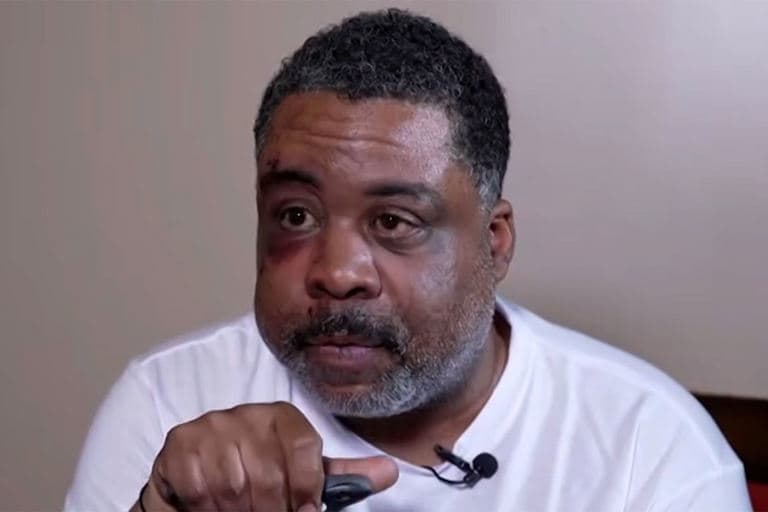
Adding to these troubling cases, a **federal public defender** was recently stopped while walking home at night by police officers, questioned, and detained without clear cause. The incident drew widespread criticism, raising concerns about racial profiling within the legal community and reinforcing fears that systemic biases extend beyond individual cases.
Furthermore, a **viral video** captured a Black man, restrained and seemingly non-threatening, being killed during a police K-9 attack. The footage shows the man on the ground, unarmed, while officers' K-9s violently attack him. His mother publicly condemned the act, demanding accountability and highlighting ongoing trauma inflicted on Black communities.
### Recent Developments: Jacksonville, Cincinnati, and Arlington
- **Jacksonville** has seen continued concerns over police use of force and officer-involved shootings. Local advocates and community leaders have raised alarms about rising incidents, demanding greater transparency and reform measures to address ongoing disparities and ensure accountability.
- In **Cincinnati**, Black officers have historically faced barriers within the police department. The **Sentinel Police Association**—a group representing officers of color—has fought for over five decades to secure equitable representation and influence, advocating for policies that reflect the community’s diversity and needs. Their efforts highlight the importance of inclusion within law enforcement as a step toward reducing racial biases.
- A **2025 report** from Arlington reveals that Black drivers are pulled over more frequently than individuals of any other race. This data underscores that racial profiling persists across different regions and socio-economic strata, reinforcing the systemic nature of racialized policing nationwide.
## Data, Legal Landscape, and Reform Challenges
Despite widespread public outrage, progress in addressing these disparities remains slow and uneven. Recent studies and reports illustrate the limited impact of reforms:
- Civilian oversight bodies in **Chicago** report a **46% increase in excessive-force allegations** since 2022. Activists argue that existing oversight mechanisms are often overwhelmed or lack enforcement power, impeding meaningful accountability.
- **Predictive policing** and **facial recognition** technologies continue to target Black neighborhoods disproportionately. Organizations like the **ACLU of Wisconsin** warn that such surveillance tools operate with minimal oversight, reinforcing systemic inequalities and raising significant privacy concerns.
- Several jurisdictions have paid **multimillion-dollar settlements**—sometimes exceeding **$13 million**—for wrongful deaths and excessive force cases. For instance, a notable case involved a **Black police lieutenant** who sued ICE, winning **$13.9 million** after agents demanded his immigration papers—a stark example of racial profiling and abuse.
- The legal landscape faces complex challenges; for example, **roughly 70 lawsuits** against the **St. Louis Metropolitan Police Department** face delays and procedural setbacks, hampering victims’ pursuit of justice. This legal morass underscores systemic barriers to accountability.
In response, some states are pioneering reforms:
- **Colorado** recently enacted legislation enabling residents to **sue law enforcement officers directly** for violations of their rights, creating new pathways for accountability and deterrence.
## Oversight Tensions and Local Resistance
The debate over oversight remains highly polarized:
- Several cities, including **Cleveland**, are **curtailing federal oversight** efforts, arguing that progress has been made and that external supervision hampers local control.
- Conversely, **Oakland** has taken steps to **strengthen its civilian oversight body**, appointing a **new leader** for the **Community Police Review Agency** to investigate misconduct and foster community trust.
- Leadership changes, such as the recent **retirement of the Wichita Falls police chief** amid criticisms over mishandling misconduct cases, reflect both acknowledgment of systemic flaws and ongoing reform efforts.
Existing oversight mechanisms often struggle:
- Data from Chicago indicates a rise in misconduct allegations; however, civilian review bodies are **overburdened** and sometimes lack authority to enforce discipline, leading to frustration among communities demanding accountability.
- Resistance from some local governments to external oversight contrasts with efforts in others to enhance transparency, illustrating societal divisions over control and reform priorities.
## Historical Roots and Modern Surveillance
Understanding current policing practices requires recognizing their historical foundations:
- **Slave patrols** and **racial control agencies** laid early groundwork for systemic racial surveillance.
- Today, **predictive policing** and **facial recognition** technologies disproportionately surveil Black neighborhoods, extending a legacy of racial control and mistrust.
- Reports document **more than 70 suspected modern lynchings**—acts of racial violence often underreported or concealed—continuing a long history of racial terror in new forms.
Organizations like the **ACLU of Wisconsin** emphasize that **racialized surveillance**—including facial recognition and data-driven policing—perpetuates inequalities with little accountability, deepening community mistrust.
## Grassroots Resistance and Policy Innovations
Community activism remains a vital force in challenging systemic abuses:
- Groups like the **Black Panther Party** have actively **intervened to prevent ICE arrests** of Black Americans, exemplifying direct resistance.
- Cities such as **Ann Arbor** are adopting **community-centered policing models** that prioritize **trust-building**, **cultural competence**, and **de-escalation** to reduce violence and improve relations.
- Grassroots movements increasingly advocate for **defunding or restructuring police departments** to prioritize investments in social services, restorative justice, and community empowerment.
## Transparency, Journalism, and New Legal Challenges
Transparency initiatives and investigative journalism continue to expose systemic bias:
- **Stanford’s Center for Racial Justice** produces analytical reports revealing racial disparities.
- Digital platforms and public complaint systems aim to lower barriers for victims seeking justice.
- Investigative works like **"The Coroner’s Silence"** by Terence Keel highlight how lack of transparent death records conceals police violence, especially against marginalized groups.
Recent legal developments include:
- The **"Denial of Police Use of Force Records"** lawsuit filed by the **ACLU** in Memphis underscores ongoing battles over access to accountability data. Authorities have repeatedly denied access to these records, impeding oversight and reform efforts.
- A **jury in Chicago** is deliberating whether the department’s **“code of silence”** contributed to a **botched raid** that traumatized four children. This case exemplifies the systemic culture of silence that hampers accountability, with the jury’s decision potentially shaping future reforms.
## The Beverly Hills–Jaylen Brown Incident: A New Front in Racialized Policing
Adding a high-profile case, **Beverly Hills police** recently faced scrutiny over an incident involving NBA star **Jaylen Brown**. Brown, attending a promotional event, alleged he was stopped and questioned by officers without clear cause, solely based on his race. Brown publicly expressed his frustration, stating, **"I was singled out because of how I look, not what I did."** He is now considering legal action for racial profiling.
This incident underscores that racialized policing is not confined to urban centers but persists across socio-economic and geographical boundaries, often amplified by media attention and high-profile individuals. It also challenges the notion that affluent, predominantly white enclaves are immune to biases, emphasizing the widespread and pervasive nature of racial profiling.
## Current Status and Implications
The recent surge in incidents, legal battles, and grassroots activism underscores that the fight against racialized policing remains at a critical juncture:
- **Federal investigations** into cases like Jacob Blake's shooting continue to influence reforms and accountability measures.
- The **$8.3 million settlement** awarded to the father racially profiled while building a sandcastle exemplifies ongoing racial bias and misconduct.
- The **viral video** of a restrained Black man killed during a K-9 attack re-ignites debates over use-of-force policies and racial disparities.
- The **stop of a federal public defender** walking home highlights that systemic biases persist within the justice system itself.
- The **Jaylen Brown incident** demonstrates that racial profiling occurs across socio-economic lines, emphasizing the need for widespread reform.
While some jurisdictions resist external oversight, activism, research, and policy reforms continue to push toward **more transparent, equitable policing**. Society now stands at a pivotal moment: progress remains uneven, but a confluence of grassroots movements, legal battles, and policy innovations offers hope for transformative change.
---
### **In Conclusion**
The fight against racialized policing endures as a defining challenge of modern law enforcement. Persistent disparities, tragic high-profile incidents, and grassroots resistance reveal systemic flaws that demand urgent and sustained action. Recent legal actions—such as lawsuits over denied records and high-profile cases like Jaylen Brown’s stop—highlight that accountability battles are ongoing and evolving.
The path forward requires advancing transparency, community engagement, and systemic reforms rooted in human rights and dignity. Although obstacles remain, the collective efforts of activists, advocates, and reform-minded officials signal a societal commitment to creating a more just and equitable policing system. The journey toward dismantling racial biases in law enforcement is ongoing, but the momentum for meaningful change is unmistakable.