# The 2026 Revolution in Digital Note-Taking: AI-Driven, Privacy-Centric, and Multimodal Ecosystems Expanded
The year 2026 marks a transformative milestone in the evolution of digital note-taking, elevating it from static repositories to **dynamic, intelligent, and privacy-preserving ecosystems**. Fueled by **cutting-edge AI models**, innovative hardware advancements, and a renewed emphasis on **user control over personal data**, these developments are reshaping how individuals, educators, and professionals capture, interpret, and interact with information.
This revolution is characterized by the **convergence of conversational AI assistants**, **on-device privacy-first models**, and **multimodal workflows**—creating tools that are not only more powerful but also more aligned with users' privacy and security concerns. Recent developments underscore this evolution, highlighting industry implementations, educational adaptations, and policy trends.
---
## From Static Storage to Intelligent, Conversational Workspaces
Initially, digital note-taking tools like **Microsoft OneNote** and **Evernote** served primarily as **digital filing cabinets**, digitizing handwritten or typed notes without much interactivity. Over the past few years, the integration of **large language models (LLMs)** and **multimodal AI** has transformed these platforms into **active, conversational, and adaptive environments**.
### Key Innovations:
- **Conversational Querying:** Users can **ask their notes questions naturally**, such as requesting summaries, explanations, or related ideas, facilitating **dialogue-based interactions** that replace manual searches.
- **Automatic Content Summarization:** Lengthy or complex notes are **distilled into concise summaries**, making dense information more accessible.
- **Content Generation & Refinement:** Modern notebooks **draft ideas, suggest restructuring, or generate related content**, fostering **creative collaboration** and **cognitive augmentation**.
- **Living Documents:** Notes are **continuously updated through AI**, evolving into **dynamic artifacts** that adapt to ongoing workflows and insights.
These advances have **redefined notebooks as active partners**, significantly **enhancing productivity, learning, and creative endeavors**.
---
## Major Industry Innovations and Recent Developments
### Microsoft’s Copilot: Embedding AI as a Personal Co-Author
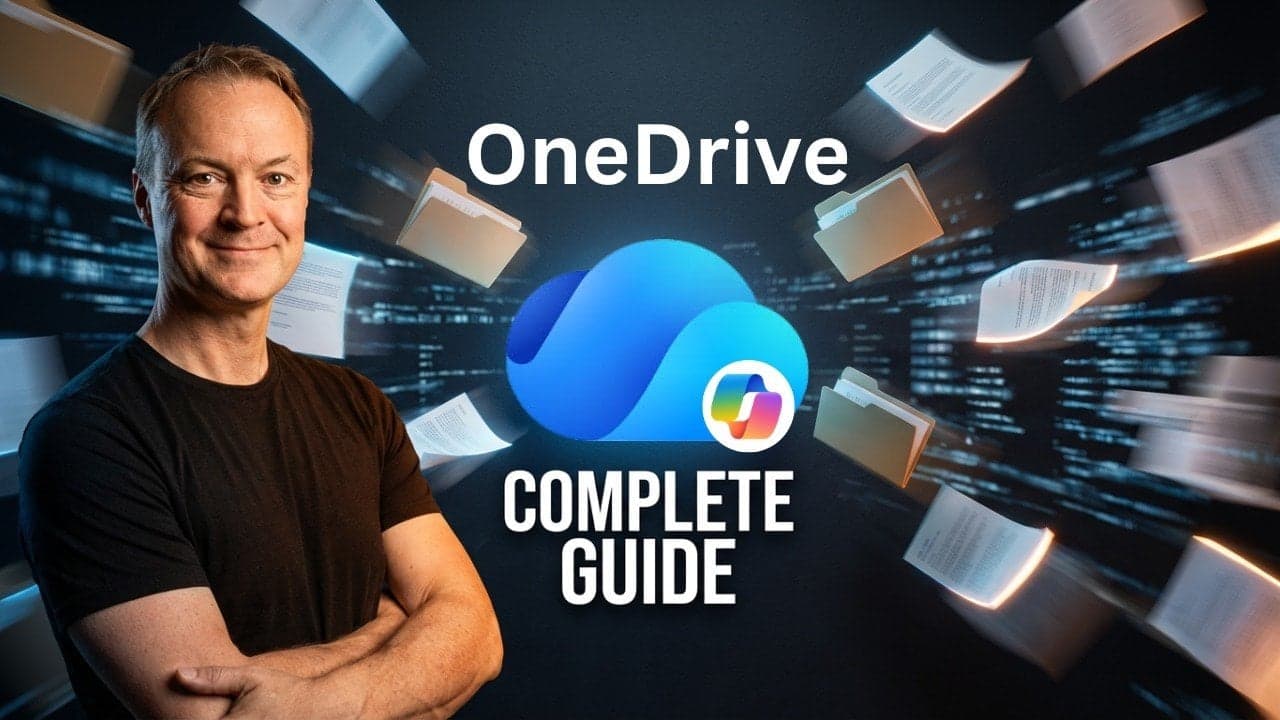
A **groundbreaking development** in 2026 has been Microsoft's **deep integration of Copilot AI** across **Office applications**—notably **OneNote**, **Word**, **Excel**, and **PowerPoint**. These embedded copilots **transform traditional productivity tools into conversational AI assistants** that **summarize, draft, restructure, and clarify content** in real-time.
**Recent capabilities include:**
- Rapidly **summarizing extensive or complex notes**
- **Generating outlines, ideas, or drafts** from user inputs
- Engaging in **interactive dialogues** to deepen understanding
- Assisting with **content organization, editing, and refinement**
This integration is **seamlessly connected** with **OneDrive** and **Office 365**, enabling **cloud synchronization** and **collaborative editing**, thereby **accelerating workflows** across devices and locations.
### The Expanding Tablet App Ecosystem
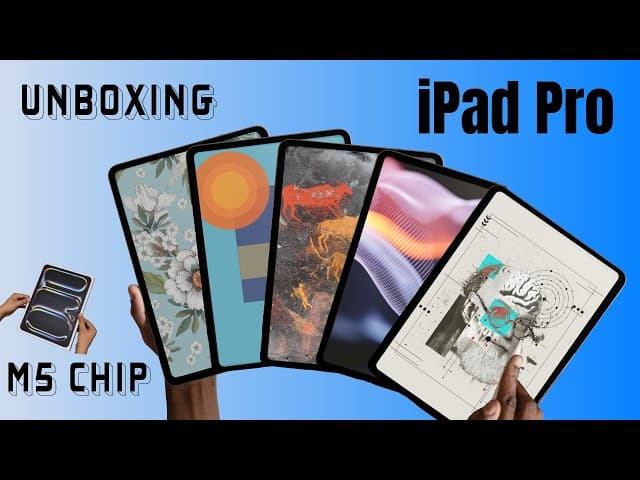
Tablets, especially **iPads** and **premium Android devices**, now host **specialized note apps** incorporating **AI-powered features**:
- **MarginNote:** Now features **AI chat integrations** that allow users to **discuss, clarify, and summarize** content directly within notes, turning passive reading into active dialogue.
- **Structured Notes:** Leverages **AI to automate structure creation** and **streamline complex workflows**, aiding content development.
- **Notiz:** Offers **AI-driven voice-to-text**, **PDF summarization**, and **accurate transcription**, making note-taking more accessible.
- **Amical:** Focuses on **privacy**, emphasizing **local AI processing** that minimizes reliance on cloud servers, thus granting users **full control over their data**.
### Advances in Handwriting and Multimodal AI Integration
A notable trend in 2026 is the **fusion of handwriting workflows with embedded AI assistants**:
- **AI-powered handwriting recognition** now **converts handwritten notes into editable digital content** with high accuracy.
- **Conversational interfaces** enable users to **interact with handwritten notes**—asking questions or requesting summaries—without disrupting their natural flow.
- **Multimodal interactions** combine **handwriting, voice, images, and UI elements**, making note-taking **more intuitive and responsive**.
Hardware enhancements, including **high-precision styluses** and **multimodal sensors**, further **accelerate this convergence**, transforming tablets into **personal cognitive hubs** tailored to diverse learning, creative, and professional styles.
### On-Device, Privacy-Focused AI Agents
A **major breakthrough** has been the development of **local AI agents** operating **entirely on devices**, addressing **privacy concerns** while maintaining **powerful capabilities**.
**Example: Apple’s Ferret-UI**
Apple researchers introduced **Ferret-UI**, a **local multimodal large language model (MLLM)** optimized for **interacting with mobile UI screens**. This **on-device AI** can **analyze app interfaces, process visual and contextual cues, and assist users**—all **without relying on cloud servers**.
**Implications include:**
- **Enhanced privacy**: Processing occurs entirely locally, reducing data exposure risks.
- **Tighter OS integration**: Apps become **smarter and more context-aware**.
- **Rich multimodal interactions**: Combining handwriting, voice, images, and UI elements for **seamless experiences**.
This development exemplifies a **shift toward embedded AI** within operating systems and applications, making **personal AI assistants** more **responsive, secure, and deeply integrated**.
---
## Transforming Education: Supporting STEM and K–12 Learning
AI-powered note tools are **revolutionizing education**, particularly in **STEM fields**:
- **Accessible Content:** Tools like **Genio Notes** can **generate explanations for complex scientific or mathematical concepts**, simplifying challenging material.
- **Personalized Study:** AI-driven **organization, summarization, and problem-solving** assist students in managing extensive research and assignments.
- **Addressing Learning Gaps:** AI can **identify misconceptions or confusion**, providing **targeted explanations**—promoting **inclusive, adaptive learning environments**.
- **Multimodal Engagement:** Integration of **diagrams, images, voice notes**, and **interactive simulations** supports various learning styles, fostering **deeper understanding**.
Recently, **district policies and state resources** have begun advocating for **responsible AI integration** in classrooms:
- The **Greenville County Schools** approved a **new AI policy**, emphasizing **ethical use, privacy, and safety** in deploying AI tools for student learning.
- Ohio’s Department of Education released **resources supporting practical, responsible AI integration**, guiding educators and districts on **best practices** and **ethical standards**.
These initiatives aim to **bridge learning gaps**, democratize access to advanced educational tools, and **empower STEM learners** across diverse backgrounds.
---
## Opportunities and Challenges
### Opportunities:
- **Natural, conversational interfaces** that align with human communication styles.
- **Multimodal, context-aware workflows** tailored to individual preferences.
- **Privacy safeguards** through **local AI models** and **user-controlled data**.
- **Educational democratization**—making advanced tools accessible nationwide and globally.
### Challenges:
- Ensuring **accuracy, fairness, and unbiased outputs** from increasingly sophisticated AI models.
- Overcoming **hardware limitations** that hinder resource-intensive AI processing.
- Achieving **interoperability** across diverse apps, platforms, and ecosystems.
- Addressing **privacy and security incidents**, such as recent bugs exposing sensitive data, by **strengthening safeguards** and promoting **transparent AI practices**.
---
## Current Status and Future Outlook
Today, **AI-powered notebooks and tablet apps** are distinguished by:
- **Deep integration of conversational, multimodal AI** within workflows.
- **Privacy-centric architectures** emphasizing **local processing** and **user control**.
- An **expanding ecosystem** of specialized apps for note organization, content creation, and learning.
- A focus on **personalization, security**, and **educational impact**.
Looking ahead, **hardware advancements**—such as more efficient processors and sensors—and **more sophisticated AI models** will make these tools **more intuitive, powerful, and accessible**. The future envisions **seamless, human-centric digital environments** that **amplify cognition, foster creativity**, and **democratize knowledge**, fundamentally transforming how we **think, learn, and create**.
---
## Conclusion
The **2026 landscape of digital note-taking** is **revolutionized by AI**, characterized by **conversational interfaces**, **multimodal workflows**, and **privacy-preserving architectures**. From **embedded assistants in mainstream applications** to **local AI models operating securely on devices**, users now enjoy **more natural, responsive, and trustworthy tools**—empowering **learning, creativity**, and **productivity**.
This epoch signifies a **paradigm shift**—where **technology complements human cognition**, supporting us in **thinking, understanding, and innovating**. As these trends continue, they are poised to **shape a more inclusive, intelligent, and secure digital future**—one where **personal AI assistants** become **indispensable partners** in everyday life and education alike.