# Spring Ecosystem 2026: The Pinnacle of Native, Reactive, Secure, and High-Concurrency Microservices — Updated and Expanded
The Spring ecosystem in 2026 exemplifies a decade of relentless innovation, strategic evolution, and unwavering commitment to empowering modern enterprise Java development. Building upon foundational principles and recent breakthroughs, this year marks a transformative era driven by native execution, reactive paradigms, fortified security, and unprecedented concurrency support. These advancements enable organizations worldwide to craft **fast, scalable, resilient microservices** tailored for today’s digital economy, while also embracing AI-driven capabilities, sophisticated observability tools, and scalable integration strategies for legacy systems.
This comprehensive update synthesizes the latest developments—spanning major releases, migration strategies, performance benchmarks, new tooling, and emerging AI integrations—offering an authoritative view of Spring’s trajectory and its pivotal role in shaping enterprise software in 2026.
---
## Major Architectural Milestones: Spring Boot 4.x & Spring Framework 7
In early 2026, the simultaneous release of **Spring Boot 4.x** and **Spring Framework 7** heralded a **paradigm shift** in enterprise Java development:
- **Native Image Support via GraalVM & AOT (Ahead-Of-Time) Compilation:**
Applications can now be **compiled into native images**, leading to **startup times measured in milliseconds**—a critical benefit for serverless functions, edge computing, and cost-sensitive cloud deployments. This capability enables **instantaneous scaling**, dramatically reducing operational costs and response latency.
- **Enhanced AOT & Native Compatibility APIs:**
Spring Framework 7 introduces **native-friendly APIs** explicitly designed for **AOT workflows** and **native image generation**. These APIs facilitate **seamless integration** with container-native ecosystems and simplify **migration from legacy architectures**, making native deployment more accessible.
- **Reactive-First Web Framework & Project Reactor:**
Transitioning **Spring WebFlux** into the **default web framework**, the ecosystem now fully embraces a **reactive, non-blocking, event-driven architecture**. Microservices built on these paradigms handle **massive concurrency** with **high throughput** and **low latency**, even under peak loads, leading to **greater resilience** and **fault tolerance**.
- **API Modernization for Native Compatibility:**
All major APIs across the ecosystem have been **optimized for native image generation** and **AOT workflows**, resulting in **more predictable performance** and **streamlined deployment pipelines**.
### The Concurrency Revolution: Virtual Threads and Beyond
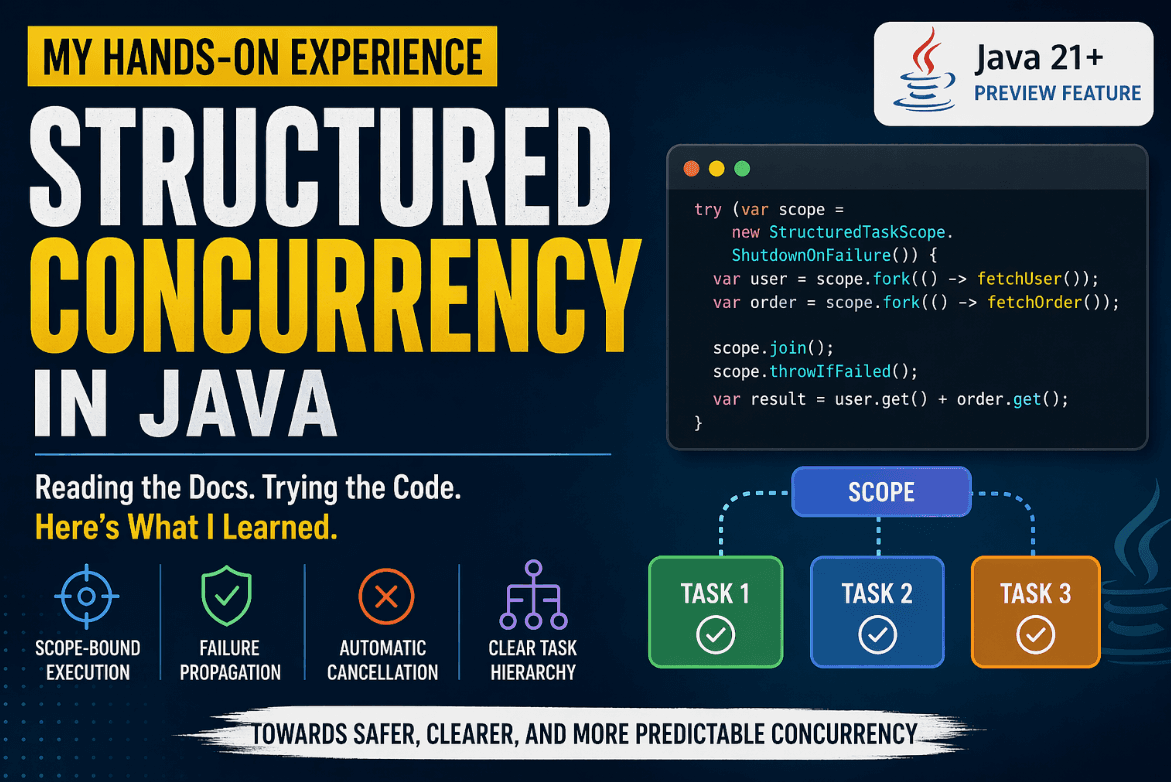
A hallmark of 2026 is the **deep integration of Project Loom's virtual threads** into Spring’s concurrency model:
- **Unparalleled Concurrency Support:**
Virtual threads enable **thousands of lightweight, concurrent tasks** with **minimal resource overhead**, dramatically **boosting throughput** and **reducing latency**. This is especially impactful for **high-demand, data-heavy microservices** operating at scale.
- **Simplified Programming Model:**
Developers can **write code in a synchronous style**, which **executes asynchronously** under the hood, **minimizing bugs** tied to traditional thread management and **improving developer productivity**.
- **Empirical Validation & Industry Adoption:**
Benchmarks from tools like **k6** and numerous case studies confirm **significant resource efficiency improvements**. As a result, Spring-based microservices are **more resilient**, **cost-effective**, and **scalable at enterprise levels**.
---
## Navigating the Migration: Strategies for Seamless Transition
As organizations adopt these cutting-edge features, **migration strategies** are essential to **minimize disruption** and **maximize benefits**:
- **Incremental Module Upgrades:**
Validate and upgrade each component independently, phasing updates gradually to **prevent regressions** and **maintain system stability**.
- **Leverage Gradle 9.3:**
The **latest Gradle 9.3** release enhances **native/AOT support**, **faster build times**, and **dependency management**, critical for **large-scale native and AOT workflows**.
- **Dependency Compatibility Checks:**
Employ **community tools** and **dependency scanners** to verify third-party library compatibility, preventing **runtime issues** post-migration.
- **Embedding Native & AOT in CI/CD Pipelines:**
Automate **native image creation** and **AOT workflows** within **CI/CD pipelines** to ensure **reliable, repeatable deployments** and **rapid iteration cycles**.
- **Proactive Testing & Benchmarking:**
Continuously perform **performance tests**, **security scans**, and **integration validation** to **maintain system stability** and **security integrity**.
### Addressing Build Challenges
Migration may surface common issues such as **Gradle output-to-source violations**, exemplified by:
> **"Cannot access output property 'outputDir' of task ':openApiGenerate'"**
Countermeasures include **validating build scripts**, **checking plugin compatibility**, and **consulting community tutorials**—steps that streamline migration and prevent build failures.
---
## Developer-Centric Innovations: APIs, Concurrency, and Security
### Transition from RestTemplate to WebClient
By 2026, **RestTemplate** has been **officially deprecated**, with **WebClient** now the **standard** for HTTP communication:
- Supports **reactive, non-blocking operations**, including **streaming**, **WebSocket**, and **custom protocols**.
- Facilitates **scalable**, **resource-efficient** inter-service communication.
- Community resources like **"Stop Using RestTemplate! Modern Microservices Communication in Spring Boot Explained"** provide comprehensive **migration guidance**.
### Virtual Threads & Simplified Concurrency
The adoption of **virtual threads** has **revolutionized concurrent programming**:
- Enables **synchronous-looking code** that **executes asynchronously**.
- **Reduces bugs** and **debugging complexity**.
- Industry data confirms **resource savings** and **throughput enhancements**, supporting **more scalable** and **cost-efficient systems**.
### Fortified Security Practices
**Spring Security 7**, released in late 2025, continues to **set industry standards**:
- **Simplified configuration** accelerates **secure development**.
- Supports **OAuth2**, **JWT**, and **SSO**, streamlining **API security**.
- **Multi-Factor Authentication (MFA)** is now **industry standard**, strengthening **enterprise security posture**.
- Ecosystem tools like **Snyk** and **OWASP Dependency-Track** assist with **vulnerability detection** and **dependency management**.
- Techniques such as **"Spoof-Proof File Type Validation in Spring Boot Using Apache Tika"** bolster **content security**, thwarting **content spoofing** and **malicious uploads**.
### Resiliency & Event-Driven Patterns
Integrating **Resilience4j** enhances **fault tolerance** with **circuit breakers**, **fallbacks**, and **retry policies**. Compatibility with **Apache Kafka**, **gRPC**, **RabbitMQ**, and **Spring Cloud Gateway** supports **high-throughput**, **low-latency** communication, with features like **dynamic routing** and **security enforcement**.
Support for **GraphQL** and **gRPC** further broadens **data fetching** and **inter-service communication**, accompanied by **comprehensive tutorials** and **sample projects**.
---
## Ecosystem & Tooling: Supporting a Future-Ready Developer
The Spring ecosystem continues its robust expansion, emphasizing **observability**, **documentation**, and **community engagement**:
- Built-in **metrics**, **distributed tracing**, and **dashboards** enable comprehensive **system monitoring**.
- **springdoc OpenAPI** automates **API documentation**, **versioning**, and **security schemas**.
- Resources like the **"Kafka Ecosystem Masterclass"** (27-minute training) cover **event-driven architecture**, **Kafka scaling**, and **best practices**.
### Emerging Techniques & AI Integration
Recent innovations include **"🚀 Ultra-Fast Pagination in Spring Boot | Production-Ready Keyset"**, demonstrating **performance optimizations** like **keyset pagination**, which significantly **reduces database load** and **response latency**, especially in **native** and **virtual-threaded environments**.
Furthermore, **Spring AI** initiatives are actively fostering **AI-native architectures**, with resources such as:
- **"Spring AI 实战:手把手教你构建智能对话助手(支持流式输出)"** — a Chinese-language tutorial on **building intelligent chatbots** with **streaming support**.
- **"Shipping a Feature with AI — A Disciplined Agent Workflow Demo"** — a **22-minute** video demonstrating **AI-driven feature development**.
- Integration tutorials with **Azure OpenAI Service** guide developers in **connecting Spring Boot applications** with **GPT-4, GPT-4 Turbo, DALL-E, and Whisper**, enabling **enterprise-grade AI features**.
These initiatives are part of a broader **AI-native movement**, where **reactive**, **native**, **concurrent**, and **AI** components are intertwined to create **intelligent, adaptive microservices**.
---
## Architectural Perspectives: Modular Monoliths vs. Microservices
While **native microservices architectures** dominate, **modular monoliths** remain relevant—especially for organizations favoring **gradual evolution**:
- **Advantages include:** **simpler deployment**, **low latency**, and **incremental migration paths**.
- **Key principles** such as **bounded contexts** and **domain-driven design** underpin successful transitions.
Discussions like **"Modular Monoliths and Other Facepalm Moments"** (Kevlin Henney, NDC London 2026) highlight the importance of **strategic architecture choices** aligned with organizational needs.
---
## Exposing Legacy MCP Systems for Modern Use
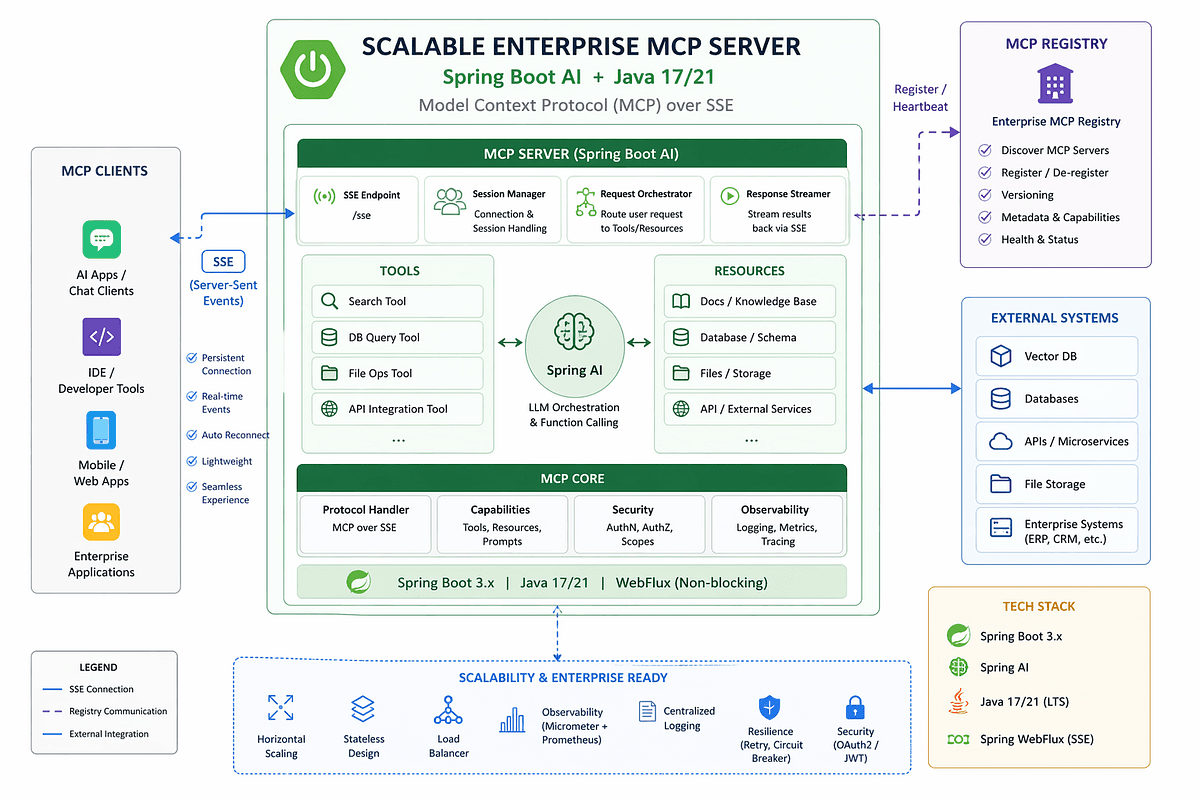
A significant new development in 2026 is the focus on **exposing MCP (Mainframe Control Protocol)** from legacy Java systems to modern Spring-native architectures:
> **"Exposing MCP from Legacy Java: Scalable Architectures"**
> This practical architecture guide details how to **integrate and expose MCP protocols** from legacy Jakarta EE or mainframe systems, enabling **scalable, secure, and reactive access** via Spring Boot microservices.
> Key strategies include **protocol translation**, **gateway orchestration**, and **event-driven data streaming**, supporting **gradual migration** and **hybrid architectures** that leverage existing investments while harnessing modern capabilities.
This approach offers **scalable migration pathways**, allowing organizations to **incrementally modernize** without sacrificing **legacy stability**.
---
## Highlights from the "Spring Forward" Event
The community-driven **"Spring Forward"** conference showcased a wealth of **cutting-edge demos**:
- **Migration workshops** covered **native image optimization**, **reactive adoption**, and **security enhancements**.
- A standout session on **"Passwordless Login in Spring Boot"** demonstrated **passwordless authentication** with **one-time tokens**, reflecting **industry trends** toward **user-friendly, secure login**.
- The **Kafka Masterclass** provided **hands-on training** in **event-driven architecture** and **Kafka scaling**, reinforcing **enterprise readiness**.
---
## Supporting Production-Grade Kafka & Native Libraries
The resource **"Day 10: Production-Grade Dependency Management for Kafka Streams with Native Libraries"** offers vital guidance:
- Achieving **high throughput**, **low latency**, and **fault tolerance**.
- Leveraging **native libraries** for **resource efficiency**, especially critical for **large-scale enterprise deployments**.
This approach enhances **streaming capabilities**, positioning Kafka as a **cornerstone** of resilient, event-driven microservices.
---
## Current Status & Future Implications
As of 2026, **Spring** exemplifies a **resilient, high-performance platform** capable of addressing **enterprise complexities**:
- **Milliseconds startup times** facilitate **dynamic scaling** and **cost-effective cloud operations**.
- **Virtual threads** support **massive concurrency** with **resource efficiency**.
- **Fortified security protocols**, **timely vulnerability detection**, and **content validation** bolster **enterprise resilience**.
- **Developer experience** benefits from **streamlined APIs**, **automated workflows**, and **powerful tooling**, significantly **reducing time-to-market** and **operational costs**.
- **Architectural agility**, driven by **resiliency patterns**, **event-driven messaging**, and **protocol support**, enables organizations to **respond swiftly** to market shifts.
**In essence**, Spring 2026 offers an **integrated, future-proof platform**—empowering enterprises to **innovate confidently** amidst rapid technological evolution.
---
## Embracing the Future: Pathways Forward
The ecosystem’s ongoing evolution underscores **AI-native architectures** and **automated intelligent workflows**. Initiatives like **Spring AI** are pioneering **next-generation microservices** that **seamlessly integrate AI models** within **reactive**, **native**, and **high-concurrency** environments. Notable developments include:
- Building **Retrieval-Augmented Generation (RAG) chatbots** with Spring Boot + **Large Language Models (LLMs)**.
- Developing **production-ready AI features** leveraging **Azure OpenAI** or **local models** like Ollama & Pinecone for **vector similarity search**—enabling **privacy-conscious, offline AI solutions**.
- Automating **content validation**, **security**, and **performance optimization** through **AI-driven insights**.
**Recommendations for organizations**:
- Adopt **incremental migration strategies** supported by **comprehensive testing**.
- Embed **native image** and **AOT workflows** into **CI/CD pipelines** for **reliable, rapid deployment**.
- Leverage **community resources**, tutorials, and **sample projects**—such as the **Kafka Masterclass** and **AI integration guides**—to **accelerate adoption**.
- Prioritize **security best practices** and **content validation techniques** to **maintain enterprise resilience**.
By following these pathways, organizations can **confidently step into the future of Java microservices**, leveraging Spring’s full potential.
---
## Final Reflection: Spring 2026—A Platform for Infinite Possibilities
The **Spring ecosystem in 2026** exemplifies a **harmonious fusion of innovation and stability**. Its support for **native images**, **reactive programming**, **virtual threads**, **AI-native architectures**, and **industry-leading security** makes it the **cornerstone for building tomorrow’s resilient, high-performance microservices**.
**The message is clear**: the future is **native**, **reactive**, **secure**, and **AI-enabled**. Spring isn’t merely evolving—it’s actively **shaping** this future.
**Spring into 2026**—where **speed**, **security**, and **scalability** converge to redefine enterprise excellence.
---
## Summary of Key Points
- **Architectural Innovations:** Spring Boot 4.x & Spring Framework 7 introduce **native image support**, **AOT**, **reactive-first design**, and **virtual threads**.
- **Migration & Tooling:** Use **Gradle 9.3**, automate **native/AOT workflows** within **CI/CD**, verify **dependency compatibility**, and address build challenges proactively.
- **Developer Practices:** Transition from **RestTemplate** to **WebClient/RestClient**, adopt **virtual threads**, and implement **Spring Security 7** best practices.
- **Performance & Benchmarks:** Recent **Spring Boot 4.0.2** benchmarks highlight **performance gains** across web, reactive, CDS, AOT, and native deployments; **WebFlux** demonstrates superior scalability for reactive workloads.
- **Ecosystem & Resources:** Leverage **native Kafka libraries**, **Spring AI**, and **advanced observability tools**.
- **Best Practices & Recommendations:** Emphasize **incremental migration**, **automated native/AOT workflows**, **security vigilance**, and **community engagement**.
**In conclusion**, Spring 2026 is not just a platform—it's a **comprehensive ecosystem** enabling enterprises to **innovate confidently**, **scale efficiently**, and **securely** meet the challenges of the future.
---
## Additional Noteworthy Articles
### How a Request Flows in Spring Boot Microservices using Kafka with Load Balancing and Tracing
> **"Explain how a request flows in Spring Boot Microservices using Kafka with Load Balancing and Tracing"**
> An in-depth explainer, available as a 1:27 YouTube video, illustrates the **end-to-end request flow** in Kafka-backed microservices, emphasizing how **load balancing**, **distributed tracing**, and **event streaming** work together to deliver **highly scalable**, **observability-rich** architectures.
### Resolving Spring Boot Exception: The Elements Were Left Unbound
> **"Resolving Spring Boot Exception: The Elements Were Left Unbound"**
> This tutorial offers guidance on **common configuration binding issues**, explaining **causes**, **detection**, and **best practices** for **validation**—crucial for **maintaining stability** during complex migrations.
---
## Final Note
As Spring continues its evolution into a **native, reactive, AI-enabled**, and **highly secure** platform, organizations equipped with **modern migration strategies**, **robust tooling**, and **cutting-edge practices** will be best positioned to **lead in the digital age**. The journey into 2026 and beyond is marked by **opportunity**—embrace it with confidence.
**Update Outline**: 1) Spring Boot 4.x & Spring Framework 7: native/AOT, reactive-first, virtual threads; 2) Migration strategies: incremental upgrades, Gradle 9.3, CI/CD native/AOT, dependency checks, common build issues; 3) Developer practices: WebClient/RestClient, virtual threads, Spring Security 7, Resilience4j patterns; 4) Ecosystem & tooling: observability, springdoc OpenAPI, Kafka native libs, Spring AI and AI integrations; 5) Performance & optimizations: Spring MVC optimizations, adaptive timeouts for outbound calls, keyset pagination, production-grade Kafka streams; 6) Legacy integration: exposing MCP and protocol translation; 7) Recommendations: incremental migration, automated workflows, security vigilance, community resources.
**New Articles Added** (full content):
[
{
"title": "Optimizations in Spring MVC",
"content": "Title: Optimizations in Spring MVC\n\nContent: The application code is taken from some public benchmarks. The data represent fruits with links to the stores that stock them and the prices listed. The /f"
},
{
"title": "Spring Boot Interview - Adaptive Timeouts for Outbound Call",
"content": "Title: Spring Boot Interview - Adaptive Timeouts for Outbound Call\n\nContent: You are building a Spring Boot microservice that calls multiple external services over HTTP (e.g., payment gateways, third-"
}
]
**Removed Articles** (titles only):
None
**Task**:
Write a comprehensive markdown article that:
1. Builds upon the previous context with new developments
2. Synthesizes the key information into a coherent narrative
3. Covers the main events, developments, and their significance
4. Highlights important details, quotes, and data points
5. Uses clear structure with paragraphs, **bold** for emphasis, and bullet points where appropriate
6. Is comprehensive but not redundant - avoid repeating the same information
**Format**:
- Start with a strong opening that captures the essence of the topic
- Organize information logically (chronologically or by importance)
- Include specific details and examples from the articles
- End with current status or implications if relevant
Output the markdown article directly (no JSON wrapper, no title header).