# U.S. Cattle Supply Tightness, Elevated Beef Prices, and Slow Herd Rebuilding: An Updated Analysis of 2025-2026 Market Outlook
The U.S. beef industry remains at a critical juncture, characterized by an unusually tight cattle supply, soaring beef prices, and a sluggish pace of herd rebuilding. As of early 2026, cattle inventories hover near **86.7 million head**, a figure reminiscent of the early 1950s, underscoring the severity of the supply crunch. Recent developments have only intensified the complexity of this landscape, indicating that the "new normal" of elevated prices and constrained supplies is likely to persist into late 2026 unless significant environmental, biological, or policy shifts occur.
## Persistent Supply Constraints: Environmental, Biological, and Climatic Challenges
### Drought, Wildfires, and Forage Shortages
Long-term drought conditions continue to be the primary driver behind the stagnant herd growth. Major grazing regions—including the Western U.S., Southern Plains, and Great Plains—are experiencing water shortages that have decimated forage production. Reports from agricultural sources and social media, such as **YouTube videos**, depict skyrocketing hay and alfalfa prices; for example, **Colorado** has reported **record hay costs** due to dwindling water resources. These elevated costs compel many ranchers to cull herds or delay herd expansion plans, maintaining the supply tightness.
Adding to environmental stress, **wildfires** have ravaged pasturelands across several states. Recent reports from Reuters highlight that extensive fires have "burned grazing lands to the point of being a sea of sand," forcing ranchers to rely heavily on expensive supplemental feeds. These land losses not only reduce immediate forage availability but also slow herd rebuilding efforts, which sustains high beef prices and tight supplies.
### Biosecurity and Disease Risks
Biosecurity concerns remain heightened. The recent detection of **New World Screwworm (NWS)** near the Texas-Mexico border has increased vigilance. While **Mexico** reports a **57% decrease** in NWS cases, the proximity—only 215 miles from key U.S. cattle regions—keeps the threat active. States like **Texas** and **Colorado** have responded with **disaster declarations** to bolster biosecurity measures.
The USDA’s **Grand Challenge** initiative is actively working on **biological controls**, **genetic research**, and **disease prevention strategies** to mitigate these threats. However, the risk of infections and potential export disruptions continues to cast uncertainty over herd recovery timelines.
### Climatic Disasters and Winter Losses
Extreme weather events have inflicted significant herd losses. For instance, Arkansas recently reported **over $24 million** in cattle losses due to severe winter storms. Such climatic disasters further complicate herd rebuilding, prolonging the supply constraints and supporting elevated beef prices.
## Market Dynamics: Prices, Volatility, and Industry Adaptation
### Record Beef Prices and Market Fluctuations
Demand-supply imbalances have pushed **retail beef prices** to approximately **$8.45 per pound**, marking a **16.4% increase** from the previous year. Certain cuts have seen **price hikes of up to 36%**, reflecting persistent scarcity. Wholesale markets, like the **Choice cutout**, have approached **$365 per hundredweight**, signaling ongoing tightness.
Market volatility remains intense:
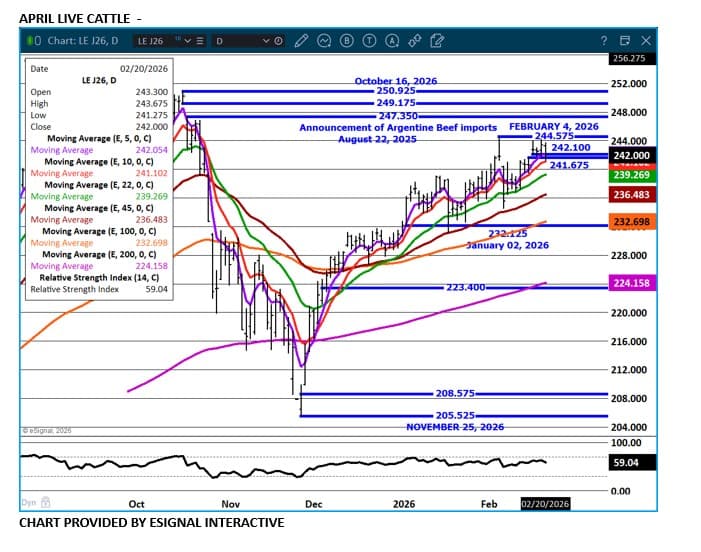
- **Cattle futures** have swung between **up 45 cents and 90 cents** daily, highlighting ongoing uncertainty.
- Industry analysts question whether **$250 cash** prices can push prices even higher amid persistent shortages. Reports from **"Markets Now" (February 18)** emphasize the importance of **risk management strategies** such as hedging and futures trading to navigate these swings.
Futures markets continue to hold a **bullish outlook**, underpinned by expectations of sustained shortages and high demand.
### Industry Responses: Capacity Cuts and Technological Innovations
Major processors are actively **reducing capacity** to adapt to market conditions. For example, **Tyson Foods** announced the closure of its **Lubbock Feeders** plant after over 70 years, which further constricts supply and helps sustain high prices.
Producers are increasingly deploying **advanced reproductive technologies** and **genetic improvements** to expedite herd rebuilding. Notably, the recent **"DocTalk 719"** YouTube video titled **"Selecting a bull with Lorna Marshall"** underscores the industry's focus on **bull-selection** and **genetic strategies** to enhance herd productivity. These efforts aim to accelerate herd growth, although environmental and biological constraints limit their immediate impact.
Additionally, land management practices and risk mitigation via **futures contracts** and **hedging** are becoming more prevalent, helping stabilize revenues amid volatile markets.
### Data on Feedlot Inventories and Placements
Recent USDA and industry reports confirm **declining cattle on feed** and **fewer placements** into feedlots compared to previous years. These indicators reinforce the ongoing tightness of supplies and support the bullish price outlook. The **cattle on feed** figures remain at historically low levels, emphasizing the sluggish pace of herd expansion.
## Trade, Policy, and Global Market Influences
### Import Quotas and Export Opportunities
Argentina recently announced a **quintupled import quota** of **80,000 metric tons**, enacted through an executive order signed by **President Trump**. This move aims to alleviate domestic shortages but could **delay herd rebuilding**, as increased imports compete with domestic production.
On the export front, agreements with **Taiwan** and **Indonesia** are expanding opportunities. However, **China’s ongoing beef ban** continues to limit export avenues, constraining the industry's ability to leverage international markets for herd recovery.
### Trade Tensions and Tariff Movements
A notable recent development involves **President Trump’s** announcement of **a 10% global tariff increase** affecting Australian beef and wine imports. Importantly, **beef was explicitly exempted** from this tariff, as recent trade updates confirm, preventing additional costs that could further tighten supplies domestically.
Nonetheless, this move is part of broader **trade tensions**, with potential retaliatory actions from Australia and other beef-exporting nations. These geopolitical dynamics add layers of complexity to global supply chains and could influence price stability.
## Recent Data and Near-Term Outlook
### Updated Market Data and Expert Forecasts
The latest **cattle on feed** and **placements** reports confirm **continued declines in feedlot inventories**, reinforcing the persistent supply tightness. Industry experts, including insights from **Cattle HQ Live** and **2026 Market Predictions** by Patrick Linnell, suggest herd rebuilding will remain sluggish through late 2026 unless there are significant breakthroughs in forage recovery, disease control, or policy support.
### Market Volatility and Short-Term Trends
Recent activity underscores ongoing volatility:
- **Sharp declines** in cattle futures and spot markets reflect persistent uncertainty.
- Market reports, such as the **February 26, 2026** update, indicate that **cattle prices** remain **elevated and bullish**, with few signs of imminent relief.
### Industry Implications
- **Producers** face high prices but must contend with environmental risks, disease threats, and market volatility.
- **Consumers** should anticipate **continued elevated beef prices**, potentially prompting shifts toward alternative proteins.
- **Policymakers** are encouraged to consider measures supporting herd rebuilding, including environmental management, disease mitigation, and trade facilitation.
## Current Status and Future Outlook
The supply-demand imbalance persists, with **high prices and volatility** expected into late 2026. While the industry employs technological advances and capacity adjustments, environmental adversities, disease threats (notably NWS), and trade policies continue to hinder rapid herd recovery.
**Key takeaways:**
- **Supply constraints** driven by drought, wildfires, disease risks, and extreme weather will keep cattle inventories at historically low levels.
- **Market prices** are at or near record highs, with ongoing volatility influencing industry and consumer behaviors.
- **Industry adaptations**, including genetic improvements and capacity adjustments, are underway but insufficient for immediate herd expansion.
- **Trade and policy developments**, including import quotas and tariff exemptions, influence supply and pricing dynamics, with recent exemptions preventing further domestic inflation.
**In sum,** unless substantial environmental recovery, disease control, or supportive policy measures arise, the U.S. beef industry will likely maintain tight supplies and elevated prices through late 2026. The "new normal" of high prices and limited herd growth appears to be firmly established.
---
### Recent Market Highlights
- **February 26, 2026:** Market data confirms continued declines in cattle inventories, with futures remaining bullish amid volatility.
- **Price Movements:** Retail beef prices hover around **$8.45/lb**, with certain cuts up to 36% higher.
- **Trade Developments:** Argentina’s increased import quota aims to ease shortages, while tariff exemptions prevent domestic price inflation.
- **Capacity Adjustments:** Major processors are trimming capacity, and producers are adopting genetic and land management innovations to accelerate herd rebuilding, albeit gradually.
---
**Overall,** the U.S. beef market remains in a delicate, turbulent equilibrium—fragile and uncertain but resilient amidst ongoing environmental, biological, and geopolitical challenges. Stakeholders must stay vigilant as the industry navigates these complexities into late 2026 and beyond.