# The 2024 Revolution in Medical AI: Deep Learning, Multimodal Models, and Neuro-Symbolic Innovation
The landscape of artificial intelligence in healthcare continues to accelerate at an unprecedented pace in 2024, driven by groundbreaking advances that emphasize **specialization, trustworthiness, resource efficiency, and multimodal perception**. Building upon prior momentum, this year marks a transformative shift toward **more interpretable, scalable, and clinically integrated AI systems**. These innovations are fundamentally reshaping diagnostics, surgical support, neuroimaging, and patient management—making medical AI more precise, safe, and accessible than ever before.
---
## Major Advances in Domain-Specific Medical AI
### Refinements in Imaging and Pathology
A key highlight of 2024 is the development of **tailored deep learning architectures** optimized for specific medical domains, enabling higher accuracy and clinical utility:
- **Neuroimaging and Cardiology**: The advent of **Dgenet**, a diffusion model-based graph convolution network, exemplifies this trend. Dgenet now demonstrates **exceptional performance** in capturing complex geometrical structures within brain and cardiac imaging, facilitating **more accurate segmentation** of challenging cases such as strokes and cardiac anomalies. These improvements support **earlier detection** and **timely interventions**, directly impacting patient outcomes.
- **Cancer Detection**: The evolution of **YOLOv11n**, with **multi-scale feature calibration**, enables **earlier and more reliable tumor detection**, especially in breast cancer imaging. This supports **timelier diagnoses** and reduces delays, which are crucial for effective treatment planning.
- **Pathology**: Integration of **attention-based multi-instance learning (MIL)** within deep learning-based pathomics systems has become standard. These models enable **detailed tissue analysis**, supporting **tumor subtyping and grading** with **greater diagnostic clarity**. This enhanced interpretability assists pathologists in making **nuanced prognostic assessments** and **personalized therapeutic decisions**.
### Synthetic Data and Surgical Support Tools
To address data scarcity and privacy concerns, researchers have advanced **diffusion models like DDiT** that generate **high-fidelity synthetic datasets**. This democratization of data significantly accelerates **robust training and clinical validation**, especially for rare diseases, thereby **expediting clinical deployment**.
In the surgical domain, **AI-driven tools** such as **SAGE** now generate **layout-aware 3D anatomical models**, allowing surgeons to **virtually rehearse procedures** with high fidelity. This **preoperative planning** enhances **safety and precision** in minimally invasive and complex surgeries. Concurrently, **ANCHOR** facilitates **real-time analysis of surgical videos**, enabling **workflow pattern recognition** that improves **intraoperative guidance** and **training**.
The ultimate aspiration is the development of **autonomous surgical agents** capable of **planning and executing procedures**—a goal increasingly supported by **multimodal perception** and **predictive modeling** that can adapt to dynamic surgical environments and patient-specific nuances.
---
## Multimodal Perception and Large Language Models in Clinical Environments
### Multimodal Models for Surgery and Diagnosis
The integration of **visual, auditory, and sensor data streams** has revolutionized **real-time intraoperative support** and **diagnostic accuracy**:
- **Models like OneVision-Encoder** and **Codec-aligned sparsity techniques** now enable **efficient multimodal perception** during complex procedures. These systems can **reduce errors**, **enhance safety**, and **provide timely insights**.
- When combined with **large multimodal language models (MLLMs)**, these systems support **immediate diagnostic reasoning**, **adaptive surgical guidance**, and **enhanced training environments**—ultimately **reducing risks** and **improving patient outcomes**.
### Development of Domain-Specific Multimodal Large Language Models
Significant progress has been made in **specialized MLLMs tailored for healthcare**:
- **CancerLLM** now approaches **diagnostic accuracy comparable to expert oncologists**, offering **interpretable reasoning pathways** that foster **clinician trust** and **decision confidence**.
- **MedXIAOHE** introduces **entity-aware continua**, supporting **nuanced interpretation** across modalities such as imaging, pathology, and clinical notes, ensuring **comprehensive understanding**.
- The **Knowledge-enhanced pretraining (KEEP)** framework infuses models with **disease-specific knowledge**, greatly **enhancing reasoning, diagnosis, and treatment planning** across a wide range of clinical scenarios.
### Remedies for Weaknesses in Vision-Language Models
Recent research has addressed **limitations in visual language models** (VLMs), such as their difficulty understanding negation and complex reasoning:
- The development of **CLIPGlasses**, a **plug-and-play framework**, enhances CLIP's capacity to **comprehend negated visual statements**, improving **accuracy in clinical image interpretation**.
- Additionally, **plug-and-play remedies** leverage **probabilistic reasoning** and **likelihood-based rewards**, boosting **decision calibration** and **trustworthiness** in clinical settings.
### Neuro-Symbolic Decoding and Brain Signal Interpretation
A groundbreaking development in 2024 is the rise of **neuro-symbolic approaches** tailored for neuroimaging analysis:
- The **NEURONA** framework exemplifies this **neuro-symbolic decoding** paradigm, combining **neural activity patterns** with **symbolic reasoning** to **decode brain signals**.
- Recent publications, such as **"Neuro-Symbolic Decoding of Neural Activity,"**, demonstrate how **NEURONA leverages these techniques** to **translate raw neural data into interpretable, meaningful concepts**.
- This approach **bridges the gap** between **raw neuroimaging data** and **cognitive understanding**, offering **more transparent insights** into brain function—crucial for **neuropsychiatric diagnostics** and **brain-computer interfaces**.
---
## System-Level Innovations for Safety, Efficiency, and Deployment
### Resource-Efficient Training and Inference
The clinical deployment of AI increasingly relies on **reducing computational costs**:
- Techniques like **FP8 training**, **NanoQuant**, and **learnable sparse attention mechanisms** such as **SLA2** have **dramatically decreased training times** and **energy consumption**.
- These innovations support **on-device inference**, which is critical for **resource-limited settings**, enabling **real-time decision support** **at the point of care** without sacrificing accuracy.
### Long-Sequence Data Fusion and Autonomous Surgical Agents
Systems like **OpenVision 3** and **DFlash** now facilitate **long-sequence inference** by integrating **visual, auditory, and sensor data** over extended periods. This capability is essential for **continuous patient monitoring**, **autonomous surgeries**, and **long-term health management**.
Models such as **SAGE** and **ANCHOR** continue to advance **surgical training** and **procedural understanding**, with the overarching goal of **autonomous surgical agents** capable of **performing complex procedures** with **minimal human oversight**. These agents rely on **multimodal perception**, **predictive modeling**, and **adaptive reasoning** to operate reliably and safely.
### New Sampling Techniques and Curriculum Strategies
Recent innovations include **Ψ-Samplers** and **efficient curriculum learning approaches**, which dramatically speed up **diffusion model sampling**:
- The publication titled **"DDiT: 3x Faster Diffusion via Dynamic Patching"** showcases methods to **accelerate diffusion-based models**, reducing inference time while maintaining high fidelity.
- **Curriculum-based training** and **ψ-samplers** optimize the training process, making large-scale model training more resource-efficient and accessible.
### Query-Focused and Memory-Aware Long-Context Processing
To handle **long-term patient data** and **extended contextual reasoning**, researchers have developed **query-focused** and **memory-aware rerankers**:
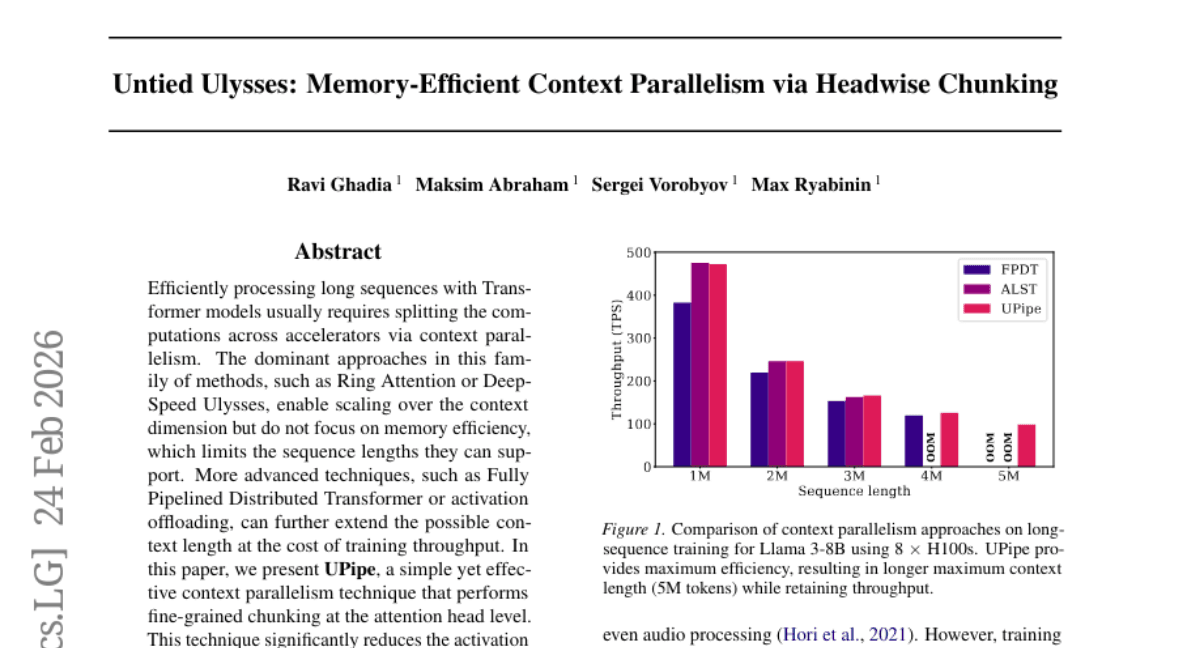
- The article **"Query-focused and Memory-aware Reranker for Long Context Processing"** introduces systems that **selectively attend to relevant information**, enhancing **accuracy and interpretability** in long-horizon diagnoses and planning.
---
## Enhancing Trust: Safety, Robustness, Privacy, and Explainability
Ensuring **AI reliability** involves deploying **comprehensive robustness and explainability benchmarks**:
- Tools such as **SIN-Bench**, **MirrorBench**, **KnowMe-Bench**, and **RoT** rigorously evaluate **performance**, **bias**, **cultural awareness**, and **explainability**.
- Recent studies emphasize **trust calibration** through **probabilistic reasoning** and **likelihood-based rewards**, which **foster clinician confidence** and **regulatory compliance**.
### Privacy-Preserving and Safety Frameworks
Innovations like **NeST (Neuron Selective Tuning)** exemplify **lightweight safety frameworks** that **selectively adapt safety-critical neurons** within large models without full retraining. This method **ensures compliance** with **safety standards** and **privacy regulations**, which are vital for **clinical deployment**.
---
## Neuro-Symbolic Decoding and Neuroimaging Breakthroughs
A defining trend of 2024 is the rise of **neuro-symbolic approaches** tailored for neuroimaging analysis:
- The **NEURONA** framework exemplifies this **neuro-symbolic decoding** paradigm, combining **neural activity patterns** with **symbolic reasoning** to **decode brain signals**.
- The recent publication **"Neuro-Symbolic Decoding of Neural Activity"** demonstrates how **NEURONA leverages these techniques** to **translate raw neural data into interpretable, meaningful concepts**.
- This **bridges the gap** between **raw neuroimaging data** and **cognitive understanding**, offering **more transparent insights** into brain function—crucial for **neuropsychiatric diagnostics** and **brain-computer interfaces**.
---
## Latest Innovations in Video, Reasoning, and Multimodal Capabilities
AI's expanding role in medical video analysis and reasoning is exemplified by recent developments:
- **VidEoMT** showcases how **Vision Transformers (ViTs)** can **multitask seamlessly**, functioning both as **general visual encoders** and **video segmentation models**. This **dual capability** enables **real-time surgical and diagnostic video analysis** with high efficiency.
- **Selective training strategies**, such as **visual information gain-based approaches**, enhance **learning efficiency** and **robustness** in vision-language models tailored for clinical applications.
- The **FMLM** approach introduces **one-step denoising** for **LLM inference**, **drastically reducing computational overhead** and facilitating **real-time interactive clinical reasoning** and **decision support**.
---
## New Developments in Fairness, Resource Efficiency, and Modular Modeling
Two significant innovations are shaping future directions:
- **Fairness-awareness in clinical language models** aims to **mitigate biases**, ensuring **equitable AI-driven healthcare** across diverse populations. Incorporating **fairness frameworks** helps prevent disparities in diagnosis and treatment recommendations.
- The **Spectral-Aware Block-Sparse Attention (Prism)** mechanism introduces **resource-efficient attention**, balancing **performance with computational costs**, especially for **long-sequence inference** and **deployment on edge devices**.
- **AssetFormer**, a **modular 3D asset generation framework** utilizing autoregressive transformers, supports **high-fidelity anatomical and surgical modeling**, enabling **precise virtual simulations** for training and planning.
- **Mobile-O** advances **unified multimodal understanding and generation** directly on **mobile devices**, facilitating **on-site clinical inference** and **patient engagement**—crucial for remote and underserved settings.
- **t t tLRM** offers **test-time training** for **long-context processing** and **autoregressive 3D reconstruction**, supporting **long-term patient monitoring** and **detailed anatomical modeling**.
---
## Recent Innovations to Strengthen Trust and Reliability
Building upon existing frameworks, several recent developments further bolster trustworthiness, interpretability, and resource efficiency:
- **NoLan**: Mitigates **object hallucinations** in large vision-language models through **dynamic suppression of language priors**, enhancing **diagnostic reliability**. By reducing false object hallucinations, NoLan helps ensure models only report what is genuinely present, a critical factor in clinical settings.
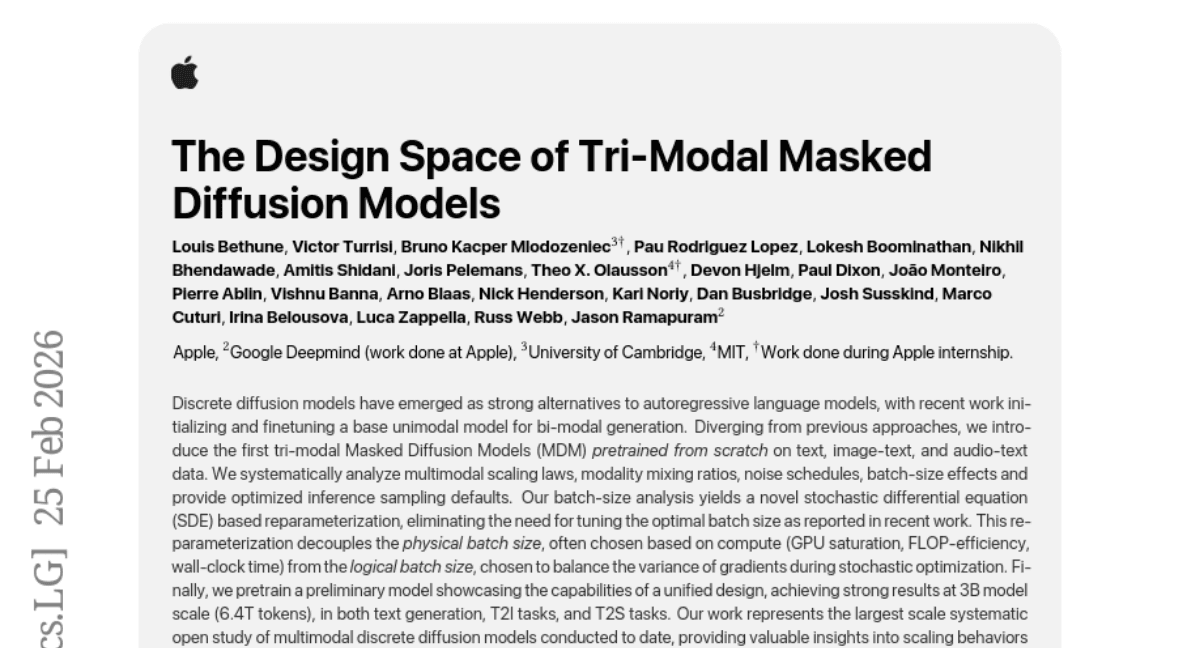
- **The Design Space of Tri-Modal Masked Diffusion Models**: Explores how **tri-modal diffusion models** can fuse **imaging, audio, and sensor data** more effectively, supporting **richer multimodal clinical understanding** and **robust decision-making**.
- **SeaCache**: Introduces a **spectral-evolution-aware cache** that **accelerates diffusion sampling** by intelligently reusing spectral information, leading to **faster inference** without compromising quality—vital for real-time clinical applications.
- **NanoKnow**: Provides tools to **audit and understand** what language models **actually know**, addressing **interpretability** and **trust issues**. NanoKnow enables clinicians and researchers to **probe model knowledge bases**, ensuring transparency and identifying potential gaps or biases.
---
## Current Status and Broader Implications
The developments of 2024 collectively define a **holistic evolution** of medical AI—**more specialized, transparent, resource-efficient, and ethically aligned**. The integration of **neuro-symbolic decoding** (e.g., NEURONA), **interactive virtual platforms**, and **long-horizon reasoning models like KLong** exemplifies systems that are **increasingly trustworthy and explainable**.
These innovations promise to **improve diagnostic accuracy**, **streamline surgical procedures**, **democratize healthcare access**, and **foster clinician confidence**. As AI transitions from a supportive role to **a core partner in personalized medicine**, ensuring **ethical standards, safety, and fairness** remains critical to serving **all populations equitably**.
### **Notable Publications and Future Directions**
- **"World Guidance: World Modeling in Condition Space for Action Generation"** introduces a paradigm where AI systems can **simulate and plan actions** within a **condition-aware world model**, supporting **autonomous decision-making** in complex clinical scenarios.
- **"tttLRM"** (test-time training large relational models), announced at CVPR 2026, exemplifies **advanced long-context reasoning** and **autoregressive 3D reconstruction**, reinforcing **real-time, on-device multimodal inference** in healthcare.
---
## Final Remarks
**2024 stands as a transformative year**—not only through technological milestones but also in fostering a **collaborative, transparent, and ethically grounded future** for AI in medicine. The convergence of **specialized models, multimodal perception, neuro-symbolic reasoning**, and **robust safety frameworks** signals a new era where AI **amplifies human expertise**, ultimately shaping a **smarter, safer, and more inclusive healthcare landscape**. As these systems become more capable, interpretable, and resource-efficient, they promise to elevate patient care quality, reduce disparities, and accelerate the realization of personalized medicine worldwide.