# Arizona’s Electoral and Political Turmoil Intensifies as 2026 Approaches
Arizona remains at the forefront of national attention, as a complex web of legal battles, administrative chaos, and partisan strategies threaten to redefine its electoral landscape ahead of the pivotal 2026 elections. Recent developments highlight the deepening conflicts over voter data privacy, election administration stability, and efforts to influence voter participation—underscoring the state’s critical role as both a battleground and a testing ground for broader national debates on voting rights and election security.
---
## Federal vs. State Disputes Over Voter Data and Citizenship Verification
One of the most prominent flashpoints involves the ongoing legal and political clash over **federal access to Arizona’s voter registration and citizenship data**. The debate centers on balancing **election security** with **voter privacy**.
- **Federal Court Ruling:** A **landmark decision** by a federal judge **overturned restrictions** imposed during the Trump administration, which limited federal agencies’ ability to access Arizona’s voter data. The court **asserted** that **full federal cooperation** is **crucial** for **detecting ineligible registrations** and **preventing voter fraud**. This ruling **sets a significant legal precedent**, compelling Arizona to **allow more extensive federal data sharing**.
- **Implications:** The decision could **significantly enhance federal oversight**, enabling **more comprehensive eligibility verification** and **fraud prevention measures**. However, critics warn that **expanded federal access** raises **privacy and data security concerns**, fearing **partisan misuse** or **data breaches** that could undermine **public trust** in the electoral process.
- **State Resistance and DOJ Advocacy:** Arizona Secretary of State Adrian Fontes and other officials **oppose broad federal data sharing**, citing **voter privacy** and **data security**. They emphasize the importance of **state-controlled verification** to **safeguard voter confidentiality**. Meanwhile, the **Justice Department** has **publicly urged** Arizona to **ease restrictions**, arguing that **unrestricted federal access** is **essential** for **effective election oversight**.
This federal-state tug-of-war exemplifies the broader **struggle over authority** in election management, with courts increasingly favoring **federal cooperation**—a trend that could reshape **Arizona’s election security standards nationwide**.
---
## Turmoil in Maricopa County: Administrative Instability and Legal Battles
Maricopa County, Arizona’s largest electoral jurisdiction, continues to grapple with **administrative chaos** that threatens **the integrity of upcoming elections**.
### Subpoenas, Legal Challenges, and Political Conflicts
- The **Board of Supervisors** has **issued subpoenas** demanding **election documentation** from **County Recorder Justin Heap**, including **ballots, voting records, and related materials**. The Supervisors **threaten removal** if Heap **refuses compliance**, igniting accusations of **overreach** and **undermining election independence**.
- **Legal Tensions:** Federal courts **initially blocked** efforts to **remove Heap**, underscoring the need to **maintain an independent election process**. However, **recent rulings** now **permit the subpoenas to proceed**, adding to **administrative instability** and raising questions about **who controls election operations**.
### Operational Challenges and Disclosures
- The county faces **multiple hurdles**, including **funding disputes**, **technology failures** such as **E-Qual system outages**, and **staff shortages**—many election workers are **retiring or declining to serve** due to **political pressures** and **safety concerns**.
- These issues have **delayed vote counts** and **damaged public confidence**, fueling **partisan narratives** that cast doubt on **the legitimacy of the electoral process**.
- **Recent disclosures** reveal that **Justin Heap’s office identified 60 noncitizens** who **cast ballots** in recent elections. While this indicates **possible ineligible voting**, experts caution that **automated database matches** can **produce errors**, risking **disenfranchisement** if acted upon prematurely.
### Funding and Administrative Efforts
- Despite ongoing turmoil, the county **recovered $500,000** in **overcharges from the U.S. Postal Service**, demonstrating **ongoing efforts to bolster logistics**.
- The **Board of Supervisors** has **approved additional funds**, including **$550,000 for signature verification efforts**, aiming to **strengthen vote integrity**.
- They are also **seeking clarity** on **early voting site placements** for upcoming primaries, striving to **maintain equitable access** amid instability.
---
## Civic Mobilization, Partisan Legislation, and Electoral Strategies
Arizona’s **divided political climate** fuels vigorous efforts by both parties to **shape voter participation** ahead of 2026.
- **Democratic Initiatives:** Focused on **mobilizing marginalized communities**, Democrats are deploying **targeted outreach programs** aimed at **youth, minorities, homeless populations**, and others often **excluded or disenfranchised**. These efforts seek to **expand access** and **counter voter suppression narratives**.
- **Republican Measures:** Republicans are proposing **stricter election laws**, including **bills requiring proof of citizenship**—measures critics argue could **disenfranchise eligible voters**, especially among vulnerable groups. Notably, **proposed laws** also include **ICE notification mandates** and **restrictions on mail-in voting**.
- **Electoral Competition:** The **gubernatorial race** is intensifying, with a **Scottsdale businessman** announcing his candidacy under the **Arizona Independent Party**. His entry could **alter electoral dynamics**, potentially acting as a **spoiler** or **kingmaker** in a **tight race**.
- **Legislative Efforts:** The “**Eyes on the Ballot Box**” initiative, spearheaded by **Governor Katie Hobbs**, aims to **increase transparency** through **public forums**, **support for independent audits**, and **voter education campaigns**—efforts designed to **restore confidence** amid escalating controversy.
### Ballot Measures and Legal Challenges
- Lawmakers are **considering dozens of proposals** for the 2026 ballot—ranging from **election security** to **voting procedures**—which could **overload voters** and **deepen polarization**.
- **Legal challenges** target laws like **proof-of-citizenship requirements**, with **petitioners challenging their constitutionality** before the U.S. Supreme Court. Proponents argue these laws **protect election integrity**, while opponents contend they **disenfranchise eligible voters**, especially from marginalized communities.
---
## Immigration Enforcement and Voting Rights: A Tense Intersection
The relationship between **immigration enforcement** and **voting rights** remains highly contentious.
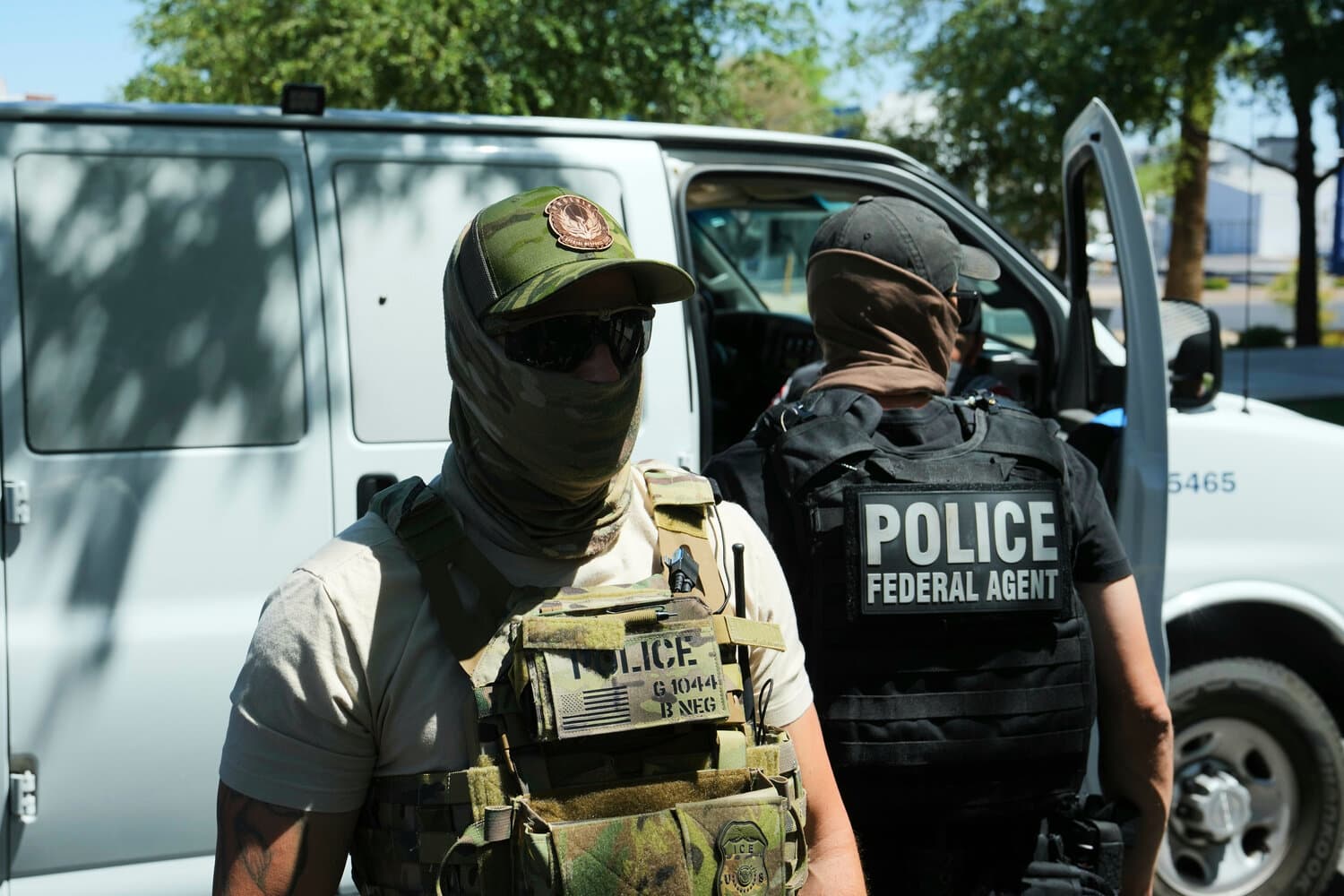
- **Community protests** at Phoenix City Hall demand **protections for immigrant communities**, especially amid **ICE raids** and **proof-of-citizenship laws** that threaten **non-citizen residents**’ trust in the electoral process.
- Recent **legislation** includes proposals to **require federal immigration agents** to **station personnel at polling places**, a measure **stalled due to civil rights opposition** citing **constitutional violations** and **intimidation risks**.
- **Arizona Republican lawmakers** have **passed legislation** mandating **police inform ICE of arrests**, raising fears of **profiling** and **deterrence of voter participation** among immigrant communities.
---
## Current Status and Outlook
As the 2026 elections draw nearer, Arizona’s **legal, administrative, and political battles** show no signs of abating. The **federal courts’ push for increased oversight** could **bolster election security**, but **privacy concerns** remain a critical issue. Meanwhile, **county-level instability**, **technology failures**, and **staff shortages** threaten **public confidence** if not promptly addressed.
**Partisan legislative efforts** and **community activism** continue to polarize the state, with **protests**, **policy debates**, and **legal challenges** shaping the electoral environment. The recent conflicts, especially between **Justin Heap’s office and the Board of Supervisors**, exemplify **ongoing administrative fragility** that could **undermine election preparations** in the critical run-up to 2026.
**Implications are profound:** Arizona’s handling of **democracy**, **security**, and **inclusion** may **set national precedents**. Its capacity to **balance election integrity with voter rights** will **not only influence its own political future** but also **offer lessons for the nation** amid heightened polarization. How Arizona manages these challenges will likely determine whether it emerges as a **model of trust and transparency** or becomes a **cautionary tale of chaos and partisan conflict**.
---
## Reminder to Check Election Deadlines
The **Maricopa County Elections Department** emphasizes the importance of staying informed about **upcoming election deadlines**. Voters should consult official channels for **important dates**, including **registration cut-offs**, **early voting start and end dates**, and **mail-in ballot submission deadlines** to ensure their participation is counted in the approaching elections.
---
**In summary**, Arizona’s electoral landscape is currently characterized by a **high-stakes tug-of-war** involving **federal oversight**, **state resistance**, **county-level disputes**, and **partisan strategies**. The outcomes of these conflicts will shape **the integrity, inclusivity, and trustworthiness** of Arizona’s democracy as it prepares for the critical 2026 elections—and potentially influence the national conversation on voting rights and election security for years to come.