# The 2026 Evolution of Containerization, Deployment Workflows, and Scalable Infrastructure for ML Services: A Comprehensive Update
The landscape of machine learning (ML) deployment in 2026 has entered a transformative era characterized by **hyper-automation, security-centric design, and enterprise-grade resilience**. Building upon the foundational innovations from previous years, recent breakthroughs have propelled the adoption of **trustworthy, scalable, and highly automated ML systems** that seamlessly integrate every phase of the ML lifecycle—from development and testing to deployment, monitoring, and compliance—within unified, containerized architectures tailored for complex enterprise environments.
This comprehensive update synthesizes the latest developments, emphasizing how **containerization, deployment workflows, orchestration, security, and governance** have evolved to support increasingly sophisticated AI ecosystems.
---
## Reinforcing the Foundations: Unified, Security-First CI/CD with GitOps and KitOps
At the core of the 2026 ML ecosystem lies the **convergence of GitOps and KitOps paradigms**, which has **revolutionized deployment workflows**. Organizations now rely heavily on **Git-based workflows** integrated with **CI/CD pipelines**—leveraging tools such as **GitHub Actions**, **AWS CodePipeline**, **Argo CD**, and others—to ensure **reproducibility, automation, security, and transparency**.
Recent innovations include:
- **Embedded security within pipelines**: Automated vulnerability scans of containers and models are now standard, with **instant rollback capabilities**. This ensures **minimal downtime** and prevents **compromised models** from reaching production environments.
- **Auto-code generation and policy enforcement**: Advanced tools facilitate rapid creation of deployment scripts, enforce organizational policies, and streamline infrastructure management with minimal manual input—drastically improving **consistency**, **compliance**, and **deployment speed**.
- **Declarative, unified pipelines**: The integration of **KitOps** with **GitOps** has fostered **declarative, infrastructure-as-code (IaC) driven workflows**, providing **auditability** and **traceability** across the entire ML lifecycle. This approach reduces human error and enhances **trustworthiness**.
> *"Bridging DevOps and MLOps—unifying pipelines with KitOps and GitOps—allows teams to streamline workflows, reduce errors, and improve compliance across the entire ML lifecycle."*
This integrated approach has **fundamentally transformed model versioning, automated deployment, and governance**, empowering organizations to operate **trustworthy, auditable, and resilient** AI services at massive scale.
---
## Tailored Orchestration for Diverse ML Workflows
Choosing the appropriate orchestration platform remains pivotal, with each tool optimized for specific scenarios:
- **Kubeflow** has cemented its position as the **comprehensive platform** for **end-to-end ML pipelines**, particularly excelling in **training**, **hyperparameter tuning**, and **model lifecycle management**. Its native Kubernetes integration facilitates **scaling**, supports **multi-framework compatibility**, and enables **complex workflow orchestration**.
- **Apache Airflow** continues to shine in managing **complex data workflows**, including **ETL pipelines** and **dependency-based scheduling**, making it ideal for **large-scale data preprocessing** feeding models.
- **Prefect** has gained considerable traction for its **Python-centric**, **developer-friendly** approach emphasizing **ease of use**, **dynamic workflows**, and **robust error handling**. Its **hybrid execution model** supports both **cloud** and **on-premises** environments, fostering **rapid iteration** and **flexibility**.
**Strategic guidance**:
- Use **Kubeflow** for **training** and **model deployment** at scale.
- Opt for **Airflow** when orchestrating **complex data pipelines** and **ETL workflows**.
- Choose **Prefect** for **developer-centric workflows** emphasizing **agility**.
---
## Modern Serving Architectures: Embracing Serverless, Kubernetes, and Deployment Strategies
By 2026, **ML serving architectures** have matured into **multi-faceted, flexible solutions**, emphasizing **serverless**, **Kubernetes-native**, and **multi-model deployment** paradigms:
- **Serverless inference platforms**, powered by **KNative** and **AWS Lambda with container support**, now deliver **on-demand auto-scaling**, **cost efficiency**, and **simplified management** for applications with variable traffic.
- **Kubernetes-native solutions** such as **KFServing** and **MLflow** enable **multi-model serving**, **version control**, and **drift detection**, ensuring models remain **accurate** and **compliant** over time.
- **Deployment strategies** like **Blue-Green** and **Canary rollouts** have become standard, facilitating **seamless updates** with **minimal downtime**:
- **Blue-Green deployments** enable **instant switching** between versions—critical in sectors like **healthcare** and **finance**.
- **Canary deployments** facilitate **gradual rollout and validation**, reducing risk during updates.
Recent advancements include **runtime policy enforcement** via **Kubernetes Webhooks**, embedding **security checks**, **model validation**, and **regulatory compliance** directly into **deployment pipelines**—automating standards adherence and **reducing manual oversight**.
---
## Data and Compute Pipelines: Ensuring Reproducibility, Privacy, and Adaptability
The importance of **robust data pipelines** has intensified, emphasizing **traceability**, **privacy**, and **adaptability**:
- **Experiment tracking and versioning tools**, such as **MLflow**, **DVC**, and **Kubeflow**, now provide **comprehensive experiment management** for **reproducibility**.
- **Data quality-as-code** approaches—integrating **profiling**, **cleansing**, and **validation**—are embedded within pipelines, guaranteeing **AI-ready data** feeds.
- **Drift detection** and **automatic retraining** mechanisms are now standard components of CI/CD workflows. When **data shifts** are detected, models **automatically retrain** and **redeploy**, maintaining **accuracy**.
- **Federated learning** solutions—including **LoRA**, **PEFT**, and **Flower**—have matured into **privacy-preserving, collaborative fine-tuning frameworks** that enable **distributed training** without raw data sharing, complying with regulations like **GDPR**.
**Recent innovations**:
- **Automated retraining triggers** based on **performance analytics** and **dataset shifts**.
- **Data quality checks** embedded directly into **SQL-based pipelines**, termed **Data Quality for AI**, streamline **pre-deployment validation**.
- **Encrypted deployments** and **secure enclaves** are now commonplace, ensuring **model confidentiality** even in compromised environments.
---
## Cost Optimization and Operational Excellence
Operational efficiency remains a top priority:
- **Serverless inference** platforms support **scale-to-zero**, drastically reducing costs during idle periods.
- **Kubernetes auto-scaling policies**, including **Horizontal Pod Autoscaler (HPA)** and **Cluster Autoscaler**, optimize resource utilization dynamically.
- **Spot instances** and **preemptible VMs** are widely adopted for **batch processing** and **non-critical workloads**, offering **significant cost savings**.
- **Dynamic GPU model swapping**—a recent breakthrough—has become pivotal in **scaling inference workloads efficiently**. As detailed in the tutorial **"Dynamic GPU Model Swapping: Scaling AI Inference Efficiently"**, this approach allows systems to **switch GPU models on-the-fly**, matching workload demands precisely and minimizing idle GPU costs.
- During low traffic, inference runs on **smaller, cost-effective GPUs**, and during peaks, switches to **larger, high-performance GPUs**, thus **optimizing both performance and expenses**.
- **Integrated dashboards** for **cost tracking**, **system health**, and **compliance** facilitate **data-driven operational decisions**.
---
## Ecosystem Maturation: Platformization and Large-Scale Orchestration
The ecosystem now features **comprehensive MLOps platforms** like **SageMaker**, **Flyte**, **Union.ai**, and **Microsoft Fabric**, which **unify governance, security, and automation**:
- **Kubeflow** continues to be central, supporting **on-premises**, **hybrid**, and **edge deployments**, with recent improvements in **workflow orchestration** and **runtime policy enforcement**.
- **Scaling GitOps** across **multi-cluster environments**—a practice exemplified by **"Scaling Argo CD Past 50 Clusters"**—has become **industry best practice**, emphasizing **centralized governance**, **security**, and **deployment consistency** across diverse infrastructure landscapes.
**Practical innovations** include:
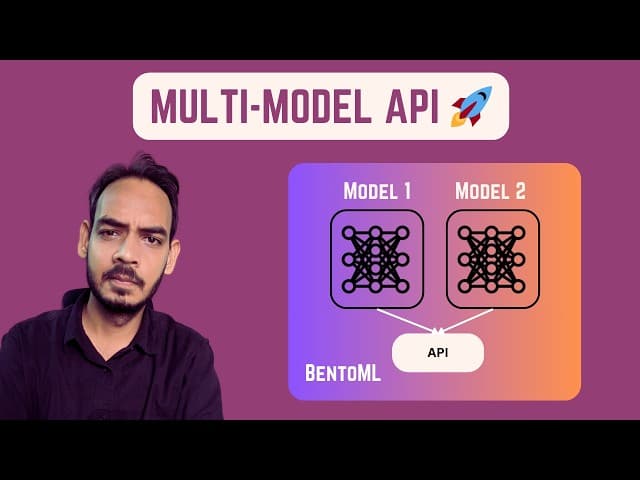
- **Multi-model deployment** strategies utilizing **BentoML** for **scalable, efficient serving architectures**.
- **Enhanced Argo CD workflows** support secure management of **hundreds of clusters**.
- **Runtime policy enforcement** and **automated compliance checks** prevent breaches and ensure **regulatory adherence**.
---
## Strengthening Cloud Control and Securing Infrastructure
In 2026, **cloud control plane security** and **IaC (Infrastructure-as-Code) integrity** have become critical priorities, especially for safeguarding **model intellectual property** and maintaining **regulatory compliance**.
**Key initiatives include**:
- **Securing the Cloud Control Plane**: As explored in **"Securing the Cloud Control Plane: A Practical Guide to Secure IaC Deployments"**, organizations are adopting **best practices** such as:
- Implementing **multi-layered IAM policies** to restrict access.
- Enforcing **least privilege principles** across all deployment components.
- Utilizing **runtime encryption** and **secure enclaves** to protect models and data during deployment and inference.
- Embedding **security checks** directly into deployment workflows, ensuring **automated compliance** and **attack surface reduction**.
- **IaC Security Integration**: Embedding **security validation** within **IaC templates** ensures **misconfigurations** or **vulnerabilities** are detected early, preventing potential breaches or governance lapses.
> *"Effective control-plane security and hardened IaC practices are essential in protecting ML assets, preventing unauthorized access, and maintaining regulatory compliance."*
This proactive security stance minimizes risks related to **model theft**, **industrial-scale AI distillation attacks**, and **data breaches**—issues that have become more prevalent with the proliferation of large language models (LLMs).
---
## New Critical Developments: Defending AI Systems & Building Scalable RAG Pipelines
### Protecting LLM Intellectual Property and Preventing Model Extraction
As LLM adoption accelerates, **security concerns** around **model IP theft** and **malicious distillation** have intensified. Recent innovations focus on **robust defense mechanisms**:
- **Runtime API monitoring** detects **suspicious query patterns** indicative of extraction attempts.
- **Watermarking schemes** verify **ownership** of models and **detect unauthorized copies**.
- **Active defenses** such as **model fingerprinting** and **distillation resistance mechanisms** are integrated into deployment environments.
- Deployment within **secure enclaves** ensures **model confidentiality**, even if environments are compromised.
### Building Serverless Retrieval-Augmented Generation (RAG) Pipelines That Scale to Zero
The tutorial **"How to Build a Serverless RAG Pipeline on AWS That Scales to Zero"** exemplifies a **cost-effective, scalable architecture**:
- Utilizes **AWS Lambda**, **S3**, **API Gateway**, **Elasticsearch**, and **vector databases** to establish **retrieval pipelines** that **scale dynamically**.
- Implements **scale-to-zero** configurations, activating resources **only on demand**, drastically reducing **costs during idle periods**.
- Supports **real-time document retrieval** with **on-demand retrievers**, maintaining **high performance** under **variable query loads**.
- Enables **complex RAG systems** to **automatically scale** based on demand, combining **cost savings** with **robust performance**.
This architecture addresses the need for **flexible, secure, and efficient AI pipelines** capable of handling **enterprise-scale workloads** with **cost efficiency**.
---
## Current Status and Future Outlook
By 2026, **trustworthy, scalable, and secure ML systems** are **industry standards**. The integration of **containerization**, **automated workflows**, **orchestration**, and **runtime governance** has cultivated an ecosystem capable of supporting **enterprise-level AI deployments** at **massive scale**.
**Implications include**:
- **Runtime policy enforcement** embedded into pipelines ensures **security and compliance** without manual intervention.
- **Federated learning** and **privacy-preserving inference** are **mainstream**, enabling **collaborative AI** while respecting data privacy regulations.
- **Cost-optimized scaling strategies**, especially **dynamic GPU model swapping**, significantly **reduce operational expenses**.
**Looking ahead**, **ongoing innovations** in **orchestration**, **data management**, and **deployment automation** will further **streamline AI pipelines**. The future envisions **autonomous, compliant, and resilient ML systems** that are **trustworthy** and **cost-effective** across sectors—from **healthcare** and **finance** to **critical infrastructure**.
In conclusion, **holistic platform strategies**, **runtime governance**, and **automated compliance** will be the cornerstones ensuring AI remains **secure**, **trustworthy**, and **scalable** at every deployment level.
---
## Notable New Articles and Practical Guides
### Beyond Models: How Nagasasidhar Arisenapalli Uses MLOps to Turn AI into Real-World Impact
Artificial intelligence often garners attention through breakthrough models and research. However, **transforming AI into tangible real-world applications** demands robust MLOps practices. Nagasasidhar Arisenapalli exemplifies this approach, leveraging **integrated deployment pipelines**, **automated monitoring**, and **security protocols** to **ensure AI solutions deliver measurable value** in sectors such as healthcare, finance, and manufacturing. His work underscores the importance of **end-to-end operational excellence** in deploying trustworthy AI systems at scale.
### Docker Architecture for AI Workloads | Complete Production Guide
As containerization remains **central to AI deployment**, **Docker architecture** tailored for AI workloads has become **more sophisticated**. This guide provides comprehensive best practices for **building scalable, secure, and efficient Docker images** for ML models, emphasizing **layered designs**, **resource management**, and **security hardening**. It discusses strategies like **multi-stage builds**, **model versioning within containers**, and **optimized runtime environments**, ensuring **production-grade AI services** are **robust, maintainable, and performant**.
---
## Final Remarks
The **2026 AI deployment ecosystem** exemplifies a **mature, integrated**, and **security-first** approach to **scalable ML services**. The evolution from manual, isolated processes to **automated, unified, and governance-aware pipelines** underscores a critical shift: **AI systems are now built to be trustworthy, resilient, and cost-efficient at enterprise scale**.
**Implications for the future** include:
- Widespread adoption of **runtime policy enforcement** and **automated compliance**.
- Enhanced **security measures** to defend against **model theft** and **extraction attacks**.
- Continued **platformization** and **multi-cloud orchestration** supporting **flexible, resilient AI ecosystems**.
- Growing importance of **autonomous, self-healing ML systems** capable of **adapting seamlessly** to changing data, regulations, and operational demands.
**The journey toward fully autonomous, secure, and scalable AI infrastructure** continues, promising an era where **trustworthy AI is seamlessly integrated into every enterprise and societal domain**.