# 2024 Campaign Strategies Enter a Critical New Phase: Geographic Recalibration, Legal Battles, and Evolving Narratives Shape the Electoral Landscape
As the final months of the 2024 presidential election draw near, the political battlefield is shifting in profound and strategic ways. Campaigns are no longer relying solely on traditional battlegrounds or familiar messaging; instead, they are engaging in a **geographic recalibration**, intensifying **legal and policy battles**, and **crafting narratives** tailored to a deeply polarized electorate. These developments signal an unprecedented effort to **expand the electoral map**, **mobilize core supporters**, and **navigate complex legal, international, and domestic challenges** that could determine the election’s outcome and the future legitimacy of American democracy.
---
## Expanding the Battlefield: Democrats and Republicans Broaden Their Geographic Reach
### Democrats Venture Into Pro-Trump and Swing Districts
Historically, Democratic campaigns have concentrated their efforts in urban and reliably Democratic districts. However, recent strategic shifts reveal a **concerted push into areas traditionally considered Republican or pro-Trump**. This **geographic recalibration** aims to **sway moderates and disaffected voters** by deploying **district-specific messaging, grassroots mobilization, and targeted digital outreach**.
- **Congresswoman Suzan DelBene** exemplifies this approach by **intensifying outreach in swing and Republican-leaning districts**, emphasizing **local economic issues** such as **job creation, community resilience, and economic stability**. Her efforts are designed to **appeal to voters who may have previously leaned Republican or felt disconnected from party platforms**.
- A recent report, *"Democrats Widen Battlefield District Targets on Pro-Trump Turf,"* highlights that **some districts once considered safe for Democrats are now fiercely competitive**. Campaigns are **expanding their footprint**, tailoring messages to **local concerns** like **regional industries, economic growth, and community values** in an effort to **capture undecided voters**.
This **strategic shift** underscores a recognition that **winning over moderates and disaffected Republicans in these areas could be decisive** in both congressional and presidential contests, especially as voter loyalty becomes more fluid.
### Republicans, Led by Trump, Contest Historically Democratic States
Simultaneously, **former President Donald Trump** is actively contesting states that have trended Democratic or were once considered safe for Democrats. His campaign seeks to **broaden the electoral map** and **challenge assumptions of Democratic dominance**.
- Notably, Trump’s campaign has **increased its activity in Colorado**, a state that did not vote for him in recent elections. An analysis titled *"Trump Takes Aim at Colorado, a State That Didn't Vote for Him"* details **high-profile rallies, localized outreach efforts, and tailored messaging** aimed at **swaying undecided voters**.
- Trump’s **regional rallies**—such as speeches at Fort Bragg in North Carolina—and outreach efforts in Florida, Michigan, and Pennsylvania focus heavily on **economic themes** like **job creation, manufacturing recovery, and regional resilience**.
By **challenging the conventional electoral map**, Trump aims to **expand the battleground** and **challenge the narrative of Democratic advantage**, especially by focusing on **regional economic concerns** and **personalized voter outreach** to energize his base and attract swing voters.
---
## Campaign Operations: Coordination, Fundraising, and Foreign Influence
### High-Level Strategy Meetings and Organizational Efforts
Recent reports underscore **an unprecedented level of organization among GOP strategists**. An article titled *"Susie Wiles Leads Major Midterms Strategy Meeting With Trump Cabinet and GOP Aides"* describes **how key campaign figures are orchestrating coordinated efforts**—aligning messaging, resource allocation, and outreach strategies—across targeted districts and states to **maximize impact in a fiercely competitive environment**.
### Fundraising and Foreign Influence Concerns
On the financial front, **large foreign donations are reportedly flowing into Trump-aligned super PACs**, raising alarms about **potential foreign influence** and **legal scrutiny**.
- An investigative piece, *"Seeking Pardon, Foreign Billionaire Allegedly Funneled Millions to Trump Super PAC,"* details **how foreign actors may be attempting to sway U.S. elections through substantial monetary contributions**.
- This influx of foreign funds **raises serious questions about campaign finance transparency** and **the security of electoral processes**, prompting calls for **greater oversight**.
### International Strategies: EU Response to U.S. Trade Dynamics
Adding an international dimension, **the European Union is developing a strategic response** to shifts in U.S. trade policy and legal rulings. An article titled *"An EU Strategy in the Wake of the United States Supreme Court Tariffs Ruling"* reports that **EU policymakers are considering measures—including retaliatory tariffs, trade diversification, and diplomatic engagement**—to **mitigate potential economic fallout** from U.S. legal decisions affecting tariffs and trade policies. This signals **a broader international impact** of domestic legal and policy shifts, with **trade tensions potentially influencing U.S. diplomatic standing**.
---
## Election Integrity and State-Level Mechanics: A Growing Crisis of Trust
### Declining Voter Confidence and Political Disputes
Recent surveys and studies indicate **a significant decline in public trust** regarding **the integrity of U.S. elections**. Contributing factors include **Trump’s persistent critiques of ballot security**, **ongoing redistricting disputes**, and **fears of foreign interference**.
An article titled *"Voter Trust in U.S. Elections Drops Amid Trump Critiques, Redistricting, Fear of ICE"* highlights that **erosion of trust could suppress voter turnout** or **fuel perceptions of illegitimacy**. Additionally, **state election officials are increasingly coordinating responses** to perceived or actual threats.
### State-Level Responses and Planning
An exclusive report titled *"Exclusive: State election chiefs are huddling to plan responses to Trump’s expected interference in midterms"* reveals **how state election administrators are proactively preparing**. These officials are **developing contingency plans**, **enhancing security measures**, and **coordinating with federal agencies** to **safeguard the electoral process amid heightened political tensions**.
### Legal Developments: Georgia’s Pivotal Role
A major recent development involves **Georgia’s district attorney Fani Willis**, who is leading investigations into **former President Trump and allies’ efforts to interfere with the 2020 election**. An article titled *"Fani Willis and the Georgia Trump Indictment Court Rulings, Appeals & What Happens Next"* details **ongoing indictments and legal proceedings** that **shape the narrative around election interference**.
- Supporters argue these legal actions are **necessary accountability measures**, while critics suggest they are **politically motivated**.
- These legal struggles **highlight the ongoing contest over election legitimacy**, with **court rulings and investigations fueling debates about state authority, judicial independence, and election administration**.
---
## New Legal and Policy Developments: Supreme Court Rulings and Economic Postures
### Supreme Court Limits on Executive Power Over Tariffs
A landmark recent Supreme Court ruling **restrained President Trump’s ability to impose tariffs under emergency authority**. An article titled *"U.S. Supreme Court Finds Trump Overstepped Authority in Imposing Tariffs Under Emergency Law"* reports that **the Court ruled Trump exceeded his constitutional powers**, **limiting unilateral executive actions**.
- The decision was **a 4-4 split**, with the majority emphasizing **the importance of congressional oversight**.
- President Trump responded by **criticizing the ruling**, asserting it **undermines presidential authority** and **promising to pursue legislative avenues** for tariffs.
This ruling **limits the executive branch’s flexibility** in trade policy and **poses challenges** for Trump’s economic messaging, which has heavily leaned on **tariffs and trade strength**.
### Recent Developments: Classified Iran Document and Tariff Expansion
Further complicating the political landscape:
- A video titled *"Trump Caused on Tape Admitting He Kept Classified Iran Document"* surfaces, with **Trump admitting to retaining a classified Iran-related document**, raising **national security and legal concerns**.
- Following the Supreme Court ruling, **Trump announced plans to increase tariffs globally to 15%**, aiming to **demonstrate strength** but risking **escalating international trade tensions**.
Legal analysts are scrutinizing **the legality of Trump’s tariff actions post-ruling**, emphasizing that **any unilateral tariffs outside legislative approval may face legal challenges**. The international response includes **discussions within the EU and trading partners** about **retaliatory measures** and **trade diversification**.
### IRS and Immigration Enforcement: Legal Setbacks
In a notable development, **federal judges blocked the IRS from sharing taxpayer data with U.S. Immigration Enforcement agencies**. An article titled *"Donald Trump has faced a legal setback after federal judges blocked the IRS from sharing taxpayer information with U.S. Immigration Enforcement"* explains **how this ruling curtails efforts to leverage financial data for immigration enforcement**, highlighting **the ongoing tension over executive authority in immigration policy**.
---
## Messaging and Campaign Events: Trump’s State of the Union and Its Aftermath
### Trump’s Upcoming State of the Union Address
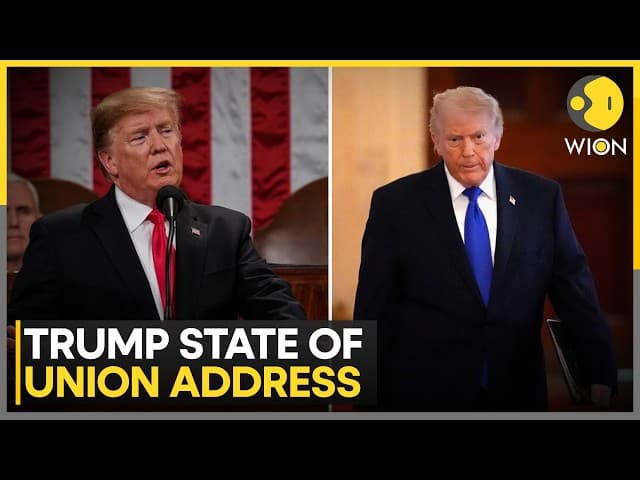
In a pivotal moment, **Trump’s upcoming State of the Union** aims to **energize his base and address economic concerns**. An article titled *"Trump's State of the Union will seek to calm voters' economic concerns ahead of midterm elections"* states that **the speech will focus on themes like job creation, manufacturing revival, and national resilience**, intended to **counter negative narratives** and **boost support**.
### Repetition of False Claims and Impact on Voter Perception
In the speech and subsequent events, **Trump is expected to repeat false claims about election fraud**, as detailed in *"Trump uses speech to repeat false claims about fraud in upcoming elections."* His persistent assertions **undermine confidence in electoral integrity**, influence **voter turnout**, and **shape perceptions about legitimacy**.
### Campaign Narrative Control and Legal Discourse
Both campaigns are **microtargeting messages**, **regional outreach**, and **framing narratives** based on **legal developments, economic policies, and election integrity issues**. The ability to **control the narrative**, especially regarding **legal challenges, international trade, and election security**, will be critical in **mobilizing supporters** and **persuading undecided voters**.
---
## Recent Viral and Strategic Moves
- **Trump’s viral challenge during his State of the Union address** sharply criticized Democrats over migrant crime, framing immigration enforcement as a **"first duty"** and **shaming opponents** in a widely circulated speech titled *"Trump shames Democrats in viral State of the Union challenge on migrant crime: ‘First duty’"*.
- Meanwhile, **Democrats have shown cautious responses** to Trump’s push for the **SAVE Act election bill**, as detailed in *"Democrats cool to Trump pushing SAVE Act election bill in voter dial."*
- Observers note that **Trump avoided certain topics** in his recent speeches, which **could haunt him in November**, as outlined in *"What Trump avoided in the State of the Union could haunt him in November."* His **repetition of false claims** and **alleged election interference** continue to **shape the narrative**.
---
## Strategic Implications and the Road Ahead
The **2024 campaign landscape is now characterized by a complex interplay** of **geographic targeting**, **legal resilience**, **international trade tensions**, and **narrative control**. Both campaigns are **adapting rapidly to legal rulings, international developments, and shifting voter sentiments**.
- **Microtargeting and regional messaging** are increasingly vital as campaigns seek to **mobilize supporters and sway undecided voters** amid growing distrust in election processes.
- **Legal battles**—including **Georgia indictments** and **Supreme Court rulings**—continue to **shape the political narrative**, either bolstering claims of accountability or fueling perceptions of partisan bias.
- **Foreign influence concerns**, especially regarding **foreign donations** to Trump-aligned super PACs, are under scrutiny, emphasizing **the importance of transparency**.
- The **decline in voter confidence**, fueled by **disputes over election security, redistricting, and legal challenges**, could **dampen turnout** or **fuel perceptions of illegitimacy**, impacting the **legitimacy of the final result**.
**In this fluid environment, the ability of campaigns to adapt messaging, leverage legal and international developments, and mobilize voters will be decisive**. The **final months are poised to be pivotal** in **shaping the electoral outcome and defining the future of American democracy**.
---
### **Current Status and Implications**
As the race intensifies, **the interplay of geographic targeting, legal resilience, international trade tensions, and narrative control** will determine which candidate can **effectively rally supporters and shape voter perceptions**. The **battle over election legitimacy, executive authority, and economic security** is not only shaping the immediate electoral outcome but also **setting the tone for American democracy’s future**. The **next few months** will be critical in **defining the political landscape and the legitimacy of the 2024 election results**.