As AI products evolve from experimental curiosities into indispensable enterprise and consumer tools, the economics of AI monetization have matured into a **complex, telemetry-driven discipline that underpins sustainable growth and profitability**. The past year has seen this transformation accelerate sharply, with new innovations in pricing, packaging, partner monetization, and acquisition channels converging into a tightly integrated, data-centric operating layer. This ecosystem enables AI vendors to simultaneously pursue ambitious growth while rigorously defending margins amid volatile compute costs, retention challenges, and partner complexity.
---
## Telemetry-First Monetization: The Operational Backbone Intensifies
Telemetry remains the **indispensable core of AI commerce**, but its role has deepened beyond passive data collection into an active operational lever that powers real-time decision-making across pricing, billing, attribution, and retention workflows. Leading vendors such as Meta AI, Stripe, Intercom, and emerging innovators like Genspark embed telemetry deeply into their commerce stacks to drive:
- **Real-time LTV recalibration** that dynamically integrates retention trends, feature engagement, and downstream business impact, enabling pricing and packaging adjustments that reflect evolving customer value.
- **Cost-aware, usage-linked pricing models** that flex responsively with inference compute times, model complexity, and fluctuating infrastructure costs to preserve margin amid volatility.
- **Transparent, consumption-aligned billing** that ties fees directly to usage signals, bolstering customer trust and reducing billing disputes.
- **Integrated partner attribution and margin defense workflows** that leverage continuous telemetry to allocate revenue shares fairly and detect margin leaks.
This telemetry-first approach transforms raw usage data into **a living operational fabric** that continuously informs adaptive monetization strategies — a necessity in the fast-changing AI landscape.
---
## Pricing and Packaging Innovation: Hybrid Models and AI Experimentation
The complexity and variability of AI consumption have driven a surge in **pricing and packaging ingenuity**, balancing flexibility, clarity, and value alignment:
- **Hybrid pricing models**, combining fixed subscriptions with tiered, consumption-based fees, have become a market standard. Intercom’s pioneering **outcome-based pricing**—charging based on business results like conversion lifts rather than raw usage—exemplifies a shift toward value-centric monetization frameworks.
- **Dynamic paywalls with multi-dimensional credit friction controls**—incorporating time limits, feature gating, and volume caps—are increasingly used to pace consumption and manage cost exposure without degrading user experience. Tinder’s paywall innovations remain a benchmark, supported by new data across 16,000+ apps confirming the direct impact of paywall design on conversion and revenue.
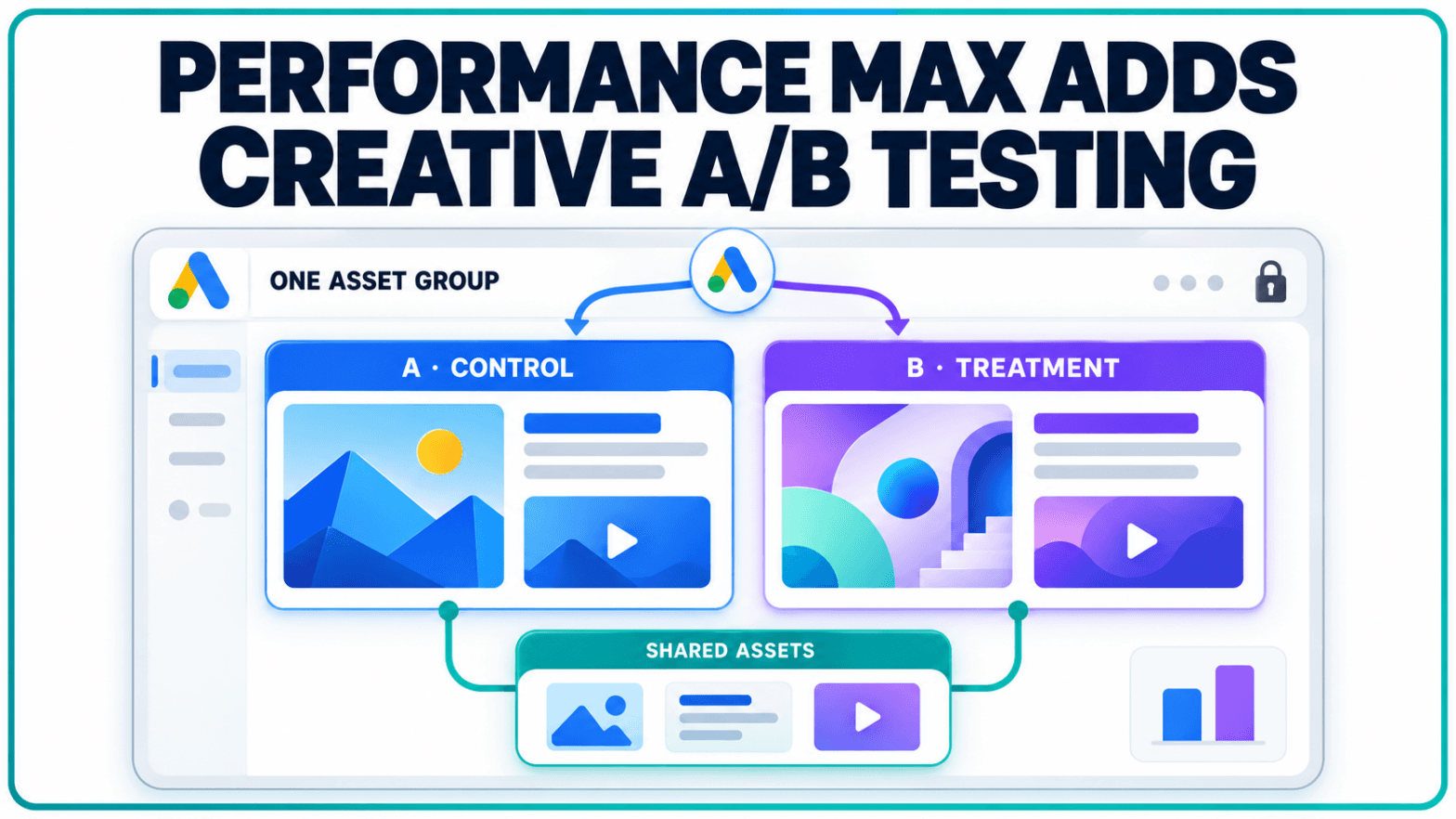
- The emergence of **AI-powered pricing experimentation platforms** such as **The Price-Test Lab** and Andrej Karpathy’s open-source **‘autoresearch’** project has revolutionized pricing optimization. These tools enable autonomous, rapid micro-experiments that produce near real-time refinements to pricing policies with minimal customer disruption.
- **Micro-packaging and flexible bundling** strategies—mixing freemium tiers, consumption caps, and targeted feature bundles—allow vendors to finely segment users by value and usage profile, maximizing monetization across diverse cohorts.
Together, these innovations help vendors navigate the tension between top-line growth, pricing clarity, and margin defense amidst fluctuating compute costs and retention pressures.
---
## Attribution and Margin Defense: Scientific Advances Cement Foundations
As AI partner ecosystems grow larger and more complex, **attribution and margin defense have emerged as critical pillars** for sustainable AI monetization:
- **Bayesian incrementality testing**, combined with continuous drift auditing, uncovers hidden margin leaks and validates the true incremental value of acquisition and retention partners.
- **Multi-touch Bayesian attribution models** now incorporate downstream engagement and revenue signals, enabling granular, equitable partner revenue allocation beyond simplistic volume-based incentives.
- Real-time, telemetry-driven **dynamic revenue-sharing frameworks** adjust partner commissions based on profitability signals, embedding margin defense directly into ecosystem economics.
This discipline—often called **“AI ARR You Can Defend”**—equips AI vendors to aggressively pursue growth while safeguarding unit economics amidst volatile usage patterns and compute costs.
---
## The Retention Paradox Deepens: Monetize More, Churn Faster
New data from **RevenueCat** crystallizes a vexing paradox for AI app monetization:
- AI-powered consumer apps generate **41% more revenue per user** than non-AI apps, confirming their superior acquisition and monetization efficacy.
- Yet these AI apps **churn 30% faster**, with 12-month retention rates of just 6.1%, compared to 9.5% for non-AI peers.
- This retention gap exposes the fragility of monetization models overly reliant on early conversion wins and topline growth.
- The findings intensify the imperative to embed **cost-aware, real-time LTV telemetry within product-led growth (PLG) and retention workflows**, enabling early churn risk detection and dynamic monetization adjustments.
- Vendors are increasingly tying pricing and packaging to **ongoing engagement and outcome-based metrics**, shifting focus from acquisition spikes toward durable value delivery and retention.
The key insight: **durable AI monetization demands continuous value creation and retention, not just superior initial user acquisition.**
---
## AI Agent-Driven Acquisition Channels: The New Growth Frontier
One of the most transformative developments in 2024–2025 is the explosive rise of **AI agent-driven acquisition strategies**, championed by growth experts like Cody Schneider. Autonomous AI agents now:
- Manage SEO campaigns at scale by generating targeted content and backlinks, moving beyond traditional keyword-based SEO toward **AI-Enhanced Optimization (AEO)**.
- Automate paid advertising with continuous, real-time bid and budget adjustments, maximizing ad spend ROI.
- Orchestrate integrated multi-channel growth funnels combining conversational AI bots, influencer outreach, commerce agents, and outbound calling into unified, scalable acquisition pipelines.
Recent thought leadership pieces—*“SEO or AEO? Here's What Actually Gets You Customers in 2026”* and *“Beyond keywords: Mastering AI-driven campaigns”*—document how AI-powered content generation coupled with rigorous telemetry monitoring reshapes marketing ROI. Vendors leveraging these AI-first acquisition channels close the loop between acquisition telemetry and monetization outcomes, **enhancing margin defense while expanding reach through cost-conscious, scalable AI-powered funnels**.
---
## Tactical and Strategic Imperatives for 2027 and Beyond
To thrive amid ongoing compute cost volatility, intensifying retention pressures, and evolving acquisition paradigms, AI vendors must:
- Implement **usage-linked, tiered pricing dynamically adjusted by real-time cost and LTV telemetry** to ensure prices reflect both consumption and evolving user value.
- Deploy **dynamic paywalls with multi-dimensional credit friction controls** that pace usage and manage cost risk without degrading user experience.
- Maintain **transparent communication linking AI cost drivers directly to delivered value**, fostering customer trust and reducing churn.
- Refine **partner revenue shares using advanced multi-touch Bayesian attribution models** enriched by post-purchase engagement data.
- Institutionalize **Bayesian incrementality experiments and drift auditing** to safeguard attribution accuracy and margin defense.
- Embed **cost-aware LTV feedback loops within PLG and retention workflows**, enabling proactive churn risk management and margin protection.
- Monitor and control acquisition and AI-SEO risks through telemetry-driven oversight and quality controls.
- Leverage **AI-enabled tools for pricing research, experiment design, and AI-assisted content generation**, balancing automation with human oversight.
- Build **adaptive pricing engines** uniting LTV predictions, compute telemetry, partner economics, and outcome-based metrics into seamless automated platforms.
- Develop **dynamic, profitability-aligned partner revenue-sharing models** rewarding genuine incremental contributions over simplistic volume incentives.
- Scale **creator marketplaces** to enable granular micro-packaging and margin-conscious revenue sharing, unlocking diverse AI asset monetization.
- Institutionalize **continuous Bayesian incrementality experimentation integrated with AI personalization and attribution** to maintain model fidelity amid drift.
- Embed **cost-aware LTV telemetry within conversational AI flows and PLG workflows** to optimize retention and margin.
- Implement robust **drift detection and auditing mechanisms** to protect ROI amid volatility in AI model performance and usage patterns.
- Lead the transition to **conversational AI-first discovery**, merging paid search, AI SEO/AEO, personalized chatbots, influencer marketing, commerce agents, and outbound calling into scalable, cost-conscious acquisition funnels.
- Integrate **AI-generated content strategies with rigorous quality controls and telemetry monitoring** to sustain marketing ROI and acquisition efficiency.
---
## Conclusion: Telemetry-Driven Monetization as the Durable Moat of AI Commerce
The AI monetization landscape has crystallized into a **highly integrated, telemetry-centric, and cost-aware ecosystem** where growth and profitability reinforce rather than conflict with each other. Innovators like Meta AI, Stripe, Intercom, Tinder, Braze, Figma, and Genspark demonstrate that:
> **Dynamic, telemetry-driven, cost-aware monetization is the new operating layer underpinning AI commerce.**
As Ryan Byrd, CTO of P, succinctly states:
> *“AI agents aren’t a future interface—they’re a new operating layer for commerce.”*
Mastering this operating layer—anchored in continuous data-driven experimentation, adaptive monetization, and integrated attribution—empowers AI vendors to deftly navigate volatile compute costs, retention headwinds, and partner ecosystem complexities. The result is a **resilient, adaptive growth engine** poised to sustain leadership well into 2027 and beyond.
---
*This updated synthesis integrates cutting-edge developments—from the deepening retention paradox in AI apps, AI-driven pricing experimentation platforms like The Price-Test Lab and autoresearch, evolving partner attribution sciences, to the explosive rise of AI agent-driven acquisition channels—offering AI leaders a definitive blueprint for success in the fast-evolving AI monetization landscape.*