# Techniques and Engines Accelerating Large Language Model Inference: The Latest Breakthroughs and Future Outlook
The quest to make large language models (LLMs) faster, more efficient, and cost-effective is accelerating at an unprecedented pace. Recent innovations in specialized inference engines, hardware-aware kernels, system-level optimizations, and addressing critical hardware constraints are transforming how these models are deployed across industries. These advancements are enabling real-time, scalable AI applications at a fraction of previous costs, opening new frontiers for AI-driven solutions. In this comprehensive update, we explore the latest developments, their technical underpinnings, and the broader implications shaping the future of large language model inference.
---
## The Evolving Landscape of Specialized Engines and Hardware-Aware Kernels
### Breakthroughs in Hardware-Optimized Inference Engines
Recent months have seen a decisive shift from generic deep learning frameworks toward **highly specialized inference engines** designed to exploit the unique features of modern hardware architectures:
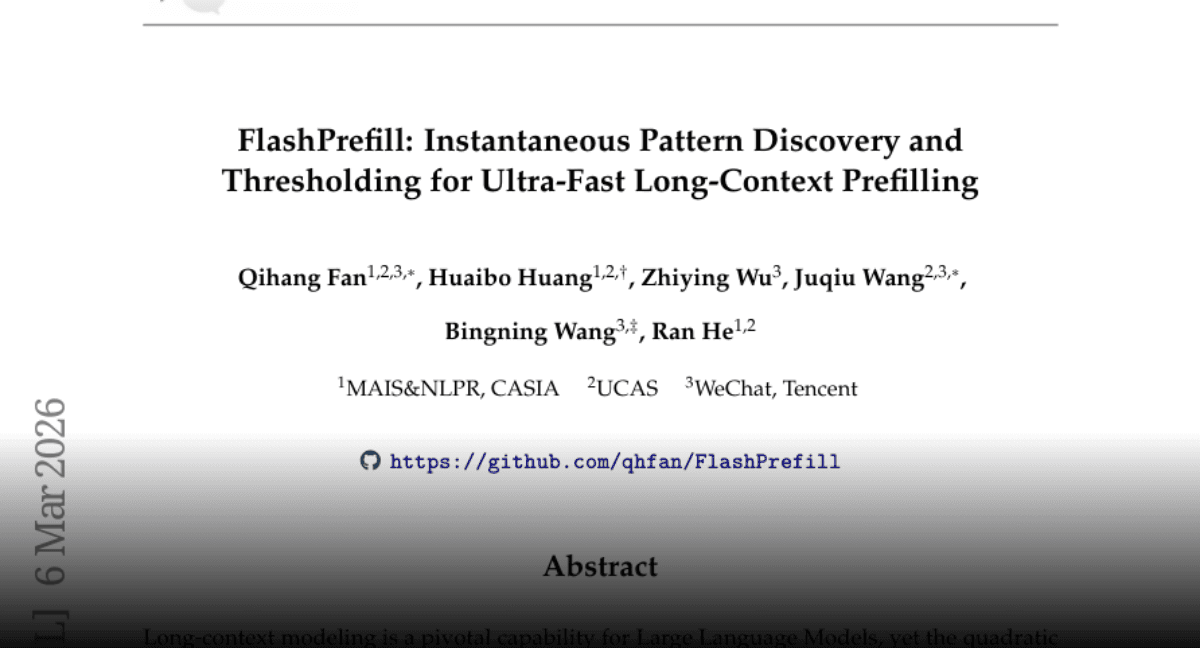
- **FlashAttention-4 for NVIDIA Blackwell GPUs** has set new standards in transformer inference speed. By leveraging **advanced kernel fusion**, **optimized tensor core utilization**, and **sophisticated memory management**, it achieves **substantial speedups** that make real-time deployment of massive models increasingly feasible.
- **vLLM**, known for its **memory-efficient multi-request serving capabilities**, has integrated **qwen2_5_vl**, an optimization targeted at **variable-length input sequences**. This reduces redundant computations during long-sequence processing, accelerates attention and embedding operations, and supports **larger batch sizes**, thereby lowering latency and operational costs.
- **AMD's innovations**, particularly **GPU partitioning on MI300X**, enable multiple inference instances to run **concurrently on a single device**, effectively **multiplying throughput** and **reducing per-inference costs**. The development of **TileLang**, a hardware-specific kernel language, empowers developers to craft **high-performance, tailored kernels** for AMD architectures, narrowing the performance gap with NVIDIA and expanding hardware options.
### Core Optimization Techniques Driving Performance Gains
These engines are built upon a suite of **core techniques** that maximize efficiency:
- **Kernel and Operator Fusion**: Combining multiple neural operations—such as attention, feed-forward layers, and normalization—into **single GPU kernels** reduces synchronization points and memory transfers, significantly **cutting inference latency**.
- **Attention Variants and Memory Layouts**: Implementing **sparse** or **linear attention** mechanisms addresses the quadratic complexity of traditional attention, especially critical for **large models**. When paired with **optimized data arrangements**, these techniques improve cache utilization and processing speed.
- **Quantization and Model Compression**: Techniques like **8-bit quantization** and pruning are now standard, enabling models to run efficiently on resource-constrained hardware **without notable accuracy loss**.
- **Dynamic Batching and Scheduling**: Adaptive batching strategies optimize hardware utilization during fluctuating workloads, maintaining **low latency** and **high throughput**.
- **Hardware-Specific Kernels & Partitioning**: Exploiting features like **NVIDIA tensor cores** or **AMD's TileLang** allows for **precise computational tailoring**, unlocking additional performance gains.
- **CUDA Graphs and Streaming/Blockable Operators**: Recent work has demonstrated transforming traditional operators like **softmax** and **attention** into **streaming**, **blockable variants** via **tiling techniques**. This reduces memory footprint and supports **incremental inference**, making models **more scalable**.
---
## Practical Innovations and Their Impact
### **Q Cache: Visual Attention Caching for Multi-Modal Models**
A standout recent innovation is **Q Cache**, which **caches visual attention outputs** across decoder layers. Research indicates that **visual attention** contributes significantly only in **less than half of decode layers**. By **bypassing unnecessary attention calculations**, **Q Cache**:
- **Reduces computational load**, leading to **faster inference**.
- **Enhances efficiency** in multi-modal tasks like image-captioning.
- **Simplifies deployment pipelines**, facilitating scalable systems.
**Long Qian**, a researcher involved in this work, states:
*"Q Cache’s lightweight, fully compatible integration with frameworks like Transformers v5 RC enables models to operate more efficiently without sacrificing accuracy."*
### **FlashAttention-4 for NVIDIA Blackwell**
Building upon earlier versions, **FlashAttention-4** exploits **Blackwell's tensor cores** and **high-bandwidth memory** more effectively. Its **advanced kernel fusion** and **memory management strategies** have set new benchmarks, making **real-time large model deployment** increasingly feasible.
### **AMD Hardware Enhancements**
Leveraging **GPU partitioning** on **AMD MI300X**, **vLLM** can now deploy **multiple inference instances per device**, **significantly increasing throughput**. The emergence of **TileLang**—a hardware-specific kernel generation language—enables **tailored kernel development**, narrowing the gap with NVIDIA and promoting a more **diverse ecosystem**.
### **Transforming Operators with Streaming and Blockable Variants**
Transforming operators like **softmax** and **attention** into **streaming**, **blockable variants** through **tiling techniques** has gained momentum. These approaches **reduce memory demands** and **support incremental inference**, enhancing **scalability** and **adaptability**.
Research led by Long Qian demonstrates that **attention tiling** can **significantly lower memory consumption** without compromising correctness, enabling **faster, resource-efficient inference**.
### **System-Level Optimization: PackInfer**
**PackInfer** introduces **compute- and I/O-efficient attention processing** for batched inference workloads. It has demonstrated **throughput improvements of 13.0–20.1%** and **reduced end-to-end latency**, proving vital for **high-throughput applications** like multi-user chatbots and large-scale document analysis.
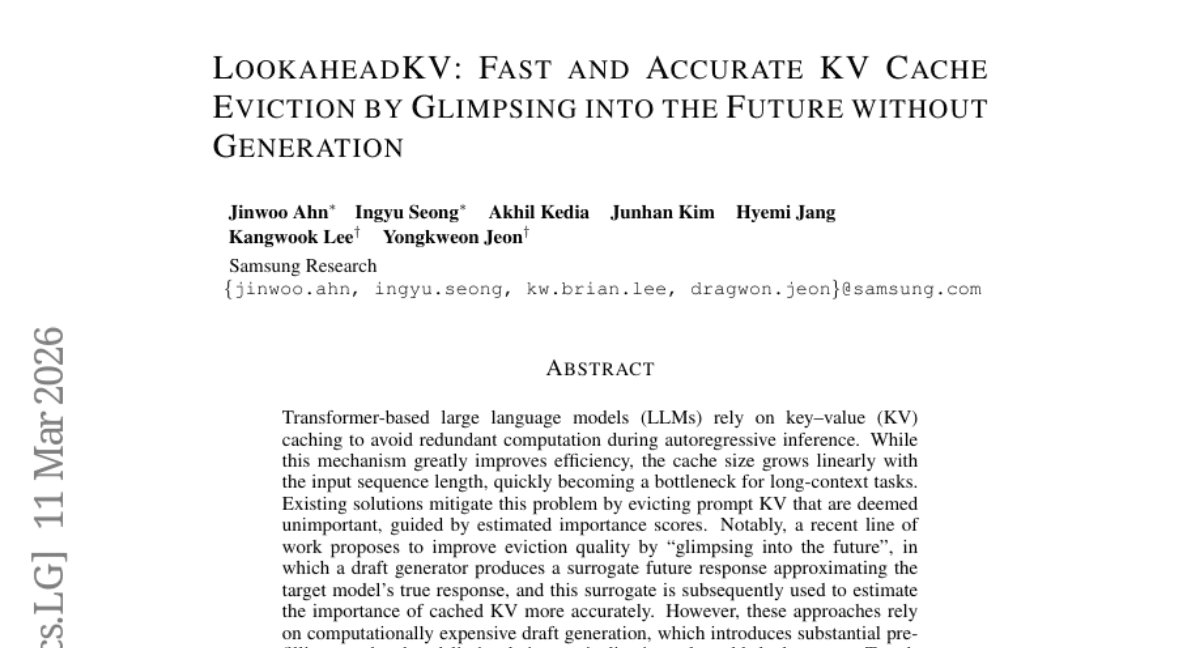
### **Fast KV (Key-Value) Compaction via Attention Matching**
A novel technique—**Fast KV Compaction via Attention Matching** (detailed in arXiv.org)—addresses **long-context inference** by **matching attention patterns** to **compact key-value caches**. It:
- **Reduces memory and computational overhead** during processing of lengthy inputs.
- Enables **faster processing** in multi-turn dialogues and summarization tasks.
- Supports **efficient multi-turn reasoning**, making large models more practical for real-world interactive applications.
---
## Addressing Stability and Reliability Challenges
While performance gains are impressive, **system stability** has encountered notable challenges:
- **Kernel regressions** have caused errors such as **IndexError** during inference with **FlashAttention** in **Transformers v5 RC**.
- **FlashAttention 2.8.3** updates triggered **Instruction Memory Access (IMA)** errors during regression testing.
- **Mitigations** include **patching kernel implementations**, such as replacing standard vector subtractions with **`hn::Sub`** functions to prevent memory access errors during large-scale inference.
**Community efforts**, including **rigorous testing, cross-platform benchmarking**, and **validation at forums like FOSDEM 2026**, are critical in ensuring **correctness and robustness** alongside performance improvements.
---
## Deployment Strategies and Future Directions
To harness these innovations, practitioners are adopting strategies such as:
- **Multi-GPU and multi-instance deployment** to **maximize throughput**.
- **Quantization, pruning, and distillation** to enable **cost-effective, resource-light deployment**—especially on edge devices.
- **Fine-grained profiling and optimization** to identify bottlenecks and guide kernel improvements.
- **Hardware diversification**, extending optimizations to emerging architectures and accelerators beyond NVIDIA and AMD, fostering a **heterogeneous AI ecosystem**.
- **Operator standardization** for streaming and blockable operators, facilitating **low-latency, incremental inference**.
### Future Outlook
- **Efforts to develop more efficient attention mechanisms**, such as **sparse** and **linear attention**, continue to accelerate.
- **Enhanced multi-model serving** with **dynamic resource sharing** aims to support **large-scale, multi-user environments** seamlessly.
- **Operator standardization** is poised to enable **widespread incremental processing**, further reducing latency and memory demands.
- **Hardware innovation**, including next-generation memory technologies like **HBM4**, promises to alleviate the **bandwidth wall** constraining AI performance.
---
## The AI Memory Crisis: Technical Challenges in Hardware and Bandwidth
A critical aspect of current and future AI scalability hinges on **hardware capabilities**, particularly **memory bandwidth** and **processing technology**. Recent analyses highlight:
- The **bandwidth wall**, a fundamental challenge where the **memory bandwidth** (e.g., HBM3E, HBM4, DRAM) cannot keep pace with **computational throughput** demands of large models.
- The **limitations of current memory technologies** in scaling to meet the needs of **massively parallel AI workloads**.
- The importance of **efficient memory hierarchy design**, **cache management**, and **innovative memory architectures** to mitigate these bottlenecks.
*For a detailed technical exploration of these issues, see the recent article:*
> **_"The AI Memory Crisis: A Deep Technical Analysis of HBM3E, HBM4, DRAM Process Technology, and the Bandwidth Wall Constraining AI"_**.
This analysis underscores that **hardware innovation**—including **next-generation memory chips**, **multi-layer cache hierarchies**, and **integrated processing-in-memory architectures**—will be pivotal in overcoming current constraints and enabling future AI scalability.
---
## Current Status and Broader Implications
The convergence of **specialized inference engines**, **hardware-aware kernels**, **system-level optimizations**, and **hardware advancements** is fundamentally reshaping the landscape of large language model deployment. The transition from expensive, latency-bound systems to **scalable, real-time AI pipelines** is well underway.
Industry experts emphasize:
*"The integration of these technological breakthroughs is democratizing AI, making the deployment of massive models accessible and practical in diverse environments—from cloud data centers to edge devices."*
However, challenges related to **system stability**, **hardware limitations**, and **software robustness** remain. Continued community effort, rigorous testing, and cross-platform validation are vital to sustaining this momentum.
---
## Conclusion
The rapid evolution of techniques and engines for making large language models **faster, cheaper, and more scalable** signifies a **paradigm shift** in AI deployment. Innovations like **FlashAttention-4**, **Q Cache**, **PackInfer**, and **Fast KV compaction**—coupled with hardware advancements in memory technology and processing architectures—are unlocking new capabilities.
As these technologies mature, the AI ecosystem is poised to deliver **more robust, real-time, and accessible AI services**, transforming industries and empowering a new wave of AI-driven innovation. Addressing ongoing hardware and stability challenges will be key to ensuring that these models reach their full potential across all scales and applications.