# The Cutting Edge of Sovereign, Edge, and Facility-Scale AI Infrastructure in 2026: Innovations, Governance, and Strategic Growth
As the AI landscape in 2026 continues to evolve at an unprecedented pace, enterprises and governments are pushing the boundaries of **sovereign, edge, and facility-scale AI infrastructure**. This year marks a convergence of **hardware–model co-design breakthroughs, sophisticated orchestration frameworks, and strategic investments** that collectively aim to deliver **low-latency, secure, and compliant autonomous AI systems**. These advancements are not only redefining performance standards but also addressing critical challenges related to **governance, safety, and regional compliance**, ensuring AI deployments are trustworthy and scalable at planetary scales.
---
## Continued Industry Consolidation, Strategic Funding, and Regional Deployments
The drive toward resilient, multi-region autonomous ecosystems has accelerated, fueled by significant mergers, investments, and deployments:
- **Render’s $100 million Series C extension**, boosting its valuation to **$1.5 billion**, is enabling expansive regional deployments with fault-tolerant workflows, vital for sovereign data management.
- **Meta’s partnership with AMD**, deploying **6 gigawatts of AMD GPUs**, establishes sovereign clusters designed explicitly for **regional data governance** and **personalized AI services**, reinforcing the trend of hardware-software synergy.
- **Yotta’s large-scale GPU deployments** facilitate retrieval-augmented AI systems, ensuring **ultra-low latency and compliance with regional data laws**.
Emerging startups like **Skipr**, recently valued at **$10 million**, are focusing on **modular, region-aware data pipelines** that streamline compliance and reduce latency. **Encord’s $60 million Series C** underscores the surge in **physical AI infrastructure investments**, supporting **region-specific data collection** and **regulatory adherence** crucial for autonomous applications across sectors like healthcare, robotics, and industrial diagnostics.
Additionally, the recruitment landscape reflects these priorities, with organizations such as **DeepMind** and others actively hiring researchers specialized in **autonomous agents and regional AI governance**, signaling a strategic emphasis on **building trustworthy, compliant autonomous systems**.
---
## Hardware–Model Co-Design and Performance Scaling at the Edge
Meeting the stringent demands of sovereign and edge deployments requires **innovative hardware and optimized inference frameworks**:
- The development of **veScale-FSDP**, a **high-performance Fully Sharded Data Parallel (FSDP) framework**, now enables **efficient scaling of large models across distributed hardware**, significantly reducing communication overheads and increasing throughput. Researchers emphasize that **"this work is critical for enabling large models to run efficiently at the edge"**, especially in latency-sensitive contexts.
- **Specialized inference chips** like **Taalas’ HC1** now process **nearly 17,000 tokens per second**, optimized for **embedded Llama 3.1 8B models**, supporting **real-time inference in security-critical sectors** such as healthcare and defense.
- **SambaNova’s SN50 wafer-scale chip** delivers **substantial reductions in latency and power consumption**, aligning with the stringent security and performance standards of autonomous agents operating within sovereign data centers.
- Recent advances in **memory and context window technologies**, exemplified by **Samsung’s HBM4 modules** and **Micron’s next-generation DRAM**, have **tripled interpretive capacity and inference speeds**, enabling **more complex autonomous reasoning** and **long-term contextual understanding**.
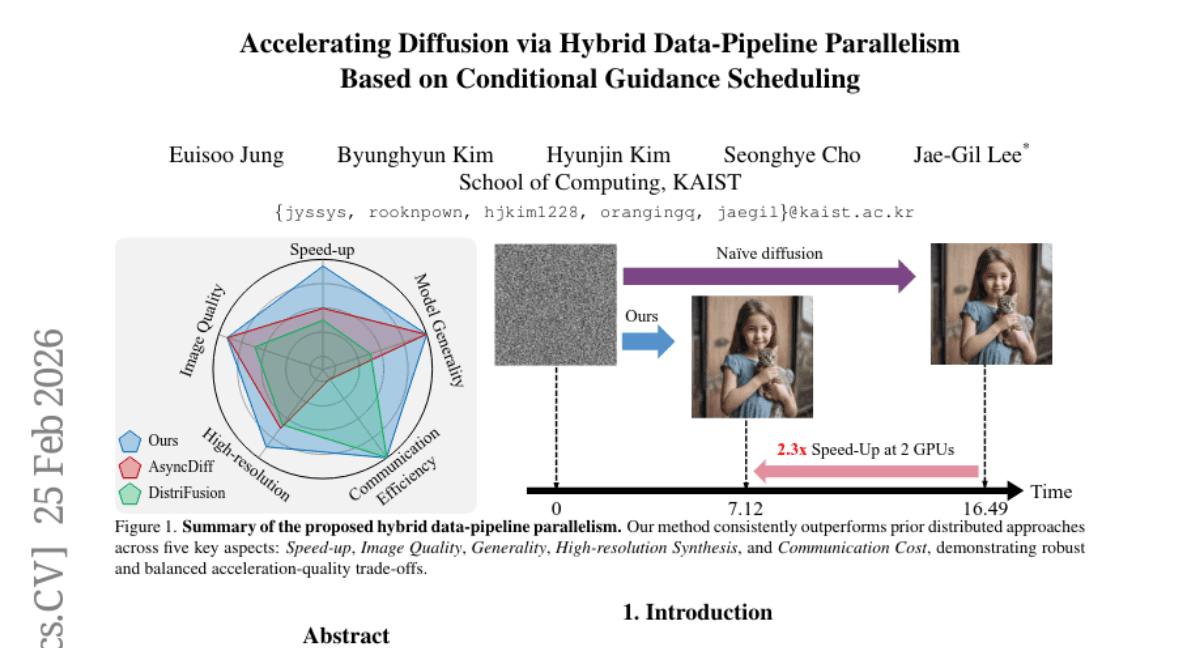
A new frontier is emerging with **hybrid data-pipeline parallelism** techniques tailored for **diffusion models**, allowing **faster training and inference** through **conditional guidance scheduling**. This approach optimizes the **flow of data and model parameters**, further reducing latency and increasing efficiency in high-stakes autonomous applications.
---
## Evolving Ecosystem of Autonomous Agent Governance and Safety Tooling
As autonomous agents become more capable and widespread, ensuring their **trustworthiness and compliance** remains paramount:
- **Govern AI Agents at Scale with Coder** introduces **scalable management and oversight frameworks**, facilitating **behavioral control, safety audits**, and **regulatory compliance** across diverse regions.
- Tools like **Braintrust** and **Code Metal** now provide **behavioral monitoring, adversarial testing**, and **real-time observability**, vital for **detecting anomalies and preventing systemic failures**.
- The release of **"The QA: AI Agents Could Break AI Infrastructure"** highlights the importance of **proactive governance**, emphasizing that **robust oversight mechanisms** are essential as autonomous agents operate at planetary scales. These frameworks aim to **mitigate risks**, **prevent security breaches**, and **ensure adherence to regional laws**.
The emphasis on **scalable governance** reflects a broader industry acknowledgment that **trust and safety** are foundational for **widespread adoption** of autonomous systems, especially those with **agentic capabilities**.
---
## Expansion of Physical and Data Infrastructure
Supporting the deployment of autonomous AI at scale requires **robust physical and data infrastructure**:
- **Encord’s $60 million Series C** targets **scaling data pipelines** for **physical AI applications**, including robotics, industrial diagnostics, and scientific research, emphasizing the importance of **region-aware data collection**.
- **Skipr’s modular infrastructure solutions** facilitate **regional data pipeline deployment**, ensuring **compliance with sovereignty laws** and **reducing latency**.
- Companies like **CoreWeave** are advancing **cloud-in-a-box solutions** and **modular data centers**, enabling **rapid regional deployment** with minimal operational overhead, crucial for **real-time autonomous systems** in diverse legal environments.
These infrastructure strategies are critical to **sustaining large-scale autonomous ecosystems**, allowing seamless operation across regions with varying security and legal frameworks.
---
## Orchestration, Observability, and Control in Dispersed Autonomous Ecosystems
Managing complex, multi-region autonomous clusters demands **advanced orchestration and control-plane solutions**:
- **VAST Data’s Polaris** offers **comprehensive orchestration** across hybrid and multicloud environments, ensuring **regulatory compliance**, **fault tolerance**, and **dynamic resource management**.
- **Portkey’s regional-aware orchestration frameworks** facilitate **automatic failover**, **policy enforcement**, and **adaptive resource allocation**, essential for **sovereign data sovereignty**.
- Enhanced **observability tools**, including **behavioral monitoring**, **audit logging**, and **adversarial testing**, strengthen **trustworthiness** and **system resilience** in distributed autonomous deployments.
These frameworks underpin the **reliability, transparency, and security** of autonomous AI systems, enabling enterprises to deploy **planetary-scale autonomous agents** with confidence.
---
## New Frontiers: Use Cases and Future Directions
The synergy of **hardware–model co-design**, **orchestration**, and **scalable infrastructure** unlocks a range of **innovative applications**:
- **Cybersecurity automation**, with autonomous agents providing **real-time threat detection and response**, leveraging **low-latency edge inference**.
- **Scientific exploration** in remote or hazardous environments, utilizing **perception and reasoning** capabilities for **physical AI**.
- **Industrial diagnostics and remote monitoring**, empowered by **long-horizon reasoning** and **multimodal perception frameworks** like **PyVision-RL** and **LongCLI-Bench**.
Looking forward, the focus remains on balancing **performance, security, and compliance**. Key technological drivers such as **veScale-FSDP**, **region-aware orchestration**, and **advanced hardware innovations** will continue shaping **enterprise AI ecosystems** that are **powerful, trustworthy, and compliant**.
---
## Current Status and Implications
2026 stands as a **watershed year** for **sovereign, edge, and facility-scale AI infrastructure**, with **hardware breakthroughs**, **robust orchestration**, and **strategic investments** fueling a new era of **low-latency, secure, and compliant autonomous systems**. The proliferation of **agentic AI** and **physical AI applications** underscores the critical need for **scalable governance, safety, and regional infrastructure**.
As these systems become more autonomous and capable, the industry’s emphasis on **trustworthiness and compliance** will define success, ensuring AI remains a **reliable partner** across sectors and regions. The ongoing innovations promise a future where **planetary-scale AI ecosystems** operate seamlessly, securely, and responsibly—charting a path toward **trustworthy autonomy at unprecedented scale**.