# The 2024 Convergence in AI Evaluation, Security, and Interoperability: Charting a Trustworthy Future
The artificial intelligence landscape of 2024 is witnessing a transformative era where advancements in **holistic benchmarks**, **contamination mitigation**, **security protocols**, and **interoperability standards** are reshaping how AI systems are evaluated, trusted, and integrated into society’s critical infrastructures. This convergence signals a move away from narrow, surface-level metrics toward **deep, agentic, multi-modal evaluation frameworks** that emphasize **robustness, privacy, and security**—laying the foundation for AI that is not only powerful but also safe, reliable, and aligned with societal values.
---
## Expanding Evaluation Paradigms: From Narrow Metrics to Multi-Dimensional, Agentic Assessments
In 2024, the focus has shifted from traditional benchmarks that primarily measure accuracy to **multi-horizon, multi-modal, and agentic evaluation frameworks** designed to better reflect real-world complexities. These efforts aim to **assess long-term reasoning**, **context retention**, and **behavioral consistency** across diverse settings.
### Key Innovations in Benchmarking
- **Memory and Session Continuity: DeltaMemory**
A breakthrough in **cognitive memory for AI agents**, DeltaMemory addresses the persistent challenge of **session-to-session forgetting**. By enabling **fast, reliable, session-aware memory**, DeltaMemory allows agents to **retain context**, **learn from past interactions**, and **operate seamlessly across multiple sessions**—a critical feature for **autonomous planning**, **long-term dialogues**, and **complex decision-making**.
- **Extended Browsing and Interactive Reasoning**
Platforms like **BrowseComp-V^3** now test models' ability to **reason over lengthy browsing sessions**, integrating **visual reasoning** with **dynamic information retrieval**. Such benchmarks mirror real-world scenarios where **data is fragmented**, **unstructured**, and **constantly evolving**, pushing models toward **adaptive, context-aware behaviors**.
- **Scientific and Hypothesis-Driven AI**
Initiatives like **SciAgentBench** and **SciAgentGym** are fostering **multi-step scientific reasoning**, including **hypothesis generation**, **experimental planning**, and **autonomous employment of tools**. These are essential for **accelerating scientific discovery** and **enabling models to operate over extended durations** with **autonomous inquiry capabilities**.
- **Agentic and Reverse-Engineering Tasks**
The **AgentRE-Bench** introduces **reverse engineering challenges** such as malware analysis and behavioral comprehension, demanding **layered reasoning** and **behavioral understanding**—crucial for **cybersecurity** and **threat detection**.
- **Perception and Action in Complex Environments**
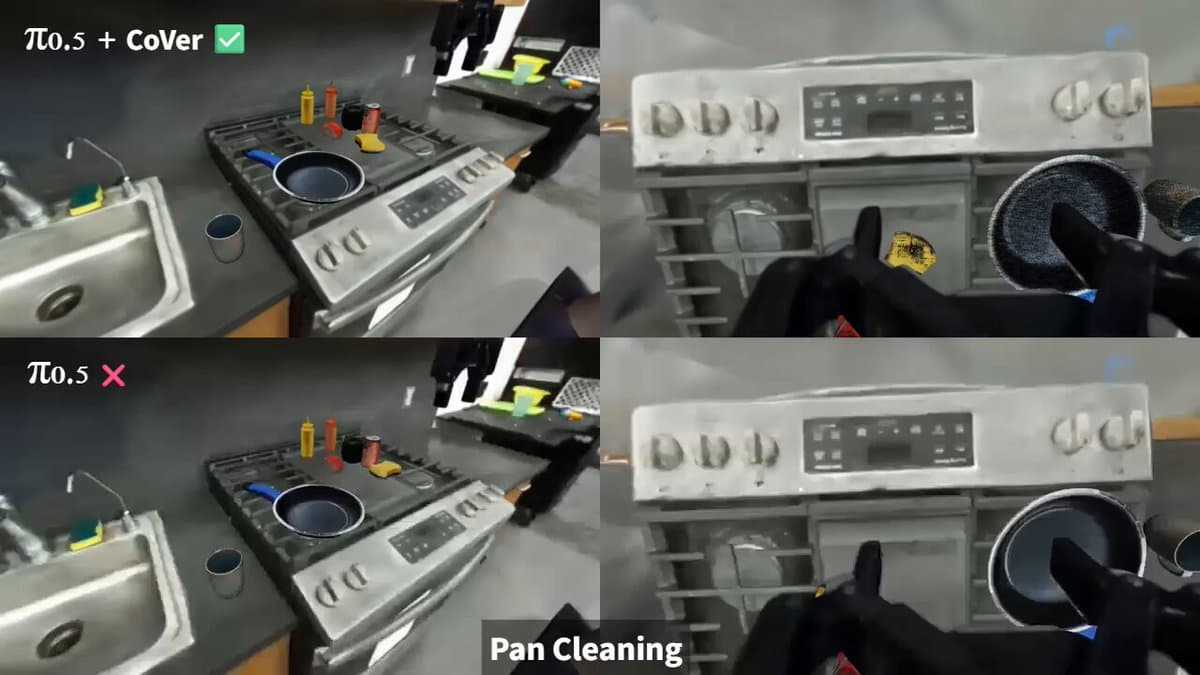
The **PyVision-RL** benchmark supports **reinforcement learning-based vision models** that **perceive and act** within **visual-rich, open environments**. The **"From Perception to Action"** benchmark further integrates **perceptual grounding** with **real-time decision-making**—vital for **autonomous robots**, **self-driving systems**, and **surveillance applications**.
- **Agentic Metrics and Deep Evaluation Frameworks**
The **DREAM** framework consolidates these efforts by introducing **agentic metrics** that assess **reasoning depth**, **behavioral resilience**, and **adaptability**. Such metrics **prioritize trustworthy AI**—models that **reason reliably**, **exhibit resilience**, and **generalize across tasks and environments**.
**Implications:**
These benchmarking advances **broaden the evaluation landscape**, compelling models to demonstrate **long-term coherence**, **multi-modal reasoning**, and **agentic behaviors**—traits indispensable for **high-stakes sectors** like **healthcare**, **cybersecurity**, **autonomous navigation**, and **scientific research**.
---
## Contamination Risks and Privacy: Safeguarding Evaluation Integrity
As AI benchmarks grow in sophistication, **data contamination**, **privacy breaches**, and **IP theft** pose escalating threats. Recent research and incidents underscore the urgency of **robust evaluation protocols**.
### Emerging Threats and Insights
- **In-Context Probing and Data Exfiltration**
The **"Hacking AI’s Memory" (NDSS 2026)** study reveals how **prompt engineering** can **exfiltrate sensitive training data** by crafting prompts that **expose proprietary information** stored within models’ memory. This is particularly concerning for **industrial secrets** and **personal data**.
- **Model Cloning and Distillation Attacks**
Techniques like **"Defending Against Industrial-Scale AI Distillation Attacks"** demonstrate adversaries' ability to **clone models** or **steal capabilities**, risking **IP loss** and **unauthorized replication**. These threats highlight the need for **watermarking**, **model fingerprinting**, and **contamination-resistant evaluation protocols**.
- **Synthetic Data and Out-of-Distribution (OOD) Testing**
To counter **memorization** and **data leakage**, researchers advocate for **synthetic datasets**, **adversarial testing**, and **OOD samples** that **challenge models’ reasoning** genuinely, rather than their ability to **regurgitate memorized responses**.
### Practical Measures and Community Initiatives
- **"Every Eval Ever"** encourages the use of **synthetic data**, **adversarial robustness testing**, and **reproducibility** to **detect contamination** and **evaluate reasoning** accurately.
- Experts like **Gary Marcus** emphasize that **"benchmarks are STILL contaminated"**, urging the development of **next-generation evaluation paradigms** centered on **reasoning, generalization, and resilience**.
**Implications:**
Strengthening **evaluation protocols** with **contamination-resistant**, **privacy-preserving** methods is critical for **trustworthy AI**, especially in fields like **healthcare**, **finance**, and **national security**.
---
## Embedding Security and Robustness: From Vulnerability Testing to Defense
Security has become a core component of AI evaluation in 2024, with **adversarial testing**, **behavioral audits**, and **attack simulations** now routine.
### Recent Developments
- **Adversarial and Penetration Testing Frameworks**
Tools such as **Caterpillar** embed **malicious prompts**, **visual exploits**, and **API manipulations** to **test model resilience** against **attack scenarios**, revealing **vulnerabilities** that could be exploited in real-world deployments.
- **Behavioral Traceability and Vulnerability Detection**
Platforms like **Claude Code Security** and **keychains.dev** facilitate **behavioral monitoring**, **resource access auditing**, and **vulnerability detection**, ensuring models **do not leak credentials** or **engage in malicious actions**.
- **Notable Incidents**
The **"RoguePilot"** vulnerability in **GitHub Codespaces** demonstrated how **AI deployment environments** could **leak credentials like GITHUB_TOKEN**, emphasizing the importance of **sandboxing**, **secure credential management**, and **continuous security audits**.
### Integrating Security into Evaluation
- Incorporate **attack simulations** into **standard evaluation routines** to **assess resilience**.
- Implement **behavioral monitoring tools** for **ongoing vulnerability detection**.
- Enforce **least-privilege policies** and **secure API practices** to **minimize attack surfaces**.
**Implications:**
Embedding **security robustness** into evaluation processes ensures AI systems are **resilient against malicious exploits**, a necessity for **trustworthy deployment** in **critical sectors**.
---
## Multi-Agent Ecosystems and Interoperability: Enabling Collaborative AI
The emergence of **multi-agent systems** and **interoperability protocols** in 2024 is fostering **scalable, collaborative AI ecosystems** capable of **distributed planning**, **resource sharing**, and **dynamic orchestration**.
### Key Initiatives and Trends
- **Frameworks like OpenClaw** and **Fetch.ai** support **agent coordination**, **distributed decision-making**, and **resource management**, underpinning **large-scale multi-agent workflows**.
- **Enterprise-grade integrations** such as **Why MCP** and **Atlassian Jira agents** are driving **production-level adoption** of **model context protocols (MCP)**, facilitating **secure, seamless agent collaboration**.
- The **Agent Data Protocol (ADP)**, recently **accepted at ICLR 2026**, aims to **standardize interoperability**, enabling **heterogeneous agents** to **collaborate securely** across diverse systems.
### Security and Deployment Considerations
While **agent orchestration** unlocks many potentials, it introduces **security risks** like **resource access vulnerabilities**. Cases such as **"I Gave an Open-Source AI Full Access to My Computer"** highlight the importance of **robust access controls**, **trusted environments**, and **security policies** for **safe multi-agent deployment**.
### Hardware and Edge AI Advances
Innovations in **specialized hardware** bolster **edge AI deployment**:
- **Taalas’s ChatJimmy** enables **low-latency inference** on **dedicated chips** suitable for **embedded systems**.
- **Zclaw** demonstrates **tiny AI assistants** on **microcontrollers** like **ESP32**, supporting **offline, privacy-preserving AI** with **small firmware (~888 KB)**.
These developments **expand AI’s reach** into **IoT**, **smart devices**, and **privacy-sensitive applications**, emphasizing **security** and **robustness** across all deployment levels.
---
## Practical Tools, UI Innovations, and Deployment Strategies
Enhancements in **tooling** and **user interfaces** continue to democratize AI deployment:
- **Plugin frameworks** like **Anthropic’s** facilitate **dynamic context management** and **plugin integration** for **custom workflows**.
- **No-code agent training** and **offline AI blueprints** enable **non-expert users** to **build, deploy, and manage** secure AI solutions.
- **User interfaces** such as **@yutori_ai** focus on **intuitive interactions**, lowering barriers to **adoption and trust**.
### Emerging Frontiers
- **Perceptual 4D benchmarks**, discussed by researchers like **@CMHungSteven**, aim to **integrate 3D spatial modeling** with **temporal dynamics**, advancing **world modeling** and **perception**.
- The emphasis on **reproducibility** and **rapid iteration** accelerates **trustworthy research** and **technological innovation**.
---
## Community and Open-Source Ecosystems
Open-source initiatives and **community-driven standards** continue to shape 2024’s AI landscape:
- The **"Global Trends in Open Source AI"** panel underscores **transparency**, **interoperability**, and **collaborative progress**.
- Shared evaluation formats, security protocols, and interoperability standards are increasingly **industry norms**, fostering **trust** and **collective advancement**.
- Benchmarks like **"Token Games"** and **"Puzzle Duel"** exemplify **deep reasoning** and **adversarial robustness** within **open, community-driven settings**.
---
## Current Status and Future Outlook
The convergence of these innovations **culminates in a comprehensive paradigm** where **holistic evaluation**, **security robustness**, and **interoperability protocols** are integral to AI development. This **integrated approach** **elevates capabilities** while **fortifying societal trust**.
**Key implications include:**
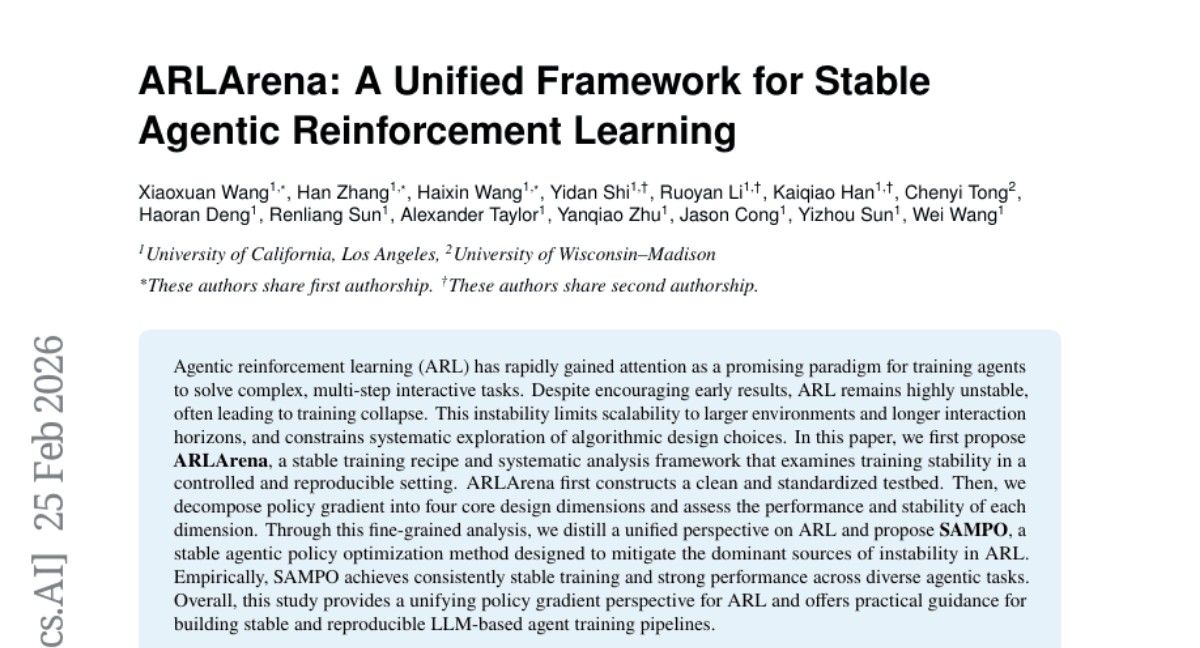
- **Genuine reasoning and generalization** are increasingly measurable through **contamination-resistant benchmarks** like **LOCA-bench** and **ARLArena**.
- **Security practices**—including **attack simulations**, **behavioral audits**, and **secure credential management**—are now **core components** of **trustworthy AI**.
- **Standardized protocols** like **MCP** and **ADP** enable **secure, scalable multi-agent ecosystems** capable of **collaborative decision-making**.
- **Advanced perception benchmarks** prepare models for **complex real-world tasks**, supporting **deep understanding** and **autonomous reasoning**.
As AI systems become embedded into societal infrastructure, these developments **set a resilient foundation** for **trustworthy, safe, and ethical deployment**—guiding the path toward **AI that is not only powerful but also aligned with human values**.
---
## Final Reflection
The developments in 2024 **embody a holistic, interconnected approach**—where **robust evaluation**, **security assurance**, and **interoperability protocols** are **interdependent pillars** of progress. This synergy **advances technological frontiers** while **building societal trust**, ensuring AI systems are **not only capable** but also **safe, resilient**, and **aligned**. As these themes continue to evolve, they forge a **trusted ecosystem** where **powerful AI** works **collaboratively and securely** to meet the demands of an increasingly complex world.