# The 2026 Renaissance in Diffusion, Multimodal Generative Models, and Autonomous AI Systems: The Latest Breakthroughs and Future Directions
The year 2026 marks an unprecedented epoch in artificial intelligence, characterized by a convergence of rapid technological advancements that are transforming how machines perceive, generate, and reason across multiple modalities. From **real-time, high-fidelity multimodal content synthesis** to **autonomous reasoning with long-term memory**, the AI landscape is experiencing a renaissance driven by innovative algorithms, specialized hardware, and a relentless focus on safety and trustworthiness. This evolution is not only accelerating industry capabilities but also redefining the boundaries of human-AI collaboration, creativity, and virtual experience.
---
## Breakthroughs in Real-Time, Low-Latency Multimodal Content Generation
### Algorithmic Innovations
Central to this revolution are several **algorithmic advances** that have significantly boosted inference speed and efficiency:
- **Ψ-Samplers and Curriculum Learning**: Building on early diffusion models, researchers such as @_akhaliq have developed **Ψ-samplers**, which exploit dualities in the diffusion process to **dramatically accelerate sampling speeds**. These methods enable **instantaneous multimodal synthesis** suitable for live editing, virtual assistants, and immersive content creation.
- **Test-Time Training with KV Binding for Linear Attention**: A groundbreaking technique involves transforming the traditional quadratic attention mechanism into a **linear operation** through **key-value (KV) binding** during inference. As @_akhaliq notes, **"Test-time training with KV binding effectively turns attention into a linear operation, unlocking real-time capabilities for large diffusion models."** This approach allows models like **2Mamba2Furious** to generate complex multimodal outputs **with negligible latency**, making real-time applications feasible at scale.
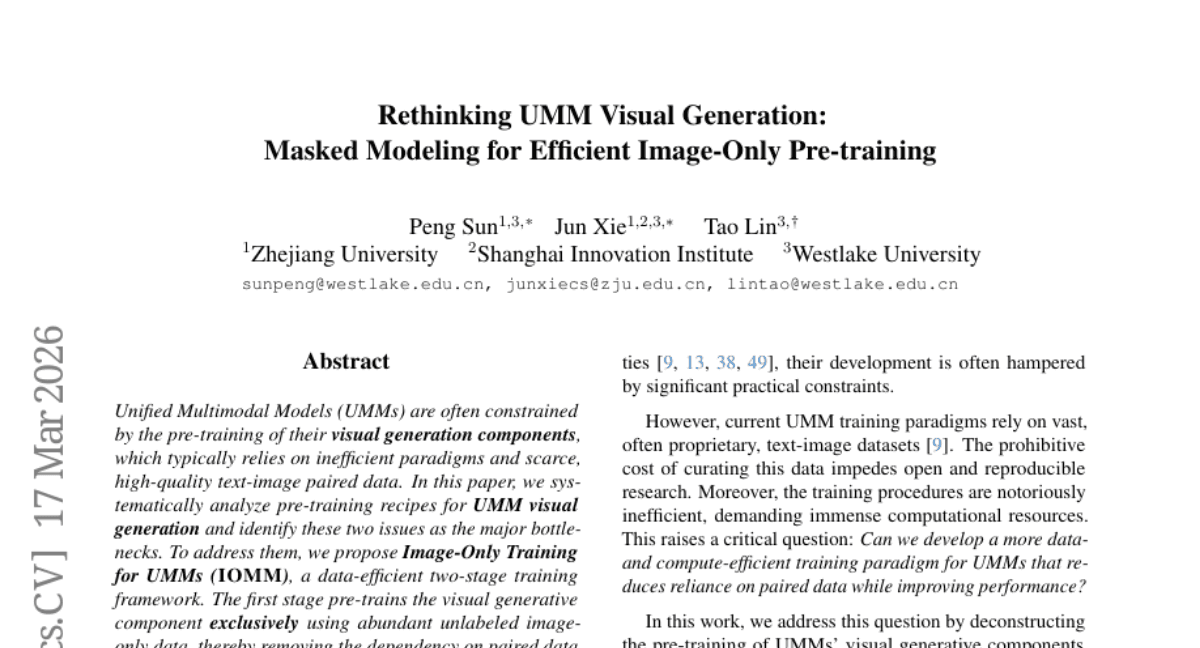
- **Tri-Modal Masked Diffusion Architectures**: Recent research such as **"The Design Space of Tri-Modal Masked Diffusion Models"** demonstrates models capable of **jointly generating and editing text, images, and audio**. These architectures facilitate **cross-modal consistency**, enabling more coherent and immersive multimedia experiences.
### Hardware and Infrastructure Developments
Complementing algorithmic progress are substantial investments in hardware:
- **High-Performance GPUs and Cloud Infrastructure**: Nvidia’s deployment of **H200 GPUs** and Neysa’s **$1.2 billion cloud expansion in India** provide the **compute density** necessary for scaling multimodal models.
- **Edge Inference Hardware**: Specialized chips like **BOS Semiconductors’ edge-optimized inference chips** (secured with **$60.2 million**) facilitate **on-device multimodal AI**, powering **autonomous vehicles, wearables, and mobile devices**. Meanwhile, **Taalas’s HC1 chip** enables **large language model inference at ~17,000 tokens/sec**, supporting **real-time, on-device interactions**.
- **Ecosystem Consolidation**: Industry players are acquiring and integrating tools for seamless deployment. For instance, **OpenAI’s acquisition of OpenClaw** and **HCLsoftware’s Wobby** streamline **data pipelines and interoperability**, ensuring models can operate at scale efficiently.
---
## Expanding Multimodal Capabilities and Content Synthesis
### Unified, Multi-Task Multimodal Models
The **dissolution of modality boundaries** continues apace:
- **Multi-Modal Generation and Editing**: Models like **"The Design Space of Tri-Modal Masked Diffusion"** enable **simultaneous handling of text, images, and audio** for tasks such as **content creation, editing, and cross-modal translation**. These architectures foster **more immersive and coherent multimedia outputs**.
- **High-Performance, Compact Image Models**: Google's **Nano Banana 2** exemplifies how **compact models** can deliver **professional-quality image generation at lightning speed**, enabling **interactive art, design, and media editing**.
- **Voice and Audio Synthesis**: Tools like **Kitten TTS**, with **15 million parameters**, support **natural, expressive speech synthesis** on edge devices. Paired with **Voxtral Realtime**, which provides **multi-speaker, emotionally expressive audio**, these innovations allow for **synchronized audio-visual experiences** across entertainment, virtual training, and customer service applications.
### Human-Centric and Virtual Reality Content
Emerging platforms such as **DreamID-Omni** facilitate **controllable, human-centric audio-video generation**, empowering users to **manipulate avatars and virtual environments** with **precise control**. Additionally, **Generated Reality** platforms produce **dynamic, responsive virtual worlds** that **interact with user gestures and camera inputs**, creating **fully immersive, human-centered experiences**.
### Challenges in Long-Form Video and Embodiment
Despite significant progress, **long-form video generation** remains a complex challenge, particularly in maintaining **physical coherence** and **embodiment** over extended sequences:
- **Embodiment Hallucinations**—where generated content **violates physical laws** or **lacks visual consistency**—are prevalent, especially in intricate scenes. Researchers like **@mzubairirshad** are deploying **multi-modal consistency checks**, **attention regularization**, and **embodiment-aware training** to **enhance the realism and physical plausibility** of generated videos.
> *"Achieving believable long-form video requires tackling embodiment hallucinations, a critical hurdle for immersive media, training simulations, and storytelling."*
- **3D Asset Creation and Video Reasoning**: Advances like **AssetFormer** facilitate **detailed, modular 3D asset generation** for gaming, AR/VR, and virtual worlds. Moreover, **"A Very Big Video Reasoning Suite"** aims to scale **video understanding models** for **reasoning over long, complex videos**, enabling **autonomous navigation, media editing, and virtual environment management**.
---
## Autonomous Reasoning, Memory, and Long-Horizon Planning
### Hierarchical Memory and Agentic Systems
AI systems are now capable of **multi-year planning and persistent reasoning**:
- **Hierarchical Memory and Fast Weights**: These support **long-term retention and retrieval** of multimodal data, critical for **multi-step decision-making** and **autonomous reasoning**.
- **DeltaMemory**: An innovative **fast, persistent memory module** addresses **catastrophic forgetting**, enabling **continuous learning** across sessions and **long-term operation**.
- **Self-Reflection and Adaptive Planning**: Techniques like **"Learning from Trials and Errors"** allow agents to **self-reflect**, **adapt**, and **correct** their behaviors, significantly improving **robustness**, **trustworthiness**, and **long-horizon goal pursuit**.
### Multi-Agent Ecosystems and Complex Task Management
Platforms such as **AgentOS** and **OmniGAIA** are pioneering **multi-agent orchestration**, capable of **collaborating across modalities** for **complex, long-term tasks**:
- **OmniGAIA**, as detailed in **"Towards Native Omni-Modal AI Agents"**, supports **native integration of multiple modalities**, enabling **seamless communication and reasoning**.
- **AI Gamestore** introduces a **scalable, open-ended evaluation framework** for **machine general intelligence** through **interactive human games**, fostering **long-term autonomous evaluation** and **multi-step reasoning**.
---
## Safety, Verification, and Dataset Innovations
As AI systems become more **autonomous and multimodal**, ensuring **safety**, **transparency**, and **trust** is paramount:
- **Safety Disclosures and Transparency Gaps**: Studies such as **"AI Agents Are Getting Better. Their Safety Disclosures Aren't"** highlight ongoing deficiencies in **safety communication** and **system transparency**.
- **Predictable Memory and Behavior**: Startups like **Cognee** (funded with **$7.5 million**) develop **predictable memory management tools**, while **Braintrust** with **$80 million in funding** emphasizes **system observability** and **behavioral verification**.
- **Behavioral Monitoring and Formal Methods**: Tools like **Portkey LLMOps** and **CanaryAI v0.2.5** enable **real-time behavior analysis**, **debugging**, and **security assurance**. Incorporating **formal verification techniques** such as **TLA+** into agent design reduces risks associated with **autonomous decision-making**.
---
## Industry Trends, Funding, and New Data Resources
Robust datasets underpin ongoing innovation:
- Resources like **4RC**, **VidEoMT**, and **DeepVision-103K** facilitate **dynamic scene understanding**, **video segmentation**, and **multi-view reasoning**, essential for **autonomous navigation** and **media synthesis**.
Industry investments continue to surge:
- **Neysa’s cloud initiatives** and **unicorn valuations** demonstrate strong confidence in **scalable AI infrastructure**.
- Startups such as **Cernel** and **Golpo** are expanding **agentic commerce** and **AI-native content creation**, diversifying the ecosystem.
### New Data and Tools
Recent developments include:
- **veScale-FSDP**: A flexible, high-performance Fully Sharded Data-Parallel (FSDP) training framework designed for large-scale models, supporting **efficient distributed training** at unprecedented scales.
- **AI Gamestore**: An evaluation platform allowing **scalable, open-ended assessment** of **machine general intelligence** through **interactive human games**.
- **Google vs. Suno**: Google’s acquisition of **Suno** signals an **aggressive push into generative music**, aiming to rival specialized startups in **AI-driven audio creation**.
- **Zavi AI**: A **Voice to Action OS** that enables **voice commands** to **type, edit, see, and perform actions** across apps on iOS, Android, Mac, Windows, and Linux—**bridging natural language and direct control** for seamless multimodal interaction.
---
## Advances in Training, Control, and Optimization
Recent methodologies aim to **improve model robustness and controllability**:
- **Diagnostic-Driven Iterative Training**: Techniques like **"From Blind Spots to Gains"** emphasize **diagnostic tools** to identify and address **model weaknesses**.
- **World-Model Consistency**: The principle articulated in **"The Trinity of Consistency"** advocates for **coherent, cross-modal, and temporal consistency**, fostering **more reliable and generalizable AI systems**.
- **Action Jacobian Penalties**: These regularizations smooth **control policies**, leading to **more human-like, predictable autonomous behaviors**—crucial for **trustworthy deployment**.
- **LongCLI-Bench**: A benchmarking platform for **multi-step reasoning** and **tool use**, encouraging development of **long-horizon autonomous agents**.
---
## Current Status, Future Outlook, and Implications
The rapid integration of these technological innovations signifies a **new renaissance in AI**, driven by **algorithmic ingenuity**, **hardware acceleration**, and a **dedicated focus on safety and ethical deployment**. The emergence of **real-time multimodal content creation**, **autonomous reasoning with long-term memory**, and **trustworthy AI frameworks** collectively enable systems that **reason, create, and interact** with human users more naturally and reliably than ever before.
Looking ahead, **long-form video generation**, **embodiment coherence**, and **deployment safety** remain **challenging frontiers**. Yet, ongoing research—such as **embodiment-aware training**, **multi-modal consistency checks**, and **formal verification techniques**—are steadily addressing these hurdles.
### Notable Contributions and Industry Movements
- **"AgentOS"** introduces a **systemic framework** for managing **multi-agent collaborations**.
- **"AI Gamestore"** pushes the envelope in **autonomous evaluation** and **multi-step reasoning**.
- **"The Trinity of Consistency"** advocates for **coherent, cross-modal world models**.
- **"OmniGAIA"** aims at **native omni-modal AI agents** capable of **seamless modality integration**.
- **Qwen3.5 Flash**, available on platforms like Poe, exemplifies **fast, efficient multimodal inference**—processing **text and images** with remarkable speed.
Industry investments, acquisitions, and startups foster a vibrant ecosystem, with **scalable infrastructure**, **diverse datasets**, and **innovative tools** fueling continued growth.
---
## Final Reflection
The **2026 AI renaissance** exemplifies how **algorithmic breakthroughs**, **hardware innovation**, and a **commitment to safety** are converging to produce **powerful, reliable, and ethically aligned AI systems**. These systems are poised to **transform industries, reshape human experiences**, and unlock **unprecedented creative and scientific possibilities**. As we navigate this evolving landscape, the focus on **trustworthy deployment**, **long-term reasoning**, and **multimodal integration** will determine how effectively humanity harnesses AI's full potential, forging a future where **machines reason, create, and collaborate seamlessly with humans**.