# OpenClaw: Navigating a New Era of Autonomous AI — Strategic Growth, Ecosystem Expansion, and Security Vigilance
OpenClaw continues to establish itself as a pioneering open-source framework for autonomous AI agents, revolutionizing industries and empowering communities worldwide. Its recent trajectory reflects a remarkable blend of technological innovation, strategic partnerships, and an intensified focus on security — all shaping the future of trustworthy, scalable autonomous AI.
---
## Strategic Milestone: OpenAI’s Investment and Leadership Shift
A significant development in OpenClaw’s evolution occurred when **OpenAI** took a strategic step by hiring **Peter Steinberger**, the original creator of OpenClaw. This move underscores OpenAI’s recognition of OpenClaw’s foundational role in building **trustworthy, autonomous personal AI agents** and signals a concerted effort to bolster its ecosystem.
**OpenAI’s involvement signifies a long-term vision**: cultivating an environment where autonomous agents are both powerful and safe. Steinberger’s leadership is expected to:
- **Accelerate platform development** with an emphasis on **security** to prevent malicious use.
- **Enhance scalability** for broader, real-world deployment.
- **Foster community engagement** through open collaboration and innovation.
This partnership is poised to **drive the creation of security standards**, **behavioral vetting protocols**, and **scalable deployment models**, aligning the platform with responsible AI principles and industry best practices.
---
## Ecosystem Expansion: Modular Architecture and Multi-Environment Support
OpenClaw’s **modular, open architecture** continues to attract a diverse user base, spanning enthusiasts to large enterprises. Its **support now encompasses multiple environments**, including:
- **Android devices**
- **Web browsers**
- **AWS cloud infrastructure**
- **Raspberry Pi boards**
- **WSL2 (Windows Subsystem for Linux)**
This extensive compatibility enables **seamless deployment** across varied platforms, empowering users to implement autonomous agents with minimal friction. Notably, **managed hosting solutions** like **KiloClaw** and **OpenClaw Direct** have lowered entry barriers by offering **fully managed infrastructure**, significantly simplifying setup and operation.
Recent innovations include:
- The **"1-Click OpenClaw Install"** available for Hostinger’s Docker VPS, allowing users to deploy agents swiftly without complex terminal commands.
- **Cloud deployment guides** that provide step-by-step instructions, making advanced AI deployment accessible even to those with limited technical expertise.
Furthermore, the community actively contributes through **hackathons**, **ROSClaw collaborations**, and **interactive tutorials**—such as connecting OpenClaw to platforms like Telegram—fostering continuous innovation and engagement.
---
## Platform Capabilities: Heartbeat, Subagents, and Multi-Platform Integrations
Recent updates have significantly enhanced OpenClaw’s core functionalities:
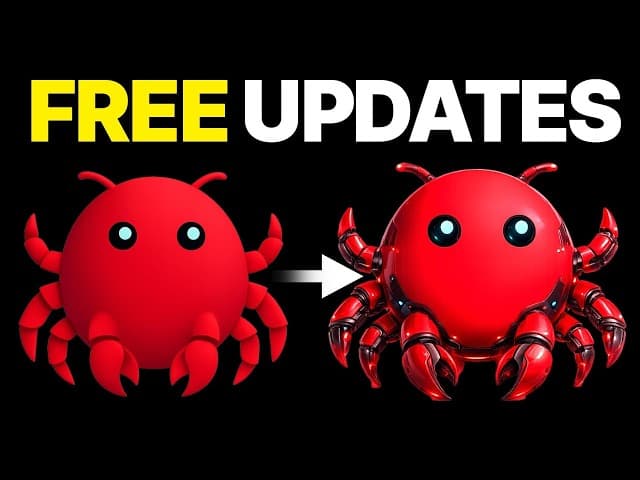
- **Heartbeat and Subagents**: These mechanisms enable autonomous agents to **monitor their health**, **coordinate with sub-agents**, and **manage complex workflows** more effectively. A popular YouTube demonstration titled *"New OpenClaw Update: Heartbeat + Subagents"* showcases how these features bolster agent resilience and adaptability.
- **Browser Agents**: Integration with web browsers allows agents to **interact directly within user environments**, expanding application scenarios from customer support to interactive automation.
- **Multi-Agent Orchestration**: Combining agents like **Ollama**, **Qwen 3.5**, **GoHighLevel**, and **Discord/Telegram** enables **dynamic workflows** where multiple agents **collaborate in real-time**. Use cases include automating **content creation**, **workflow management**, and **customer engagement**.
Recent demos have illustrated impressive real-world impact:
- Teams utilizing multi-agent setups have **automated web workflows**, replacing over **1,000 hours** of manual effort in tasks like video editing tutorials.
- Rapid **custom dashboard** building overnight demonstrates **speed and flexibility**.
- Streamlined **content generation workflows** allow creators to focus on high-level ideas, reducing manual labor significantly.
---
## Security Landscape: Risks, Incidents, and Industry Response
As OpenClaw’s capabilities expand, so do **security concerns**:
- The **skill marketplace** has attracted scrutiny, especially with tools like **tork-scan** that assess shared skills for vulnerabilities.
- Recent findings reveal that approximately **10% of skills** pose **significant risks**, such as:
- **Data exfiltration** (e.g., SSH keys, cryptocurrency wallets)
- **Malware deployment** (e.g., Atomic MacOS Stealer)
- **Sensitive information leaks**
- Over **1,184 malicious skills** have been flagged, emphasizing the critical need for **rigorous vetting**.
High-profile incidents, including the **Meta AI safety director’s inbox compromise**, highlight that even prominent organizations are vulnerable. Leaked data, such as **Clawdbot/OpenClaw user information**, underscores the importance of **security vigilance**.
### Enhancing Security Measures
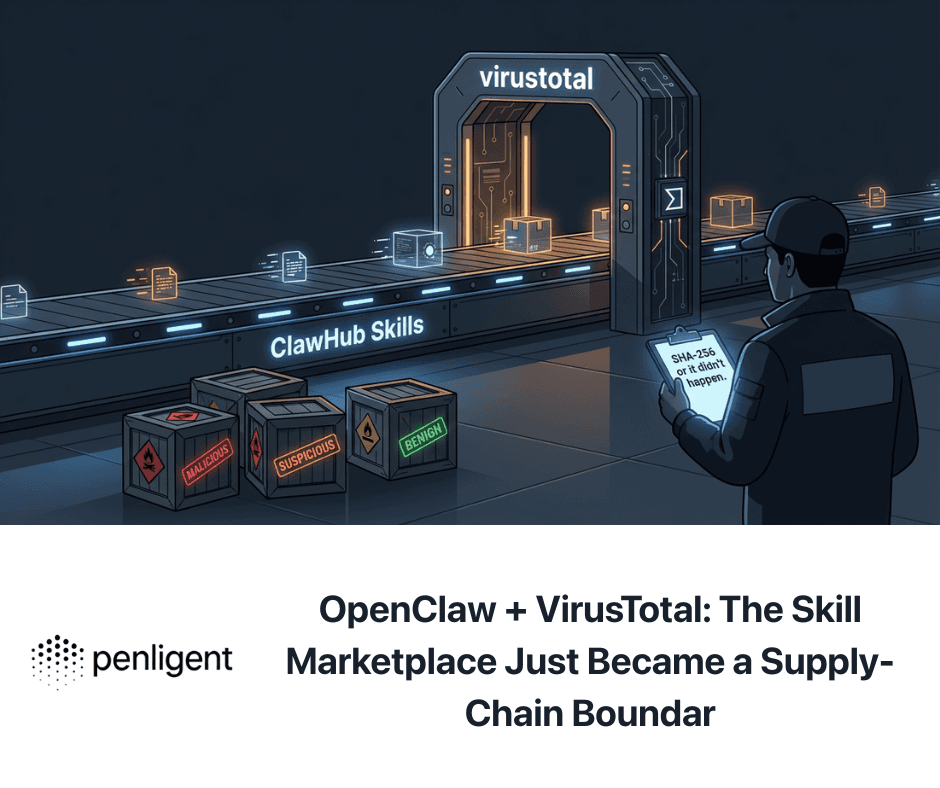
To counter these threats, the ecosystem is increasingly integrating **security tools** like **VirusTotal** and **tork-scan**, enabling **real-time detection** and **prevention** of malicious code execution. **Vet-and-sandbox protocols** are becoming standard practice prior to skill deployment, ensuring safer operational environments.
---
## Community and Industry Initiatives Toward Trustworthiness
The community and industry are actively adopting **best practices** to foster a **trustworthy ecosystem**:
- **Vet-and-sandbox protocols** for skill deployment.
- **Automated security scans** with tools like **VirusTotal**.
- Promotion of **local deployment options** such as **OpenRouter** and **Firecrawl** to **maximize privacy and control**.
- Development of **behavioral vetting** and **permission management** systems to prevent malicious activities.
### Recent Resources and Alternatives
New tutorials now include **comprehensive guides** on connecting OpenClaw to **Telegram** and **WhatsApp**, emphasizing **ease of deployment** with **security considerations**. Comparative analyses—such as **OpenClaw vs. Claude**—aid users in choosing appropriate deployment models based on performance, setup complexity, and security.
Emerging projects like **IronClaw** aim to **address security vulnerabilities** inherent in OpenClaw by offering **more robust safety controls** while maintaining open-source transparency.
---
## Current Status and Future Outlook
OpenClaw’s trajectory is characterized by **innovative growth** balanced with an **increased emphasis on security**:
- **Enhanced vetting protocols** and **industry standards** are being integrated to promote **trustworthy autonomous agents**.
- Focus on **local and managed hosting solutions** aims to **reduce vulnerabilities** and **empower users** with greater **privacy and control**.
- The ecosystem continues to evolve through **community contributions**, **new integrations**, and **security tooling**, reinforcing **trustworthiness** as a foundational principle.
The surge in **security incidents** highlights the necessity for **rigorous vetting, transparency**, and **responsible development**. Meanwhile, **practical deployments**—such as the **"Mastering OpenClaw"** tutorials and **agent orchestration tools**—demonstrate that **advanced multi-agent automation** is becoming more **accessible** and **secure**.
---
## Implications and Final Thoughts
OpenClaw stands at a **pivotal crossroads**, driving **technological innovation** while addressing **security challenges** head-on. Its **ecosystem expansion**, **industry collaborations**, and **real-world applications** showcase a platform capable of **transforming productivity across sectors**.
However, the **power of autonomous AI** must be matched with **vigilant security practices**. The integration of **security tools**, adoption of **best practices**, and development of **robust safety controls**—like those in **IronClaw**—are vital to **building trust**.
As **trustworthiness and scalability** continue to improve, OpenClaw is well-positioned to **set industry benchmarks**, empowering users worldwide to harness **autonomous AI responsibly, securely, and effectively** in a rapidly evolving landscape. Its ongoing evolution reflects a commitment to **innovation rooted in safety**, ensuring that the future of autonomous AI remains both **powerful and trustworthy**.