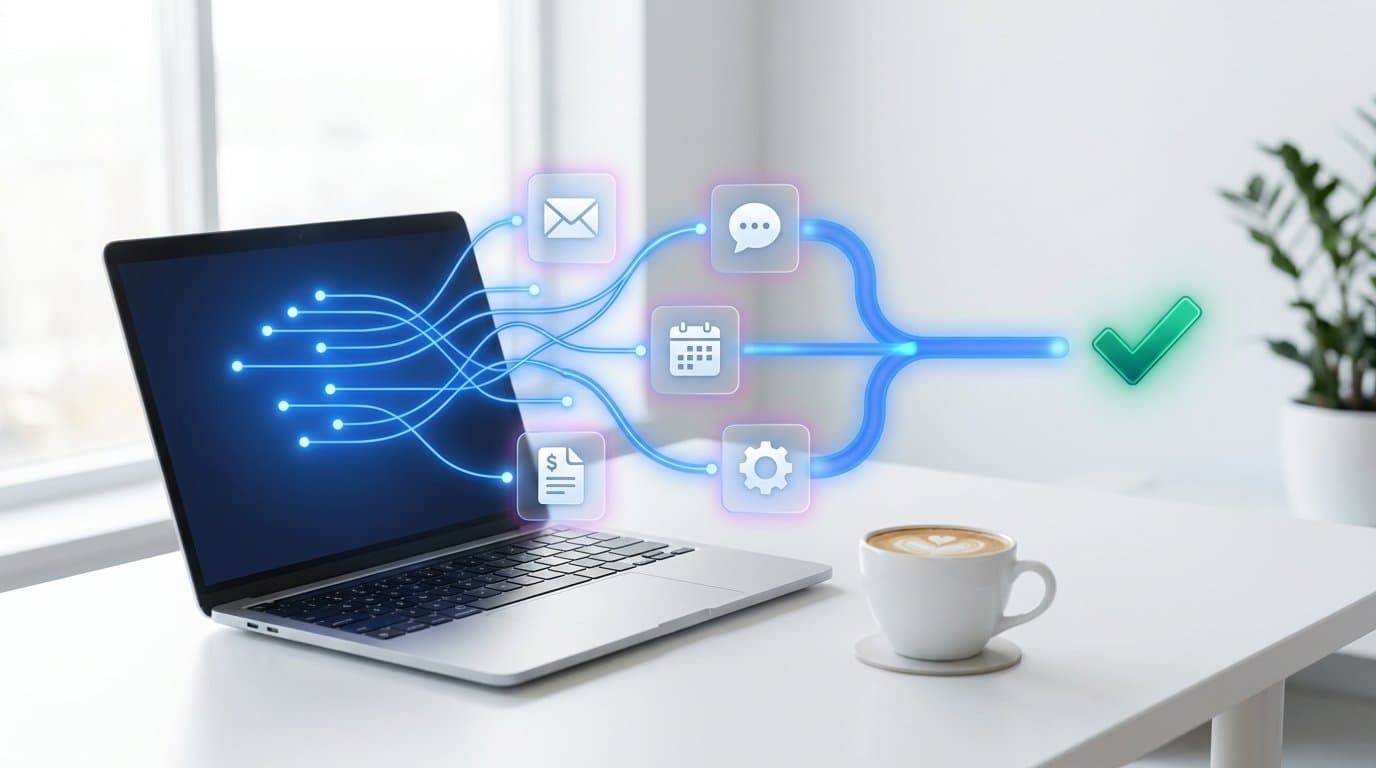
The AI frontier in 2026 is undergoing a profound transformation, moving decisively beyond the earlier obsession with raw scale and benchmark dominance toward a **balanced, sustainable ecosystem**. This new era prioritizes **emergent intelligence alongside throughput, cost-efficiency, deployment agility, and measurable real-world impact**, while addressing the practical challenges of production readiness, governance, and trustworthy operation.
---
### Beyond Scale: The Rise of Sustainable Practical AI
Flagship models such as **GPT-5.x** and **NVIDIA Nemotron 3 Super** continue to showcase remarkable emergent abilities—complex reasoning, multimodal understanding, and long-horizon planning. However, their **enormous computational and infrastructure demands** have catalyzed a paradigm shift in the AI community, which now values:
- **Throughput:** Real-time, scalable response delivery without latency bottlenecks.
- **Cost-efficiency:** Leveraging techniques like prompt compression (e.g., **Winnow** achieving over 50% token reductions in Retrieval-Augmented Generation pipelines) to dramatically lower inference costs.
- **Deployment agility:** Simplifying and accelerating the transition from models and prototypes to scalable, maintainable production systems.
- **Real-world impact:** Demonstrating AI’s tangible benefits in live workflows beyond isolated academic benchmarks.
Recent progress underscores this shift:
- **Winnow’s advances** in semantically compressing prompts enable significant savings without accuracy degradation, making large-scale RAG deployments financially viable.
- **Google AI Studio’s updated deployment options** reduce friction for developers, allowing faster and easier rollouts of AI-powered apps and websites.
- The maturation of **Google Cloud’s Vertex AI and Generative AI Leader Essentials** platforms provides integrated governance, monitoring, and cost control tools, bridging vital gaps between experimental research and enterprise-grade services.
- Meanwhile, hardware constraints for AI inference continue to spur innovation in mixed-precision computing and novel architectures, addressing energy efficiency and throughput challenges outlined in recent *AI Inference Hardware Challenges & Solutions* reports.
Together, these developments mark a decisive move toward **practical, sustainable AI that balances raw power with efficiency and deployability**.
---
### Agentic AI: From Assistants to Autonomous Collaborators
2026 represents a watershed moment for agentic AI systems, which are rapidly evolving from reactive tools into **fully autonomous collaborators capable of managing complex, multi-step workflows with real-world agency**. Key breakthroughs fueling this evolution include:
- The **Orion AI Agent**—a leading example in customer relationship management—now autonomously **engages customers in real time, answers queries, captures leads, and schedules follow-ups**, directly accelerating sales and support workflows.
- Integration of the **Chrome DevTools Multi-Context Protocol (MCP)** empowers AI coding agents to **debug live browser sessions interactively**, significantly boosting developer productivity by enabling real-time inspection and fixes of web applications.
- Open-source communities accelerate agentic AI production readiness with multi-agent toolchains via projects like **Fish Speech, AstrBot, LiteRT, DeerFlow, and Hive**, collectively broadening the ecosystem of tools and fostering rapid innovation.
- Tutorials such as *“How to Give Your AI Agent Its Own Email Address (Free, No Setup)”* democratize persistent agent identities, allowing AI agents to autonomously manage asynchronous tasks using real inboxes and phone numbers—vastly expanding their autonomy and utility.
- Enterprise-grade monitoring tools like **Claudetop** provide real-time “htop for Claude Code sessions” insights into resource usage, performance, and cost, essential for scaling agent fleets responsibly.
- The **Nia CLI** facilitates autonomous workflows by indexing and retrieving from complex document stores via command line, reducing human overhead in knowledge management and accelerating AI-driven decision-making.
- The emerging **Agent Gateway Protocol (AGP)** gains traction as a standardized framework for secure, efficient inter-agent communication and orchestration, promising to be foundational for scalable, interoperable agent ecosystems.
- Multi-agent orchestration frameworks increasingly embed governance, transparency, and error mitigation features to address enterprise concerns around compliance, auditability, and operational safety.
These advances position agentic AI as **proactive, adaptive collaborators that autonomously integrate APIs, plan multi-step operations, and dynamically adjust to evolving workflows with minimal human supervision**, ushering in a new era of AI-human partnership.
---
### Democratizing AI on the Edge: Local Assistants and Hybrid Deployments
Alongside the rapid growth of cloud AI, **local AI assistants have flourished**, driven by concerns over privacy, latency, and autonomy:
- The **Local AI Coding Assistant stack**—built on VS Code, Ollama, and Continue—delivers fully offline coding assistance rivaling cloud models, mitigating data exposure risks while maintaining high performance.
- The **OpenClaw philosophy** emphasizes **customizability, privacy, and minimal operational costs**, empowering users and developers to tailor AI assistants to specific needs.
- Real-world demos such as *“I Turned a Raspberry Pi into the Ultimate AI Assistant”* showcase how consumer-grade hardware can host capable AI assistants for everyday tasks, extending AI's reach beyond always-online enterprise contexts.
- New tutorials for setting up **OpenCode on MacOS** enable developers to achieve **zero API spending with full local AI capabilities**, lowering barriers for private, offline AI tooling.
- Offline work tracking tools integrated with local assistants enhance productivity by supporting asynchronous task management without cloud reliance.
This **dual-track ecosystem—combining robust cloud AI platforms with nimble local assistants—ensures flexible, privacy-conscious, and latency-optimized AI deployment**, expanding AI accessibility across diverse environments.
---
### Engineering Innovations: Efficiency and Production Readiness
Engineering innovations continue to drive AI’s efficiency and versatility:
- **Mixture-of-Experts (MoE)** architectures have reached mainstream production use, selectively activating specialized subnetworks during inference to significantly lower compute costs while maintaining or enhancing quality.
- **Multi-Task Prompting (MTP)** enables single models to dynamically switch across multiple tasks, simplifying lifecycle management compared to maintaining numerous fine-tuned variants.
- Prompt compression tools like **Winnow** have become central to cost reduction strategies, especially in large-scale RAG deployments.
- The release of **Gemini Embeddings 2** advances embedding quality and retrieval efficiency, reaffirming the viability of semantic search despite occasional narratives of RAG obsolescence.
- Hardware and inference constraints continue to shape deployment choices, with ongoing innovations targeting energy consumption, latency, and throughput trade-offs.
- Platforms such as **Google AI Studio** and **GCP Vertex AI** further smooth the path from rapid prototyping through scaling to governance integration, closing the gap between experimental AI and enterprise-grade deployment.
These developments reflect an ecosystem increasingly defined by **efficiency, adaptability, and production readiness**, essential for sustainable AI deployment at scale.
---
### Tangible Productivity Gains: AI as a Force Multiplier
The impact of AI on productivity is now demonstrably tangible:
- In *“The AI Workflow That Made Me 3× More Productive,”* Ankur Gupta details how integrating multiple AI tools automates research, content creation, meetings, and daily workflows—showcasing how thoughtfully composed AI workflows multiply human output significantly.
- The proliferation of open-source agent projects like **Fish Speech, AstrBot, LiteRT, DeerFlow, and Hive** expands the toolkit for custom AI workflow automation, fostering community-driven innovation.
- New real-world demonstrations, such as *“I Created a Playable Game Level in 24 Hours,”* highlight AI’s creative potential beyond traditional office workflows, showing AI can autonomously design and assemble complex interactive content rapidly.
- The ongoing race among industry leaders to build the best AI coding agents—including OpenAI’s intense efforts—underscores the emotional and technical challenges of pushing agentic AI capabilities further, as reflected in statements from figures like OpenAI Chairman Bret Taylor.
These examples illustrate AI’s growing role as a transformative productivity partner that **reduces repetitive tasks, accelerates knowledge work, and improves decision-making**, thereby enhancing creativity and operational efficiency.
---
### Governance, Monitoring, and Cost Controls: Foundations of Scalable AI
As AI systems grow mission-critical, robust governance, monitoring, and cost control frameworks are indispensable:
- Tools like **Claudetop** provide real-time visibility into resource consumption and operational costs, enabling enterprises to manage large agent fleets within budget and compliance requirements.
- **Google’s Vertex AI and Generative AI Leader Essentials** integrate governance frameworks with monitoring dashboards and automated compliance tooling, ensuring transparent and auditable AI operations.
- Emerging identity and access management solutions such as **KeyID** enhance security by tightly controlling AI agent identities and permissions, strengthening trust boundaries.
- The **Nia CLI’s** advanced document indexing reduces manual oversight while maintaining auditable knowledge management.
- Enterprises increasingly embed human-in-the-loop safeguards, fallback mechanisms, and explainability frameworks to mitigate risks including error propagation, bias, or non-compliance.
- The expanding adoption of the **Agent Gateway Protocol (AGP)** introduces standardized governance and orchestration layers, enabling secure, scalable multi-agent systems with enhanced auditability.
These layered governance strategies ensure AI automation remains **transparent, controllable, and aligned with organizational policies**, nurturing trust in AI-driven operations.
---
### Conclusion: A Mature, Responsible, and Dynamic AI Ecosystem
The AI frontier in 2026 is no longer solely defined by model scale or raw capability. Instead, it is characterized by a **sophisticated and multipolar ecosystem where emergent intelligence, engineering innovation, practical constraints, and governance converge**. Autonomous agentic systems with persistent inboxes, CLI-based knowledge retrieval, and real-time resource monitoring are reshaping human-AI collaboration.
Architectural advances such as **Mixture-of-Experts, Multi-Task Prompting, and Gemini Embeddings 2**, combined with prompt compression and developer platforms like **Google AI Studio** and **GCP Vertex AI**, make advanced AI more accessible, efficient, and production-ready than ever.
The vibrant competition and collaboration among industry leaders—**Manus AI, Claude, Google Gemini**, and a thriving open-source community—fuel relentless innovation, continuously reshaping the balance among capability, cost, deployment modes, and governance.
The rise of **AI software factories**, powered by multi-agent toolchains and governed by protocols like **Agent Gateway Protocol**, underscores the necessity of **robust monitoring, explainability, and human oversight** to sustain quality and trust at scale.
Ultimately, the frontier is defined by **balancing emergent abilities with transparency, cost control, and deployment practicality**. The next era promises responsible, explainable, and cost-efficient AI collaborators that enhance creativity and productivity across sectors—ushering in deeper, more dynamic human-AI partnerships.