# Making Model Reasoning Deeper, Cheaper, and Better Calibrated: The Latest Breakthroughs and the Emerging Agent Context Wars
The quest to develop large language models (LLMs) that **reason more profoundly, operate efficiently, and produce trustworthy, well-calibrated explanations** continues to reach new heights. Over the past year, rapid innovations have not only expanded the technical capabilities of these models but have also sparked lively debates about **how best to manage, control, and verify their internal reasoning processes**. These advancements are transforming AI from mere pattern recognition tools into **rigorous, transparent, and scalable reasoning engines**, with profound implications across scientific, industrial, and societal domains.
This article synthesizes the recent breakthroughs—covering **benchmarking efforts, training strategies, architectural innovations, interpretability tools, and real-world demonstrations**—and explores the emerging discourse surrounding **"The Agent Context Wars"**, a pivotal debate about how models manage and control their reasoning layers and context.
---
## Advancements in Measuring and Benchmarking Deep, Multi-Step Reasoning
A foundational challenge remains: **How do we accurately evaluate a model’s capacity for deep, multi-step reasoning?** Recent efforts have introduced sophisticated benchmarks designed as **diagnostic tools and performance standards**:
- **$OneMillion-Bench**: This expansive dataset assesses models on **diverse, complex inference tasks**, emphasizing **long chains, narrative coherence, and subtle reasoning**. Early results reveal a common trend—many models tend to **overestimate their reasoning depth**, often providing explanations that are superficial or lack genuine understanding.
- **Chain-of-Thought Control Tests**: These evaluate a model’s ability to **control and steer** its reasoning process through multi-step prompts. Metrics focus on **correctness, depth, and alignment with human reasoning standards**. A recurring finding is that models **frequently justify incorrect answers with overconfidence**, exposing calibration gaps that need addressing.
- **Long-Story Consistency Benchmarks**: These challenge models to **maintain thematic and logical coherence** over extended narratives or reasoning sequences. They reveal weaknesses in **sustaining interconnected reasoning**, guiding architectural improvements and training methods.
A remarkable milestone was achieved when **AI systems successfully verified a prize-winning mathematics proof**, demonstrating that models are increasingly capable of **rigorous, verifiable reasoning** in high-stakes domains.
---
## Innovative Training and Inference Strategies for Deep, Trustworthy Reasoning
Building on these benchmarks, researchers have developed **novel methods** to foster **more profound, reliable reasoning**:
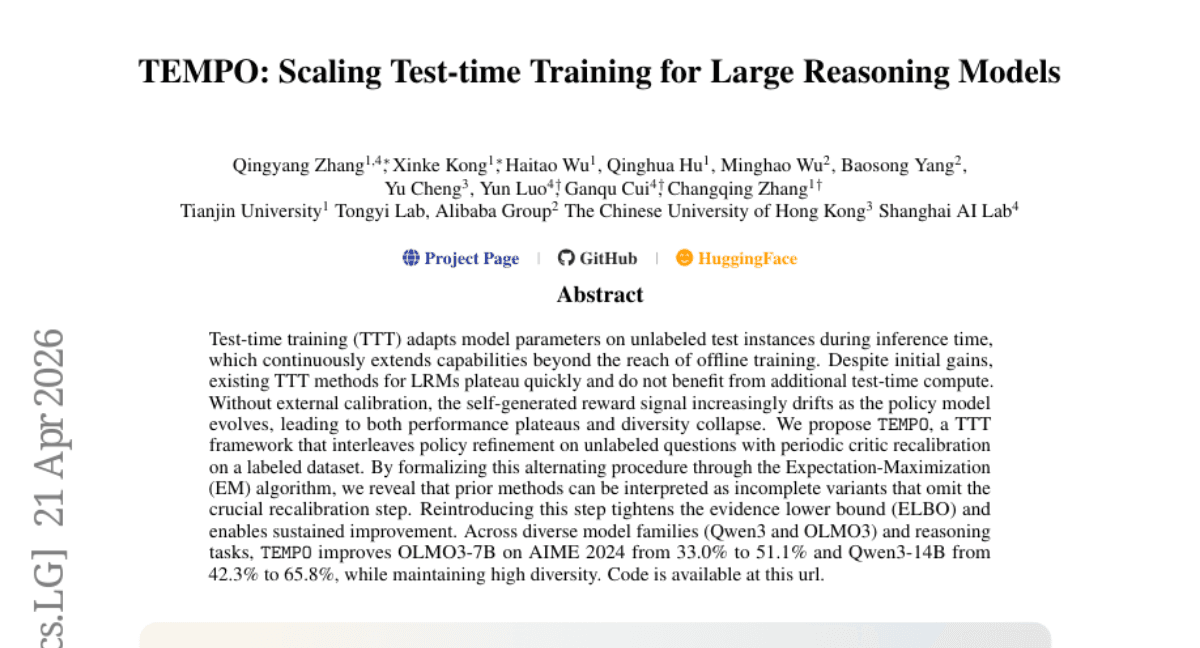
- **Reinforcement Learning from Verifiable Rewards (RLVR)**: By integrating reward signals based on **factual correctness and reasoning quality**, models learn to **prioritize genuine understanding**. Early experiments show RLVR-trained models **outperform traditional approaches** on complex reasoning tasks and **exhibit improved calibration**, reducing overconfidence issues.
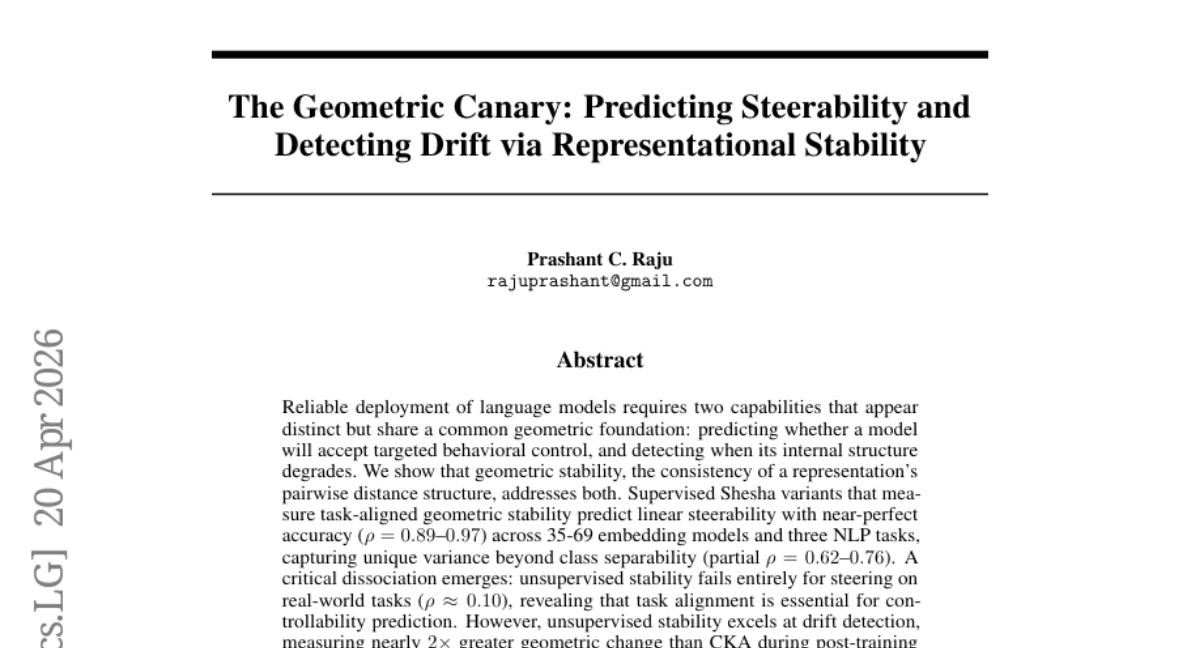
- **Confidence Calibration Techniques**: Methods such as **temperature scaling**, **ensemble calibration**, and **self-assessment prompts** enable models to **more accurately estimate their certainty**—a critical feature in domains like **healthcare, legal analysis, and scientific research**.
- **Iterative Self-Correction**: A rising trend involves models **generating initial reasoning chains**, evaluating their own outputs, and **refining explanations** before producing a final answer. This **feedback loop** enhances **accuracy, depth, and transparency**, significantly improving **error detection and correction**.
- **Models as Their Own Judges**: Recent studies highlight that **self-evaluation of reasoning** can **amplify biases and inaccuracies** if not carefully managed, emphasizing the need for **rigorous verification frameworks** that ensure **reliability and safety**.
---
## Architectural Innovations and Cost-Effective Deep Reasoning
Achieving **scalable, deployable** models that reason deeply while maintaining affordability has spurred **architectural breakthroughs**:
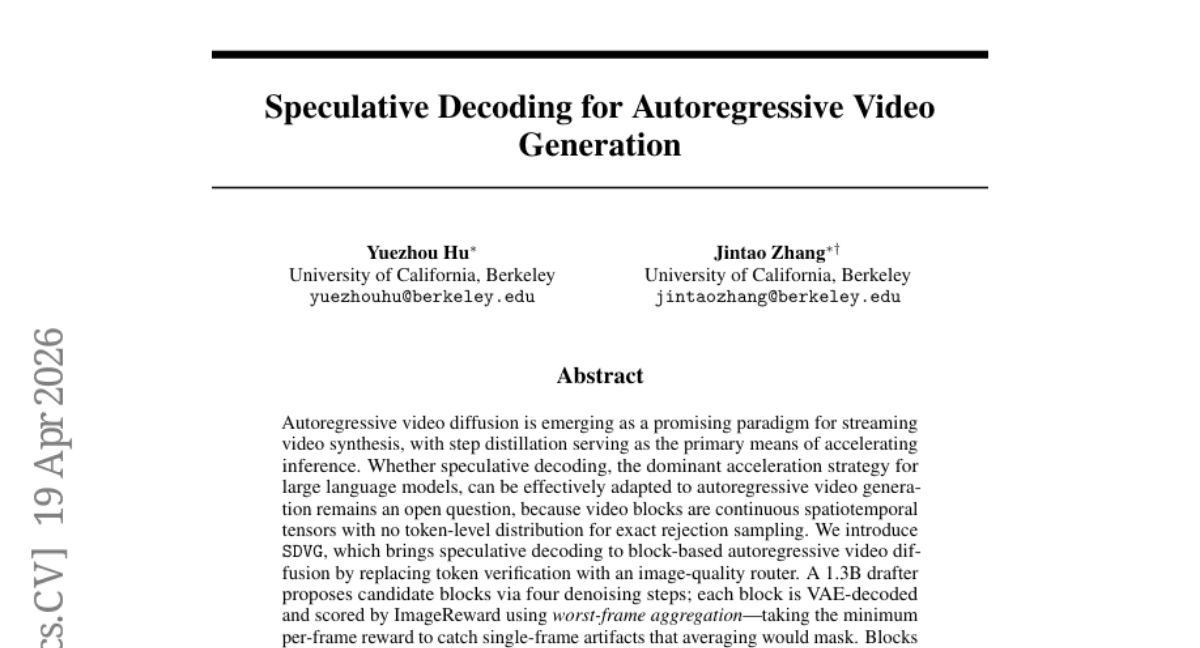
- **Long-Context Prefilling**: Techniques such as **context prefetching** enable models to **process extended histories** efficiently, supporting **multi-step reasoning over longer problem chains or narratives** without excessive computational costs.
- **Compact Planning Tokenizers**: New tokenization schemes are designed to **capture essential reasoning cues with fewer tokens**, decreasing input size and inference latency—crucial for real-world deployment.
- **Training Tricks: Residual Warmup**: Gradually introducing complex reasoning tasks during training stabilizes learning, leading to **improved performance** on reasoning benchmarks.
- **Mixture of Experts (MoE) and Hybrid Architectures**: Combining **sparse MoE layers** with dense components allows models to **dynamically allocate capacity** for reasoning, scaling depth **without proportional compute increases**. Recent implementations demonstrate **up to a 50% reduction in inference costs**, making **deep reasoning more affordable and accessible**.
---
## Deepening Interpretability and Uncovering Hidden Knowledge
Trustworthy AI hinges on **transparency**, and recent research has significantly advanced our understanding of **internal reasoning pathways**:
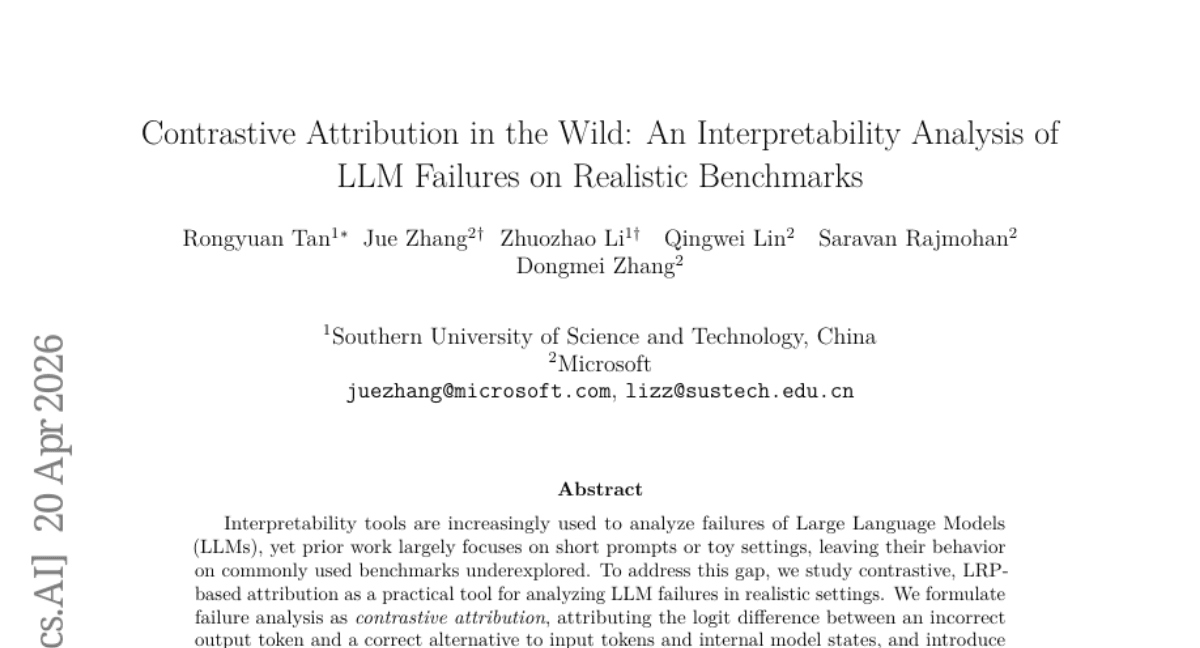
- **Mechanistic Interpretability and Neural Thickets**: Dissection of models' internal pathways reveals **dense, interconnected neighborhoods**—sometimes called **"Neural Thickets"**—that encode **complex reasoning abilities**. These insights help **demystify** how models generate explanations and **identify failure modes**.
- **"AI Knows More Than It Tells"**: Evidence indicates models **possess internal knowledge they cannot explicitly articulate**—a phenomenon with vital safety and calibration implications. Recognizing this **hidden knowledge** underscores the importance of developing **methods to extract and verify** internal information.
- **Controllable Chains of Thought**: Combining **prompt engineering** with **attribute steering** allows users to **guide reasoning processes**, ensuring explanations adhere to **ethical standards, domain-specific norms, or logical constraints**. This enhances both **trustworthiness and safety**.
- **Dynamic Self-Correction and Transparency**: Advanced models can **detect errors** in their reasoning and **revise explanations in real time**, providing **transparent, trustworthy outputs**—especially critical for **high-stakes applications**.
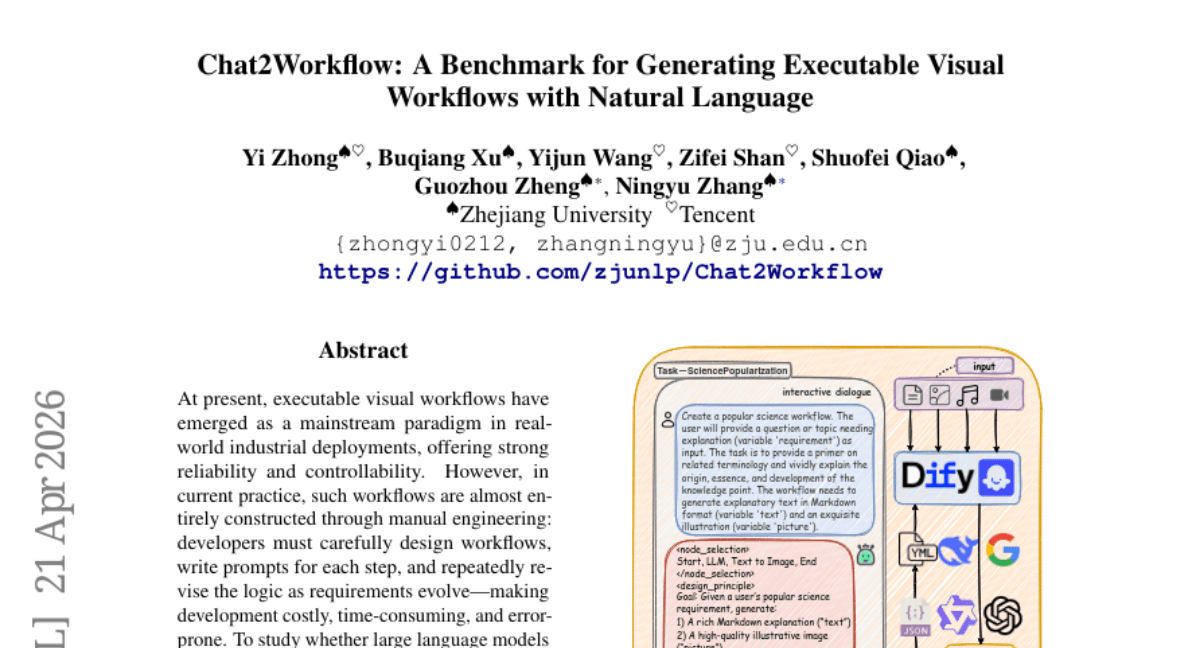
- **Structured, Agentic Reasoning Workflows**: Emerging frameworks involve **agentic models that initiate planning, evaluate their own outputs, and perform iterative corrections**, mimicking **human problem-solving strategies**. This approach supports **more reliable, goal-oriented reasoning**.
---
## The Agent Context Wars: Managing Layered Reasoning and Context Control
A **recent surge of debate**—dubbed **"The Agent Context Wars"**—centers on **how models manage and control reasoning across different layers and contexts**:
- **Layered Reasoning Control**: Researchers are exploring **how high-level prompts**, **intermediate representations**, and **internal memory modules** interact to **shape decision-making**. Effective control mechanisms are viewed as **crucial for safety, reliability, and interpretability**.
- **Context Management Strategies**: Approaches include **explicit context injection**, **dynamic pruning**, and **modular control architectures**. These strategies aim to **prevent information overload**, **mitigate hallucinations**, and **improve transparency**.
- **Safety and Reliability Implications**: Proper management of **context layers** is essential for **preventing unintended behaviors**, especially as models engage in **multi-step, goal-directed reasoning**. The debate emphasizes **where** and **how much control** should be implemented in system design.
- **Future Directions**: Ongoing discussions advocate for **robust verification protocols**, **modular reasoning architectures**, and **transparent context pipelines**—all aimed at ensuring **safe, aligned, and effective AI reasoning**.
---
## Recent Demonstrations and Broader Implications
The convergence of these advances is clearly exemplified in **notable recent demonstrations**:
- **Mathematics Proof Verification**: AI systems have **successfully verified complex mathematical proofs**, underlining **rigorous reasoning capabilities** applicable in **scientific research and formal verification**.
- **AI-Driven Scientific Research**: The recent breakthrough with **AlphaEvolve**—a project leveraging AI to **advance Ramsey theory**—has **moved the needle** significantly. A recent working paper by Ansh Nagda, Prabhakar Raghavan, and Abhradeep Thakurta reports **improved lower bounds for five Ramsey numbers**, marking a substantial step forward in combinatorial mathematics. This exemplifies how **deep reasoning models** are now contributing directly to **cutting-edge scientific discovery**.
- **AI-Assisted Software Engineering**: Agentic workflows enable models to **plan, evaluate, and iteratively improve code**, promising **more reliable and efficient AI-assisted development**.
- **High-Stakes Decision Support**: Enhanced **calibration, interpretability, and verification** are paving the way for AI in **medical diagnosis, legal analysis, and safety-critical systems**, provided **rigorous safety standards** are maintained.
---
## Current Status and Future Outlook
The past year has seen a **remarkable convergence** of **measurement, training, architectural, and interpretability breakthroughs** that collectively push AI toward **deeper, cheaper, and better-calibrated reasoning**. Models are now **more aligned with human standards**, capable of **multi-step, verifiable, and transparent explanations**.
**Looking forward**, several key themes dominate:
- **The "Agent Context Wars"** will influence how **layered reasoning and context control** evolve, impacting **model safety, reliability, and interpretability**.
- The integration of **verification protocols** and **calibration techniques** will underpin **trustworthy deployment** in **high-stakes fields**.
- Ongoing research into **hidden internal knowledge** and **internal pathways** will continue to **demystify model reasoning**, improving **interpretability and safety**.
- The ultimate goal remains: developing **AI systems capable of profound reasoning**, **cost-effective operation**, and **clear, trustworthy communication**—bridging the gap between **technical capability and societal trust**.
**In sum**, we are witnessing the dawn of an era where **deep, calibrated, and transparent reasoning** is increasingly within reach. As models become **more human-like in their understanding and explanation**, and as control mechanisms mature, the promise of **AI systems that truly comprehend, explain, and collaborate** with humans is becoming a tangible reality.