# Key Rulings, Geopolitical Shifts, and Domestic Battles Reshape U.S. Rights, Elections, and Power in 2024
As 2024 progresses, the United States finds itself navigating a tumultuous landscape marked by pivotal legal decisions, intense political confrontations, and escalating international conflicts. These developments are fundamentally reshaping the nation’s democratic fabric, its global standing, and the balance of power between institutions, the states, and the federal government. The year’s unfolding events reveal a nation at a crossroads—where the preservation of civil liberties, democratic processes, and strategic stability are under unprecedented challenge.
## Domestic Legal and Institutional Battles: Defending or Undermining Checks and Balances
### Federal Reserve and Presidential Influence
The debate over **presidential influence on the Federal Reserve** has intensified. President Donald Trump’s recent attempts to **dismiss Fed officials such as Governor Lisa Cook** sparked widespread legal resistance. A **court ruling reaffirmed Fed independence**, underscoring that **monetary policy must remain insulated from political pressure**—a safeguard crucial for economic stability. Experts warn that **any erosion of this independence** could trigger **market volatility**, **inflation spikes**, and **diminished public confidence** in economic management.
Critics argue that **politicized efforts to influence the Fed** threaten the constitutional checks and balances designed to prevent executive overreach. These tensions raise concerns about **long-term economic stability** if the Federal Reserve’s autonomy is compromised.
### Justice Department Investigations and High-Profile Prosecutions
The Justice Department has ramped up investigations into **classified documents, Jeffrey Epstein**, and other politically sensitive figures. While transparency is essential, critics caution that **protecting victim identities and political interests** may **undermine public trust**. The legal cases involving **former President Trump** exemplify rising **partisan tensions**, raising fears that **judicial impartiality** could be compromised—potentially **undermining the rule of law** and **public confidence** in the judiciary as an independent arbiter.
### Civil Liberties, Enforcement, and Surveillance
Leaked **ICE memos proposing warrantless home entries** have alarmed civil rights advocates, revealing potential threats to **privacy rights** and **constitutional protections**. The **fatal shooting of Renee Good** by an ICE officer has intensified calls for **reforming use-of-force policies** and **enhanced oversight mechanisms**.
Additionally, the **designation of civil rights activists as 'domestic terrorists'** raises grave concerns that **lawful activism and dissent** are increasingly being **criminalized**—a trend that threatens **civic freedoms** and **public confidence** in democratic institutions.
### Privatization of Enforcement and Corporate Involvement
The recent sale of **Capgemini’s US government solutions unit**, a major ICE contractor, signals a shift toward **privatized enforcement activities**. Proponents argue that this can **increase operational efficiency**, but critics warn it **raises transparency and accountability issues**. As private firms assume roles traditionally held by government agencies, **oversight diminishes**, and **civil liberties** risk **erosion**, potentially undermining **public trust**.
### Free Speech, Surveillance, and Regulatory Encroachments
Government policies requiring **travelers to disclose social media accounts** and **enhanced identity verification** have sparked fears of a **chilling effect** on free expression. Meanwhile, the FCC’s **heightened scrutiny of talk-radio programming** and ongoing **court battles with tech giants over privacy** threaten **diverse viewpoints** and **public discourse**.
High-profile political figures, including **Senator Chuck Schumer**, have condemned efforts by **Trump’s administration to prosecute Democratic figures**, emphasizing that **partisan legal strategies** threaten **core democratic norms**. The *Economist* highlights **Attorney Bondi’s legal battles against Democrats** as emblematic of **judicial-political tensions** that could influence **free expression** and **oversight**.
## Federal–State Power Struggles and Election Integrity
### Contest Over Electoral Control
The battle over **who controls electoral processes** has intensified. **Federal initiatives**, such as **ICE expanding access to local jails in Minnesota**, are viewed by many as **federal overreach into state sovereignty**. Critics argue these actions **undermine local control** and raise **constitutional concerns**.
### Use of Federal Funding as Leverage
Both **Biden and Trump administrations** are **reviewing and manipulating federal funds**—particularly targeting **Democratic-led states**—to **pressure compliance with federal priorities**. These tactics **heighten intergovernmental tensions** and **undermine the independence** of **local electoral institutions**.
### The SAVE America Act and Federal Centralization
A recent significant development involves **former President Trump’s references to the SAVE America Act**, a bill aimed at **centralizing election authority at the federal level**. Recent statements suggest **Trump’s desire to expand federal control**, raising alarms about **dismantling federalist safeguards** that protect **state election sovereignty**. Critics warn such moves could **lead to executive overreach** and **diminish the role of states** in administering elections, threatening the core principle of federalism.
### Funding as Coercion and Criminalization of Dissent
The **federal government’s strategic use of funding**, alongside **designations of civil rights groups and activists as 'domestic terrorists'**, continues to threaten **lawful dissent**. The tragic killing of Renee Good highlights how **federal enforcement actions** can **erode public trust** and **suppress civic activism**, risking **compromised electoral integrity** and **public confidence** in democratic processes.
## International and Geopolitical Dynamics: A Year of Strategic Shifts
### Ukraine, NATO, and Russian Tensions
NATO has **pledged a historic $35 billion aid package for Ukraine**, reaffirming **U.S. commitment** amidst ongoing conflict with Russia. President Biden emphasizes **deterring Russian aggression**, but these measures **escalate tensions** and **risk broader confrontation**.
Recent battlefield reports reveal a **prolonged stalemate**, with both Ukraine and Russia preparing for a **protracted conflict**. Diplomatic efforts, including **US–Ukraine–Russia talks in Geneva**, have **confirmed progress** on military cooperation, but **political negotiations remain fragile**, underscoring the **delicate balance of diplomacy and deterrence**.
### Middle East Escalations and Iran Diplomacy
The Middle East remains volatile. **Israeli military strikes on Gaza** have resulted in **at least eleven casualties**, intensifying regional instability. Meanwhile, **Iran’s underground nuclear facilities** continue to **expand**, with **satellite imagery revealing rearmament efforts** that threaten to **ignite wider conflict**.
Recently, **US–Iran talks in Geneva** have been **confirmed**, marking a significant diplomatic development as efforts to **revive the nuclear deal** resume. **Secretary of State Marco Rubio** warned that **diplomatic negotiations with Iran will be 'highly complicated'**, reflecting ongoing tensions and regional uncertainties.
### Arctic Sovereignty and Greenland
Greenland’s strategic importance has surged as **U.S. and allied military interests** increase. **Recent military exercises** and **resource exploration discussions** underscore the Arctic’s status as an emerging **geopolitical frontier**, with implications for **security**, **climate change**, and **natural resource access**.
### Arms Control and Nuclear Stability
The **expiration of the last U.S.-Russia nuclear treaty** heightens fears of an **arms race**. Both nations are **recalibrating military postures**, and the **erosion of arms-control agreements** diminishes **global stability**, increasing the risks of **miscalculation** and **nuclear escalation**.
### Cyber and Space Domains
The partnership between **SpaceX and Kyiv** to **protect Starlink satellites** from Russian interference exemplifies the **growing importance of space and cyber warfare**. As **private defense initiatives** expand, **public-private collaborations** introduce new **strategic challenges** and **opportunities** for **national security**.
### Humanitarian and Human Rights Crises
Crises such as **measles outbreaks at ICE detention centers** and **mass executions in Iran** highlight the **intersection of human rights** and **geopolitical instability**. These crises attract **international condemnation**, complicating **diplomatic efforts** and **global stability**.
## Market and Policy Impacts: Navigating Volatility
### Energy Markets
**OPEC+’s decision to maintain current output levels**, combined with **Middle East tensions** and **U.S.-China friction**, has driven **oil prices upward**, fueling **inflationary pressures**. The Federal Reserve faces a **delicate balancing act**, weighing **interest rate hikes** against **supporting economic growth**.
### Trade and Tariffs
The **House’s move to end Trump-era tariffs on Canada** signals a shift toward **more open trade policies**. Conversely, proposals to **raise tariffs on South Korea to 25%** threaten **supply chains** and **trade stability**.
### Federal Reserve Outlook
The recent **appointment of Kevin Warsh as Fed chair** signals a **hawkish stance**, with expectations of **interest rate hikes**. While **Jerome Powell** continues to **assert Fed independence**, markets remain cautious amid **global uncertainties** and **potential overvaluation**.
## Political Landscape and Public Sentiment
The political environment remains **highly volatile**. **Trump’s substantial fundraising efforts—claiming over $1.5 billion—** position him as a leading contender for the 2024 presidential race. Meanwhile, **Congressional negotiations** threaten a **government shutdown**, risking **federal service disruptions**.
Recent insights from **NPR’s Tamara Keith and Jasmine Wright** reveal **shifting support among independents**, with **Trump losing favor** among this crucial demographic. These shifts could profoundly influence **electoral outcomes** and **party dynamics** in the coming months.
Despite domestic tensions, U.S. officials continue to **project strength internationally**, even as **domestic divisions deepen**. The combination of **campaign strategies, legislative battles, and diplomatic efforts** underscores a turbulent yet pivotal year for American democracy.
## Civic Resilience and International Protest Movements
Amid these upheavals, **public protests advocating for democracy** persist worldwide. The **mass gatherings in the Czech Republic**, where **large crowds** mobilized to **defend democratic principles**, exemplify this resilience. A recent *YouTube* report titled **"Crowds gather across Czech Republic to defend democracy"** captures this surge of civic activism, emphasizing that **the fight to uphold democratic ideals** remains a powerful force globally.
---
## **BREAKING: US–Iran Geneva Talks Confirmed as Diplomatic Efforts Resume**
In a major diplomatic breakthrough, **US–Iran talks have been officially confirmed to take place in Geneva**. After months of heightened tensions and stalled negotiations, this **meeting signals a renewed effort to revive the Iran nuclear deal**.
**U.S. officials** have expressed **cautious optimism**, emphasizing that **diplomatic engagement remains the preferred route** amid concerns over Iran’s expanding nuclear program and regional influence. **Iran’s negotiators** have indicated a **willingness to discuss compromises**, but **diplomats warn** that the process is **highly complex**, with **deep mistrust** and **regional tensions** complicating progress.
This development could **reshape the geopolitical landscape**, potentially easing some regional tensions and **testing U.S. diplomatic resilience**, while also **challenging hardline domestic opponents**.
---
### **Additional Key Developments**
#### **Trump Omits China in State of the Union Address**
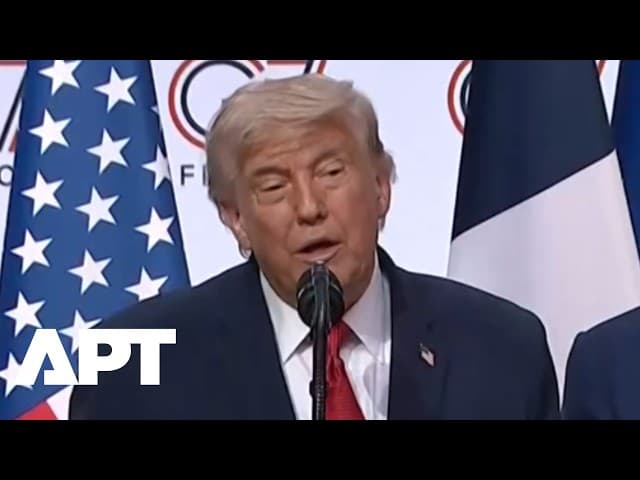
In a notable foreign policy signal, **former President Trump’s recent State of the Union address** notably **omitted any mention of China**. A YouTube analysis titled **"Trump passes over mention of China in State of the Union address"** highlights this strategic omission. The move suggests a **shift in focus away from traditional geopolitical rivalries** towards domestic issues and other regional conflicts. Critics interpret this as an attempt to **de-emphasize the China challenge**, potentially signaling a **change in U.S. foreign policy priorities** and a possible **recalibration of U.S.–China relations**.
#### **Pentagon Push for Unrestricted AI Weapons Use**
In a startling development, the **Pentagon has demanded the authority to deploy artificial intelligence (AI) weapons without restrictions**. According to *Sharad Swaney*, director of the *Centered America* project, **"There’s a lot unfolding right now, including a striking admission by officials that AI weapons should be used freely in conflict zones."** This **push for unregulated AI military technology** raises profound **ethical, strategic, and oversight concerns**.
Military experts warn that **unrestricted AI weapons deployment** could **accelerate conflicts**, **reduce accountability**, and **increase the risk of unintended escalation**. Civil-military advocates and human rights groups urge **strict oversight and international treaties** to prevent an unchecked arms race in autonomous weapons.
---
## **Current Status and Implications**
2024 remains a year of profound **uncertainty and transformation**. **Legal rulings upholding the independence of key institutions**—notably the **Federal Reserve and judiciary**—are vital for **economic stability**. However, **federal efforts to control elections**, **criminalize dissent**, and **expand law enforcement powers** threaten **democratic integrity** and **public trust**.
On the international front, **diplomatic efforts with Iran**, **support for Ukraine**, and **regional conflicts in the Middle East** and **Arctic** highlight a landscape fraught with **strategic risks**. The **erosion of arms control agreements** and **advancements in cyber and space warfare** further underscore the **fragility of global stability**.
Meanwhile, **public activism and protests continue to demonstrate resilient civic engagement**. The **mass gatherings in the Czech Republic**, emphasizing a global resistance to authoritarian tendencies, underscore that **the fight to uphold democracy remains vibrant**.
As policymakers grapple with **domestic legal battles**, **international diplomacy**, and **technological challenges**, the choices made this year will **shape the resilience of American democracy** and **the stability of global order** for years to come. Vigilance, strategic diplomacy, and unwavering commitment to democratic values are essential to navigating this complex era.