# Advances in Architectures, Memory, World Models, and RL for Embodied Long-Horizon Multimodal Agents in 2026
The field of embodied long-horizon multimodal agents has reached a new zenith in 2026, driven by a confluence of technological innovations, standardization efforts, and practical deployments. These systems now demonstrate unprecedented capabilities in reasoning, planning, and acting across multi-year timelines within complex, real-world environments. This evolution signifies a paradigm shift from reactive, short-term systems to trustworthy, long-term collaborators capable of sustained multi-modal understanding and decision-making.
## Building a Resilient Ecosystem: Industry Standards, Infrastructure, and Safety
A cornerstone of this progress is the maturation of **industry-wide standards and robust infrastructure** that facilitate multi-year deployment, interoperability, and safety:
- **Standardization and Protocols:** The **NIST “AI Agent Standards Initiative”** has established foundational frameworks that define secure, robust communication channels among diverse multimodal and embodied agents. These standards are crucial for enabling **long-term collaboration**, allowing agents to **negotiate, adapt**, and **coordinate** over extended periods. Dr. Jane Doe from NIST highlights, “Standardization acts as the backbone for trustworthy AI, enabling systems to reliably work together across extended timelines.”
- **Semantic Negotiation Frameworks:** The **Symplex protocol**, an open-source framework supporting **multimodal semantic negotiation**, has become instrumental for **decentralized coordination**. It allows heterogeneous agents to **dynamically reconfigure roles and objectives** based on environmental feedback—vital in applications like **smart city management**, where stability and adaptability over years are paramount.
- **Simulation Worlds and Infrastructure:** Industry leaders such as **Tripo AI** have pioneered **persistent, high-fidelity simulation environments** that mirror real-world complexity over multi-year timelines. These platforms serve as **training and testing grounds** for embodied agents, especially in **urban planning**, **autonomous robotics**, and safety-critical domains.
- **Media Synthesis and Visualization:** Breakthroughs like **Seedance 2.0**—a media synthesis system capable of long-form media generation—support **multi-year storytelling, scientific visualization**, and **creative projects**. These tools facilitate **long-term scientific research**, **education**, and **entertainment**, enabling a richer, more immersive understanding of complex scenarios.
- **Data Governance and Ethics:** Companies like **Palantir** have introduced innovative data infrastructure solutions, such as the **"Data Layer,"** designed to uphold **Right to Erasure** while maintaining data integrity. As one article states, “Palantir built a data infrastructure that even the Right to Erasure can't touch,” emphasizing the importance of **ethical data management** for long-term system trustworthiness.
- **Open-Source Ecosystem:** The proliferation of **open-source tools** accelerates innovation, enabling researchers and developers to build, test, and deploy long-horizon multimodal agents with greater transparency and safety. This collaborative ecosystem fosters rapid iteration and shared standards.
## Technical Foundations: Memory, World Models, and Long-Context Processing
Central to these advancements are **state-of-the-art memory architectures**, **attention mechanisms**, and **causal world models** that support multi-year reasoning and planning:
- **Persistent Memory Architectures:** Systems like **LatentMem** now empower agents to **store, retrieve, and update** vast amounts of multi-modal data continuously over years. This persistent knowledge base enhances **trustworthiness** by allowing agents to **build on prior experiences** without catastrophic forgetting.
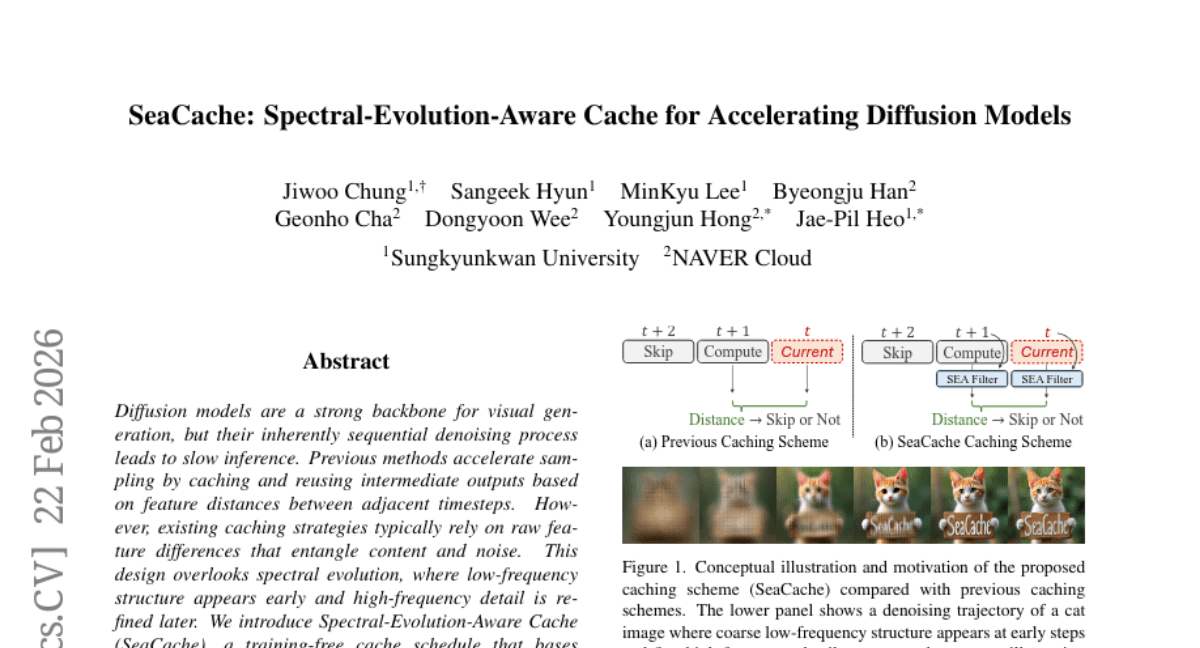
- **Handling Extended Contexts:** Techniques such as **SeaCache**—a **Spectral-Evolution-Aware Cache**—and **SLA2**—a **hybrid sparse attention** mechanism—have significantly increased **context length capabilities**. Models can now process **hundreds of thousands to millions of tokens**, supporting **strategic planning**, **long-form narratives**, and **environmental understanding** over multi-year horizons.
- **Object-Centric and Causal World Models:** Models like **Causal-JEPA**, **Olaf-World**, and **SAGE** embed **causal reasoning** at the **object level**. These models facilitate **predictive control**, **long-term environment modeling**, and **zero-shot transfer** across domains. For instance, **causal inference** enables agents to **reason about the long-term consequences** of their actions within complex, dynamic environments.
- **Media and Diffusion Models:** The resurgence of **VAE + diffusion models** has expanded **hours- or days-long media synthesis**, supporting **long-form storytelling**, **scientific visualization**, and **creative workflows** that extend over years. These models are increasingly integrated into **scientific research**, **education**, and **entertainment** pipelines.
## Embodied Control, Cross-Modal Transfer, and Sectoral Impact
The integration of **structured latent spaces**, **object-level models**, and **causal inference** has propelled **embodied long-horizon control** forward:
- **Perception-Action Loops:** Robots and virtual agents now **perceive complex, dynamic environments**, manipulate objects, and **plan multi-year actions**. For example, autonomous systems are managing **urban infrastructure**, **warehouse operations**, and **environmental conservation projects** over extended durations.
- **Cross-Modal and Multi-Modal Reasoning:** Architectures like **ERNIE 5.0** and **UniReason** support **long-term planning**, **hypothesis testing**, and **knowledge transfer** across modalities and environments. This facilitates **skill transfer** between physical and virtual domains, enhancing **adaptability**.
- **Tactile and Physical Reasoning:** Tools such as **TactAlign** have accelerated **tactile skill transfer**, allowing robots to **perform delicate manipulations** based on rich historical interaction data—crucial for autonomous agents operating in unstructured, real-world scenarios.
### Sectoral Transformations
These technological strides are reshaping various sectors:
- **Healthcare:** Multi-year AI systems now enable **long-term patient management**, **diagnostics**, and **personalized treatment plans**, with improved safety and explainability.
- **Urban Planning and Environment:** Persistent world models support **multi-year environmental simulations**, assisting policymakers in **sustainable urban development** and **climate mitigation**.
- **Scientific Research:** Long-term simulation tools facilitate **multi-year experiments** in **climate science**, **materials research**, and **biomedicine**, accelerating **discovery and innovation**.
- **Media and Creative Industries:** Extended media synthesis supports **multi-year storytelling**, **educational content**, and **scientific visualization**, fostering deeper engagement and understanding.
## Recent Developments and Emerging Capabilities
Several notable recent initiatives have pushed the frontier:
- **Trace** has raised **$3 million** to address the **AI agent adoption problem in enterprise**, focusing on deploying long-horizon agents at scale in real-world settings. This funding underscores industry confidence in these long-term systems.
- **IronClaw**, an **open-source, secure alternative to OpenClaw**, emphasizes **security and credentials management** for agent tooling, addressing vulnerabilities like **prompt injections** and **API key theft**—crucial for safe deployment over years.
- The **DROID Eval** framework, exemplified by **CoVer-VLA**, has demonstrated **14% gains in task progress** and **9% improvements in success rates**, providing **robust benchmarks** for evaluating and verifying long-horizon embodied systems.
- **GUI-Libra** introduces **training paradigms** for **native GUI agents** that reason and act with **action-aware supervision** and **partially verifiable RL**, enhancing **interface understanding** and **control** capabilities for long-term embodied agents.
- **SeaCache** offers a **spectral-evolution-aware cache** that accelerates diffusion models, supporting **long-duration media synthesis** necessary for multi-year visualization and storytelling.
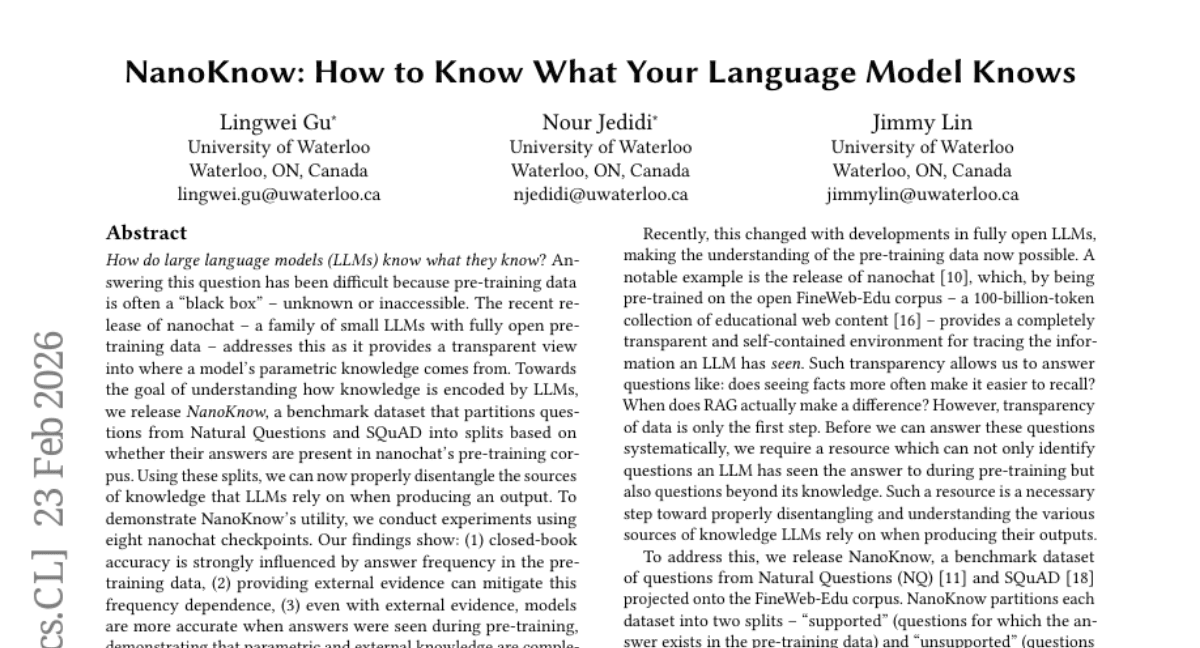
- **NanoKnow** adds **methods for understanding and introspecting** model knowledge, complementing persistent memory and world modeling efforts, fostering **transparency** and **explainability** essential for long-horizon deployment.
## Challenges and the Path Forward
Despite these remarkable advances, ongoing challenges include:
- **Data Provenance and Ethics:** Incidents such as **Anthropic’s public disputes** over unauthorized data use highlight the importance of **transparent, auditable datasets**. Ensuring **ethical sourcing** and **clear attribution** remains critical for societal trust.
- **Regulatory Frameworks:** Governments and organizations like the **OECD** are developing **dataset licensing standards** and **evaluation protocols** to regulate long-term AI deployment, emphasizing **privacy**, **accountability**, and **standardization**.
- **Safety and Explainability:** Tools like **THINKSAFE**, **AgentDoG**, and **NeST** are advancing **formal verification** and **explainability** for complex, long-horizon behaviors—vital for deploying agents in **safety-critical** environments.
- **Interoperability and Robustness:** Ongoing efforts focus on **standardized protocols** and **modular architectures** to ensure **interoperability**, **fault tolerance**, and **adaptability** against unforeseen environmental or adversarial challenges.
## Current Status and Outlook
As of 2026, the confluence of **advanced architectures**, **persistent memory systems**, **causal world models**, **long-context attention mechanisms**, and **rigorous safety frameworks** has created a **resilient ecosystem** capable of supporting **embodied, long-horizon multimodal agents** operating reliably in real-world contexts. These agents are increasingly **integrated into societal infrastructure**, performing **multi-year tasks** with **trustworthy, explainable behaviors**.
Looking ahead, the focus will likely intensify on **ethical governance**, **data transparency**, and **interoperability**, ensuring these powerful systems serve societal needs responsibly. The development of **long-term simulation environments**, **media synthesis tools**, and **causal reasoning models** promises to unlock new horizons in **scientific discovery**, **urban development**, **healthcare**, and **creative industries**.
In sum, **2026** marks a pivotal year where **technological innovation** and **regulatory maturity** are converging to make **embodied long-horizon multimodal agents** a tangible, trustworthy reality—fundamentally transforming how AI interacts with, understands, and enhances human life over extended durations.