# The 2026 Evolution of Creator Taxation: Legal Nuance, Policy Turmoil, and Enforcement Challenges
The digital creator economy in 2026 stands at a pivotal juncture, with legal clarifications, contentious policy debates, and complex enforcement landscapes shaping its future. As creators, platforms, governments, and regulators navigate this multifaceted terrain, recent developments underscore the necessity for adaptive strategies, technological innovation, and balanced reforms that promote fairness, sustainability, and societal cohesion.
---
## Legal Milestone: The Fifth Circuit’s Nuanced Approach to Creator Income
A landmark legal ruling by the **Fifth Circuit Court of Appeals** this year has significantly reshaped how creator earnings are classified for tax purposes. Moving away from broad, blanket categorizations that labeled all online income as **self-employment**, the court adopted a **case-by-case analysis** that recognizes the diversity of creator revenue streams.
### Core Elements of the Court’s Framework
- **Differentiation of Income Sources**:
The court emphasizes distinguishing **active earnings**—such as tips, direct sales, and live-stream donations—from **passive income** like **royalties**, **licensing fees**, and **cryptocurrency gains**. This nuanced approach enables more precise tax treatment aligned with each income's nature.
- **Contractual and Platform Factors**:
The ruling considers **specific agreements** between creators and platforms, as well as **platform policies**, which influence income characterization. For instance, a creator’s contractual relationship may determine whether earnings are treated as business income or passive royalties.
- **Origin and Nature of Revenue**:
Special attention is given to **cryptocurrency transactions** and **licensing deals**, acknowledging their unique legal and tax implications. For example, crypto tips or NFT royalties may be treated differently from traditional earned income.
**Legal scholar Dr. Emily Carter** remarked:
> *"This decision marks a **paradigm shift toward more precise legal interpretations**. Blanket assumptions no longer suffice in the multifaceted digital economy."*
### Implications for Stakeholders
- **Creators and Freelancers**:
Now have **greater agency** to **contest or renegotiate** how their income is classified, especially concerning **passive royalties** and **crypto earnings**. This could potentially **lower their tax liabilities** and **encourage diversified monetization strategies**.
- **Tax Authorities (IRS)**:
Must **update enforcement strategies**, develop **sector-specific guidelines**, and **target audits**—particularly in areas like **cryptocurrency activities**, **licensing revenues**, and **passive streams**—to promote **fair compliance**.
- **Platforms** such as **Twitch**, **OnlyFans**, and **YouTube** are now tasked with **revising income reporting systems** and **contractual structures** to align with this legal interpretation, requiring operational adjustments and clearer reporting protocols.
This legal clarification reflects a broader recognition of **the diversity of creator income sources**—from **active content creation** to **passive royalties**, **cryptocurrency earnings**, and **licensing deals**—and signals a move toward **sector-specific regulatory approaches** that prioritize **clarity**, **fairness**, and **flexibility**.
---
## Contentious Policy Debates: Sector- and Morality-Driven Levies and State Initiatives
Alongside legal shifts, governments worldwide are embroiled in **heated debates over sector-specific taxes**, often motivated by **societal values, morality**, and **fiscal needs**. The focus on **taxes targeting platforms hosting adult or morally sensitive content**, such as **OnlyFans**, has ignited controversy around **free speech**, **content diversity**, and **regulatory fairness**.
### Drivers Behind Sector-Specific Taxes
- **Revenue Generation**:
Policymakers aim to **capture new revenue streams** within **creator platforms** to **offset declining traditional tax bases**, viewing **sector-specific levies** as tools to **close loopholes** and **fund social programs**.
- **Moral and Societal Concerns**:
Certain states advocate **higher levies on explicit-content platforms** citing **public decency**. These initiatives raise **free speech debates** and **content diversity concerns**, complicating legislative efforts.
- **Evasion and Compliance**:
Many creators operate through **informal channels**, **offshore accounts**, or **decentralized platforms**. **Targeted levies** are viewed as mechanisms to **encourage reporting** and **reduce evasion**.
### Recent State-Level Initiatives and Legislation
- **Washington State**:
The **Senate approved a new tax on personal income exceeding $1 million**, primarily targeting high-earning creators. Senate Majority Leader **Jamie Pedersen** emphasized **fair contribution** from top earners, while **Governor Bob Ferguson** expressed reservations, warning that the proposal is **not yet finalized**.
- **Georgia**:
Proposed legislation offers a **$100,000 income tax-free threshold** for small creators, aiming to **support local creative industries** and **ease tax burdens** on small-scale entrepreneurs.
- **South Carolina**:
Implemented **property tax reductions** on **content creation equipment** and offers **educational workshops** to help creators understand **tax obligations**, fostering **local innovation** and **support networks**.
- **Kansas**:
Legislation seeks to **limit property tax hikes to a maximum of 3%**, particularly benefiting creators owning property or equipment, aligning with efforts to **provide tax relief** and **encourage economic development**.
### Recent Policy Remarks
**Governor Bob Ferguson** has articulated a cautious stance:
> *"The proposed millionaires’ tax is **not close** to what I want,"* Ferguson stated, emphasizing **fair contributions** but warning against **overly broad taxation** that could **stifle growth**. He stressed that **any revenue** should **support working families** and **small businesses**—including creators—without **overburdening** them.
### Additional Targeted Measures
- **Mileage Tax (AB1421)**:
Introduces a **per-mile fee** for gig workers and creators relying on vehicles, which could **reduce mileage deduction benefits** and **add administrative burdens**. Aims to **modernize revenue streams** and **address urban congestion**, but complicates **tax planning**.
- **Property Tax Caps in Kansas**:
Efforts to **limit property tax increases** seek to **ease burdens** on property owners, including content creators with real estate holdings, fostering **economic stability**.
---
## Enforcement Landscape: Fragmentation, Crypto, Offshore Challenges, and Limited Resources
The **decentralized** and **multi-platform** nature of the creator economy presents **significant enforcement hurdles**. Income streams are **spread across TikTok, Twitch, Patreon**, cryptocurrencies, offshore accounts, and informal payments, complicating **monitoring**, **verification**, and **compliance efforts**.
### Major Challenges
- **Fragmented Income Sources**:
Multiple channels make **comprehensive oversight difficult** and create **blind spots** for enforcement agencies.
- **Crypto and Offshore Transactions**:
The rise in **cryptocurrency tips**, **NFT royalties**, and **offshore banking** offers **privacy protections** and **evasion avenues** for income concealment.
- **Evasion Tactics**:
Creators utilize **privacy tools**, **offshore accounts**, or **informal payments** to **avoid detection**, increasing enforcement complexity.
### Technological and Administrative Responses
- **Platform Reporting & Withholding**:
Governments are increasingly **mandating platforms** to **report earnings directly** to tax authorities, inspired by frameworks like **FATCA**, to **enhance transparency** and **reduce evasion**.
- **Enhanced IRS Infrastructure**:
The IRS has **upgraded its Digital Tax Pro Account**, featuring **automated calculations**, **user-friendly interfaces**, and **direct communication channels** with creators.
- **AI and Blockchain Forensics**:
Authorities leverage **AI-powered transaction analysis** and **blockchain tracking** to **detect unreported income** and **verify crypto activities**, viewing these as crucial tools in **closing evasion loopholes**.
### Resource Constraints and Opportunities
Despite technological advances, **limited staffing and resources** remain major barriers. The IRS reportedly operates with **only about 2% of the staffing needed**, especially during the **2026 tax season**, hampering **audit capacity** and **enforcement reach**. This creates **safe havens** for non-compliant creators.
However, investments in **digital infrastructure**, such as **platform reporting systems** and **AI forensics**, are viewed as **vital**—but require **sustained funding** and **political support**.
---
## Broader Policy Environment: Deregulation and the IDEA Report
The **Initiative for Deregulation and Administrative Efficiency (IDEA)** released its **third progress report**, emphasizing **deregulation**, **digital infrastructure expansion**, and **streamlining administrative processes**.
### Key Highlights
- **Reduced Regulatory Burdens**:
Significant reductions in **bureaucratic hurdles** aim to **accelerate innovation** and **lower compliance costs** for creators and platforms.
- **Enhanced Digital Infrastructure**:
Initiatives include **platform reporting systems**, **automatic compliance tools**, and **transparency measures** designed to **improve oversight** while **reducing enforcement costs**.
- **Policy Recommendations**:
Advocates for **further deregulation** where **self-regulation** and **technology-driven compliance** are sufficient, promoting **market flexibility** and **growth**.
### State-Level Experiments
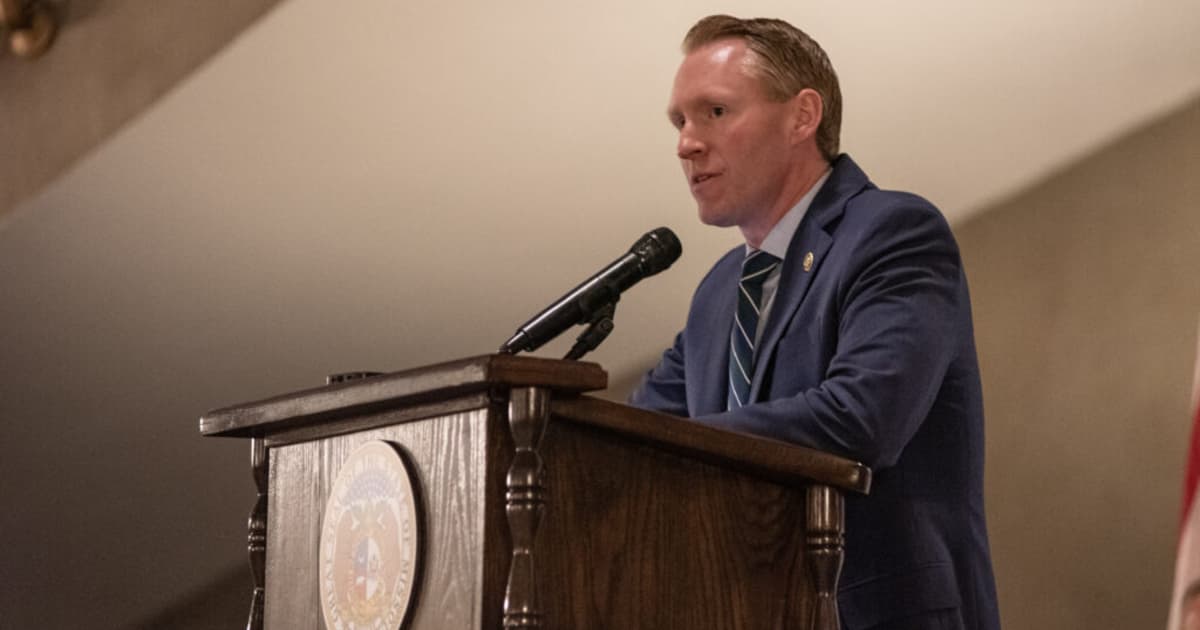
States like **Missouri** are experimenting with **investment funds** designed to **eliminate all state taxes** by allocating **public funds** into a **state-backed investment vehicle**. The goal is to **attract investment** and **stimulate economic growth**, potentially **eliminating state income and property taxes** over time.
---
## Practical Guidance for Creators and Small Businesses
In this evolving environment, creators should:
- **Maintain meticulous records** of all income sources—including platform payouts, tips, cryptocurrencies, and informal payments.
- **Utilize legal entities** such as **LLCs** to **optimize tax strategies**.
- **Consult experienced tax professionals** familiar with **digital income streams** and **recent legal rulings**.
- **Stay informed** about **platform reporting mandates**, **cryptocurrency regulations**, and **legislative changes**.
- **Implement accurate reporting practices** to avoid penalties, especially regarding **crypto** and **royalties**.
Leveraging **tax planning tools** like **bonus depreciation** can help **reduce taxable income**, while resources such as **Tom Wheelwright’s guidance** offer valuable insights for **maximizing tax benefits**.
---
## New Contexts and Developments
### The One Big Beautiful Bill Act (OBBBA)
Recent **tax policy research** introduces the **One Big Beautiful Bill Act (OBBBA)**, a legislative proposal aimed at **streamlining the federal tax code**. As analyzed by **Tax Foundation experts**, OBBBA seeks to **simplify compliance**, **close loopholes**, and **enhance fairness**, which could significantly impact creator taxation by **clarifying rules** and **reducing administrative burdens**.
### The Federal 'War on Fraud'
President **Donald Trump** has **officially declared a "war on fraud"**, with **Vance leading efforts** to **crack down on tax evasion** and **financial crimes**. This intensified focus is especially directed at **cryptocurrency evasion**, **offshore accounts**, and **large-scale fraud schemes** that threaten the integrity of the tax system. For creators, this signals a **greater likelihood of audits** and **stringent enforcement measures**, aligning with **rhetoric from the recent State of the Union**, where efforts to strengthen **fiscal oversight** are emphasized.
---
## Current Status and Future Outlook
The creator economy in 2026 operates within a **complex, multi-layered regulatory environment**. The **Fifth Circuit’s legal clarification** provides **greater certainty** for income classification, while **state-level initiatives**—such as **Washington’s millionaire tax**, **Kansas’s property cap**, and **AB1421’s mileage tax**—highlight ongoing attempts to balance **fiscal needs** with **support for the creative sector**.
Despite advances in **technology** and **legal clarity**, **enforcement capacity** remains a significant challenge due to **resource constraints**. Addressing this gap will require **continued investment in digital infrastructure**, **cross-sector collaboration**, and **innovative regulatory approaches**.
**In sum**, 2026 marks a transformative year where **legal nuance**, **societal debates over morality-based levies**, and **technological innovation** converge. The future of the creator economy hinges on **resilience**, **transparency**, and **fair policies**—aimed at fostering **sustainable growth**, **free expression**, and **equitable taxation**—so that this vibrant sector can thrive amid societal expectations and rapid technological change.