# The 2026 Landscape of Trustworthy Autonomous Agents: Breakthroughs in Benchmarking, Verification, Control, Security, and Industry Innovation
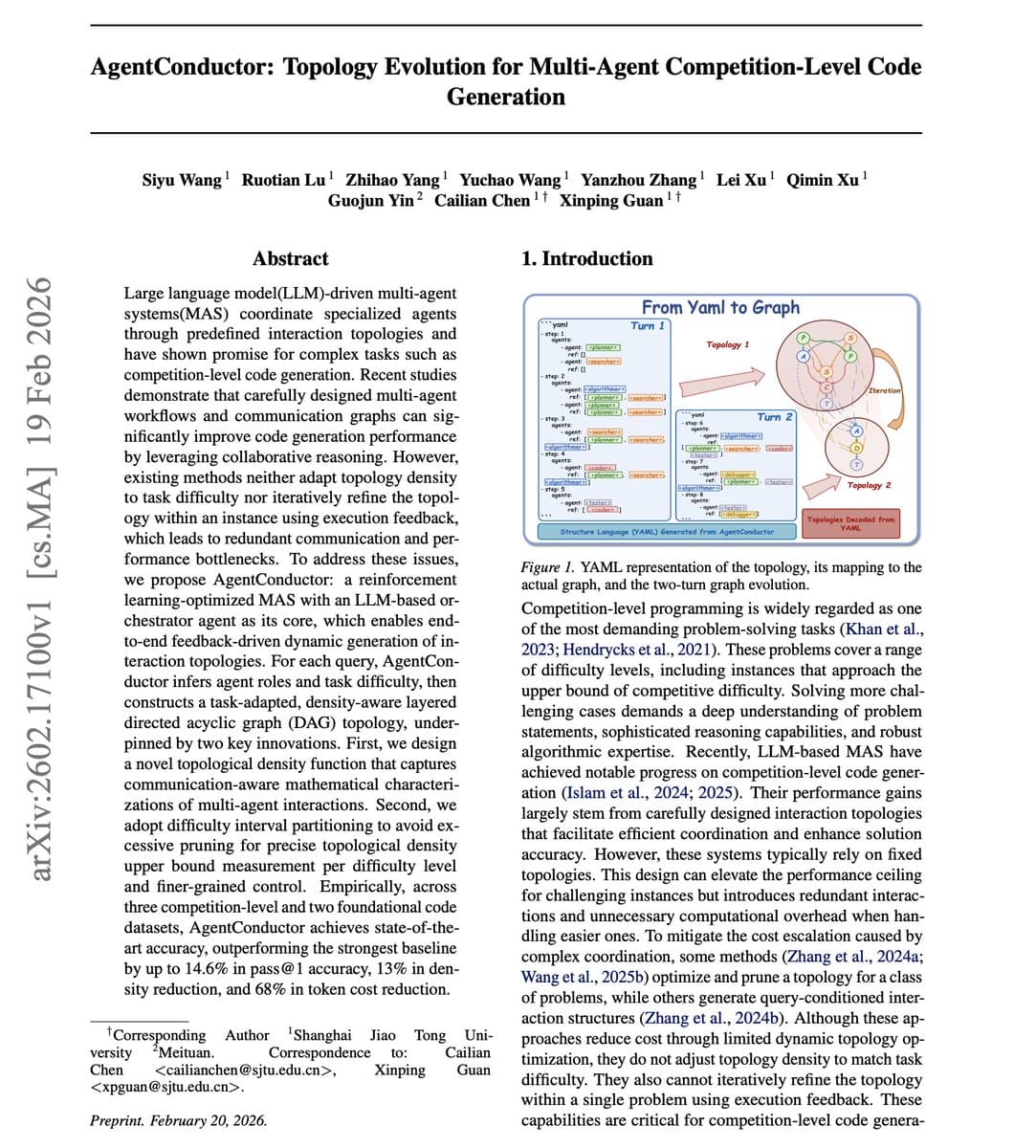
As 2026 unfolds, the pursuit of **trustworthy autonomous agents** has reached a new zenith, driven by unprecedented technological advances, strategic investments, and a steadfast commitment to safety, reliability, and security. The past year marks a pivotal point where **interdisciplinary innovations**—spanning benchmarking, formal verification, reinforcement learning (RL) control, security tooling, hardware infrastructure, and embodied AI—are coalescing to create systems that are **not only powerful** but also **interpretable, dependable, and aligned** with societal values.
This comprehensive evolution reflects a **multi-layered ecosystem**—one emphasizing **rigorous evaluation metrics**, **mathematical safety guarantees**, **predictable control paradigms**, and **resilient security infrastructures**—each essential for deploying autonomous agents in **high-stakes domains** such as healthcare, defense, transportation, scientific research, and industrial automation.
---
## 1. Reinforcing Foundations: Expanding Benchmarking and Multimodal Evaluation
Benchmarking remains the backbone for measuring progress toward **trustworthy AI**, and 2026 has seen remarkable developments that deepen its scope:
- **Enhanced Multimodal Datasets & Metrics:** Building on prior initiatives like @AnthropicAI’s **AI Fluency Index**, the year has introduced **complex, scientific, and reasoning benchmarks**, extending evaluation into **multimodal terrains**. Notably:
- The emergence of models like **JavisDiT++**, a **joint audio-video generative system**, exemplifies advances in **synchronized perception and communication**, critical for **multimedia interaction**.
- The **DeepVision-103K** dataset broadens evaluation to include **visual, textual, and mathematical reasoning**, vital for **medical diagnostics**, **autonomous navigation**, and **scientific discovery**.
- Platforms such as **ResearchGym**, **SciAgentGym**, and **Gaia2** facilitate **long-horizon scientific reasoning**, **hypothesis testing**, and **procedural planning**, supporting **autonomous scientific research** and **decision-making**.
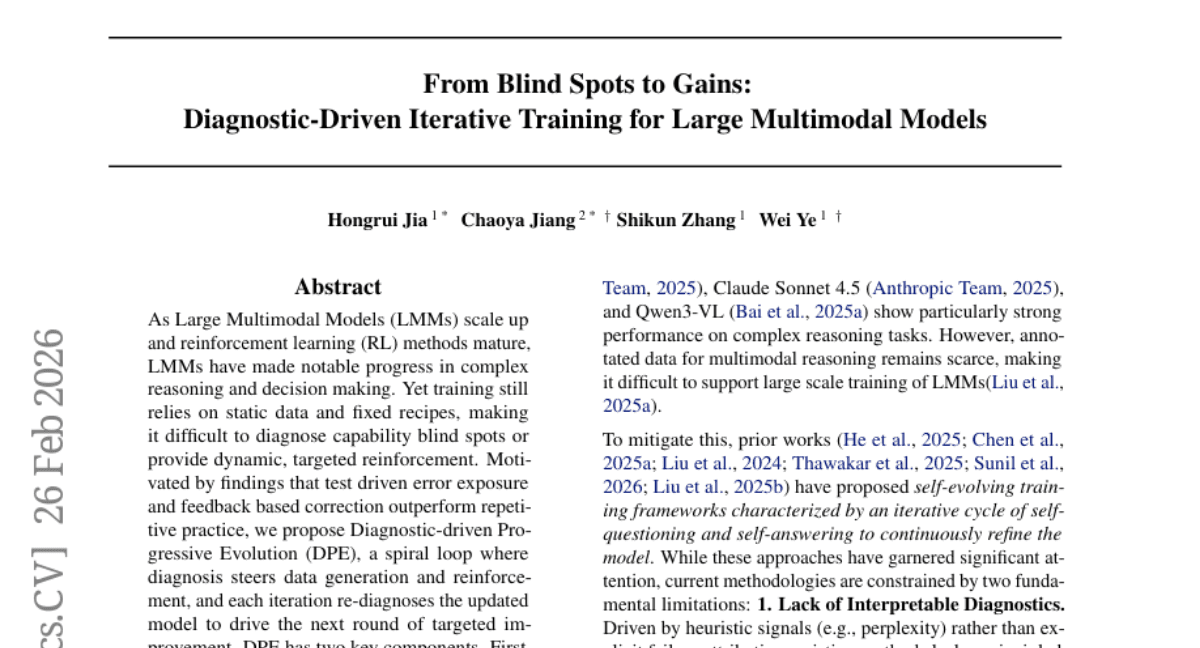
- **Addressing Hallucination & Improving Recall:** One persistent challenge—**factual hallucination**—is actively mitigated through **new metrics like N11**, which focus on **memory robustness** and **hallucination reduction**. These metrics enhance **recall accuracy** during multi-turn interactions, increasing **trustworthiness** in real-world systems.
- **Refined Tool Integration & Protocols:** The **Model Context Protocol (MCP)** has been refined to **better encode tool descriptions** and **improve agent efficiency**, enabling **more reliable and resource-effective task execution**.
**Industry efforts** emphasize **multi-tool integration** and **multimodal reasoning**, recognizing that **comprehensive benchmarking** is essential for **measuring progress** and **accelerating development** toward **trustworthy, capable agents**.
---
## 2. Formal Verification & Risk Management: Building Certainty
While benchmarks define **what AI systems can achieve**, **formal verification** provides **mathematical guarantees** necessary for **safety and correctness**:
- **Industry Standards & Frameworks:**
- **TLA+** remains the **industry standard** for **formal specifications**, enabling developers to **prove adherence** to safety constraints and **prevent unintended behaviors**.
- The adoption of **Risk Management Framework (RMF v1.5)** across sectors—including **healthcare**, **defense**, and **critical infrastructure**—marks a **paradigm shift**. Embedding **systematic safety assurance** into AI development pipelines ensures systems **operate reliably in high-stakes environments**.
- These tools are foundational as AI transitions from **experimental prototypes** to **certified systems**, especially where **failure is unacceptable**.
---
## 3. Advances in RL Control & Predictability: Ensuring Stable, Adaptive Agents
Recent breakthroughs in **RL control techniques** are transforming **agent stability** and **predictability** in complex environments:
- **Control Paradigms & Regularization:**
- The widespread adoption of **Action Jacobian penalties** has **smoother control policies**, reducing **erratic behaviors**.
- Frameworks like **VESPO (Variational Sequence-Level Soft Policy Optimization)** address **training stability** in large-scale RL, enabling **robust, multi-step policies** suitable for **high-stakes applications**.
- **Real-Time Perception & Decision-Making:**
- The **"Fast-ThinkAct"** paradigm, showcased at **#CVPR2026**, demonstrates **rapid perception-to-action cycles**. Autonomous vehicles, robots, and virtual assistants benefit from **swift reassessment and adaptation** in **dynamic scenarios**.
- **Diversity & Uncertainty Handling:**
- Techniques such as **Diversity Regularization**, including **Dual-Scale Diversity Regularization (DSDR)**, improve **sample efficiency** and **policy robustness**, empowering agents to **navigate uncertainty effectively**.
These advances are **crucial** for **behavioral predictability** and **appropriate responsiveness** in **real-world environments**.
---
## 4. Security Tooling & Defenses: Fortifying Against Adversarial Threats
As AI systems become **integral to critical infrastructure**, **security tooling** has taken center stage:
- **Threat Landscape & Risks:**
- **Model extraction attacks**, especially through **distillation techniques**, threaten models involved in **content generation** and **decision-making**.
- **Adversarial content manipulation**—such as **visual memory injection** and **API exploitation**—poses risks to **system integrity**.
- **Innovative Defensive Tools:**
- **Cryptographic watermarking** methods like **PECCAVI** embed **verifiable signatures** into generated media, aiding **content authentication** and combating **misinformation**.
- **ReIn ("Reasoning Inception")** strengthens **error detection** during reasoning processes, enhancing **system reliability**.
- Industry leaders such as **Palo Alto** (via **Koi**) and **ServiceNow** (through **Armis**) are integrating **comprehensive security infrastructures** focused on **attack detection**, **runtime integrity**, and **credential security**.
- Emerging solutions like **CanaryAI** and **keychains.dev** monitor **threats in real-time** and **secure credentials**, establishing a **resilient defense ecosystem**.
These tools **fortify AI systems** against **adversarial exploits**, ensuring **content authenticity**, **system integrity**, and **public trust**.
---
## 5. Infrastructure & Hardware: Scaling Trustworthy AI
The backbone enabling these innovations continues to evolve:
- **Edge AI & Hardware Acceleration:**
- **Edge chips** such as **Taalas processors** now support **on-device inference** at **17,000 tokens/sec**, enabling **privacy-preserving** and **low-latency** applications.
- The deployment of **20,000 GPUs weekly** across regions like India, combined with **Consistency Diffusion** techniques, democratizes **AI scalability** and **reduces dependence** on centralized data centers.
- **Model Optimization & Local Retrieval:**
- Solutions like **SeaCache**—a **Spectral-Evolution-Aware Cache**—accelerate **diffusion model sampling** and **reduce compute costs**.
- **Local Retrieval-Augmented Generation (RAG)** systems such as **L88**, operating with **8GB VRAM**, exemplify **on-device AI** that **preserves privacy**, **reduces latency**, and **minimizes reliance on cloud infrastructure**.
These infrastructural advances are **critical** for **scaling trustworthy agents** across diverse settings, ensuring **security**, **efficiency**, and **accessibility**.
---
## 6. Embodied Agents & World Models: Toward Human-Like Interaction
A **major frontier** remains in developing **embodied, spatially-aware agents** capable of **natural, human-like interaction**:
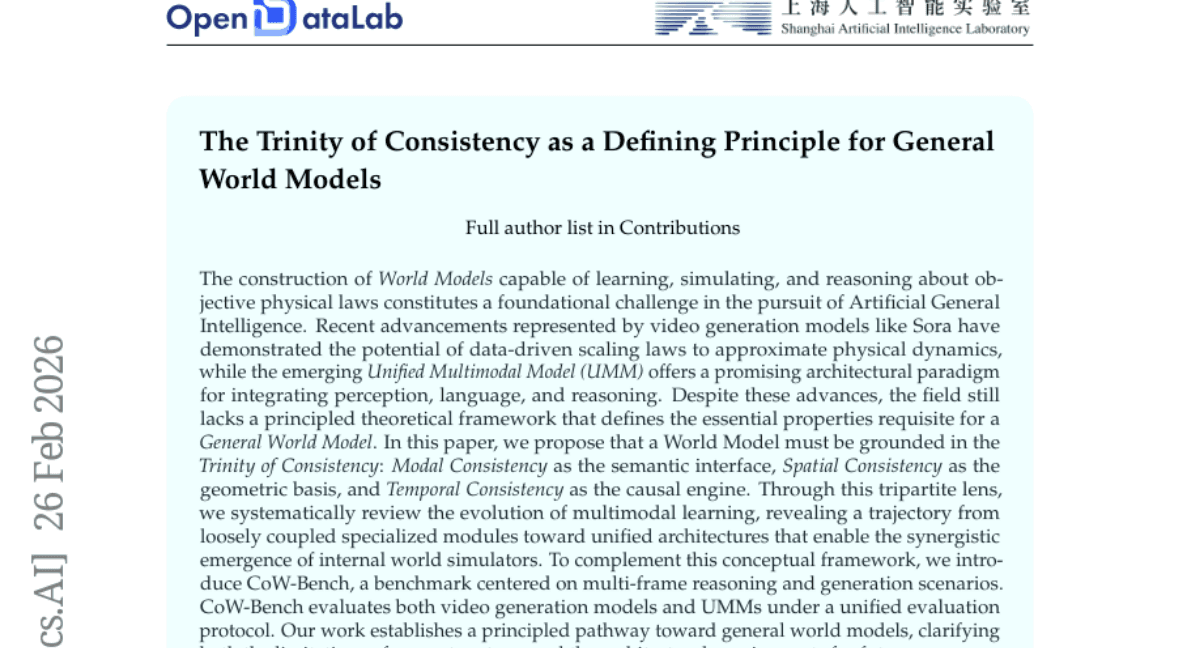
- **Virtual Environments & Scene Generation:** Technologies like **Generated Reality** and **interactive 4D scene generation** enable **controllable virtual worlds** for **training** and **testing**.
- **Spatially-Aware Frameworks:** The **SARAH (Spatially Aware Real-time Agentic Humans)** framework combines **causal transformers** with **flow matching**, enabling **spatially-aware, conversational motion**—bringing agents closer to **embodiment**.
- **Real-Time Interaction & Safety:** The **Fast-ThinkAct** approach demonstrates **swift perception-action cycles**, essential for **robotics** and **autonomous systems** operating in **dynamic environments**.
Progress in this domain aims to realize **more intuitive human-AI interactions**, **embodied safety**, and **robustness** in **complex, real-world environments**.
---
## 7. Industry Movements & Strategic Investments
The industry continues its **robust investment trajectory**:
- **@AnthropicAI**’s acquisition of **@Vercept_ai** enhances **Claude’s multimodal reasoning** and **multi-tool capabilities**.
- **Union.ai** secured **$38.1 million** in Series A funding from **GV** and **Accel**, fueling **trustworthy AI research infrastructure**.
- **MatX**, an AI chip startup, raised **$500 million** to develop **hardware supporting large language models**, challenging existing industry giants and fostering **hardware diversity**.
- **Wayve**, a UK-based **self-driving tech** company, secured **$1.2 billion** with backing from **Mercedes** and others, emphasizing **safety**, **hardware integration**, and **regulatory compliance**.
- Startups like **RoboCurate** are advancing **action-verified neural trajectories** for **robot learning**, combining **diversity-aware reinforcement learning** with **action verification** to **enhance robustness and safety**.
These investments underscore a **concerted push** to build **scalable**, **secure**, and **trustworthy AI ecosystems** seamlessly integrated into societal infrastructure.
---
## 8. New Frontiers: AI for Science & Embodied Intelligence
AI’s role in **scientific discovery** and **embodied intelligence** continues to expand:
- **Generative Physics & Scientific AI:**
- **BeyondMath**, a UK DeepTech startup, raised **€8.4 million** to **advance generative physics models**, aiming to **transform scientific simulations** and **material discovery**.
- The **AI for Science Challenge** launched by **Google.org** with **US$30 million** aims to catalyze breakthroughs in **health**, **life sciences**, and **climate science**.
- **Domain-Specific Generative Advances:**
- **MolHIT**, recently introduced, employs **hierarchical discrete diffusion models** for **molecular-graph generation**, representing a major step forward in **drug discovery** and **material design**.
- **Embodied & Adaptive Robots:**
- Funding initiatives like **X Square** support **autonomous, adaptable agents** designed for **safe and effective interaction** in complex environments.
- **Enhanced Tool Use & Verification:**
- Progression from **Codex 4.6** to **Codex 5.3** has enhanced **agentic coding**, tool use, and **verification methods**, directly influencing **system safety** and **trust**.
These efforts highlight a **synergistic relationship**—advancing **scientific AI**, **embodied agents**, and **trustworthy system design**—aiming for **more capable, reliable, and human-like AI companions**.
---
## **Current Status & Implications**
The **2026 landscape** vividly illustrates an ecosystem where **technological innovation** is **deeply intertwined** with **rigorous safety, security, and verification standards**. The convergence of **benchmarking**, **formal safety guarantees**, **advanced control techniques**, **security tooling**, and **scalable infrastructure** signifies a **mature AI environment**—one committed to **embedding trustworthiness at every level**.
The **industry’s hefty investments** and **scientific breakthroughs** set the stage for **widespread adoption** of **trustworthy autonomous agents** across critical sectors. These systems are increasingly designed for **explainability**, **resilience**, and **ethical integrity**, aligning development with societal needs.
In essence, **2026 marks a transformative moment**—where **trustworthy AI** is no longer just an aspirational goal but **a foundational element** of **technological progress**, **societal safety**, and **human-AI symbiosis**. As these systems become **more capable**, **secure**, and **transparent**, they pave the way for a future where **trustworthy AI** truly **serves humanity’s best interests**.