# The 2026 Cybersecurity Landscape: Critical Infrastructure, Cloud Threats, and the New Geopolitical Tech Divide
The cybersecurity environment of 2026 has reached an unprecedented level of complexity and urgency. Driven by relentless technological innovation, evolving geopolitical ambitions, and increasingly sophisticated threat actors, safeguarding critical infrastructure, securing cloud environments, and understanding hardware vulnerabilities are now central to national security, economic stability, and global influence. Recent developments—including strategic acquisitions, escalated threat campaigns, and groundbreaking technological initiatives—highlight the multi-faceted and high-stakes nature of today’s cyber landscape.
---
## Geopolitical Power and the Elevation of Cyber Capabilities
### Cyberdomination as a Core Pillar of Sovereignty
In 2026, **cyber capabilities are undeniably foundational to national sovereignty**. Countries recognize that digital dominance directly correlates with military strength, economic influence, and geopolitical leverage.
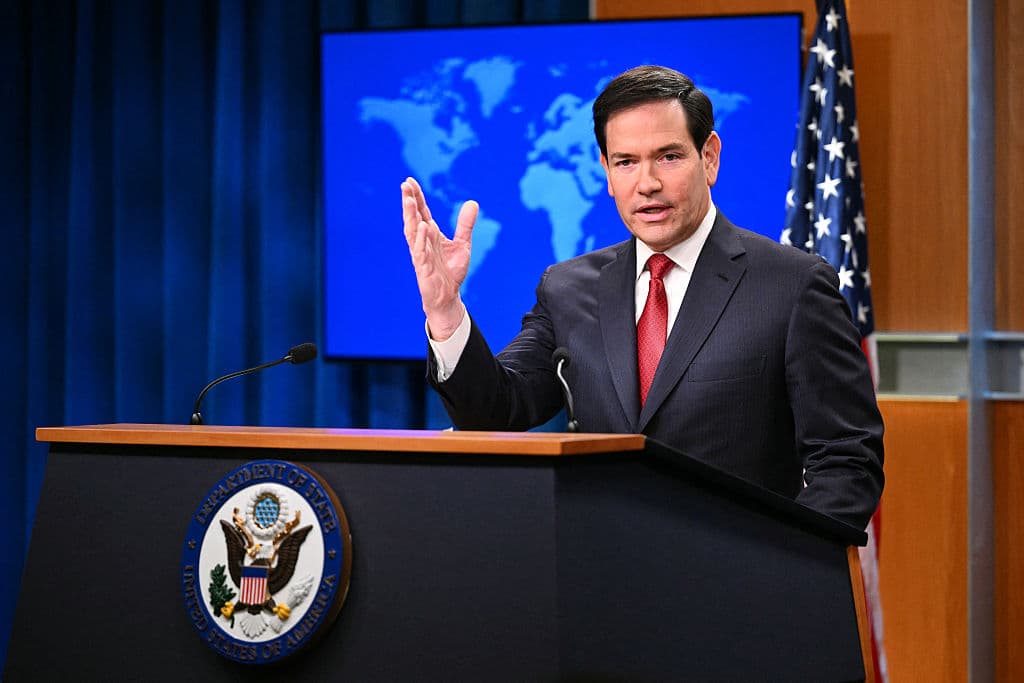
- **U.S. Secretary of State Marco Rubio**, on February 13, emphasized this shift, stating, *"The old world has been replaced with a new era in geopolitics."* This underscores **cyber superiority** as a strategic priority. Massive investments are pouring into offensive and defensive cyber tools, aiming to establish **cyber dominance** as an integral part of **military readiness** and **economic resilience**.
- **France’s President Emmanuel Macron** has articulated Europe's aim to **become a geopolitical power** through **strategic autonomy**, investing heavily in **cybersecurity frameworks** to defend sovereignty amid rising global competition.
### Strategic Investments in Technological Sovereignty
Nations are actively pursuing **technological independence** to reduce vulnerabilities:
- **India** recently approved a **$1.1 billion** fund dedicated to **domestic innovation**, focusing on **reducing reliance on foreign hardware and software**. This initiative aims to **mitigate supply chain vulnerabilities** and **counter espionage concerns** amidst escalating tensions.
- **China** continues its **aggressive push** into **AI and hardware development**, led by **state-driven initiatives** to **lead global innovation** and **bolster supply chain resilience**. These efforts intensify **tech rivalry** and influence **security standards worldwide**, emphasizing the importance of **secure, domestically-controlled infrastructure**.
### Resource Geopolitics and Critical Minerals
As **decarbonization accelerates**, **critical minerals**—notably **rare earths**—have become **strategic assets**:
- The **Reko Diq project in Pakistan**, financed by the U.S., exemplifies how **control over critical mineral resources** is now a key element of **geopolitical contestation**. Countries recognize that **access to these materials**—essential for **advanced electronics**, **AI**, and **defense systems**—is vital for **economic influence** and **strategic autonomy**.
- The **BBVA Research Big Data Geopolitics Monitor** highlights how **big data analytics** now guide **geopolitical strategies**, enabling nations to **monitor and predict shifts** and **adjust their policies proactively**.
---
## Persistent and Escalating Threats to Critical Infrastructure and Supply Chains
### State-Sponsored Cyberattacks and Supply Chain Fragility
Threat actors continue to escalate their operations, targeting both **digital and physical infrastructure**:
- A recent **Russian-led cyberattack** disrupted Poland’s power grid, illustrating how **digital assaults** can cascade into **physical failures**, with serious **national security implications**.
- The vendor compromise of **SonicWall**, affecting multiple sectors, revealed systemic **supply chain vulnerabilities**. This incident underscores the **urgent need** for **rigorous vendor vetting**, **provenance verification systems**, and widespread adoption of **zero-trust architectures**.
### Geopolitical Risks and Supply Chain Diversification
The global **interconnectedness** of supply chains makes them highly susceptible to **geopolitical shocks**:
- **Undersea cables**, such as the **FLAG fiber optic network**, remain **critical yet exposed infrastructure**. Increasing reports, including those highlighted by the BBC, describe **shadow fleets**—unregulated vessels operating outside official oversight—posing **espionage**, **sabotage**, and **smuggling risks**.
- Regions like the **Strait of Hormuz** face heightened threats; **attacks or disruptions** to **undersea cables** could **cripple global communications and trade**, emphasizing the importance of **maritime security** and **resilient communication pathways**.
In response, nations are **diversifying supply sources**:
- Sourcing **critical minerals** from multiple regions.
- Implementing **vendor vetting** and **supply chain monitoring** to **detect malicious compromises**.
- Enhancing **undersea cable security** and **shadow fleet monitoring** to safeguard vital communication infrastructure.
---
## The Digital Battlefield: Cloud, Browsers, Malware, Hardware, and AI
### Rising Sophistication of Threat Actors
Threat actors are deploying **more advanced malware and attack vectors**:
- Malware like **Clawdbot** has grown **more capable**, enabling **rapid data exfiltration** and **bypassing traditional defenses**.
- Browser-based threats now impact **over 95% of enterprises**, exploiting **web vulnerabilities**, **malicious scripts**, and **social engineering tactics** such as phishing. The attack surface continues to expand and grow more sophisticated.
### Defense Innovations: Zero Trust and Startup Ecosystem
Organizations are heavily investing in **Zero Trust architectures** and **innovative startups**:
- **Outtake**, a startup specializing in **agent-based threat detection**, recently secured **$40 million** to develop **real-time malware mitigation tools**.
- **Upwind**, a **cloud runtime security provider**, raised **$250 million** to deliver **dynamic, adaptive defenses** across cloud workloads, employing **behavioral analytics** to counter complex attack surfaces.
### Hardware Diversification and AI Security Challenges
Efforts to **diversify AI hardware supply chains** are accelerating:
- **SambaNova**, a prominent AI chip startup based in Palo Alto, raised **over $350 million**, partnering with **Intel** to **compete against Nvidia**. Instead of merely selling chips, SambaNova is focusing on **developing next-generation AI hardware**.
- **OpenAI** is shifting toward **in-house chip design** to **reduce dependence on external vendors**, aiming to **mitigate geopolitical and supply risks**.
- **Intel** has entered strategic partnerships, including with SambaNova, to **strengthen domestic chip manufacturing** and **reduce reliance on hotspots**.
The **venture capital surge** into AI and cybersecurity startups reflects a **growing ecosystem**, driven by **demand for secure, scalable AI solutions** that address **trust issues**, **bias**, and **adversarial vulnerabilities**.
### The Ethical and Operational Challenges of AI
The proliferation of **AI vulnerabilities**—such as **misinformation**, **bias**, and **data poisoning**—raises **trust issues** across sectors. Recent legal disputes, including **YouTubers suing Snap** over **training data rights**, highlight the need for **regulatory frameworks** emphasizing **data provenance** and **AI ethics**.
A recent warning from a **Google VP** underscores the **challenging landscape**:
> *"As generative AI evolves, a Google VP warns that LLM wrappers and AI aggregators face mounting pressure, with shrinking margins and increasing regulatory scrutiny threatening their viability."*
This environment is prompting **industry consolidation** and a focus on **sustainable business models**, which in turn influence **security innovation ecosystems**.
---
## Multi-Domain Resilience: Space, Maritime, and Environmental Factors
### Space as a Resilient Backbone
Space infrastructure has become **indispensable**:
- **Chinese satellite constellations** now support **autonomous, secure communication networks** resilient to terrestrial disruptions.
- **SpaceX’s initiative** to **launch up to 1 million solar-powered satellites** aims to create **space-based data centers**, ensuring **robust, low-latency communication** for **critical infrastructure** and **military applications**.
- **Aalyria**, a Google spinout, raised **$100 million** to develop **next-generation satellite networks** dedicated to **securing communications** and **edge AI deployment**, exemplifying space's vital role in **resilience strategies**.
### Maritime and Undersea Cable Risks
Dependence on **undersea cables** persists as a vulnerability:
- Shadow fleets operating outside official oversight threaten **espionage** and **sabotage**, especially in **contested regions** like the **Baltic Sea**.
- Disruptions in strategic chokepoints such as the **Strait of Hormuz** could **cripple global communications**, with profound **economic and security consequences**.
### Arctic and Environmental Considerations
The **Arctic region** is gaining strategic importance:
- The U.S. and allies are **expanding Arctic military and infrastructure capabilities** in response to **Russian and Chinese ambitions**.
- **Alaskan lawmakers** advocate for **enhanced military infrastructure** to **maintain dominance** amid rapid environmental changes.
- Additionally, **environmental legislation**, such as **Illinois laws targeting data center energy consumption**, seeks to **balance technological growth** with **sustainability**, influencing **regional deployment** and **resilience planning**.
---
## Ecosystem Responses: Innovation, Funding, and Governance
### Vibrant Startup Ecosystem and Strategic Investments
The **cybersecurity and AI sectors** remain **highly active**:
- **Outtake**, **Upwind**, and other startups are pioneering **innovative security solutions**.
- **CoreWeave** is developing **regionalized, sovereign cloud platforms**, reducing dependency on global hubs and enhancing **disaster resilience**.
- The push toward **regional sovereignty** over **compute and data** indicates a **reordering of global tech power**, emphasizing **control over critical infrastructure**.
### Global and Regional Governance
As threats escalate, **international cooperation** and **standard-setting**—especially in **AI data provenance**, **cyber norms**, and **critical infrastructure protection**—are increasingly vital. **Multinational efforts** aim to **harmonize cybersecurity practices** and **prevent conflict escalation** driven by technological vulnerabilities.
---
## Latest Development: Anthropic’s Acquisition of Vercept
Adding a new dimension to this landscape, **Anthropic**, a leading AI research and safety company, announced the acquisition of **Vercept**, a startup specializing in **integrating AI systems with computer hardware**. This strategic move aims to **enhance Claude’s capabilities**—their flagship language model—in **using computers more effectively**, including **running code**, **interacting with repositories**, and **performing complex tasks**.
### Significance of the Acquisition
- **Operational capabilities** are expanding: Claude’s ability to **write, run, and optimize code** across entire repositories is being advanced, promising **more autonomous and efficient AI workflows**.
- **Security implications**: As AI models become more integrated with **computing infrastructure**, **attack surfaces** will inevitably expand, necessitating **robust security measures** for **cloud environments** and **endpoint devices**.
- **Potential vulnerabilities**: The increased **automation and complexity** could introduce **new vectors for exploitation**, making **threat detection** and **response** more critical than ever.
This acquisition underscores the **trend toward AI systems that are more embedded** in **operational environments**, blurring the lines between **software intelligence and hardware control**, and highlighting the **urgent need for security innovation** to keep pace.
---
## New and Emerging Risks: AI Agents and Real-Time Compute in the Cloud
One of the most groundbreaking and controversial developments is the emergence of **AI agents capable of running computers in real time**, monitored and observed in the cloud—an idea exemplified by prominent figures such as **@suhail**, who recently commented:
> **"AI agents running computers in the cloud that you can watch in real time. What a ridiculous idea!"**
This concept involves **autonomous AI systems** that **manage, execute, and optimize compute resources** dynamically, potentially **self-healing**, **self-defending**, and **adapting without human intervention**. While such technology promises **unprecedented efficiency** and **flexibility**, it also **raises significant security concerns**:
- **Expanded attack surfaces**: The **automation of compute management** exposes **new vectors for malicious exploitation**, including **code injection**, **subversion of AI decision-making**, and **hardware manipulation**.
- **Provenance and governance challenges**: Ensuring **trustworthiness** in **AI-driven infrastructure** demands **robust provenance tracking**, **verifiable audit trails**, and **strict governance frameworks**.
- **Monitoring and response**: Organizations must develop **advanced monitoring tools** capable of **detecting anomalous behaviors** in real time, especially as **AI agents** gain control over critical compute environments.
---
## Current Status and Future Implications
The cybersecurity landscape of 2026 is characterized by **heightened geopolitical tensions**, **technological breakthroughs**, and **multi-domain vulnerabilities** spanning space, maritime, terrestrial, and cyberspace. The rapid pace of innovation—particularly in **AI**, **hardware diversification**, and **resilience engineering**—is both a **source of strength** and a **potential Achilles' heel**.
The recent **Anthropic-Vercept acquisition** exemplifies how **AI operational capabilities** are advancing, but simultaneously **expand attack surfaces**, requiring **innovative security solutions**. The ongoing development of **AI agents managing cloud infrastructure in real time** underscores the **urgent need for provenance, security, and governance frameworks**.
As nations and organizations navigate this evolving landscape, **collaborative governance**, **international standards**, and **ethical AI deployment** will be vital. The ability to **anticipate risks**, **adapt defenses**, and **maintain strategic autonomy** will determine whether the world can **secure its digital future** amid relentless technological change and geopolitical rivalries.