As 2026 unfolds, the accelerating convergence of **artificial intelligence (AI), automation, and global macroeconomic trends** continues to redefine the workforce and organizational ecosystems with unprecedented depth and complexity. What began as discrete AI pilots have evolved into **enterprise-wide imperatives**, embedding AI governance, culture stewardship, and human risk management at the very core of leadership agendas. This shift marks a profound transformation—not merely technological but fundamentally human-centric—where AI augments human potential while demanding rigorous ethical oversight and resilient talent strategies.
---
### HR’s Evolution: From AI Copilots to Autonomous Superagents
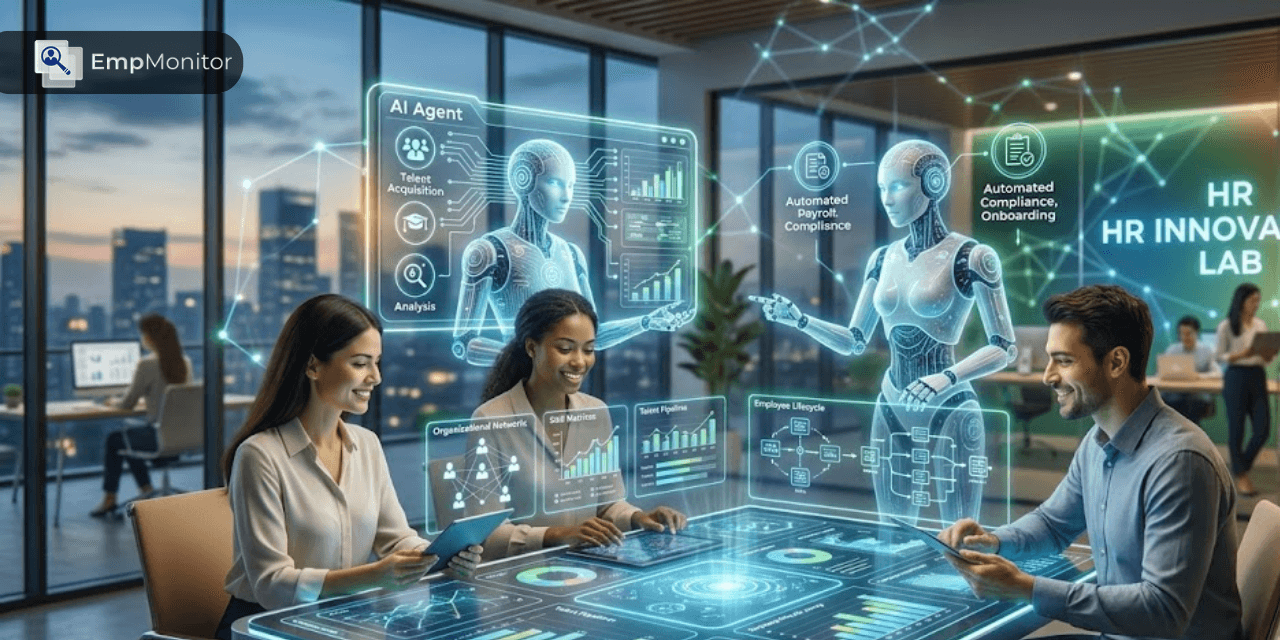
A defining trend in 2026 is HR’s strategic pivot from deploying AI as assistive copilots toward integrating **agentic AI superagents**—autonomous systems capable of making complex decisions and managing workflows with minimal human intervention. Josh Bersin’s *“Keeping One Step Ahead of AI in 2026”* underscores this shift’s transformative implications:
- **Reimagining HR Operating Models**
HR teams are redesigning end-to-end processes to incorporate AI superagents in recruiting, talent development, and employee experience management. This demands sophisticated governance frameworks that ensure AI-driven decisions uphold organizational ethics, diversity, and legal compliance.
- **Real-Time Workforce Analytics**
AI-powered analytics provide granular, real-time insights into employee engagement, performance, unconscious bias, and fatigue—enabling proactive interventions that preempt risks and foster workforce resilience. As a result, HR is evolving into a strategic orchestrator rather than a reactive service function.
- **Cross-Functional Governance Amplified**
The complexity introduced by agentic AI intensifies collaboration between Chief AI Officers (CAIOs), Chief Technology Officers (CTOs), Chief Human Resources Officers (CHROs), and Chief Culture Officers. Together, they balance AI autonomy with human oversight, ensuring transparency, accountability, and trust.
This evolution reflects a broader imperative: **hybrid human-AI partnerships** where AI enhances—but never replaces—critical human judgment and agency.
---
### Embedding Culture Stewardship and AI Governance at the Executive Core
In 2026, **culture stewardship and AI governance** have become non-negotiable C-suite priorities, signaling a maturation of organizational leadership:
- **Emergence of Specialized Leadership Roles**
The rise of Chief AI Officers, Chief Trust Officers, and Chief Culture Officers exemplifies how AI ethics, human capital strategy, and organizational values are now inseparable. OpenAI’s appointment of Arvind KC as Chief People Officer illustrates the integration of AI adoption with human risk management at the highest levels.
- **Culture as a Strategic, Measurable Asset**
Thought leaders such as Ray Kleeman emphasize institutionalizing culture alongside AI governance, recognizing culture’s vital role in maintaining psychological safety, inclusivity, and human-centered leadership amid rapid tech-driven change.
- **Investor and ESG Pressures Heighten**
Mercer’s *Global Talent Trends 2026* highlights growing investor demands for organizations to harmonize AI innovation with human capital excellence and ethical stewardship. ESG frameworks are increasingly incorporating AI governance and cultural health metrics as indicators of organizational resilience and social responsibility.
- **Integrated Governance Frameworks Gain Traction**
Industry leaders including Microsoft and Siemens embed ethics and culture metrics into executive dashboards, fostering comprehensive oversight that builds stakeholder trust and long-term enterprise value.
---
### Sectoral Workforce Dynamics: Navigating Scarcity, Displacement, and Burnout
The 2026 labor market reveals a bifurcated reality shaped by AI augmentation and automation-driven displacement:
- **Talent Scarcity in AI-Augmented Knowledge Work**
Healthcare, technology, and financial services face acute shortages of hybrid professionals adept in AI, creativity, and emotional intelligence. Institutions like the Mayo Clinic and Salesforce leverage AI-powered coaching combined with human mentorship to drive continuous reskilling, widening the divide between AI-forward leaders and lagging organizations.
- **Manufacturing and Automotive Job Displacement**
Despite proactive government interventions—such as Germany’s retraining grants and innovation subsidies—the European automotive sector reports job losses exceeding 15%, underscoring persistent regional vulnerabilities and structural shifts.
- **Accounting Sector Challenges**
Firms like Deloitte and PwC grapple with burnout, rigid career ladders, and generational workforce shifts. While AI-assisted workflows and mentoring programs alleviate pressure, systemic reforms remain essential to sustain talent pipelines and morale.
- **Precision Hiring and Upskilling as Strategic Responses**
Research from Valcon and Draup confirms that AI-driven scenario modeling and quality-focused recruitment yield superior talent alignment and competitive advantage. Google’s AI hiring assistant, for example, cut time-to-hire by 30% and enhanced retention through improved cultural fit assessments.
---
### Strengthening Workforce Resilience: Addressing Change Fatigue and Liquid Workforces
The relentless pace of AI-driven transformation imposes new demands on organizational resilience and inclusion:
- **Combating Change Fatigue**
Organizations increasingly adopt structured resilience frameworks emphasizing transparent communication, psychological safety, and continuous learning. These approaches cultivate “change-ready” teams capable of navigating ongoing disruption.
- **Managing Liquid and Hybrid Workforces**
A 2025 Forbes survey documents a 56% increase in accommodation requests and a 53% surge in leave demands linked to gig, contingent, and hybrid-remote work models. In response, firms deploy inclusive policies and AI-enabled platforms like Microsoft Viva, which deliver real-time analytics on fatigue, bias, and disengagement, enabling timely and targeted interventions.
- **Elevating Women’s and Family Health Benefits**
Mercer’s 2026 report *“The State of Women’s and Family Health Benefits”* reveals persistent access gaps despite executive recognition. Organizations investing in equitable, comprehensive benefits see improved retention, engagement, and workforce modernization.
- **Cultural Evolution Toward Human-Centric Leadership**
The *McKinsey State of Organizations* report confirms a widespread shift favoring leadership models that prioritize psychological safety, inclusivity, and belonging—cornerstones for sustaining workforce health amid AI transformation.
---
### Talent Acquisition Transformed: Generative AI, Authenticity, and Ethical Governance
Recruitment strategies are rapidly adapting to generative AI’s influence and the demand for ethical rigor:
- **Generative AI Reshapes Candidate Narratives**
The viral essay *“AI Is Killing the Cover Letter”* captures how candidates increasingly use generative AI to craft personalized, adaptive applications. This democratization challenges recruiters to develop new frameworks to validate authenticity and cultural fit.
- **Embedding Ethical Governance in Recruitment**
Experts like Nathan Mondragon advocate for continuous human oversight, algorithmic audits, and transparency to mitigate bias and uphold fairness. Accenture leads by incorporating ethics boards into AI recruitment workflows, setting industry-wide benchmarks.
- **Candidate Experience as a Differentiator**
Real-time AI-enabled feedback and seamless communication have become baseline expectations, directly influencing employer branding and talent attraction.
- **Divergent Corporate Talent Strategies**
Amazon pursues aggressive AI-driven headcount reductions, while Walmart invests heavily in hybrid AI-human roles and upskilling programs—illustrating an ongoing balancing act between cost containment and long-term workforce development.
---
### Preparing for Agentic AI: Redesigning Knowledge Management and Collaboration
The rise of **agentic AI systems**, capable of autonomous decision-making, necessitates a fundamental rethink of knowledge management and human-AI collaboration:
- **Workflow and Decision Rights Overhaul**
Enterprises redesign knowledge-sharing protocols to integrate AI collaborators, instituting new accountability frameworks and ethical guardrails, as highlighted in the *AI and KM 2026 Series*. This approach safeguards organizational integrity while unlocking AI’s decision-making potential.
- **Preventing Cognitive Surrender**
Organizations emphasize preserving human critical thinking and judgment, fostering hybrid partnerships where AI amplifies human autonomy rather than supplanting it.
---
### Scaling Frontier AI Partnerships with Accountability and ESG Alignment
As AI deployments grow in scale and complexity, governance sophistication becomes paramount:
- **Intensifying Multi-Stakeholder Collaborations**
Frontier AI developers (e.g., OpenAI), consulting firms (McKinsey, BCG, Accenture, Capgemini), and corporations collaborate closely, demanding integrated oversight spanning HR, legal, technology, and executive leadership.
- **Robust Accountability Frameworks**
Comprehensive governance models mitigate risks related to bias, operational disruption, and workforce impacts, ensuring responsible AI adoption.
- **Investor and ESG Priorities Shape AI Initiatives**
AI projects are routinely evaluated through ESG lenses, balancing innovation imperatives with social responsibility and human-centered safeguards.
---
### Addressing Governance Gaps: Analytics, HR Tech, and Leadership Stability
Despite progress, challenges persist in fully leveraging analytics and unifying HR technology:
- **Underutilization of Analytics in AI Governance**
HR Executive reports only 34% of organizations actively use analytics to monitor AI bias and compliance, exposing vulnerabilities to reputational and operational risk.
- **Fragmented HR Technology Landscape**
The February 2026 *HR Technology Trends* report highlights how siloed, poorly integrated HR systems and low adoption rates impede AI-driven workforce transformation. Experts call for **holistic, user-centric strategies** that align with business goals and employee realities.
- **Rising CHRO Turnover Reflects Escalating Pressure**
A 2025 *Human Resources Director* report documents increased global CHRO attrition, signaling the intensifying challenge of aligning AI governance with organizational culture, talent management, and strategy.
- **HR as a Strategic Orchestrator**
Thought leaders like Anthony Onesto describe HR as a “Swiss Army knife,” balancing technological innovation, financial rigor, and operational execution to drive responsible AI adoption while safeguarding workforce interests.
---
### The Imperative of Human Guardrails and Ethical AI-First Workflows
Recent analyses emphasize that AI-driven efficiency must be balanced with essential human oversight:
- The SAP report *The Road Ahead: Predictions and Possibilities for the Future of Work* stresses **people-centric leadership, inclusion, and well-being** as foundational to workforce resilience.
- Critiques such as *“Why AI-First Workflows Miss the ‘Human’ Guardrails”* warn that workflows prioritizing AI autonomy without integrated human judgment risk eroding trust, engagement, and ethical standards.
- The ongoing focus on women’s and family health benefits reflects a broader realization that workforce well-being is inseparable from organizational innovation and performance.
---
### Conclusion: Toward Ethical, Inclusive, and Trust-Centered AI-Augmented Organizations
As Johan Almqvist aptly summarizes, **“Trusted HR data governance forms the bedrock of organizational trust.”** In 2026, organizational success hinges on embracing a comprehensive, people-first paradigm that:
- Embeds AI governance and culture stewardship at the C-suite level, ensuring ethical alignment and stakeholder trust.
- Tackles sectoral labor scarcity and displacement with AI-augmented human capital strategies tailored to each industry’s realities.
- Leverages precision hiring, generative AI, and rigorous ethical frameworks to attract and retain diverse, agile talent.
- Manages liquid, dynamic workforces through inclusive policies, advanced analytics, and psychological safety frameworks.
- Prepares for agentic AI by redesigning knowledge management, decision rights, and human-AI collaboration models.
- Scales frontier AI deployments with accountability frameworks aligned to ESG and social responsibility priorities.
- Closes governance gaps through unified analytics, integrated HR technologies, and leadership stability.
- Upholds human guardrails preserving critical thinking, autonomy, and ethical standards in AI-augmented workflows.
The future of work in 2026 and beyond is **not merely automated; it is profoundly more humane**. Organizations that foster **collaborative human-AI partnerships** and anchor innovation in ethical stewardship stand best poised to thrive amid the accelerating tides of AI-driven change.