# Evolving Scrum, Kanban, and Tooling for Today’s Complex Projects in 2026
The landscape of Agile methodologies in 2026 has experienced a profound transformation, driven by rapid advancements in artificial intelligence (AI), organizational shifts toward cross-disciplinary agility, and an intensified focus on ethical AI governance. No longer confined solely to software development, Agile principles now serve as the strategic backbone of entire enterprises, fostering resilience, continuous innovation, and maintaining competitive advantage amid rising complexity, hyper-connectivity, and volatile markets. This new era is characterized by AI-augmented workflows, sophisticated tooling, and organizational practices that empower teams to navigate uncertainty with confidence—fundamentally transforming how collaboration, planning, measurement, and governance are conducted.
## AI-Driven Enterprise Agile: Revolutionizing Collaboration and Ceremonies
### AI-Powered Remote Collaboration
By 2026, **remote and hybrid work models** are standard across industries. To support seamless collaboration, organizations leverage **advanced AI tools** that automate routine yet critical tasks such as backlog refinement, capacity forecasting, risk detection, and sprint goal formulation. These systems generate **predictive insights** that enable **proactive prioritization**, facilitate **geographically dispersed team alignment**, and **reduce dependence on synchronous meetings**.
Tutorials like **"How To Create A Scrum Sprint in Jira (2026)"** emphasize **AI-assisted backlog grooming**, **automated sprint goal setting**, and **predictive capacity planning**, dramatically streamlining planning cycles. **Interactive dashboards**, **AI-moderated meetings**, and **digital whiteboards** foster **transparency**, **inclusion**, and **psychological safety**—elements critical for sustaining Agile principles remotely. Industry insights highlight that *"AI is transforming collaboration into a seamless, continuous process that adapts in real time to team dynamics."*
### Reimagined Ceremonies and Facilitation
Traditional Agile ceremonies—daily standups, retrospectives, sprint planning—have evolved into **shorter, more focused sessions**. **AI-facilitated retrospectives**, **asynchronous planning**, and **dynamic agendas** are now commonplace. Facilitators utilize **visual collaboration tools** such as **digital dashboards** and **interactive whiteboards**, often enhanced with **AI-suggested agendas** to **boost engagement** and **clarity**—especially vital for dispersed teams in maintaining momentum and psychological safety.
Resources like **"Creative Facilitation Course 4"** emphasize techniques that **foster participation**, **maintain momentum**, and **build trust virtually**. These innovations ensure Agile’s **values**—such as openness and respect—are upheld regardless of physical distance.
## Cross-Disciplinary Adoption: Agile as a Core Organizational Mindset
### Widespread Organizational Integration
A defining trend of 2026 is the **enterprise-wide embedding of Agile and Kanban practices** across diverse functions:
- **Marketing** teams now **craft user stories**, **iterate campaigns rapidly**, and **integrate continuous customer feedback**, significantly accelerating approval cycles.
- **HR departments** apply Agile techniques for **streamlining onboarding**, **fostering ongoing employee development**, and **enhancing engagement**.
- **Operations and supply chain units** leverage **Kanban boards** for **workflow management**, **resilience building**, and **service delivery optimization**.
This pervasive adoption signals a **cultural shift**: Agile is now a **fundamental organizational mindset**, promoting **flexibility**, **responsiveness**, and **collaborative innovation** across all domains.
### Visual Facilitation and Domain-Specific Practices
Facilitators increasingly rely on **digital whiteboards**, **shared dashboards**, and **interactive Kanban boards** for effective coordination across dispersed teams. These tools are often augmented with **AI-generated decision support** and **structured agendas**, enhancing **decision clarity**, **team engagement**, and **outcome-driven meetings**. Case studies demonstrate how integrating these tools within platforms like Jira transforms remote meetings into **productive, outcome-focused sessions**.
## Advanced Tooling & Measurement: From Scrum Metrics to Strategic Experimentation
### Next-Generation Agile Tools
Organizations depend on **cutting-edge tools** designed for complex, high-velocity projects. The **"Complete Kanban Guide"** showcases **dynamic, adaptable boards** that respond instantaneously to shifting priorities, supporting **real-time workflow adjustments**. The latest **Jira sprint creation walkthroughs** incorporate **AI-powered planning functionalities**, including **automated backlog refinement**, **task prioritization**, and **predictive capacity forecasting**—all aimed at **accelerating delivery cycles**.
Teams are developing **domain-specific user stories** aligned with operational contexts such as:
- **Marketing**: emphasizing **campaign management** and **content delivery**.
- **HR**: focusing on **onboarding workflows** and **employee engagement**.
- **Supply Chain**: prioritizing **process improvements** and **workflow efficiencies**.
This shared understanding enhances **holistic enterprise agility** and **reduces adoption barriers**, enabling **rapid, coordinated execution** across functions.
### Visual Facilitation and Ethical Governance
Facilitators employ **visual tools**—**digital whiteboards**, **shared dashboards**, **interactive Kanban boards**—to synchronize teams effectively. Incorporating **structured agendas**, **visual cues**, and **AI-suggested decision points** boosts **decision-making**, **engagement**, and **productivity**.
Simultaneously, organizations are emphasizing **trust** and **ethical AI governance**. Practices include **regular AI audits**, **stakeholder engagement initiatives**, and **AI literacy programs**. Industry frameworks like **"Responsible AI"** emphasize **ongoing oversight**, **bias detection**, **transparency**, and **accountability**, ensuring AI deployment aligns with **societal values** and **ethical standards**.
## The Impact of AI on Marketing, Search, and Measurement
### The Search Revolution: From Keywords to Intent
An influential article, **"From keywords to intent: how AI is reshaping modern Search - Raconteur"**, highlights a **paradigm shift**. Search engines are now **conversational** and **intent-aware**, leveraging **semantic understanding** to deliver **personalized, context-rich results**. This evolution allows organizations to **engage customers more effectively** and **tailor experiences** to nuanced needs, transforming customer journeys.
### AI-Enhanced Marketing Metrics and Campaigns
Platforms like **Domo MMM** exemplify **AI-driven marketing measurement**, offering **cross-channel analytics**, **precise attribution**, and **performance forecasting**—outpacing traditional models. The recent **GrowthBook 4.3 release** introduces **faster experimentation**, **AI-accelerated analytics**, and **deeper insights**, empowering marketers to **dynamically optimize campaigns**.
### AI-Enabled Campaigns and Verifiable Messaging
**"10 AI Marketing Trends for 2026"** discusses **agentic AI systems** that **autonomously execute campaign adjustments**, **generate content**, and **perform testing**, facilitating **rapid iteration**. At the same time, **verifiable human messaging**, championed by thought leader **Toby Coulthard**, emphasizes **authenticity** and **trustworthiness** in AI-generated content. This addresses growing **consumer concerns** about **transparency** and **integrity**.
### Attribution and Measurement Challenges
Despite technological progress, **attribution remains complex**. Limitations such as **hardcoded UTMs** hinder flexible tracking. Organizations are adopting **dynamic, adaptive tracking solutions** capable of **supporting test-and-learn strategies**, resulting in **more accurate, flexible measurement**.
### Measuring Influencer Revenue
A recent innovative approach involves **assessing influencer marketing ROI** through **geographic holdout tests**—comparing regions with and without influencer activity. These **rigorous experimental designs** are increasingly vital as influencer marketing becomes more sophisticated and integrated into broader paid media strategies, as detailed in **"How to Measure ROI on ChatGPT Ads: Conversion Tracking in 2026."**
## Reinventing A/B Testing: AI, Gamification, and Continuous Learning
In 2026, **A/B testing** has evolved into a **continuous, AI-driven process**. Organizations leverage **predictive analytics** and **adaptive algorithms** to **respond in real time** to data, significantly reducing **learning cycles** and **test durations**.
**Gamification** has become central, embedding **competition**, **rewards**, and **storytelling** into testing platforms. This fosters a **culture of experimentation**, motivating teams to **iterate rapidly** based on **real-world data** and embrace **continuous learning**.
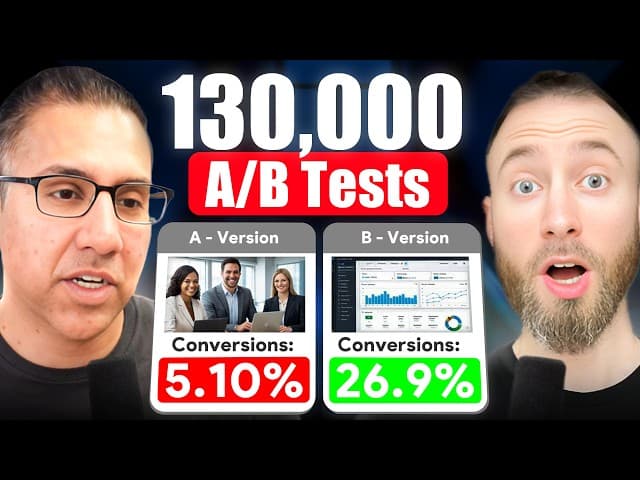
### Notable Study: "Happy People Hurt Conversions" (130,000 A/B Tests)
A comprehensive analysis, **"Happy People Hurt Conversions,"** involving **130,000 A/B tests**, reveals critical insights about **behavioral impacts** and **conversion optimization**. The study underscores that **overly aggressive or poorly timed changes** can **adversely affect user experience**, emphasizing the need for **careful, ethically guided experimentation**. It highlights the importance of **balancing innovation** with **respect for user well-being**—a key consideration as AI-driven testing scales.
## Ethical AI and Trust Building
As AI becomes central to Agile workflows, **trust** and **responsible governance** are paramount. Organizations conduct **regular AI audits**, **stakeholder engagement**, and **AI literacy programs**—crucial for **sustainable AI integration**. Industry standards like **"Responsible AI"** frameworks focus on **ongoing oversight**, **bias mitigation**, and **transparency**, fostering confidence among teams and consumers alike.
Recent studies indicate that **marketers lag behind in adopting AI tools** due to **data privacy concerns** and **trust issues**. A GWI survey found many professionals **distrust AI-generated insights**, **worry about data security**, and **seek alignment with organizational values**. Addressing these gaps is critical for **long-term AI success**.
## Notable New Examples and Trends
- **Competitor CRO Roadmap Approaches:** Teams are now **tracking and turning competitor websites into prioritized Conversion Rate Optimization (CRO) roadmaps**. A recent video titled **"Track & Turn Competitor Websites into a Prioritized CRO Roadmap"** demonstrates how organizations can utilize **web analytics and AI-driven insights** to identify **optimization opportunities**, enabling **rapid, data-backed improvements**.
- **Notion Custom Agents: Autonomous 24/7 Workflows:** New **Notion custom agents** are emerging as **autonomous, trigger-based workflows** that **operate continuously**, performing tasks such as **data aggregation**, **reporting**, and **project updates** without manual prompts. These agents **enhance productivity**, **reduce manual effort**, and **support real-time decision-making**—representing a significant leap in **organizational automation**.
## Current Status and Future Implications
Today, **Agile has matured into an AI-augmented, resilient ecosystem**. Teams leverage **predictive analytics**, **automated facilitation**, and **adaptive experimentation platforms** to **manage complexity**, **drive innovation**, and **sustain growth**. Initiatives like **Target’s ChatGPT-generated ads**, **Boll & Branch’s operational AI**, and **GrowthBook 4.3** exemplify the broad organizational embrace of **AI-enhanced agility**.
However, **trust deficits**, **bias mitigation**, and **team upskilling** remain ongoing challenges. Organizations are proactively addressing these through **trust-building initiatives**, **AI literacy programs**, and **robust governance frameworks**, ensuring AI remains a **strategic, ethical partner**.
## Final Reflection
The future of Agile in 2026 is a **holistic, AI-powered ecosystem** where **human ingenuity** and **machine intelligence** collaborate seamlessly. This synergy enables organizations to **navigate uncertainty**, **accelerate innovation**, and **build resilience** amid rapid change. As **Toby Coulthard** emphasizes, **verifiable, authentic human messaging**—supported by **responsible AI**—will be essential for **fostering trust** and **delivering lasting value**.
The ongoing evolution promises a **dynamic environment** where **adaptability**, **collaborative intelligence**, and **ethical innovation** turn complexity into a **strategic advantage**. Organizations that embrace these principles are well-positioned to **thrive** and shape a future where **technology and human creativity** work in concert, unlocking limitless possibilities.
---
## Key Takeaways:
- **AI integration** is central to transforming Agile ceremonies, planning, and collaboration.
- **Cross-disciplinary adoption** makes Agile a core organizational mindset, spanning marketing, HR, and operations.
- **Next-gen tooling** includes **dynamic Kanban boards**, **AI-powered planning**, and **domain-specific user stories**.
- **Measurement** now involves **predictive analytics**, **adaptive attribution**, and **innovative ROI assessments** like geographic holdout tests.
- **Experimentation** is continuous, AI-driven, gamified, and guided by ethical constraints based on large-scale behavioral studies.
- **Trust and governance** are prioritized through **AI audits**, **literacy initiatives**, and **transparency frameworks**.
- **Emerging trends** include **competitor CRO roadmaps** and **autonomous Notion agents** that operate 24/7 for organizational efficiency.
**In summary**, organizations that harness these advances—balancing technological innovation with ethical responsibility—are equipped to thrive in an increasingly complex, AI-augmented world.